Banjara Embroidery – Colorful, Bright & So Alive!

2
banjara-embroidery-01
Image Source

Indian art has various forms. When one thinks of art, we often confine our imagination to painting, sculpting, dance or music. However, embroidery is an expression on fabric and a unique art form too. The skill involves the usage of threads and other accessories to weave and stitch together a piece of artistic articulation that also can have multiple practical uses and applications. There are various forms of embroideries that are popular both in India and the world. However, a culturally connected embroidery art that must be understood and appreciated is the Banjara Embroidery. 

Suggested Read – Embroideries of India – Showcasing the Skills of Regional Artisans

Who are the Banjaras?

Banjara Embroidery-Who are the Banjaras
Image Source

The Banjaras, as the name suggests, are gypsy people who wander from place to place. Their history and origins can be traced back to more than 500 years old. Originating from Rajasthan the Banjara tribe is believed to have moved from place-to-place transporting military supplies for the Mughals, as well as, other household and general supplies and commodities. Thus, the Banjaras are not so much a caste, as much as a profession. However, when the British came to India, the role of the Banjaras of transporting commodities was replaced by other modes of transportation, such as the railways and vehicles. This led to the tribe settling down in many parts of the country, including in Andhra Pradesh, Maharashtra, Karnataka and Rajasthan. 

The Banjaras are also known by different names, such as Lambanis, Lambadis, Gormati, Vanjara etc. 

What is Banjara Embroidery?

What is Banjara Embroidery
Image Source

Banjara Embroidery is a specific type of embroidery that is not only done by the Banjara tribe, but also worn by them. The Banjaras, especially the women, are dressed in a distinct colorful attire that is both attractive and beautiful. With vivid vibrant colors, beadwork, mirror work and using different assortments, such as bells, shells, tassels etc. the Banjara Embroidery work stands out for its riot of colors and breath of freshness. 

However, the embroidery itself, requires fascinating creative skills, that the women of the community employ to create masterpieces. Unlike many other art forms, such as painting or sculpting where the painting or sculpture has a much longer shelf life and is used to adorn walls or homes, embroidery is quite different. It is applied on garments or accessories that are used or worn. And hence this art form is more like a recurring piece of work, where new patterns and fabrics are used in the course of time. 

Banjaras in Maharashtra

Banjara Embroidery-Banjaras in Maharashtra
Image Source

In Maharashtra specifically, the Banjaras predominantly reside in the Vidarbha, Khandesh, Solapur and Marathwada regions. Most of the tribe is involved in rearing animals, farming or working as laborers. However, the women of the household continue to create the Banjara embroidery for both household use, as well as for commercial trade. Though their popularity has not grown as significantly as some of the other local or regional traditional arts, various government efforts and NGOs are trying to bring their work to the forefront. 

Banjara Embroidery, Method and Technique

Banjara Embroidery-Method and Technique
Image Source

Banjara Embroidery looks resplendent but requires hard work to create. The embroidery is essentially needling work done on small pieces of cloth that are then later joined to create the finished product. The embroidery involves stitching, patterning, mirror work, quilting, cross stitch, patchwork, applique work and more. Fourteen types of stitches are used in Banjara embroidery. Some of the stitches are Vele, Maki, Kilian, Kans, Saudi, Tera Dora, Gadri, Nakra, Smock Stitch and more. The stitches work across different shapes and designs, be it square, circular, diagonal lines, rectangles or other geometric shapes. 

Also, the stitches are apt to include beads, mirror, cowrie shells, metal buttons, ghungroos, bells, coins and more on to the fabric and into the design. Another distinguishing characteristic of these embroidered products are the triangular borders. The applique work involves creating small triangles with another piece of cloth and stitching them over the fabric along the edges as a border. Besides, the base cloth usually is red, though other bright colors are used on it, such as red, yellow, blue, green, black, off-white and more. 

Banjara Embroidery Step by Step Guide

For ease of understanding here is a step-by-step guide on how a Banjara embroidered product is prepared. 

  1. Through the method of layering the base fabric is prepared. 
  2. The embroidery design is drawn on the base cloth using chalk. The design is done freehand by the women and hence the wavy lines instead of straight structured lines are seen on the embroidered products. The design is usually very basic and geometric in nature. 
  3. The women now start embroidering over the chalked-out design. 
  4. After the basic embroidery, the embellishments are added. For instance, the process of adding the mirror work is called Kaanch Tunna. Similarly, other additions to the embroidery are made at this stage. 

Products Made from Banjara Embroidery

Banjara Embroidery-Products Made
Image Source

The Banjara embroidery made products include clothing, accessories, footwear and more. The dresses worn by the ladies of the community, such as the lehenga, dupatta, choli etc. are all created using the Banjara embroidery. 

Traditionally and culturally, the embroidery has been used on the following:

Phetia – Phetia is a skirt made of blue or red color. The phetia forms the lower skirt of the ladies of the Banjara community and offers a wide scope of showcasing the embroidery designs due to the length and breadth of the material. 

Kanchali – Kanchali is the upper garment fitting blouse. It is usually decorated with beads, shells, tassels etc. 

Chatiya – Chatiya is a veil that covers the upper parts of the body. An end of the chaitya is tucked into the phetia. The section of the chaitya that covers the head is where the maximum embroidery is done. 

Zolana – Zolana is a bag that has a long strap and is hung on the shoulder. The bag is decorated with embroidery using different materials like mirrors, shells, bells and more. 

Ghalna – This is the headgear that has a ring and an embroidered panel. An end of the panel hangs down at the back of the neck and is adorned with embroidery. 

Chunchi – A small bag the Chunchi has 3 to 4 pockets that is used specifically to keep betel leaves. 

Darani– This is a piece of cloth that is used for household chores, such as covering the chapati or fruits etc. 

Gadano – This is also a piece of cloth but is used to cover drinking water pots and dishes. Like the Darani the Gadano is also embroidered. 

Pat – Pat is any game made from fabric where patchwork and applique work are used. This includes chess and many other local games where the game layout is embroidered. 

Kothali and Kothalo – Both of these are cloth bags used to keep money and shopping items. They are carried by the Banjaras when they are out shopping. 

Chandiya – This triangular cloth is put on the heads of the bulls and cows as decorative costumes during festive occasions. 

In modern times, Banjara embroidery is used in different applications. Besides being used on lehengas and dupattas, other modern products where the embroidery is used includes sarees, blouses, skirts, tops, footwear, bags, bedsheets, cushion covers, wall hangings and more. Most of these products are made for commercial purposes and sold in markets. 

Banjara Embroidery – The Scenario Today

Banjara Embroidery-The Scenario Today
Image Source

The Banjara community in Karnataka is working with various NGOs, such as the Sandur Kushala Kala Kendra (SKKK) to uplift the tribal community and spread awareness about Banjara embroidery. In Maharashtra, there are a few NGOs and government initiatives that materialize in the form of exhibitions etc. However, more effort is certainly required to give the Banjaras due credit and resources for furthering their heritage and art.

This skill, like all other traditional arts, is passed from one generation to another. However, the younger generation of the Banjara community is not too comfortable wearing the traditional clothing and many of them are moving into other professional fields. Thus, the future of Banjara embroidery needs to be secured right away through proper initiatives and marketing. 

The Banjara embroidery is a colorful artform that is akin to a Rangoli on the floor. Also, the Banjaras dress code is aligned to their various cultural beliefs. For instance, the bright colors are believed to ward off evil. Hence, this artform is an intrinsic part of the heritage of the tribal community and has been carried out by the women of the household. Yet, this art form is perhaps not getting its deserved due. And it is time that we collectively make efforts to sustain this wonderfully bright art form.

Get Your Tickets to the Ultimate Adventure at IMG World of Adventure

0
IMG-Worlds-of-Adventure-Dubai
Image – Jeremy Thompson/Flickr

IMG World of Adventure is a world-class indoor theme park located in Dubai, United Arab Emirates. It is the largest indoor theme park in the world, covering an area of 1.5 million square feet. The park features four zones: Marvel, Cartoon Network, Lost Valley, and IMG Boulevard, offering thrilling rides, attractions, and entertainment for all ages.

If you are planning to visit IMG World of Adventure, you can easily purchase IMG World tickets online or at the entrance gate. The park offers various types of tickets, including general admission, fast track, annual passes, and more. It is recommended to book your tickets in advance to avoid long queues and ensure availability.

One of the main highlights of IMG World of Adventure is its thrilling rides. From roller coasters to simulators, the park offers a wide range of rides that cater to all levels of thrill-seekers. Some of the most popular rides include the Velociraptor roller coaster, the Hulk Epsilon Base 3D simulator, and the Spider-Man Doc Ock’s Revenge dark ride.

In addition to the rides, IMG World of Adventure also features various attractions and experiences. The Marvel zone is home to the Avengers Battle of Ultron ride, where you can join the Avengers in their battle against Ultron. The Cartoon Network zone features the Ben 10 5D cinema, where you can experience an immersive 5D adventure with Ben 10 and his alien friends.

The Lost Valley zone is inspired by the prehistoric era and features attractions such as the Forbidden Territory, Dino Carousel, and the Predator roller coaster. Finally, the IMG Boulevard zone offers a variety of dining, shopping, and entertainment options, including the Haunted Hotel, which is a must-visit for thrill-seekers.

Moreover, if you are looking for an even more thrilling experience, you can opt for the fast track tickets, which give you priority access to some of the most popular rides in the park. With fast track tickets, you can skip the long lines and enjoy more rides in a shorter amount of time.

For frequent visitors, IMG World of Adventure offers annual passes that allow unlimited access to the park for a year. Annual passes also come with additional benefits such as discounts on dining, merchandise, and fast track tickets.

When visiting IMG World of Adventure, it is essential to wear comfortable clothing and footwear, especially if you plan to spend the entire day in the park. The park provides lockers and storage facilities for your convenience.

In addition to its exciting rides and attractions, IMG World of Adventure also hosts various events throughout the year, such as Halloween Horror Nights and Winterfest. These events offer unique experiences and entertainment that you don’t want to miss.

Finally, when it comes to dining, IMG World of Adventure offers a variety of options ranging from fast food to full-service restaurants. The park also features various themed dining options, such as the Tony’s Skydeck restaurant in the Marvel zone, which offers stunning views of the park.

Safety is a top priority at IMG World of Adventure, and the park adheres to strict safety guidelines and procedures to ensure the well-being of its guests. All rides and attractions undergo regular inspections and maintenance to ensure they are safe for operation.

In response to the COVID-19 pandemic, IMG World of Adventure has implemented additional health and safety measures, including enhanced cleaning and sanitization, mandatory face mask policy, temperature checks, and social distancing protocols.

Moreover, the park offers a dedicated first aid center and trained staff to handle medical emergencies, ensuring the safety and well-being of all guests.

IMG World of Adventure is located in the heart of Dubai and is easily accessible by public transportation or private vehicle. The park offers ample parking facilities for guests who prefer to drive.

In conclusion, IMG World of Adventure is a must-visit destination for anyone seeking an unforgettable theme park experience. With its thrilling rides, exciting attractions, and immersive experiences, IMG World of Adventure offers something for everyone. So, get your IMG World tickets today and get ready for an adventure of a lifetime!

Discover the Wonders of Freshwater Ecosystems at River Safari Singapore

0
River Safari Singapore-01
Image Source

River Safari Singapore is a unique wildlife park located in Mandai, Singapore, that offers visitors the chance to explore and learn about the world’s freshwater ecosystems. The park is home to over 6,000 animals, including giant river otters, manatees, and the world’s largest freshwater puffer fish.

If you are planning to visit River Safari Singapore, you can easily purchase Night Safari Singapore tickets online or at the entrance gate. The park offers various types of tickets, including general admission, combo tickets, and guided tours.

One of the main highlights of River Safari Singapore is its River Safari boat ride, which takes visitors on a journey through some of the park’s most iconic exhibits, including the Amazon River Quest and the River Nile Adventure. During the boat ride, visitors can see animals such as the jaguar, the anaconda, and the capybara up close.

In addition to the boat ride, River Safari Singapore also features various exhibits and attractions that offer visitors an immersive experience. The park’s Squirrel Monkey Forest is a must-visit attraction, where visitors can walk through a free-range enclosure and observe the playful squirrel monkeys up close.

The Giant Panda Forest is another popular attraction, where visitors can see the rare and endangered giant pandas, Kai Kai and Jia Jia. The park also features a freshwater aquarium, where visitors can observe various fish species from different parts of the world.

Moreover, River Safari Singapore offers various dining options, including the River Safari Tea House, which serves traditional Chinese cuisine, and the Mama Panda Kitchen, which offers Asian-inspired dishes.

If you want to experience the park in a unique way, you can opt for the Night Safari Singapore tickets, which offer visitors the chance to explore the park at night. The night safari features a guided tram ride and walking trails, where visitors can see the nocturnal animals in their natural habitats.

When visiting River Safari Singapore, it’s important to wear comfortable clothing and footwear, especially if you plan to spend the entire day in the park. The park provides lockers and storage facilities for your convenience.

In addition, the park is committed to ensuring the safety of its guests and staff. In response to the COVID-19 pandemic, River Safari Singapore has implemented additional health and safety measures, including mandatory temperature checks, social distancing protocols, and enhanced cleaning and sanitization.

River Safari Singapore is easily accessible by public transportation or private vehicle. The park offers ample parking facilities for guests who prefer to drive.

For those interested in learning more about the park and its inhabitants, River Safari Singapore offers various educational programs and activities, including guided tours, animal encounters, and workshops.

Finally, if you’re planning to visit other wildlife parks in Singapore, you can opt for the combo tickets, which offer access to multiple parks, including the Singapore Zoo and the Night Safari.

In conclusion, River Safari Singapore is a unique and exciting destination that offers visitors the chance to explore and learn about the world’s freshwater ecosystems. With its boat ride, exhibits, and Night Safari Singapore tickets, River Safari Singapore is a must-visit attraction for nature lovers and wildlife enthusiasts. So, don’t wait any longer and get your tickets today!

Safari World Bangkok: An Unforgettable Wildlife Experience

0
Safari-World-Bangkok-01
Image – Mike Wheatley/Flickr

If you’re planning a trip to Bangkok and you’re a nature and wildlife enthusiast, then Safari World Bangkok is an attraction you can’t afford to miss. There are various things to do in Safari World Bangkok as it is a wildlife park covering an area of 480 acres and is home to more than 8,000 animals from 300 different species. It’s one of the most popular tourist attractions in Bangkok, attracting over a million visitors every year. In this article, we’ll give you an overview of Safari World Bangkok, what you can expect to see, and why it’s a must-visit attraction.

Overview of Safari World Bangkok

Safari World Bangkok is divided into two sections: Safari Park and Marine Park.

  1. Safari Park: With Safari World Bangkok tickets, visitors can enjoy an open-air safari ride through the park where they can see animals roaming freely in their natural habitats. There are several zones within the Safari Park, including the African Savannah, where visitors can see giraffes, zebras, and rhinoceroses, and the Predator Prowl, where visitors can see predators such as lions, tigers, and bears. There’s also a Jungle Cruise, where visitors can see various animals such as monkeys and gorillas, and a Bird Show, where visitors can watch birds perform tricks and stunts.
  2. Marine Park: In this section, visitors can see marine animals such as dolphins, sea lions, and seals. There are several shows in the Marine Park, including the Dolphin Show, where visitors can see dolphins perform acrobatics and stunts, and the Sea Lion Show, where visitors can see sea lions play basketball and perform other tricks. There’s also a Bird Show in the Marine Park, where visitors can see birds perform aerial stunts.

Apart from the Safari Park and Marine Park, Safari World Bangkok also has a number of restaurants, souvenir shops, and other attractions such as a cowboy show, orangutan show, and a spy war show.

What to expect at Safari World Bangkok

When you arrive at Safari World Bangkok, you’ll be amazed by the sheer size of the park. The Safari Park is massive and covers an area of more than 300 acres, so you’ll need to allocate enough time to explore it fully. The open-air safari ride is one of the main attractions of the Safari Park, and it’s an experience that you’ll never forget. You’ll see animals roaming freely in their natural habitats, and you’ll be able to take amazing photos of them.

The Marine Park is equally impressive, and the shows are entertaining and informative. The Dolphin Show is a must-see attraction, and you’ll be amazed by the intelligence and skills of the dolphins. The Sea Lion Show is also entertaining, and you’ll enjoy watching the sea lions play basketball and perform other tricks.

One of the highlights of Safari World Bangkok is the animal feeding sessions. You’ll have the opportunity to feed giraffes, elephants, and other animals, and it’s an experience that you’ll cherish forever.

Tips for visiting Safari World Bangkok

To make the most of your visit to Safari World Bangkok, here are some tips to keep in mind:

  1. Arrive early: Safari World Bangkok is a popular attraction, and it can get crowded during peak hours. To avoid the crowds, arrive early in the morning when the park opens.
  2. Wear comfortable shoes: You’ll be walking around the park for several hours, so wear comfortable shoes.
  3. Bring sunscreen and insect repellent: The park is outdoors, so bring sunscreen to protect yourself from the sun, and insect repellent to protect yourself from mosquitoes.
  4. Bring a camera: You’ll see some amazing animals and attractions, so bring a camera to capture the memories.
  5. Plan your visit: The park is huge, so it’s a good idea to plan your visit beforehand. Look at the park map and decide which shows and attractions you want to see, and plan your route accordingly. You can also check the show timings and plan your visit accordingly.
  6. Buy tickets in advance: You can buy tickets for Safari World Bangkok online as it can save you time and hassle, as you won’t have to wait in line at the entrance.

Consider a tour: If you want to make the most of your visit to Safari World Bangkok, consider taking a guided tour. You’ll have a knowledgeable guide to show you around the park and provide information about the animals and attractions.

Takeaways

Safari World Bangkok is a must-visit attraction for nature and wildlife enthusiasts. With its wide range of animals, shows, and attractions, it’s an experience that you’ll never forget. From the open-air safari ride to the marine shows, Safari World Bangkok has something for everyone. Make sure to plan your visit in advance and follow the tips above to make the most of your experience. If you’re in Bangkok, don’t miss the opportunity to visit Safari World Bangkok and have an unforgettable wildlife experience.

Exploring Mandalas – Art with Infinite Facets

0

Exploring Mandalas

Mandalas are circular designs used in several traditional practices for their spiritual significance. Nowadays, mandalas are widely practised and known for aesthetic reasons throughout the world, with mainstream youtubers and artist-influencers popularising the art. However, aesthetics is not all that there is to Mandalas. They have a rich and ancient history rooted deep in Indian and South Asian spiritual practices and have been used for concentrating the meditative and metaphysical facets of the human mind throughout the pasts of multiple traditions. Mandalas are fascinating pieces of art, spirituality, history or culture based on what one’s interests are.

What are Mandalas?

What are Mandalas?
Image Source

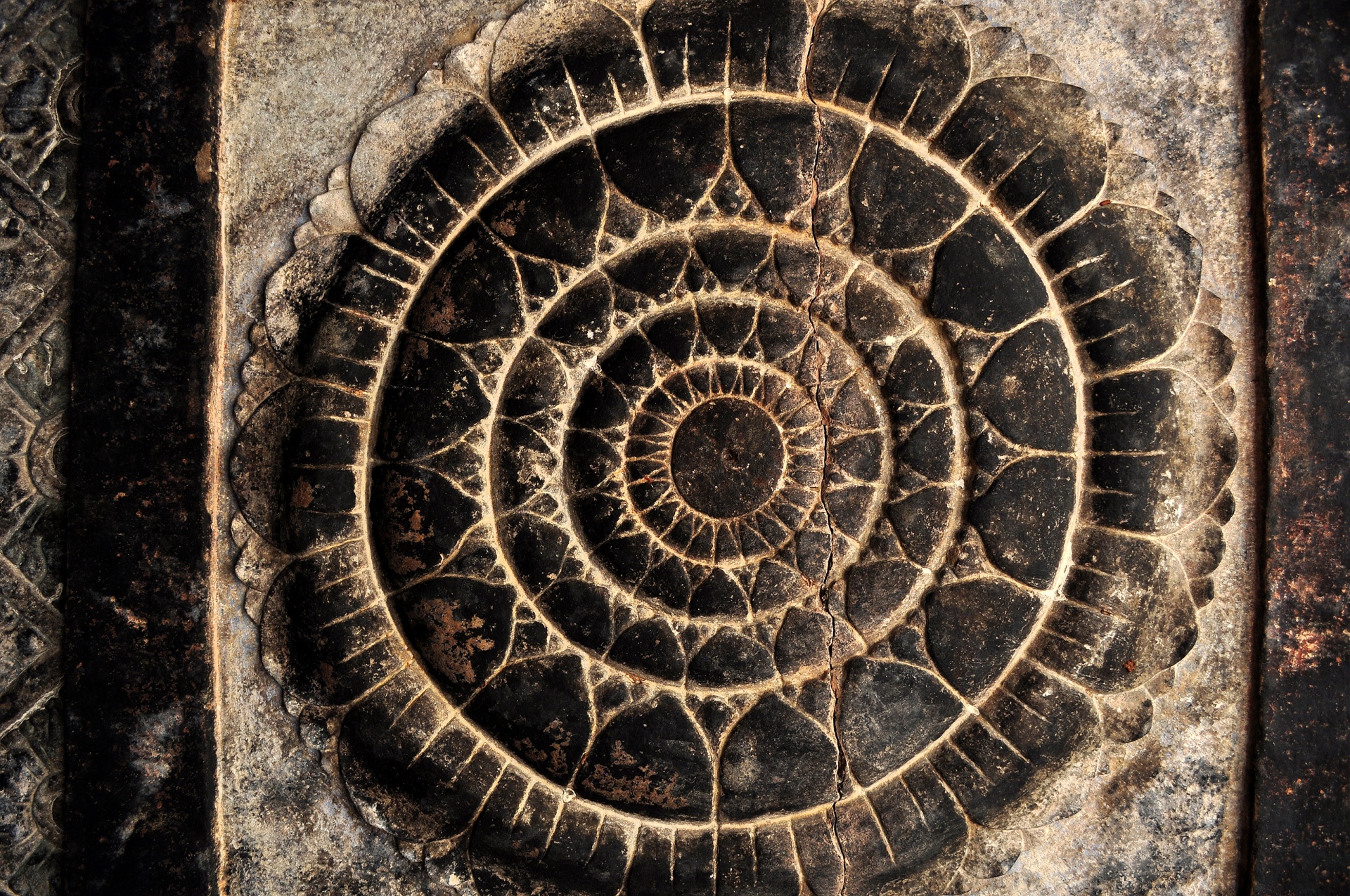
Mandalas are designs used widely in Hindu, Buddhist and several Indic traditions and religions, as a spiritual and ritualistic symbol, representing the nature of universe and life. They are usually circular and incorporate different complex shapes within the circular outline. They are a part of several significant sites of religious architecture across the world, from the Meenakshi temple in Tamil Nadu to the blue Mosque in Turkey.

History of Mandalas

History of Mandala Art
Image Source

The word ‘mandala’ comes from the Sanskrit word ‘circle’ or ‘disc’. It first appears in one of the bases of Hindu religion, the holy Rig veda, written around three thousand years ago. While this is the first appearance of Mandalass in written or physical form, this need not be the first time they were conceptualised. Mandalas could have been artistic and spiritual symbolS for centuries by then.

Significance of Mandalas in Hinduism

Significance-of-Mandalas-in-Hinduism
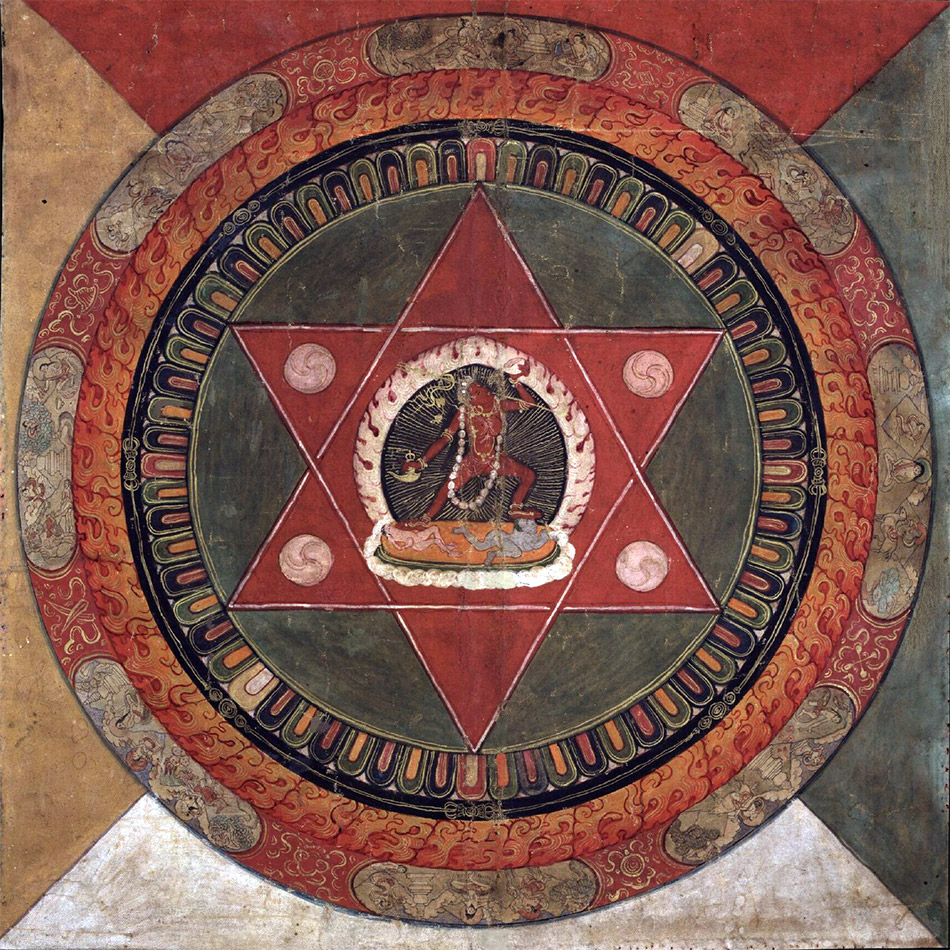
Tantric mandala of Vajrayogini –  Image Source

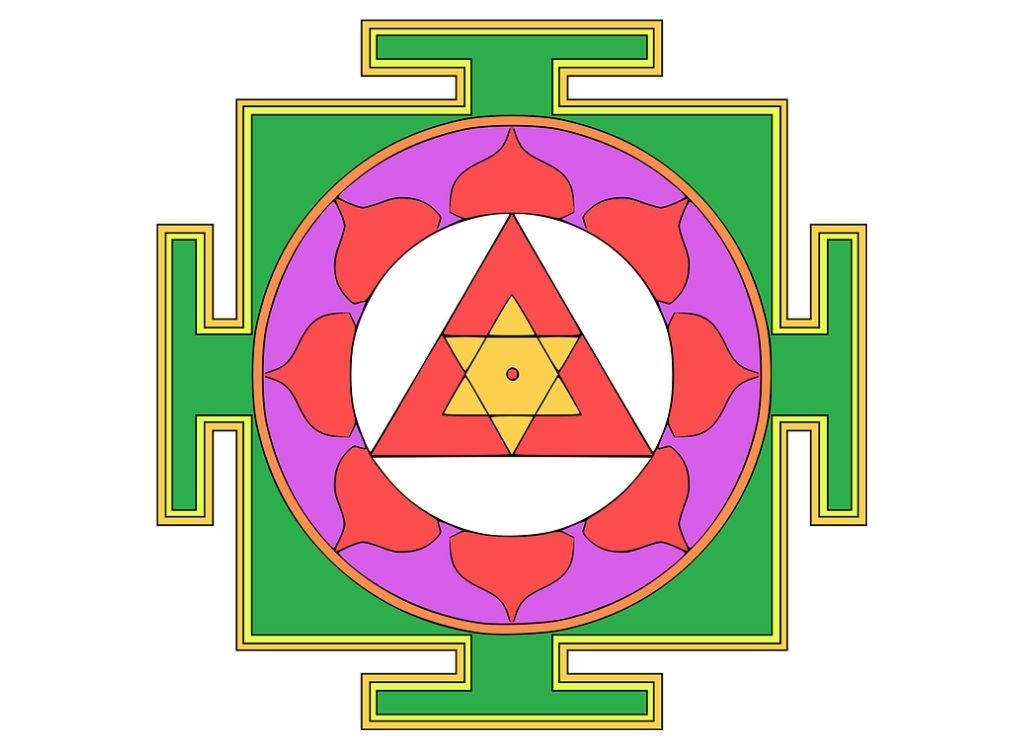
In Hinduism, Mandalas are commonly observed in Yantras, a holy symbol for Hindus throughout the world. Yantras are geometric patterns in a circular configuration surrounded by a square with four gates. The centre is supposed to be the abode of the divine – and the yantras’ complex geometric designs make one feel the presence of the deity, as one concentrates on the symbolism they represent.

Significance of Mandala in Buddhism

Significance of Mandala in Buddhism
Hevajra Mandala, Tharlam Monastery Kathmandu – Image Source

As religions and philosophical traditions boomed in the cultural and philosophical hub that was ancient India, Mandalas became central to Buddhist spiritual practice. Mandalas are crucial to meditation in Buddhism – they are supposed to inspire a person in meditation and are to be contemplated to such an extent that the practitioner can internalise the minutest detail of every mandala. Apart from this, Mandalas are supposed to represent wisdom and the impermanence of the universe. The centre of a Buddhist mandala is usually a sacred symbol, which could be a fire, a deity or another design of spiritually symbolic significance. 

The central symbol represents wisdom. One of the outer rings usually incorporates the theme of death, one of which could be charnel grounds, to represent the impermanence of the universe and life. 

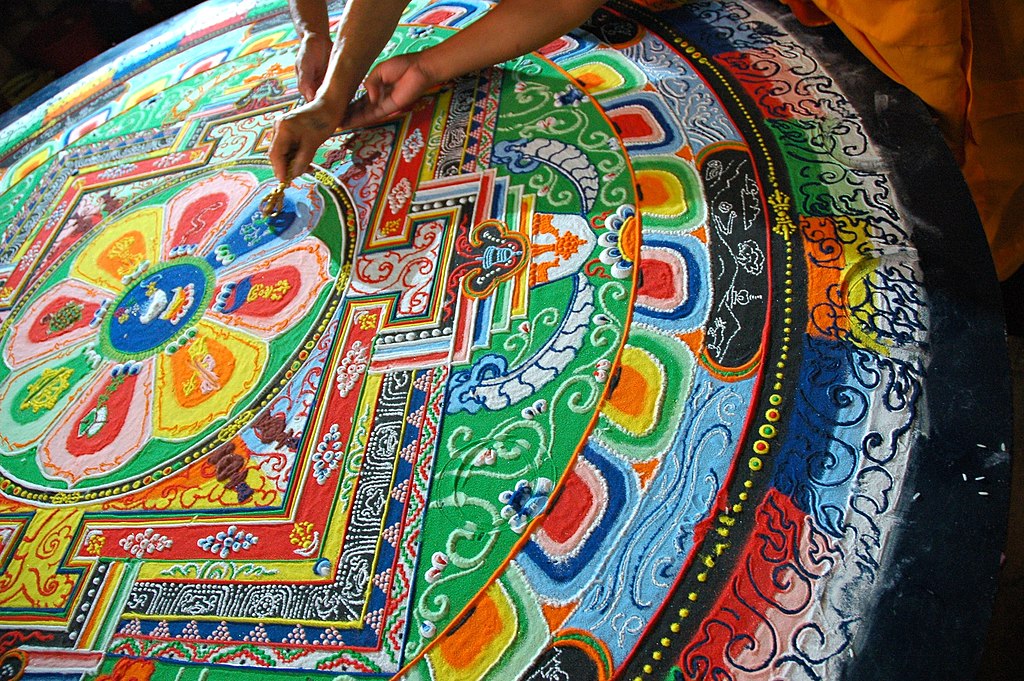
Apart from this, a ritual in one of the most spectacular and sacred Buddhist events, the Kalachakra, is the tradition of making a mandala as the twelve day long festival progresses. Buddhist monks use funnels called ‘chakpu’ to make a painfully intricate, colourful mandala out of colourful sand, that is, at the end of the event, completely destroyed. The sand of all colours is mixed up, resulting in dull, brown sand. This ritual is heavy with symbolism. Firstly, the quick destruction after the painfully long process of making the Mandala is supposed to symbolise the impermanence of suffering and of life. The circular shape of Mandalas represents the infinite, never ending wheel of time.

Mandalas Travel Across the World

Mandalas Travel Across the World
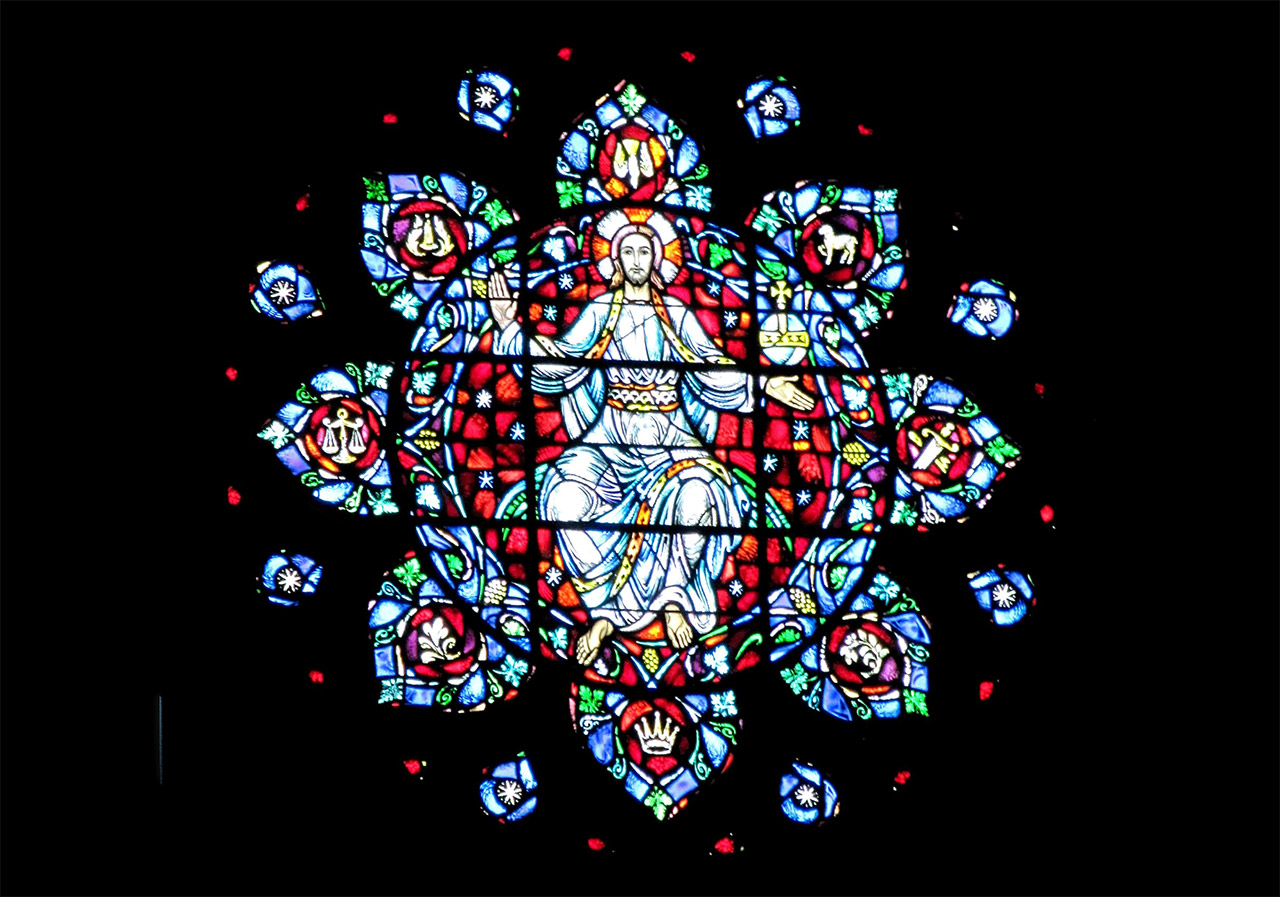
Window of Marsh Chapel at Boston University – Image Source

As the wheel of time progressed, Mandalas found a place in the philosophy and architecture of Christianity and Islam. They were also incorporated in the architecture of Hinduism and Buddhism previously, making spectacular, hypnotic centrepieces for domes. Many important religious sites of Abrahamic religions, such as the Hagia Sophia, the blue Mosque and Notre Dame feature them. 

Christianity used Mandalas or complex, symmetrical circular patterns as a media to contemplate the wholeness and all-encompassing nature of the divine. In Islam, Mandalas have similar connotations. They incorporate natural themes, additionally representing the beauty of Allah’s creation.

Mandalas are not restricted to symbolism in these religions, it is also included in the philosophical musings of the peoples of the mesoamerican cultures. In the Mayan culture, calendars were represented in the form of a Mandala, resembling the Kalachakra mandalas in Tibetan Buddhism. The famous Aztec find, the Sun stone, found in Mexico and dated to the sixteenth century, resembles mandalas, with the infinite circular encapsulating the whole of the universe.

Mandalas in Western Philosophy

Mandalas-in-Western-Philosophy-01

Mandalas travelled throughout the world as spiritual symbols, and as a result, they became open to secular philosophical interpretations by Western philosophers. One of the most prominent commentators on Mandalas was the highly influential Swiss psychiatrist Carl Jung, who lived in the nineteenth century. He wrote in his semi-autobiographical work, Memories, Dreams, Reflections-

I sketched every morning in a notebook a small circular drawing, […] which seemed to correspond to my inner situation at the time. […] Only gradually did I discover what the Mandala really is: […] the Self, the wholeness of the personality, which if all goes well is harmonious.

Takeaway

It is from such a rich history of philosophical and spiritual contemplation surrounding Mandala art that we come to the present day. Today, Mandalas have been popularised for their aesthetic value, for it demands great patience and skill, being a highly symmetrical and intricate art form. Apart from this, many people in the present day also find the art highly stimulating for similar reasons to Jung’s. Buddhist and Hindu practitioners continue to use Mandalas as a tool for contemplation of the divine, and they continue to be centrepieces in traditional architecture of many cultures. The applications and interpretations of Mandalas are infinite, like the circle they are encapsulated in. Mandalas shall remain a constant in the contemplations of humanity, despite the ephemeral nature of everything else.

Oldest Indian Languages That Survived For Ages

4

Oldest-Indian-Languages-01

Language in its literary meaning means a system of communication through speech, a compilation of sounds that a group of people understand to have the same meaning.The combined population of India speaks over hundreds of languages. Although some Indo-European languages are also spoken and understood, most languages in India belong either to Indo-Aryan or Dravidian families.

Around three-fourth of the languages spoken by India’s population are Indo-Aryan, including Hindi, Rajasthani, Gujarati, Marathi, Bengali, Oriya, Assamese, Sanskrit, Kashmiri, Sindhi and Punjabi.

The Dravidian family of Indo-European languages include the languages of South India: Telugu, Tamil, Kannada and Malayalam; English is the language most used.

Language as a form of communication is one of the most interesting and fascinating aspects of society. Several of them are over 10,000 years old and have existed before any civilisations were ever founded. India itself has a broad variety of oral sounds, from sign languages to regularly spoken Tamil, Hindi, Marathi, etc.

Let’s dive into some of the oldest languages of the Indian subcontinent.

1. Tamil

Oldest-Indian-Languages-Tamil

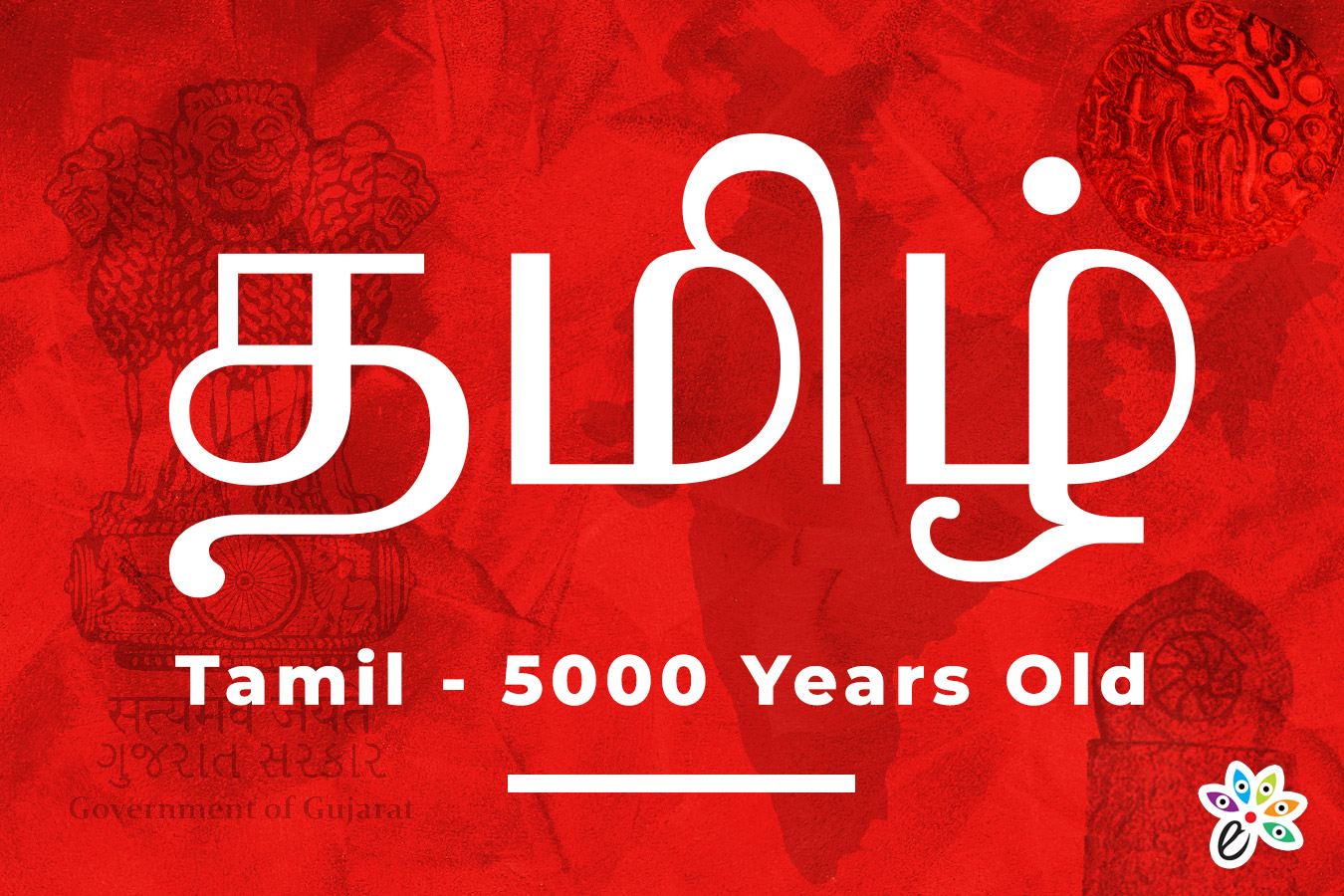
Known as the official language of  Sri Lanka and Singapore and spoken by 78 million people and the  official language, Tamil is the world’s oldest language. It is the only old language still used currently. Tamil, one of the most widely spoken languages in the world, hails from the state of Tamil Nadu and is also one of India’s official languages. It is part of the Dravidian family, as mentioned before and incorporates some native Southern and eastern Indian languages too which makes it easier for speakers of these languages to learn Tamil.

In the inscriptions and potsherds from the 5th century BCE, the oldest of Tamil writings have been documented. It is believed that the Tamil alphabet has evolved from Brahmi, however, some experts think its origins stretch back to the Indus script. The first Tamil literature is probably from 600 BC-200 A.D during the Sangam period. Three sangams are reported to have existed in Madura, Kapatapuram and northern Madura. The compositions which relate to the first two sangams are devoted mostly to music and dance. Tolkappiyam is the only accessible work of the two sangams, unfortunately. Tolkappiyam is a work on Tamil-language grammar, which was created around 200 BC and is the earliest literature in Tamil. It has been written as noorpaa (short formulaic compositions).

2. Pali and other Prakrits

Oldest-Indian-Languages-Pali-and-other-Prakrits

A set of languages known as Prakrits or Middle Indo-Aryan languages originated from the classical language in India much before the contemporary derivatives of Sanskrit existed. These were the early vernacular dialects and many of them, in their own right, were prominent literary vehicles. The most renowned one is Pali, which still acts as the canonical language of Buddhism in various places. Facets of literature from the Brahmanical/Hindu and Buddhist traditions are embodied in other Prakrit languages such Sauraseni, Maharashtri, Magadhi and Gandhar.

The term ‘Prakrit’ (meaning nature) can be assumed in two distinct ways: based on ordinary words by a common mass, when compared to the highly sophisticated language of the learned in Sanskrit or; as a group of languages deriving from Sanskrit, the source of language. Prakrit is a name for the collection of languages commonly used in various sections of Aryavarta from the fourth or fifth centuries BC to the eighth century AD. These languages evolved into Apabhramsa until they finally established themselves as early forms of the many present Indo-Aryan ones. Therefore, Linguists do not refer to ‘prakrit’ as a monolith, but rather of ‘prakrits.’

Pali, the language that was preached by the Buddha (about 563-486 BC)] and Ardhamagadhi which was Mahavira’s(approximately 6th century BC) are both Prakrits. Sanskrit was the deliberate choice of the seers as according to their broader concept of addressing the public they used such language for their religious discourse. Many of the religious corpora of Buddhists and Jains are in these languages. Ashoka (ruling in BC 268-231) again purposely had his edicts written in Prakrit to make sure his messages were comprehended by all. These Prakrits are one of the oldest known. It appears that Pali was brought to Sri Lanka by Buddhist bhikkhus, which later became contemporary Sinhalese.

3. Vedic Sanskrit

Oldest-Indian-Languages-Sanskrit

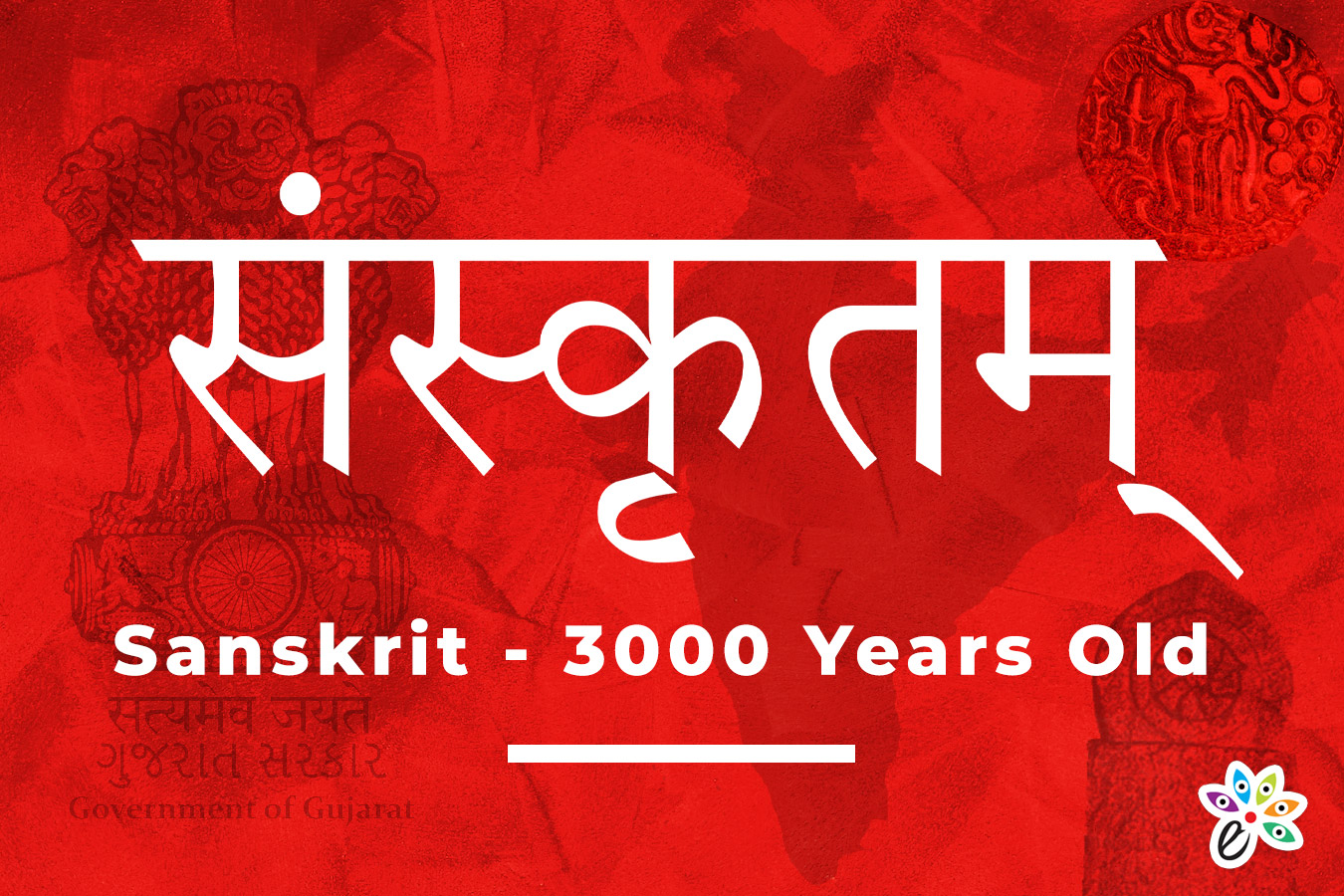
Sanskrit language, is an Old Indo-Aryan language wherein the most antiquated reports are the Vedas, made in what is called Vedic Sanskrit. Albeit Vedic records address the tongues then, the earliest works—including the Rigveda (“The Veda Composed in Verses”), which researchers attribute to around 1500 BCE—come from the northwestern piece of the subcontinent, the space of the ancient seven rivers (sapta sindhavaḥ). 

Over its long history, Sanskrit has been composed both in Devanāgarī script and in different provincial contents, like Śāradā from the north (Kashmir), Bāṅglā (Bengali) in the east, Gujarātī in the west, and different southern contents, including the Grantha letter set, which was particularly created for Sanskrit messages. Sanskrit messages keep on being distributed in territorial contents, albeit in most occasions Devanāgarī has been utilized the most.

There is a huge collection of work in Sanskrit covering a wide scope of subjects. The earliest ones are the Vedic writings. There are significant works of dramatization and verse, but the specific dates of a large number of these works have not been absolutely decided. Significant creators and works are Bhāsa for Svapnavāsvavadatta , whose dates generally fluctuating however certainly preceding Kālidāsa, who specifies him; Kālidāsa, dated anyplace from the first century BCE to the fourth century CE, who created Śakuntalā, Vikramorvaśīya , Kumārasambhava, and Raghuvaṃśa; Śūdraka and Mṛcchakatika, potentially dating to the third century CE among numerous others. The two epics Rāmāyaṇa and Mahābhārata were likewise created in Sanskrit, and the previous is regarded as the primary poetic work (ādikāvya) of India. The Pañcatantra and Hitopadeśa are significant agents of educational writing. Sanskrit was likewise utilized for making compositions out of different philosophical schools and dealt with logic, arithmetic, and astronomy.

4. Kannada

Oldest-Indian-Languages-Kannada

Kannada, which is also termed as Kanarese or Kannana, from the Dravidian family, is the official language of Karnataka. Mid-21st-century census information demonstrated that somewhere in the range of 38 million people communicated in Kannada as their first language; another 9 to 10 million are assumed to use it as the secondary one. In 2008, Kannada was recognized as a classical language by the government. 

Kannada is the second most established of the four major Dravidian dialects. The earliest Kannada engraving was found at the little local area of Halmidi and dates back to around 450 CE. The Kannada script developed from southern groups of the Ashokan Brahmi script. The Kannada script heavily identifies with the Telugu script; both emerging out of an ancient Kannarese script. 

Kannada literature started with the Kavirajamarga of Nrupatunga (ninth century CE) and was followed by Pampa’s Bharata (941 CE). The most antiquated surviving grammar is by Nagavarma and dates to the mid-twelfth century; the language of Keshiraja (1260 CE) is as yet regarded. Kannada writing was influenced by the Lingayat (Virasaiva) and the Haridasa developments. In the sixteenth century, the Haridasa evolution of vernacular religious hymns was at its peak with Purandaradasa and Kanakadasa, the former thought of as the father of Karnatak music, the traditional style music of southern India.

5. Telugu

Oldest-Indian-Languages-Telugu

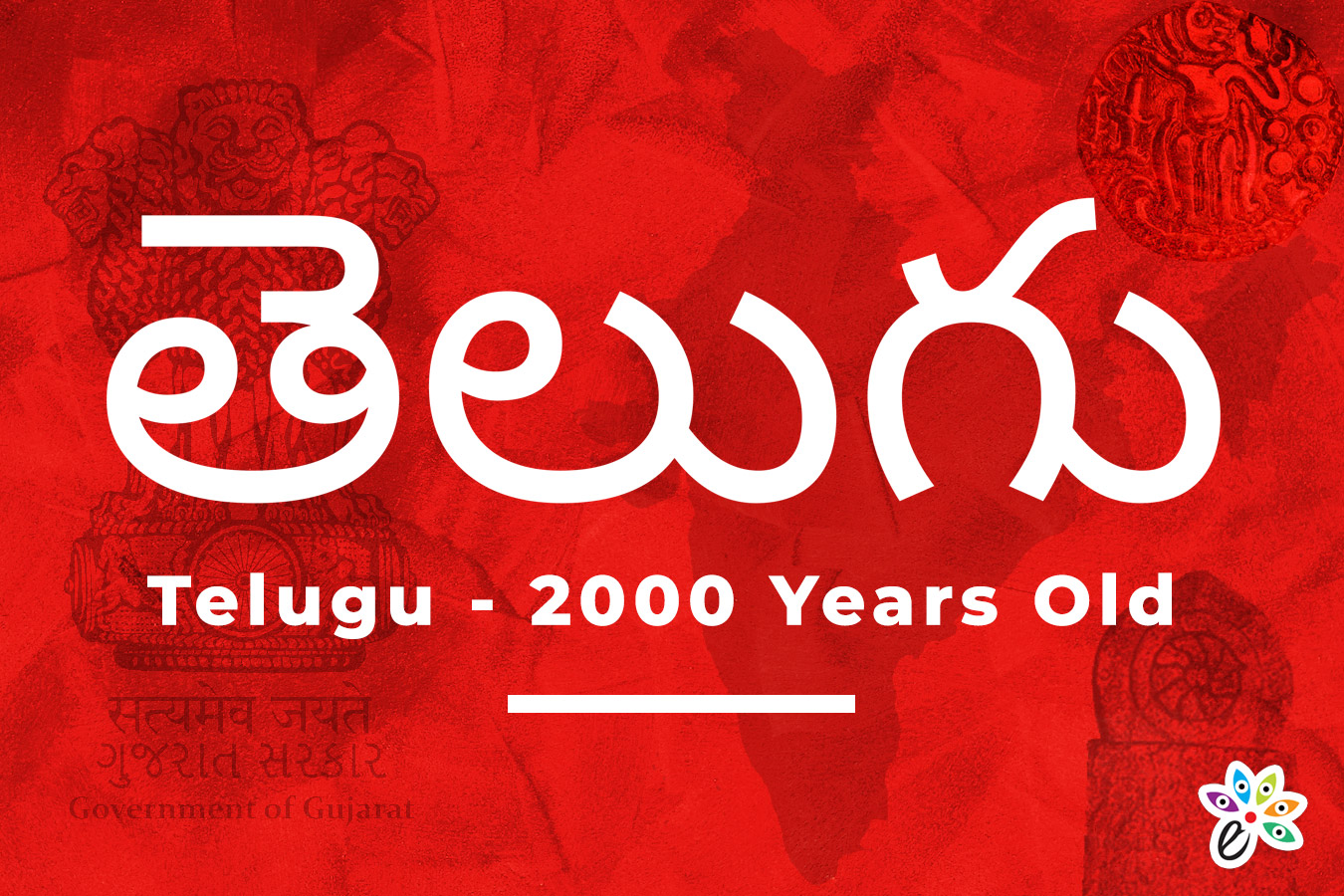
Telugu is the most used language of the Dravidian family which comprises 24 dialects crossing the whole South-Asia, from Baluchistan to Sri Lanka. As for the masses, Telugu positions second to Hindi among the Indian dialects. As recorded by the 1981 Census, Telugu is spoken by more than 45 million in Andhra Pradesh. It has likewise spread to different parts of the globe. Being a resonant language, it is called, by its admirers, the ‘Italian of the East.

The language originated from the Proto-Dravidian language. It was likewise alluded to as ‘Tenugu’ in the prior occasions and came to be known as ‘Andhra’ in medieval eras. It likely split from Proto-Dravidian between 1500 BCE and 1000 BCE, which was generally a similar time the Tamil language got particular as far as an artistic movement. Composed materials in Telugu date from 633 AD. Telugu writing starts with an eleventh-century interpretation of the Sanskrit exemplary Mahabharata. With the appearance of the Muslim principle, numerous Arabic and Persian words turned out to be essential for the Telugu language. The impact of Persian and Arabic is recognizable to an impressive degree in the dialects expressed in Telangana because of its long relationship with the Muslim standard. There is likewise an extraordinary component of English words in the jargon of Coastal Andhra, as these locales were under British rule for almost a century. Telugu has a place with the Central Dravidian language subfamily, whose individuals started from the Proto-Dravidian, spoken in central Deccan. Different dialects of the central group are the rustic Gondi, Konda, Kui and Kuvi dialects, which are all etymologically nearest to Telugu.

6. Marathi, Bengali and Odia 

Oldest-Indian-Languages-Marathi,-Bengali-and-Odia

Marathi is the language of the Indo-Aryan group from the southern regions. It is spoken primarily in the western Indian population of Maharashtra and since 1966 it is the state’s official language. Marathi was also known as Maharashtri, Marhatti, Mahratta and others, throughout prehistoric eras. Marathi had grown from Sanskrit about 1300 years old, which eventually originated with Prakrit and Apabhramsha. It is assumed to have arisen from Pali and Prakrit grammar and syntax. The Marathi we hear today is the outcome of the progressive transformation and alteration process throughout the years.

Bengali is a branch of the Indo-Aryan branch of the Indo-Iranian language group. It is spoken as the major language by more than 200 million people. Known as Bangladesh’s main language, it is also one of the officially recognised languages of Indian Constitution. By 900-1000 AD, Bangla appeared as a new Indo-Aryan language through Apabhramsha and Abahatta of Magadhi, the additional stages of Magadhi Prakrit and the Indo-Aryan Oriya and Assamese(600 BC – 600 AD). A rival theory was provided by Bengali scholar Muhammad Shahidullah and his supporters that the language emerged in the 7th century CE and progressed into spoken and written Gauda (also, individually, a Prakrit and an Apabhramsha). The language distinction between Bangladesh and Assamese was very slight up to the 14th century.

Odia, often written as Oriya, is an Indo-Aryan language with around 50 million speakers. It is also the major official language of the Indian state of Odisha, formally recognised or “scheduled” in the Indian Constitution. Mughal Bandi (Coastal Odia) is the conventional language of instruction. It also has a number of dialects. The eldest of the Indo-Aryan family’s eastern group is Odia from the Prakrit family of Ardhamagadhi. Odia may be from the 10th century CE, but until the 11th century, it was practically imperceptible from Bengali. The first poetry classic was written in the 15th century, and in the 18th-century literary prose began to emerge.

7. Malayalam

Oldest-Indian-Languages-Malayalam

Malayalam is a member of the Dravidian language family subgroup of the South. Malayalam is largely spoken by the State of Kerala and the union territory, Lakshadweep in India. Bilingual groups in adjacent Karnataka and Tamil Nadu also use it. More than 35 million people are known to speak Malayalam at the beginning of the 21st century.

Malayalam developed from either the western dialect of Tamil, or the Proto-Dravidian branch of modern Tamil. An inscription of around 830 CE is the first evidence of the language. The Malayalam script encouraged an early and significant infusion of Sanskrit terms. It is derived from the Grantha script, also known as Koleluttu, which derives from Brahmi in turn. The whole collection of sounds from Dravidian and Sanskrit is represented by the letters of Koleluttu. Ramacharitam, an epic poem written in the late 12th or early 13th centuries, is the earliest literary piece in Malayalam. A literature of mostly erotic poetry created in the manipravalam form, a combination of Malayalam and Sanskrit, developed in later decades with the popular pattu (song) literature.

There is no obvious answer to what the oldest language in the world is, but it is definitely a matter that gets linguists and historians both riled up. Some argue that all the languages we speak now arise from a sole human language, whose beginnings are lost in prehistory. In fact, one can perhaps analyze the idea of the “oldest” language in not one but multiple distinct ways. One thing is for sure, that language and literature gives us an insight into the past like no other.

Baraf Golas – The Indian Chilly Icy Delights to Beat the Heat

2
Baraf gola
Baraf Gola – Bhargavpatel009 via Wikimedia

The mouthwatering baraf golas are a ubiquitous sight on Indian roads. One of the most sought after street foods the golas also called chuski needs no introduction to anyone grown up in the hot scorching heat of Indian towns and cities. Crushed ice put together like a lollipop on a stick and dipped in syrups of various flavors takes an immense amount of effort to stay away from. This is truer when the colorful chilled golas are found parked on roadside stalls on sweltering hot days. 

Baraf gola wala
GolaWala – Kapil S via Flickr

Whether as kids or as adults, the baraf golas are one of the most irresistible delicacies that generations can identify and connect memories with. And let’s not forget the baraf gola man. That one ‘chacha’ or ‘bhaiyya’, who stands with his cart laden with colorful elongated glass bottles, some orange, some red, some yellow and some purple. In other words, kachi kerri, kala khatta, rose sherbet, pineapple sherbet and more. The ice crushing machine rooted on the cart efficiently rotated by him collects the ice that drizzles down in blistering transparency. The crushed ice is scooped up in quick reflex and transferred into the glass, tipped and tapped while the stick inserted with deftness. The gola is then pulled out in perfect shape as the baraf gola man waits patiently for his customers to decide and fret over the different flavors of syrup. The colors are painted over the white snow lollipop that blazes into a frenzy of tempting vibrancy. And almost in a gesture that is equivalent to grabbing; the gola is licked and slurped upon until the entire crushed ice is devoured. Many times I have wondered that sucking on the gola with so much energy could be a good exercise for the lungs. You know, inhale with the mouth with force which makes the face muscles strong and do so in quick succession before the ice melts to ensure a healthy heart. 

History of Baraf Golas

baraf gola nostalgia
Shaved Ice – Pixabay

Crushed and shaved ice is believed to have been invented by the Japanese around the first century AD. They brought it with them to Hawaii when they migrated and today the Hawaii shave ice is quite a popular serving. It became famous during the Industrial Revolution when vehicles carrying ice blocks moved across the USA and distributed the ice shaves to kids. Hence, the gola though a very Indianised version, is also popular in other parts of the world. The snow ball and snow cone in North America, the raspa in Texas and Mexico, the shave ice with a scoop of ice cream in Hawaii and the Ais kacang in Singapore and Malaysia are all different variations of the Indian baraf gola. 

Health and hygiene

Indian Gola
Indian Gola – Pangalactic gargleblaster and the heart of gold via Flickr

As kids we didn’t think twice before slurping on the tantalizing golas, yet today as parents, we find it difficult to let our children suck on a gola as carelessly as we did. Various factors account for this. The quality of water and the change in climate are however, the primary reasons. On a hot day it is advised by medical experts to avoid the intake of ice because that could lead to a sudden change in body temperature and lead to illness. The quality of water used to make ice is another area of contention as we know that adulteration; especially in water is a common concern these days. To overcome these certain branded companies have ventured into the market, providing golas made from mineral water and ensuring that they are made in hygienic surroundings. Similarly, certain artificial syrups also lead to throat ailments and one has to be careful and aware about them.

baraf gola shop
Beach Gola Shop – pexels.com

Yet, not only the baraf golas, but if you see the street foods in India, most are not always prepared in the best hygienic surroundings. But the good thing is that they are up in front for the customers to see exactly how they are being prepared and what they entail. The ingredients or finished products are not behind closed doors of secrecy and the makers open to any questioning that one might have. The fact that street foods continue to be craved and loved by a large population who seemingly or necessarily do not fall sick after consuming it is a point in case. 

The baraf golas continue to be a delightful dessert or snack for all age groups. The non-sophisticated way of eating it, if there is any, only highlights its sheer charm and nostalgic value. I mean it’s probably one of the only foods where the sound of slurping rings in your ears as you suck on the cool icy flavors and no one really minds. The want of thirst, chill and tang are all quenched in each ‘chuski’ of the gola. 

The next time you see the baraf gola stall anywhere near you indulge in some colorful icy chill to beat the heat. However, do it more to remind you of childhood and of simple joys of life

Awesome Gift Ideas: Vincent Van Gogh’s Paintings as Gift

0

Vincent-Van-Gogh's-Paintings-as-Gift-00

The name Vincent Van Gogh is synonymous with genius and creativity. His work was truly revolutionary and inspired many artists, including Pablo Picasso, who said that painting should be a way to “reveal the sadness of man’s existence.”

His work touches on everything from landscape to portraiture and from passionate love letters to frenzied madness. Plus, his bold, vibrant, and emotive paintings have inspired generations of art lovers and continue to captivate people worldwide. So if you are planning to give something to an art enthusiast, there’s always some masterpiece created by the famous Vincent van Gogh. 

Reasons Why You Should Gift Van Gogh’s Paintings

Vincent-Van-Gogh's-Paintings-as-Gift-01

While the original Vincent van Gogh paintings cost a whopping fortune, you can always get a replica art of the famous van Gogh paintings list to gift to your loved ones. But what makes van Gogh’s paintings?

First of all, van Gogh’s paintings are timeless pieces of an enduring classic that are loved and appreciated by anyone who sees it. Be it the Starry Night or Almond Blossoms, or even The Potato Eaters; you can never get tired of appreciating these artworks— more so if you are an avid van Gogh fan. 

Not to mention the obvious, but the famous artist paints wonderful works using the best combination of hues and his world-famous brushwork. It isn’t just that his paintings are beautiful; they are so well crafted that they bring you into a world where you can feel right along with the artist – and that’s no easy feat. So what could make for a better gift to an art enthusiast?

Above all, van Gogh’s paintings convey a beautiful message to universal themes of love, loss, and the beauty of life. This makes for the most thoughtful gift you can gift to someone. 

Starry Night

Vincent Van Gogh's Paintings as Gift-Starry-Night-Painting

One of the highly celebrated artworks by van Gogh, Starry Night is very easily recognized for its vibrant swirls of yellow and blue colors. It is also one of the most reproduced artworks in different forms. From print and posters to home decor and even apparel, Starry Night has been a source of inspiration for many creatives all across the world. 

While the painting was created in 1889, Starry Night is one timeless beauty that mesmerizes audiences of all ages and backgrounds even today. Also, it makes for a great gift for someone who is creative. Each and every detail of the artwork inspires the creative in you- from its colors and techniques to swirling lines and twinkling stars. It’s perfect for writers, artists, musicians, and any individual looking to tap into their creativity. 

Almond Blossoms

Vincent Van Gogh's Paintings as Gift-Almond-Blossoms-Painting

If you want a gift that is aesthetic and meaningful, you can always go for the painting reproduction of Almond Blossoms by Vincent van Gogh. This classic piece of art is visually stunning and flawlessly captures the beauty and serenity of nature. The delicate shades of white look incredible against the blue sky, creating a calming effect.

Appreciated by people of all age brackets, this reproduction of this masterpiece can be gifted to a friend, family member, or even co-worker. Even better is the fact that this famous van Gogh painting can be displayed in different settings— from the bedroom to the living room to the office. 

Sunflowers

Vincent Van Gogh's Paintings as Gift-Sunflowers-Painting

One cannot remember Vincent van Gogh without thinking of a series of Sunflower paintings. But did you know van Gogh originally painted Sunflowers as a gift for his friend and one of the famous artists Paul Gauguin? So, the art piece is associated with friendship, gratitude, and warmth. 

Besides, the thick brushstrokes and bold colors make the painting incredibly eye-catching, and it’s sure to brighten up any room. Giving someone a reproduction of “Sunflowers” shows that you’ve put thought and care into their gift. Whether it’s for a special occasion or just because, this painting is a thoughtful and meaningful way to express to someone how much you care.

Irises

Vincent-Van-Gogh's-Paintings-as-Gift-Irises-Painting-1

Irises is another painting by Vincent van Gogh that makes for quite a thoughtful and versatile present for your loved ones. The eye-catching painting is sure to add a beautiful touch of elegance to any room. Furthermore, this painting is frequently associated with calmness and tranquility as van Gogh painted it when he was a patient at the Saint Pual-de-Mausole asylum in France. So, it’s ideal for someone who you care about and who is going through a rough time. 

Van Gogh’s “Irises” is a timeless and beautiful painting that makes for a wonderful gift. Whether you’re looking for a gift for a friend, family member, or significant other, a reproduction of this painting is sure to be appreciated and cherished for years to come.

The Bottom Line

In conclusion, giving a reproduction of a Vincent Van Gogh painting as a gift is a unique and meaningful way to show someone how much you care.

Bhojpuri Paintings – Art Representing the Rich Folk Culture of Bihar

0

The category of Indian art forms has a long, rich history. After prehistoric rock art, Indian art, in a streamlined manner, began during the Indus valley civilisation, more than five thousand years ago. Since then, the tradition of Indian art has grown into a vast and diverse category, with the emergence of several art forms all over the country. Each art form tells a story- from the Tanjore paintings that developed from temple murals under royal patronage in Tamil Nadu to the humble Santhal paintings in West Bengal. Every Indian folk art forms have a story to tell, one such art form is the Bhojpuri Painting of Bihar and Uttar Pradesh in the heart of the Hindi belt of India. 

History of Bhojpuri Paintings

History of Bhojpuri Paintings
Image Source

Bhojpuri paintings have a history dating back millennia. They are said to have originated in the princely kingdom of Magadha, when the kingdom was at its prime as one of the sixteen Mahajanapadas. This was before the rise of emperor Ashoka, in the early second millennium BCE. The paintings were initially said to have been done on the walls of temples or on the walls of houses of newlyweds. This is supported by the fact that the paintings traditionally depict the love between Lord Shiva and Parvati, which according to Hindu scriptures is one of the strongest of marital unions. However, over the time this art form has mellowed, gradually incorporating themes of everyday life and those of natural beauty. 

While the art form has its origins in Magadha, it spread throughout the region over time. It is now prevalent in Bihar, Uttar Pradesh and the Northwestern regions of Jharkhand. Today, it is practised mostly by the same community that has practised it for millennia, the Bhojpuriya community. 

Bhojpuri Paintings Style

Bhojpuri Paintings Style
Image Source

Bhojpuri paintings have a distinct style and can be recognised because of their distinct style of childlike simplicity, with bright, vivid colours and bold lines, occasionally incorporating geometric patterns. They are traditionally done on cloth, but are also being done on paper today. Apart from this, in the modern era, Bhojpuri art has grown into two different styles. The two styles are

Kohbar paintings – This is the older style of the two styles of Bhojpuri paintings. In this style, the main themes are that of love and pleasure; mostly depicting the union of Shiva and Parvati. This is the original form of Bhojpuri art, and was originally reserved to develop temples and as gifts for newlyweds.

Pidhiya paintings – This is the style of Bhojpuri paintings that represents all things mundane and natural- the woes of daily life and the beauty of lakes, flowers, jungles and animals. In addition to this, the Pidhiya paintings also showcase the culture of Bhojpuri This is the newer form of Bhojpuri art which developed to appeal to people of all beliefs and regions.

Bhojpuri Painting Process

Process of Bhojpuri Paintings
Image Source

While the styles of Bhojpuri paintings vary, the materials and equipment used are the same. Both styles of painting use bright, natural dyes for making the primary colours, while the black paint is made by grinding the seeds of the Malacca bean tree, known as ‘Bhelwa’ in native languages. The white paint is made of the white soil native to these regions. The paint brushes used to paint these are also made of natural materials, such as twigs and bark. 

Recognition for Bhojpuri Paintings

Recognition for Bhojpuri Paintings
Image Source

Bhojpuri art has not received its due importance in the contemporary history of India. However, the Pidhiya style of Bhojpuri paintings, which is practised mostly in the state of Jharkhand, received a GI (geographical indication tag) in 2020. Beyond this, Bhojpuri art has not seen much recognition in the state or national levels. 

Current State Bhojpuri Paintings

Current State Bhojpuri Paintings
Image Source

The current state of Bhojpuri paintings and artists is far from ideal. Apart from the decreasing interest in handicrafts as a whole, the Bhojpuri style of art is overshadowed by the more popular art forms of the region, like Madhubani paintings. Artisans have been unhappy with this treatment of their craft. In a rare and significant occurrence, artists associated with Bhojpuri art, specifically of an organisation called Bhojpuri Kala Sanrakshan Morcha, staged protests in 2021 in the Arrah district of Bihar, asking for due recognition, alongside sister art forms of Bhojpuri art. The protests culminated in the government painting the walls of the Arrah station in Bhojpuri art. This incident illustrates the sad state of affairs of the art form, with proponents of an ancient art form receiving little to no recognition.

Takeaway

Bhojpuri Painting represents the rich folk culture and art traditions of India. In this age of modernisation and decreasing interest in traditional art and craft forms, it is high time we realise the importance of our traditional art forms to preserve them and understand what makes us unique in this increasingly uniform world. 

Photo CourtesyBhojpuri Paintings/Facebook

Indian Folktales for Kids to Make the Summer Holidays Memorable

0

Folktales of India narrate stories of moralistic values. These are centered around religious and mythological themes and impart universal philosophy. The characters often have supernatural powers and teach lessons of honor and wisdom. Prominently set against the backdrop of the country’s history and culture, many of the popular folktales trace the lives of animals instead of human characters. 

The most abundant sources of folktales that offer to imbibe children with humanitarian values include those of the Panchatantra tales, the tales of Tenali Raman, the Buddhist fables of Jataka, Baital Pachisi, and the Hitopadesha collection. 

A cornucopia of stories that have been passed on orally for eons, the culture of Indian folktales and fables inspire and educate children. Here, we delve into a handful of them, to express the kind of tales one might expect to come upon. 

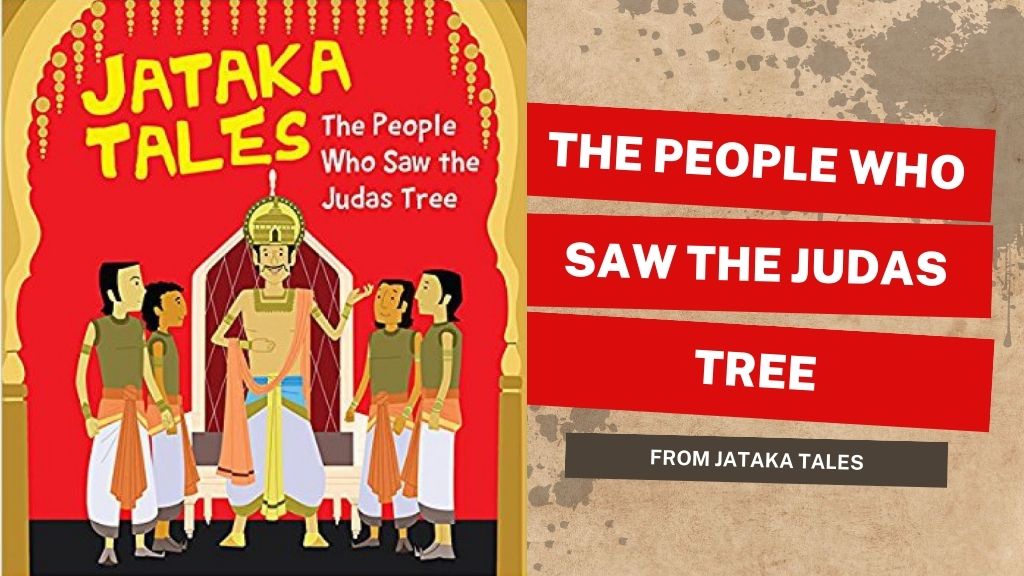
The people who saw the Judas Tree”, from Jataka Tales

The people who saw the Judas Tree", from Jataka Tales

This story from the Jataka collection of Buddhist folklore centers around the four sons of the King of Benaras, who wanted to see a Judas tree. The charioteer shows them each of the Judas tree, one at a time. For the first son, the tree was just sprouting buds from the stem. When the second one saw it, the leaves were green. The third saw the time of blossoming, and the fourth, when the tree was bearing fruit. When the brothers gather later to discuss, they are anxious as none of their observations match. To find the true nature of the Judas tree, they approach their father, who teaches them the important lesson of distinction. The boys did not care to ask the charioteer what the tree was like throughout the year, and there lay their mistake. One sees something during a specific time, but should also learn what it’s like in the wider picture to understand it in its absolute essence. 

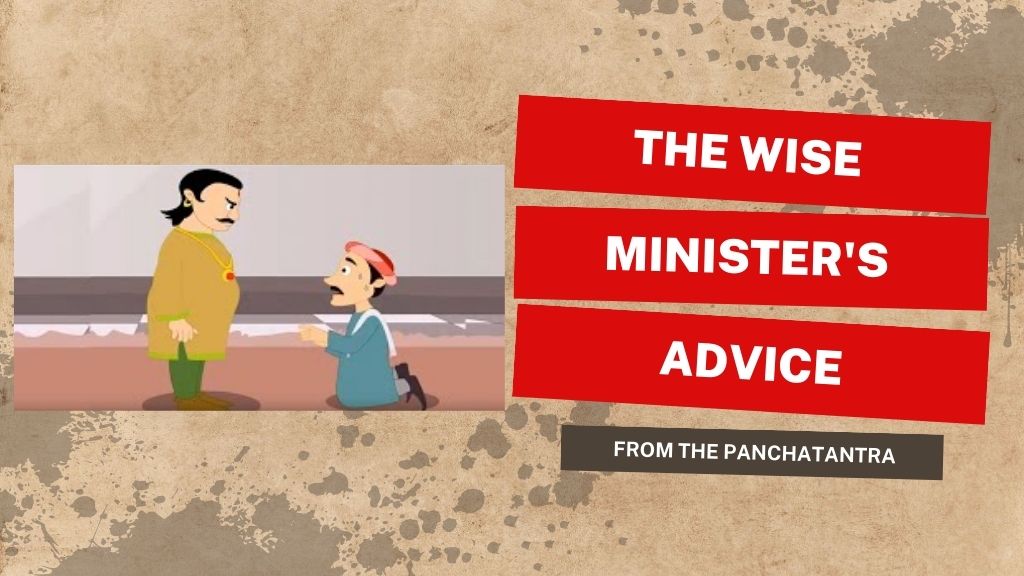
“The Wise Minister’s Advice”, from the Panchatantra

"The Wise Minister's Advice", from the Panchatantra

When a gang of owls attacked some crows in the middle of the night, the King of the latter sought his wise minister’s advice. This tale from the Panchatantra narrates what a clever and deliberate feat it is to keep a closer eye on their enemies than one keeps on their friends. Few of the crows staged a pageant at the owls’ cave: one praised the owls’ bravado while the others struck him down. Thinking that this one crow was in their favor, the Owl King let him live alongside them. This allowed the crows to set fire and annihilate the owls’ cave one morning when the nocturnals were fast asleep. 

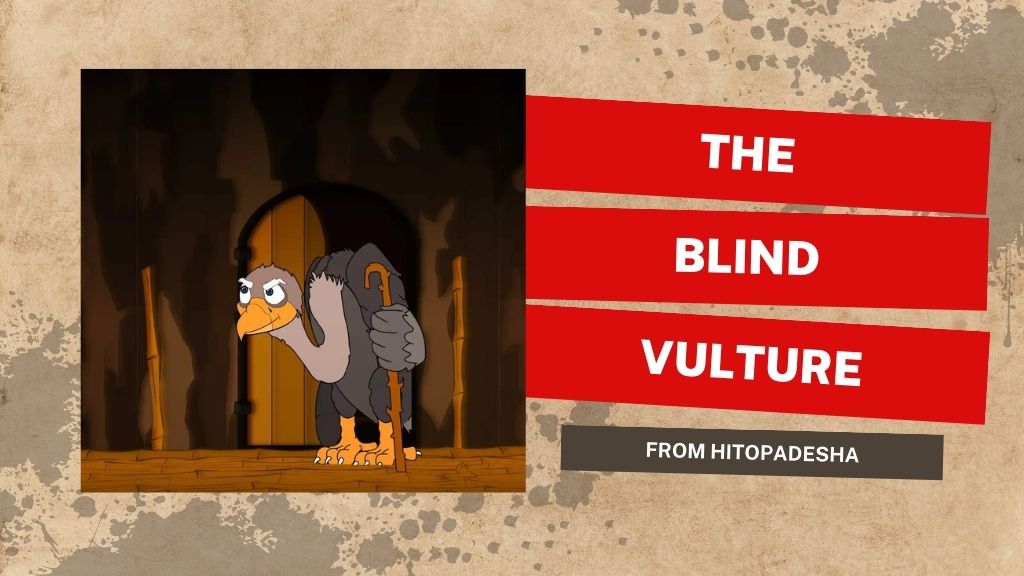
“The Blind Vulture”, from Hitopadesha

"The Blind Vulture", from Hitopadesha

The story of miscalculated trust offers a valuable piece of advice from the collection of Hitopadesha. The blind vulture, grateful for the other birds’ generosity towards him, decides to guard their fledglings while they go on the hunt.

It has not been long when a cunning cat arrives and manipulates the vulture into putting his trust in her. Although hesitant at first, the old vulture lets the cat stay, and the latter eats up the fledglings one by one. The story explores the importance of proper judgment when one comes upon a person they hardly know. Being kind stands apart from having blind faith towards a stranger. 

Baital Pachisi

Baital Pachisi

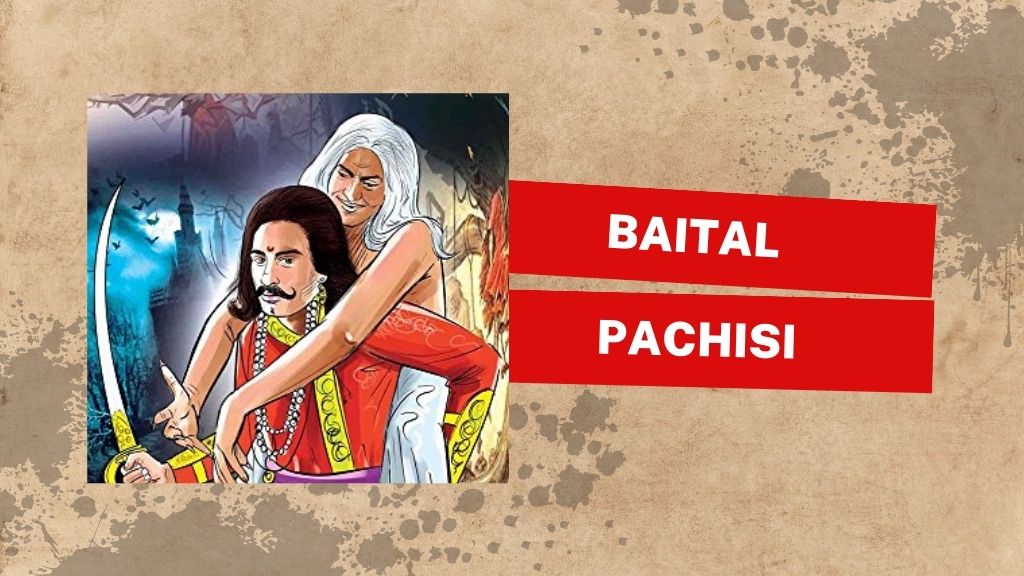
The stories of Vikram and Betal, collected as Baital Pachisi, are the oldest of vampire tales from India. When King Vikram goes to capture a ‘baital’ spirit to fulfill his promise to a tantric sorcerer, he is faced with the offer of an interesting deal and a string of riddles. Between the king and the vampirish spirit, it was decided that at the end of every puzzle, if Vikram was unable to answer correctly, the spirit would willingly be taken prisoner.

If Vikram knew the answer but remained silent, his head would explode into a thousand pieces. The wise king could answer each of the twenty-four questions correctly, and thus, as was decided in the deal, the baital was able to get away. The tales that formed the riddles of the baital explored the philosophies of life. However, when the king failed on his twenty-fifth riddle, the spirit kept his promise to be taken captive. Later on, the story reveals that the baital was the spirit of a prince sacrificed by the vicious sorcerer who wanted to attain immortality. 

“The Tortoise that Loved his Home too much”, from the Jataka Tale

"The Tortoise that Loved his Home too much", from the Jataka Tale

When the fish and tortoises knew that drought would encroach upon them, they swam to the adjoining river from the lake where they lived at a time when the water was still abundant. There was one tortoise, however, who was so stubborn to remain in his “home”, the lake, that it ended up dying under the unwitting stroke of Bodhisattva’s spade. The tale portrays how the tortoise clung so desperately to his possession that he ended up losing everything in the end. It is a tale that advises one to be wise and leave for the place where there will be life and eventual spiritual fulfillment instead of clinging to ignorant comfort.

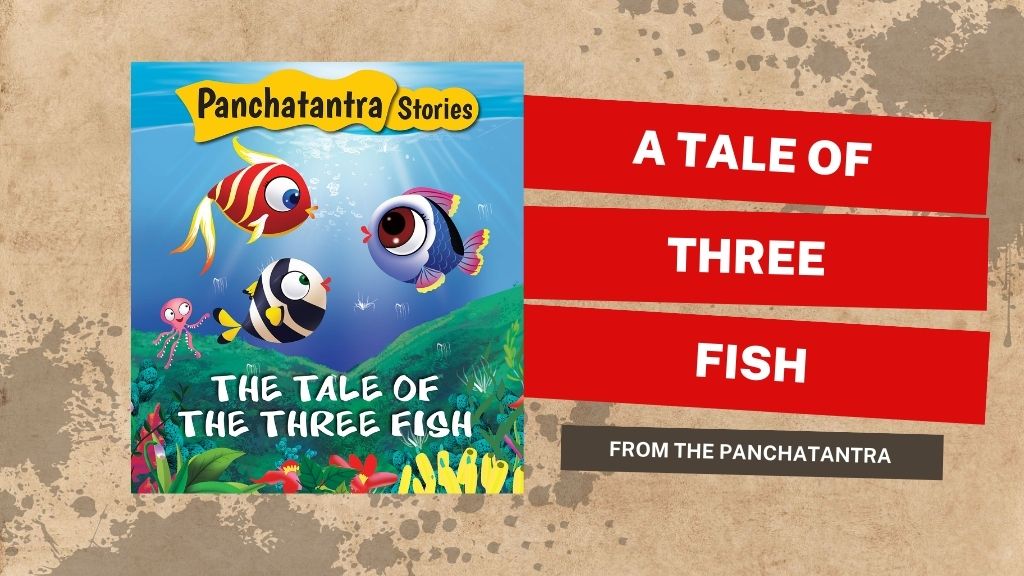
“A Tale of Three Fish”, from the Panchatantra 

"A Tale of Three Fish", from the Panchatantra 

This is a story that portrays the importance of adapting according to change. Each of the titular fish is portrayed in a different shade of characterization. The first fish is intelligent, the second is resourceful, while the third is adamant. When they learn that the fishermen will arrive the next day, the first fish swims out of the lake. The second fish stays, but its confidence helps it escape capture. The third one, however, is so obstinate in going with the flow that even after it was caught, it did nothing to escape death. Thus, it is imperative for survival that one is quick on one foot and strong-willed to confront dire circumstances.

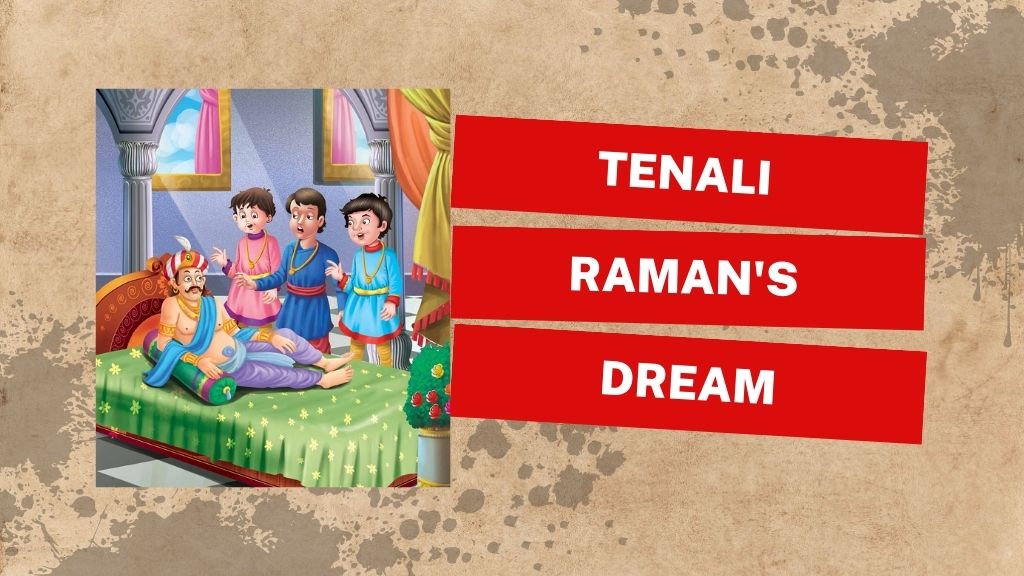
“Tenali Raman’s Dream”

"Tenali Raman's Dream"

Historically, Tenali Raman was a poet in the court of the 16th monarch Krishnadewaraya of the Vijayanagar Empire of southern India. He is known through these folktales for his quick wit and cleverness. This story explores the time when the king decided to jest with Raman in the court by narrating a dream. In the dream, the king saw himself jumping into a pit of honey while Raman tumbled into another pit of the cesspool. The next morning at the court, Raman narrated his peculiar dream that continued the king’s tale. Both of them had managed to escape out of the pits, but because of their filthy state, Raman decided that they should help each other clean up by licking off. While Raman got the honey, the king was faced with the waste from the cesspool. 

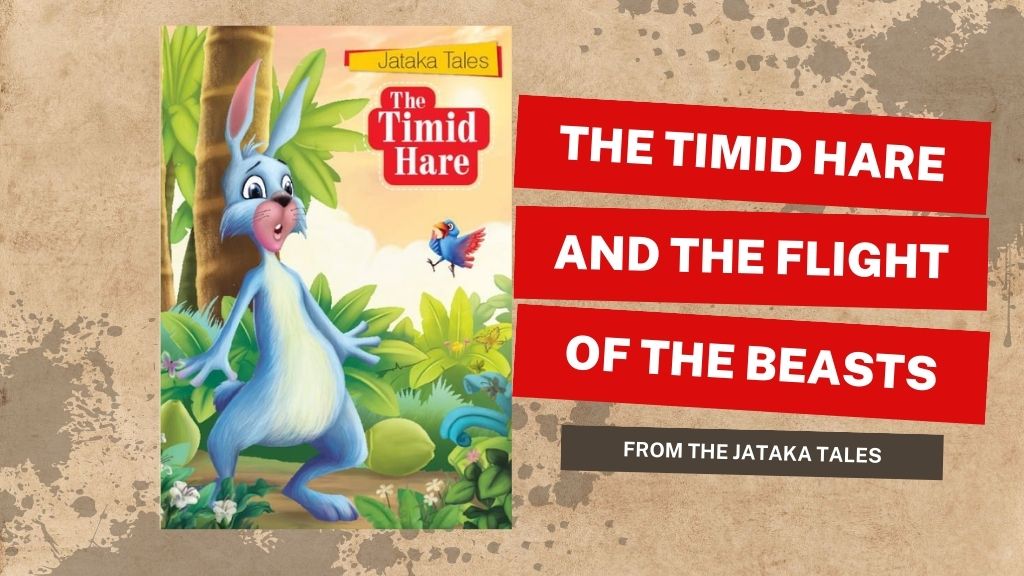
“The Timid Hare and the Flight of the Beasts”, from the Jataka Tales

"The Timid Hare and the Flight of the Beasts", from the Jataka Tales

The tale is set during a time when the Bodhisattva was living in the woods, having transformed himself into a lion. It explores how he saved the other animals who were impulsively driven to distress because of one hare’s foolish assumption that the earth was collapsing. The tale admonishes herd mentality as well as the detrimental consequences of jumping to conclusions. Before making a decision, one should always thoroughly regard and examine the situation. 

“The Wedding of the Mouse”, from the Panchatantra 

"The Wedding of the Mouse", from the Panchatantra 

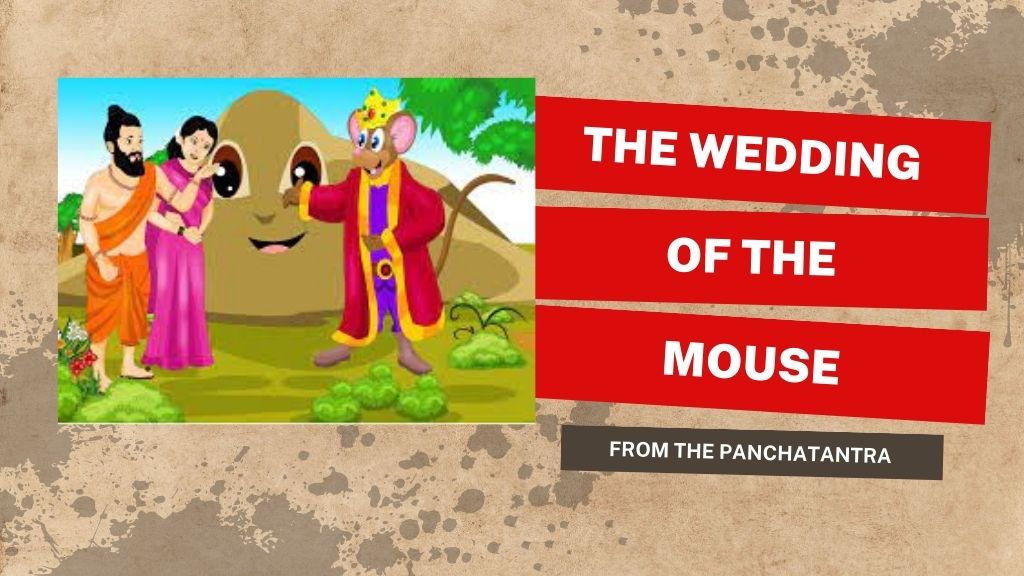
When a mouse fell from a falcon’s beak, a sage hermit decided to turn her into a little human girl and took her in as his child. The time of her marriage came, and the hermit summoned the powerful Sun to be her suitor. The daughter refused because the Sun was too bright. The hermit then called upon the Cloud, but the daughter found him to be black and cold. Stronger forces like the Wind and the Mountain were called upon, but the daughter refused them all because none was at par with her. Finally, when the hermit summoned another mouse, the daughter realized how the animal was of her kind. The hermit transformed her back to a mouse so that they could marry. This tale from the Panchatantra depicts how power and grandeur do not ensure fulfillment. Every being that the hermit summoned for the daughter was glorious, yet too distant for her; except for the mouse, a being of her own kind. 

Akbar and Birbal

Akbar and Birbal

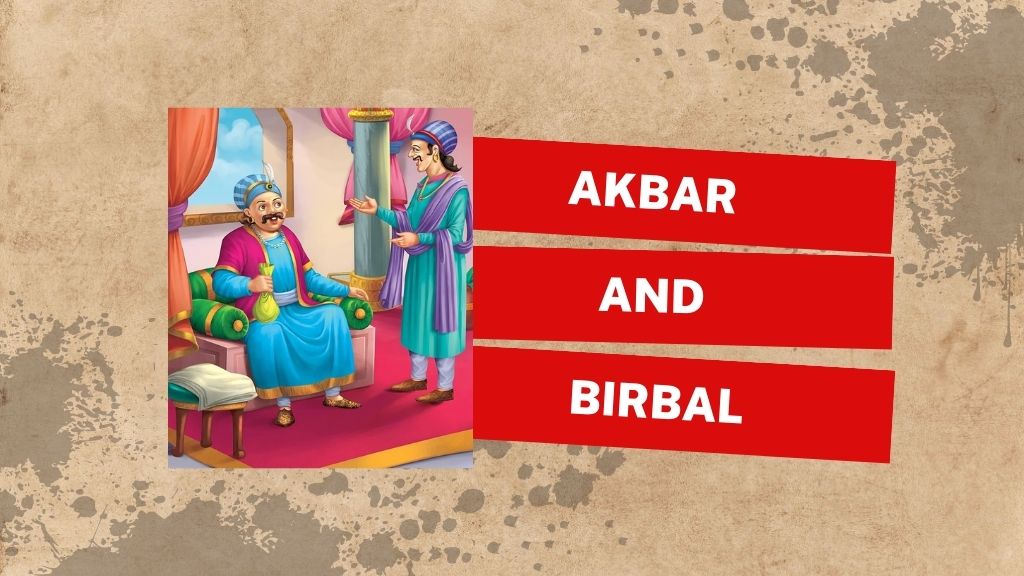
Birbal was one of the ‘navratnas’, or the nine jewels, in the court of the Mughal Emperor Akbar. Both the king and his treasured minister were exceptional intellectuals and artists. Through delightful folktales, their clever interactions, repartees and the way Birbal outsmarts jealous courtiers have been preserved all across India. 

One of the most popular of these tales takes place when Akbar drew a line on the ground and asked his ministers to make the line smaller without erasing it. None could solve the puzzle despite racking their brains. However, Birbal stepped in and drew a longer line beside the one Akbar had drawn. In this way, the original line was made shorter. 

Often containing creation myths, folktales are an important means to preserve historical elements. Most of them impart lessons and values that are significant even in the changing political and social landscape of today. Kids should be acquainted with the folktales of India concerning modern times and life.