Flowers at a wedding do a lot more than just look pretty though, as important as that is. They’re also what marks the transition between the formality of the ceremony and the celebration that follows. They’re how you remember those who can’t be there, celebrate the family that made you both, highlight the cycles of love and life that bring you there and comfort you long after everyone’s gone home. Flowers in a meaningful way transcend the space.
How Flowers Move Through a Multi-day Celebration
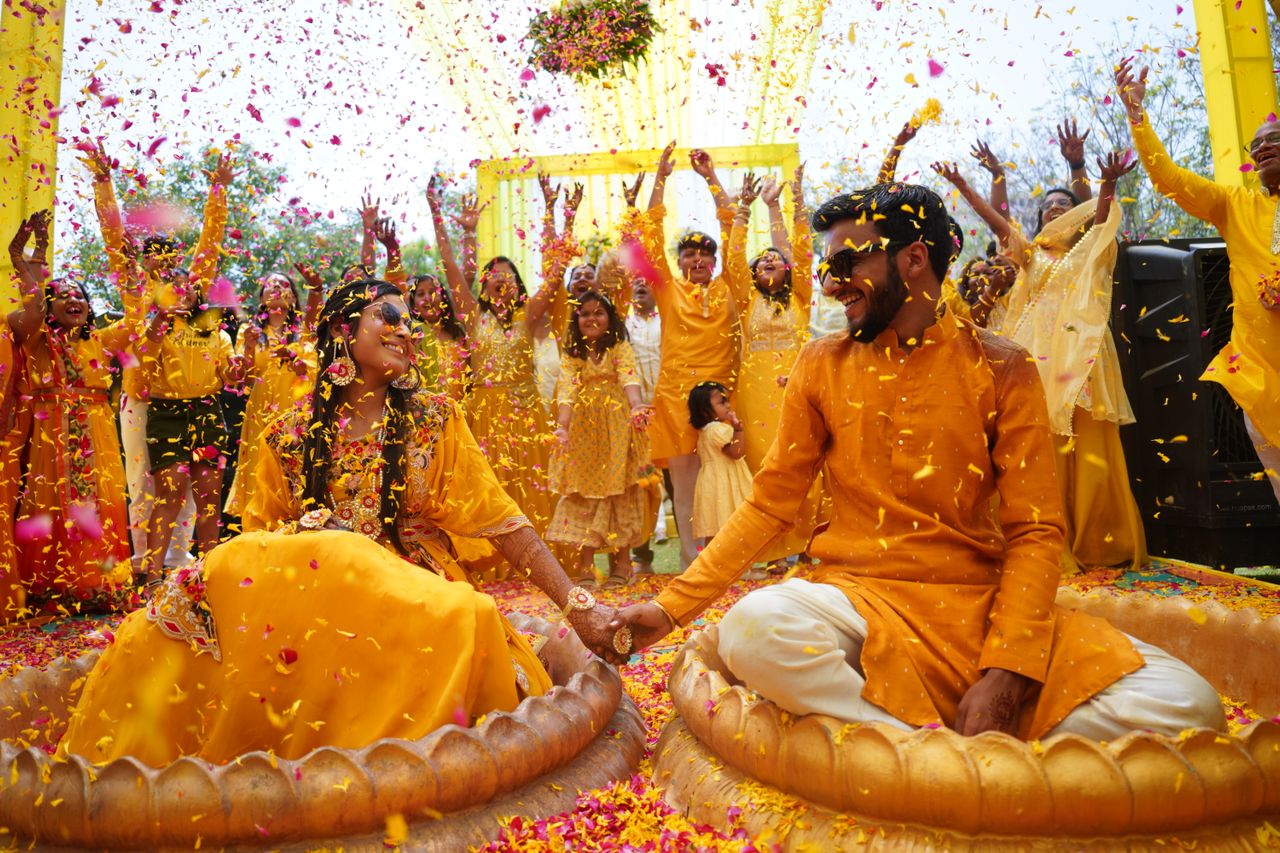
This is particularly relevant for Indian weddings. The haldi and mehendi are about loose, joyful abundance. Marigolds – genda – are a familiar choice for these ceremonies. Their deep orange and yellow tones look beautiful against turmeric-stained skin, and their associations with the sun and auspiciousness can suit these earlier celebrations. You’ll see them strung into garlands, scattered across trays, and woven into low tablescapes.
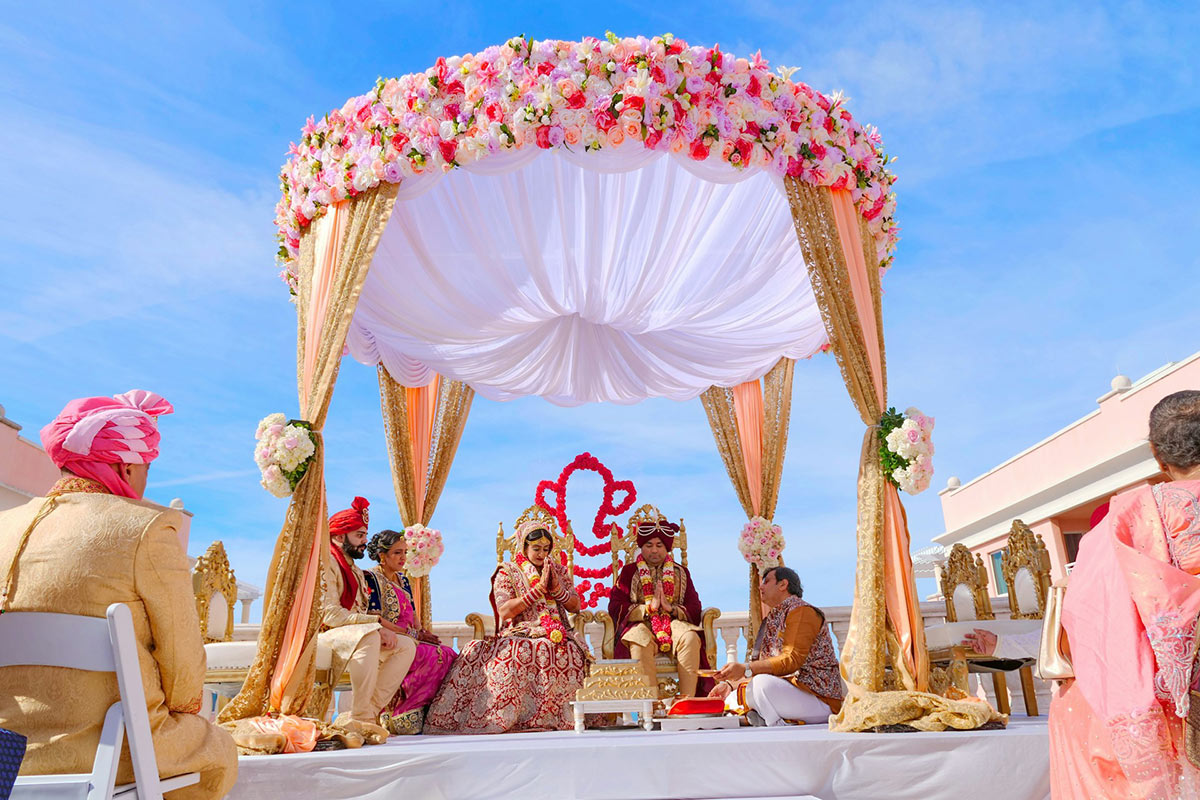
Then you shift tones. By the main wedding ceremony, the mood is often more formal. Roses, tuberose and jasmine may take over. The palette can deepen or lighten depending on regional traditions and the bride’s lehenga. The mandap – where you actually get hitched – becomes the architectural focal point of the day, and it should be treated that way. Heavy floral installations need structure, which means however beautiful the flowers are, the mechanics matter more.
The point is that flowers can track the emotional arc of the day. When every ceremony uses the same level of floral decoration, the celebration can lose some of its sense of movement.
Colour, Fragrance and Texture as Atmosphere Tools
Most couples traditionally spend their planning time thinking about colour first and foremost. Fragrance and texture tend to be treated as afterthoughts, but they directly shape the guest experience no less than colour does.
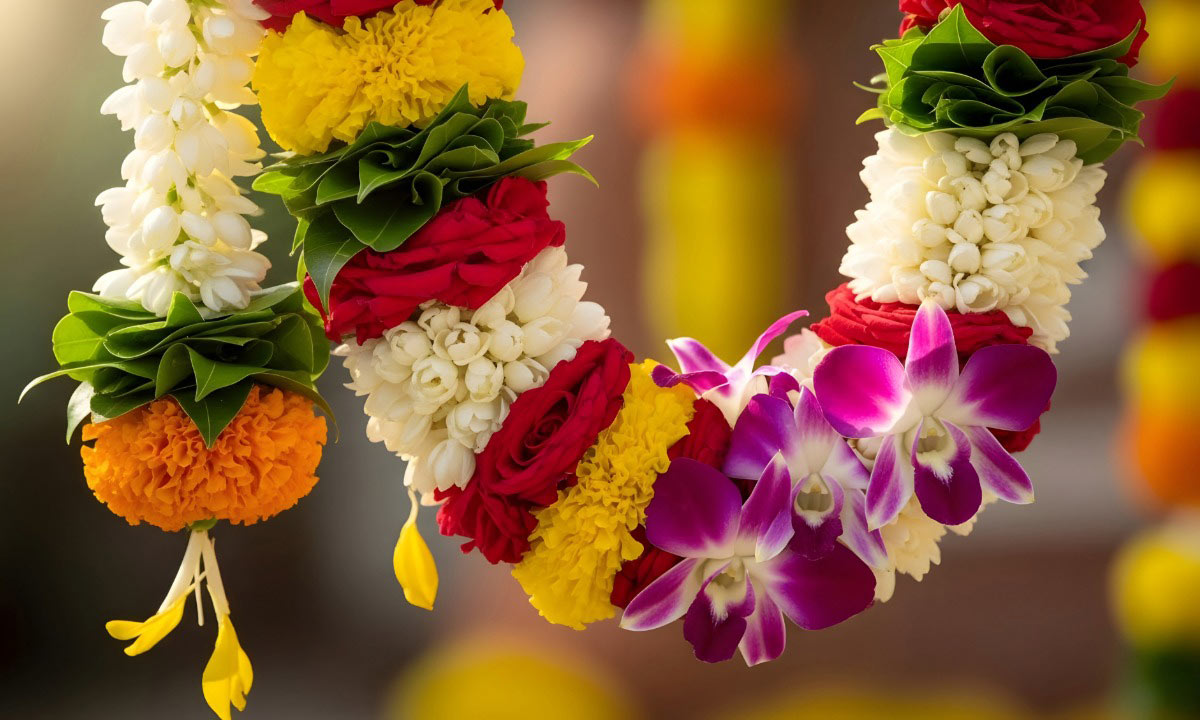
Jasmine – mogra – is one of the most recognisable wedding scents in South Asian ceremonies. It sends a direct sensory signal to guests that something sacred is happening. Gajra, the jasmine hair accessory made from fresh jasmine strands, does double duty, visually tying the bride to her cultural identity and filling the space immediately around her with scent. Tuberose is equally intoxicating. Both flowers are best used in areas where guests will be in close contact with them, or need to be enveloped in their scent – outdoor mandaps, small prayer rooms, even dining tables set with low centrepieces.
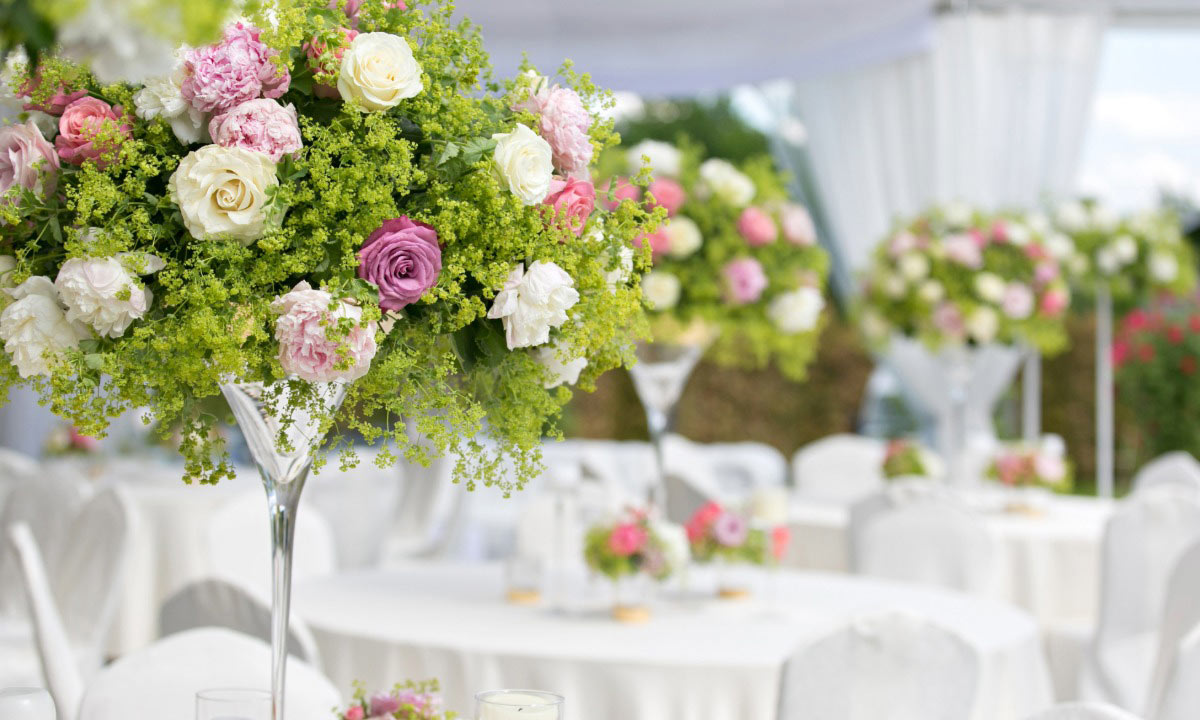
Let’s be equally clear about what not to do: high-fragrance flowers anywhere near food. Long dining tables, buffet spreads, and cocktail stations should have flowers designed to add colour and texture without conflicting with what’s being eaten. Orchids, anthuriums and especially dried pampas grass plumes are useful here. They hold structure, read sharply in photos, and are neutral in terms of scent.
Texture is the third variable, and is massively underused. The tight-spaced density of packed roses next to the feathery looseness of pampas grass, or the spiky geometry of dried palm spears, introduces a visual depth that a single bloom type (or grass type) simply can’t. This is where the preserved and the dried items are not just a budget compromise or a practical solution, but an active design choice.
Adapting Tradition Without Abandoning It
Cultural floral traditions have expectations, and those are based on real reasons – symbolic, familial, regional. However, they are not rigidly defined rules that cannot be changed, and most families are more open to variations than the couple thinks.
A pragmatic way to approach this is to work within the color family and symbolism rather than insisting on the exact bloom. For instance, Marigolds are considered auspicious in part due to their vivid warm tones. If they are not available locally or are out of season, chrysanthemums in similar orange-yellow tones can be used as substitutes because they sit within the same colour family. The warm palette and visual association can still be retained.
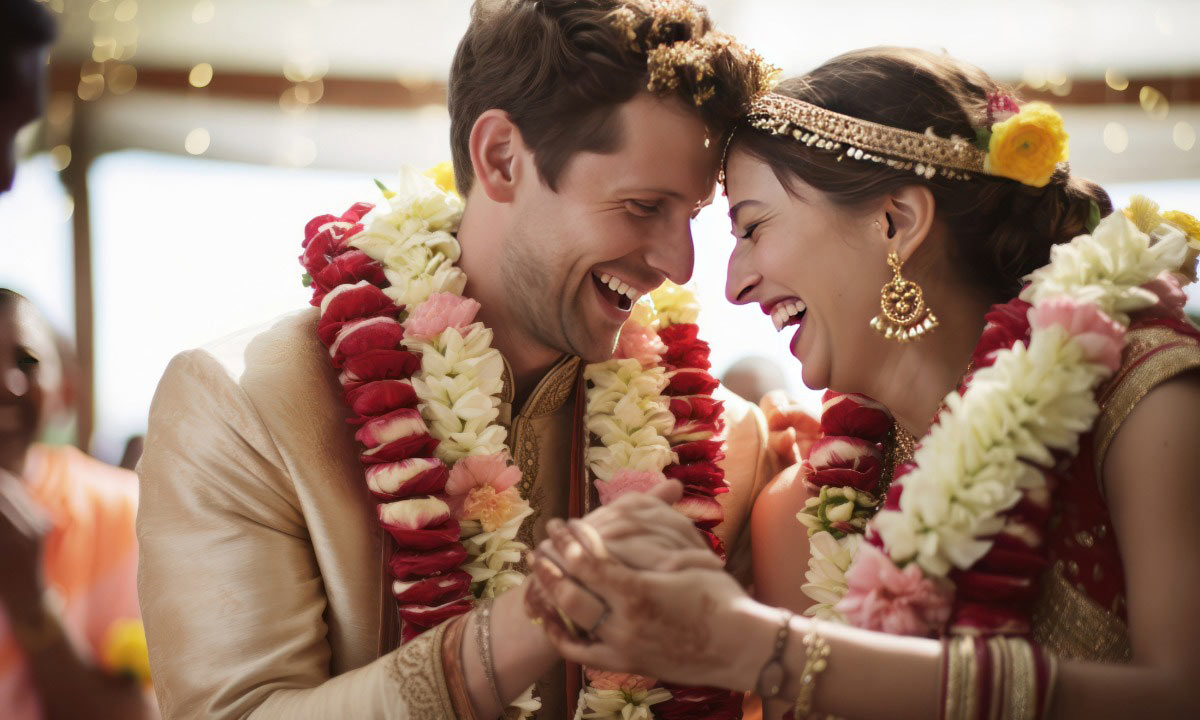
Similarly, the Jaimala garland exchange often features heavily perfumed, culturally significant flowers. Garlands made from lighter flowers, created by the family together on the morning of the wedding, using flora that are locally available often pack more emotional punch than professionally sourced ones that no one has seen before the exchange. It’s about the process.
In Malay-Muslim weddings, Hantaran florals often place particular emphasis on the assembly and colour cohesion of the trays. The specific flower choice can be more flexible than the overall presentation and coordination. As a general guideline, consider using more local flowers that are in season, along with fresh and preserved foliage for texture. The easier it is to source, the better it is for the overall outcome.
However, if you are dealing with ceremonies that are a mix of multiple cultural traditions or have specific structural requirements – heavy mandap installations, floral arches, large quantities of garlands, for instance – sourcing flowers for wedding ceremonies through someone who understands the cultural traditions and practical limitations can save a lot of time. Someone who knows what a particular flower is actually required to do in the ceremony will help you not compromise between visual appeal and tradition.
Building the Jaimala, the Bouquet and the Wearable Details by Hand
Some wedding floristry happens before the ceremony starts, when relatives gather around a table covered with scissors and string to make the pieces themselves. It is not intended to save money. It is meant to create a different kind of wedding experience.
Handmade floral items – garlands, wrist corsages, floral jewellery and hair accessories – allow important people in the couple’s life to create something the couple will wear on the day. Bridesmaids stitching together gajra strands using fresh jasmine on the same morning of the wedding, for example, becomes a memory in itself. A mother slipping roses into a garland that she will later present to her daughter prepares a symbolic gesture of nurture. That is not easily replicated by even the most skilled professional florist.
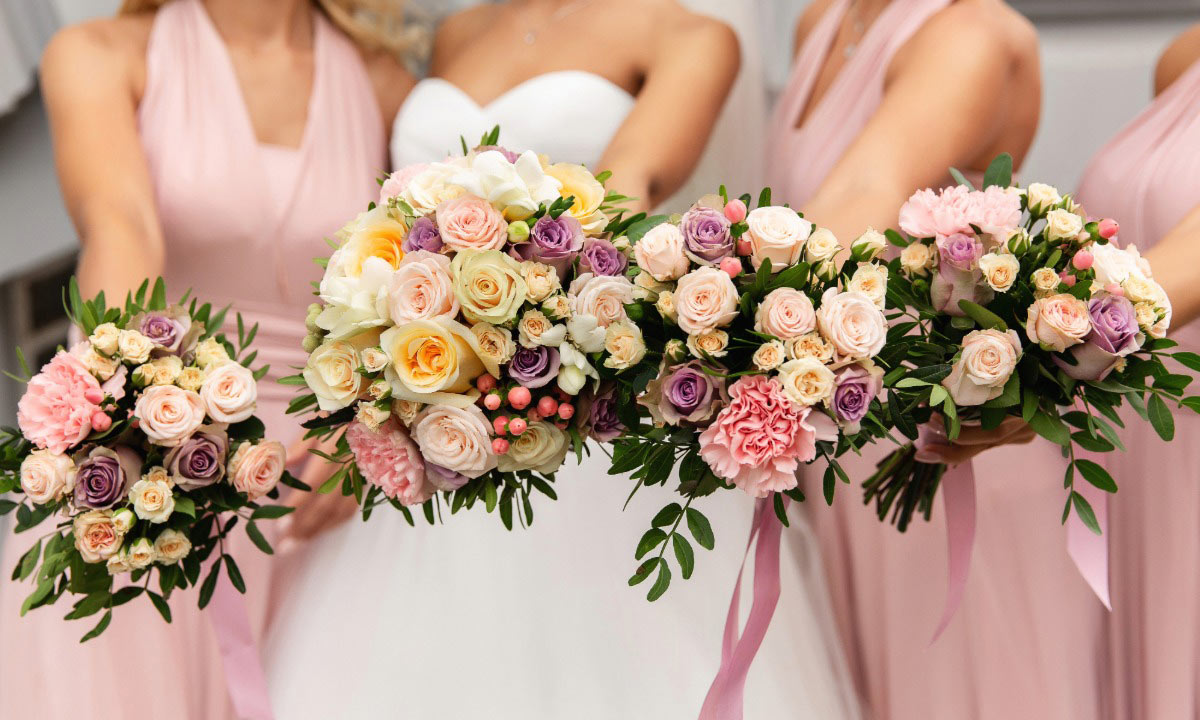
For couples who are combining Western and South Asian cultures, the hand-tied bridal bouquet becomes more than an aesthetic puzzle to solve. Because a hand-tied bouquet is not a traditional feature of many South Asian ceremonies, it is often added to multicultural celebrations as a Western bridal detail. The aim is to avoid making the two styles feel disconnected – for instance, pairing an English garden bouquet with a heavily embroidered red lehenga can feel visually separate. The florals of the ceremony should be used to inspire this bouquet and not the other way around. Pick a colour from the bridal wardrobe, echo it in the bouquet, and include that flower at least once in the main ceremony décor. The overall look should feel coherent.
Floral jewelry – fresh baby’s breath earrings, orchid necklaces, rose-petal tiaras – works particularly well for Mehendi and Sangeet ceremonies, where the dress code is often more playful and the setting more casual. These pieces are simple to make, photograph beautifully, and are meaningful precisely because of how ephemeral they are.
Mixing Fresh Florals with Preserved and Dried Elements
Fresh flowers have a lifespan problem, especially at outdoor ceremonies in warm, humid conditions. A mandap built entirely from fresh blooms at an afternoon ceremony in summer heat will show the stress by early evening. This is where preserved and dried elements do structural work.
Fresh and dried or preserved elements serve different roles in installations. Fresh flowers contribute colour, texture, and fragrance where a guest will directly interact with the piece. Pampas grass, dried palm leaves, preserved hydrangeas, and high-quality silk florals can form the skeleton of an arch or mandap installation. Fresh blooms are then layered in around these anchors, placed where they’ll be seen at close range – near the couple, on the garlands, in the bridal hair. The overall structure stays intact. The fresh flowers provide the colour and fragrance where it counts.
For large installations, floral foam has recognised sustainability drawbacks. Chicken wire or reusable floral cages can offer flexible support for heavier garlands while allowing water tubes to keep fresh stems hydrated throughout the day.
Flowers and decoration can account for a meaningful share of a wedding budget, so it is worth thinking about longevity from the start. Getting the most out of that investment means thinking about longevity from the start, both in how arrangements are built and in which elements can be kept afterward.
Designing Flowers You Can Keep
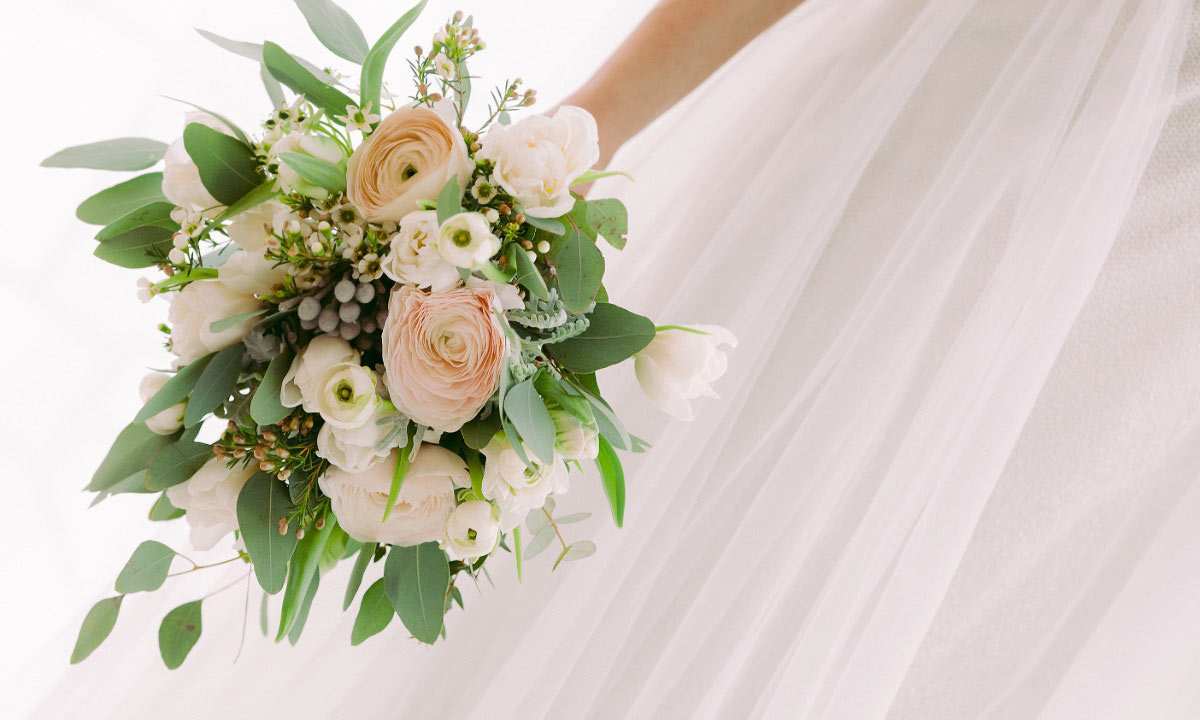
A wedding bouquet doesn’t have to be thrown away at the end of the weekend. Instead, it can be turned into a forever keepsake with a little advance planning.
For flatter blooms, such as single roses, small dahlias and flat-petalled flowers, pressing can be a good option. Bouquets should be removed from their bindings, with individual stems laid between absorbent paper and weighted as soon as possible after the wedding. The Royal Horticultural Society offers practical guidance on drying flowers and foliage, which can help couples decide whether pressing is suitable for the blooms they hope to keep. Framed pressed bouquets remain a classic way to display wedding flowers long after the celebration.
Silica gel drying can be better for preserving the three-dimensional shape of blooms, but works best when flowers are placed in the medium within a few days of the wedding. This method can retain colour well, though it may be less suitable for very thin, delicate petals.
Resin preservation is a newer option for preserving bridal flowers. Flowers are set into clear epoxy resin to create jewellery, paperweights and framed panel decorations. It is often best handled by a professional because epoxy resin requires careful preparation and handling.
The trick is knowing what you want to do with your bouquet before the florist orders your blooms. Flowers with lots of water content, like lilies and most tropicals, don’t dry well. Roses, eucalyptus, and baby’s breath dry very well, as do the various dried elements commonly tucked into today’s wedding bouquets.
Let the Flowers Mean Something
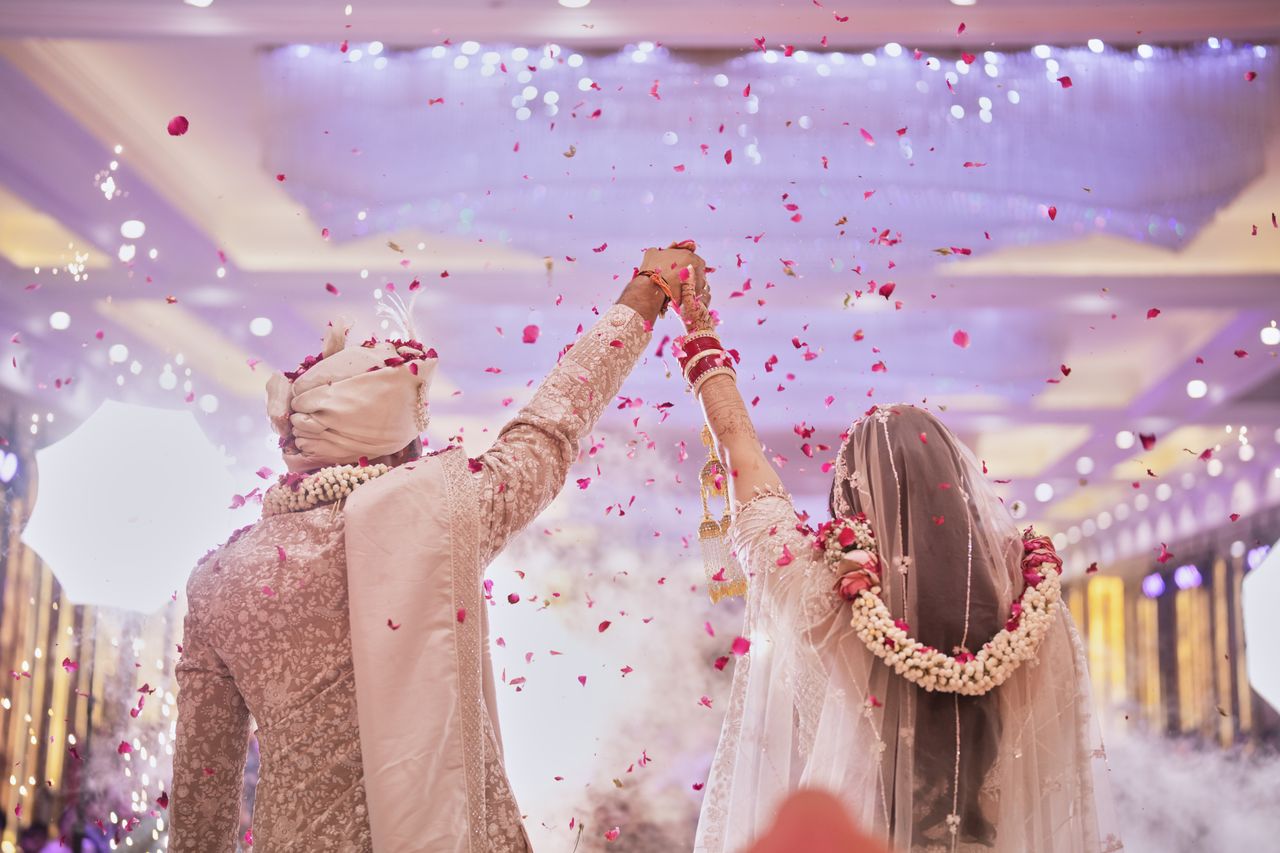
The happy couples who are the happiest with their wedding flowers are rarely those who have followed each and every trend and checked off every box. Instead, they are the couples who made one or two hyper-specific choices – choosing a flower their grandmother grew in her garden, or a color that’s always been prevalent in both of their families, or putting together the garland themselves the morning of the wedding.
It’s that personal specificity – that thing that makes the floral design feel like it wholly belongs to the people getting married rather than any old generic aesthetic – that matters more than anything else. And when that’s designed just right, the rest of the event tends to hold together just fine.