A Garden of Fragments
Mumbai’s 200-year-old heritage spot, Khotachiwadi, is hosting an exhibition housing the artworks of Ritu and Surya Singh (the artist duo called WOLF), which has been selected to be included in the permanent collection of the Kiran Nagar Museum of Art (KNMA). A total of 6 artworks crafted by the duo have been personally selected by Kiran Nadar herself. These allusive artworks are currently exhibited at 47-A, curated by Srila Chatterjee, as part of this year’s Mumbai Gallery Weekend.
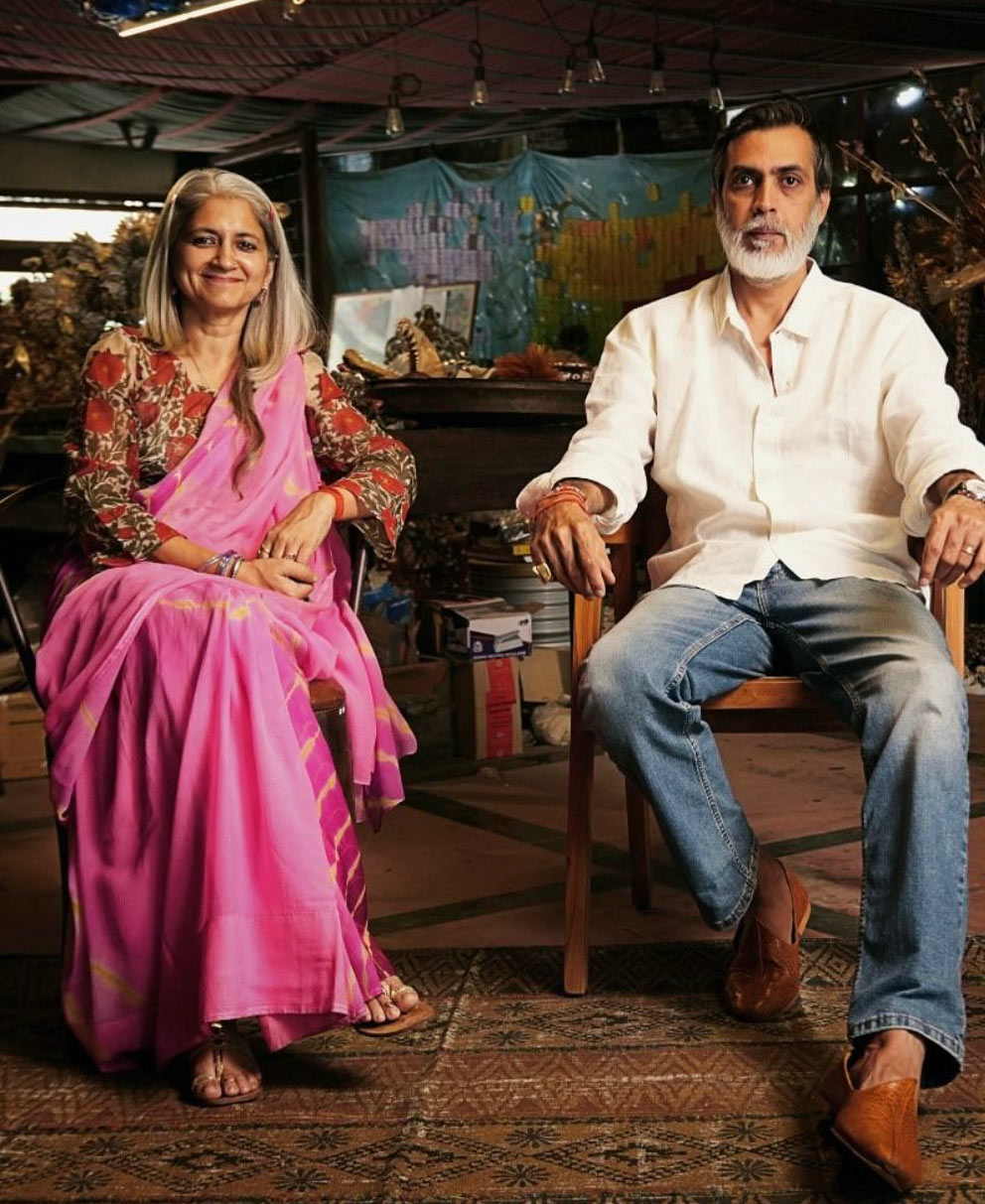
The artworks demonstrate a visual consonance of a “gul,” a rhaspodic intervention on love, loss, longing, healing, and a subtle recalcitrance. The gul represents a muted rebellion against the industrial world and replants the seeds of survival. The WOLF drew inspiration from the Persian Charbagh (four-part garden) that symbolizes paradise. The artist duo transformed broken, abandoned, and discarded materials into an ornamental garden, one that is both wounded and resilient.
The Landscapes of Hope
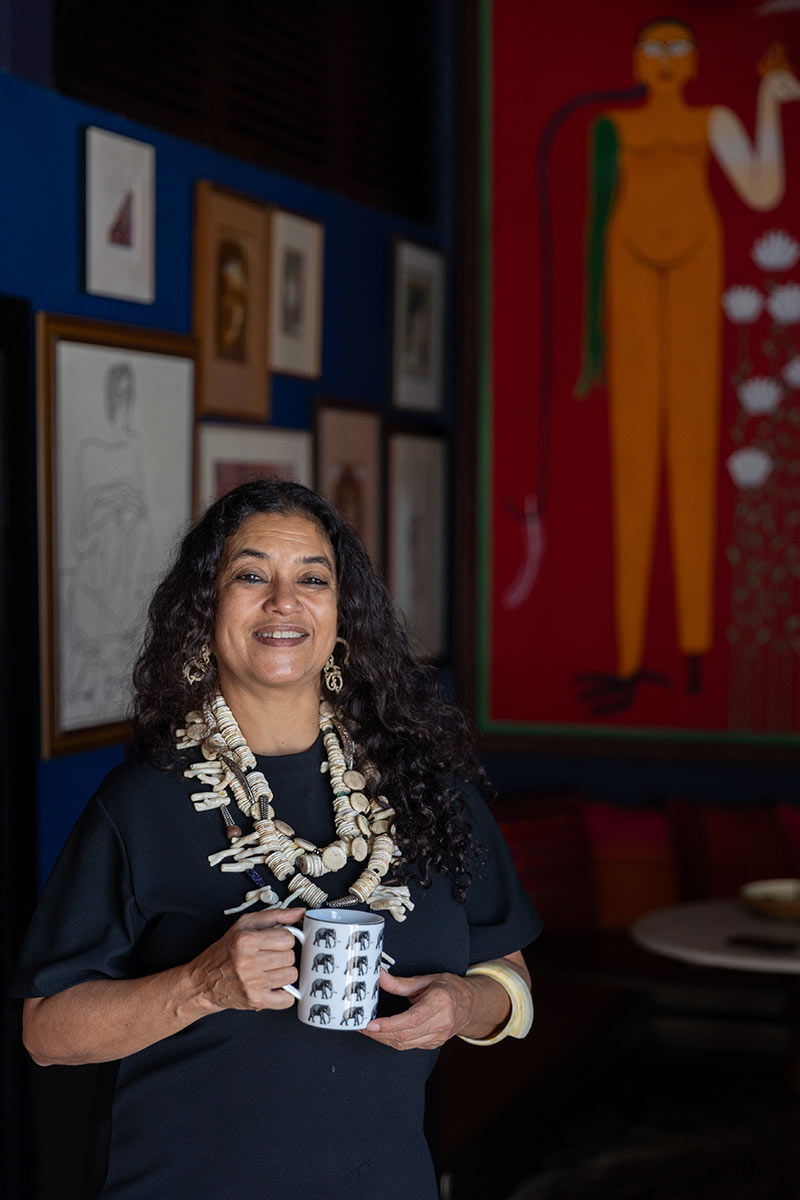
The Gul waves an introspective shadow of human experiences, of longing and grief, yet persistent in treading the path to find the ray of light. The WOLF’s artistic endeavour emanates from “material storytelling.” They use this method to “resurrect” the discarded objects, in addition to recycling them.
The selected artworks are currently on view at an exhibition that unfurled in the last remaining heritage villages of Mumbai. This setup represents a bigger irony in itself, as the Khotachiwadi itself grapples against the fast encroachment of the “city.” The selected works feature the six major works by the duo, namely, Tear Fed, Eternal Garden, Breath, Lovers in the Garden, Gul Baghi, and Eye for an Eye. Each of these works offers a different gradient of emotional depth and purview of grief and rejuvenation.
The Architectonics of the Exhibition
| Important Points | Details |
|---|---|
| Artists | Ritu and Surya Singh (WOLF) |
| Collector | Kiran Nadar (for the KNMA Collection) |
| Curator/Gallery | Srila Chatterjee / 47-A, Khotachiwadi |
| Themes | Love, Loss, Memory, Resistance, and Rebirth |
| Key Symbolism | The Charbagh (The Persian-style quadrilateral garden) |
| Admission | Free Entry for the Public |
A Glimpse of the Artworks: The 6 Acquired Masterpieces
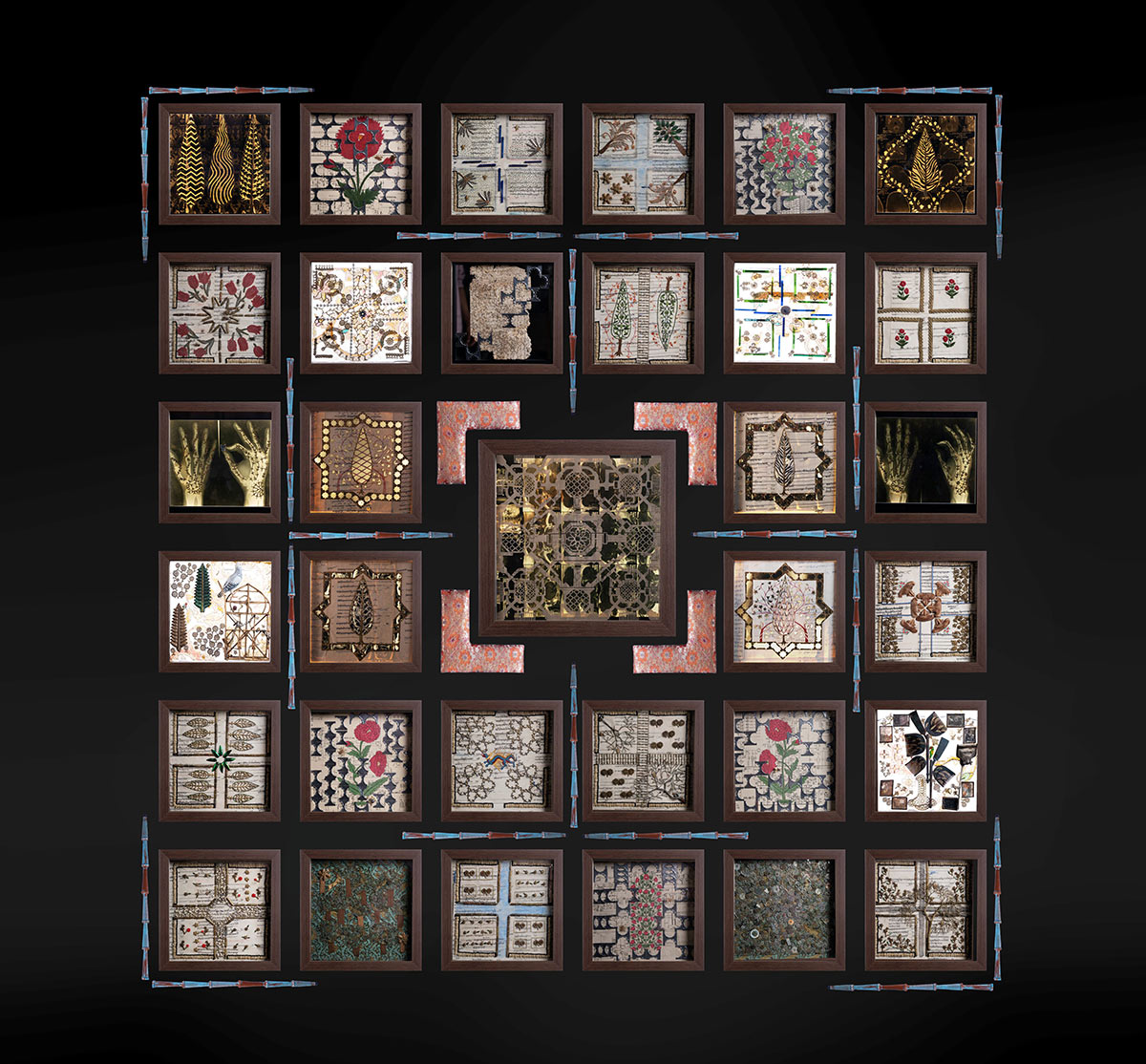
In Tear Fed, the artists have utilized a shattered shawl to construct the “map of paradise.” The reconstruction of the shawl is dedicated to the cartography of a paradise that is “wept into being.” Its rudimentary focus lies on the beauty that stems from sorrow. The fragile surface of the shawl is stitched and layered to synchronize the visuals with their perspective of how sorrow can also become fertile ground for rebirth.
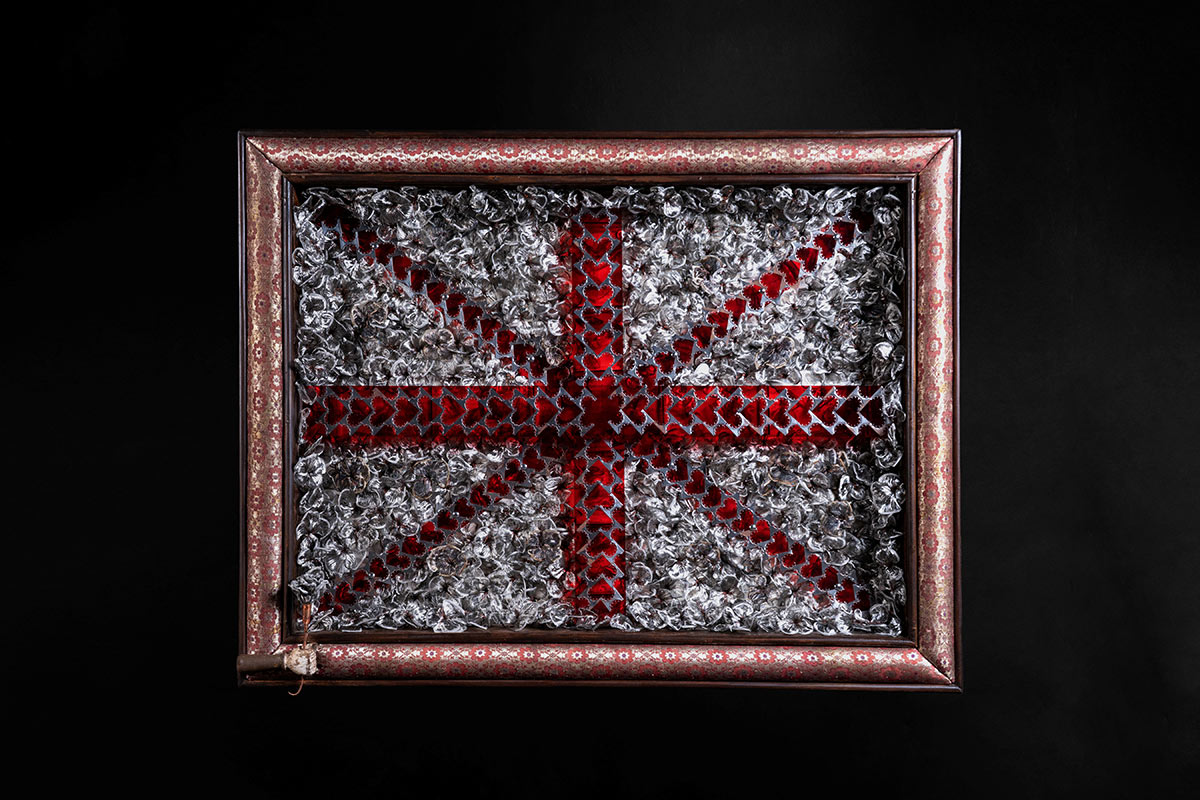
The Eternal Garden takes reference from the Mughal era Charbagh in Delhi and harmonizes it with the Ganga-Jamuni tehzeeb. These two elements are synchronized to display a syncretic cultural view of the central plains. This artwork is a meditation on continuity amidst rupture. It coalesces the fragments of history and identifies a thread of continuity, referring to the fact that no culture or tradition goes in vain; people continue to uphold some aspects of the declining traditions. This artwork positions itself at the intersection of continuity channeled through loss.
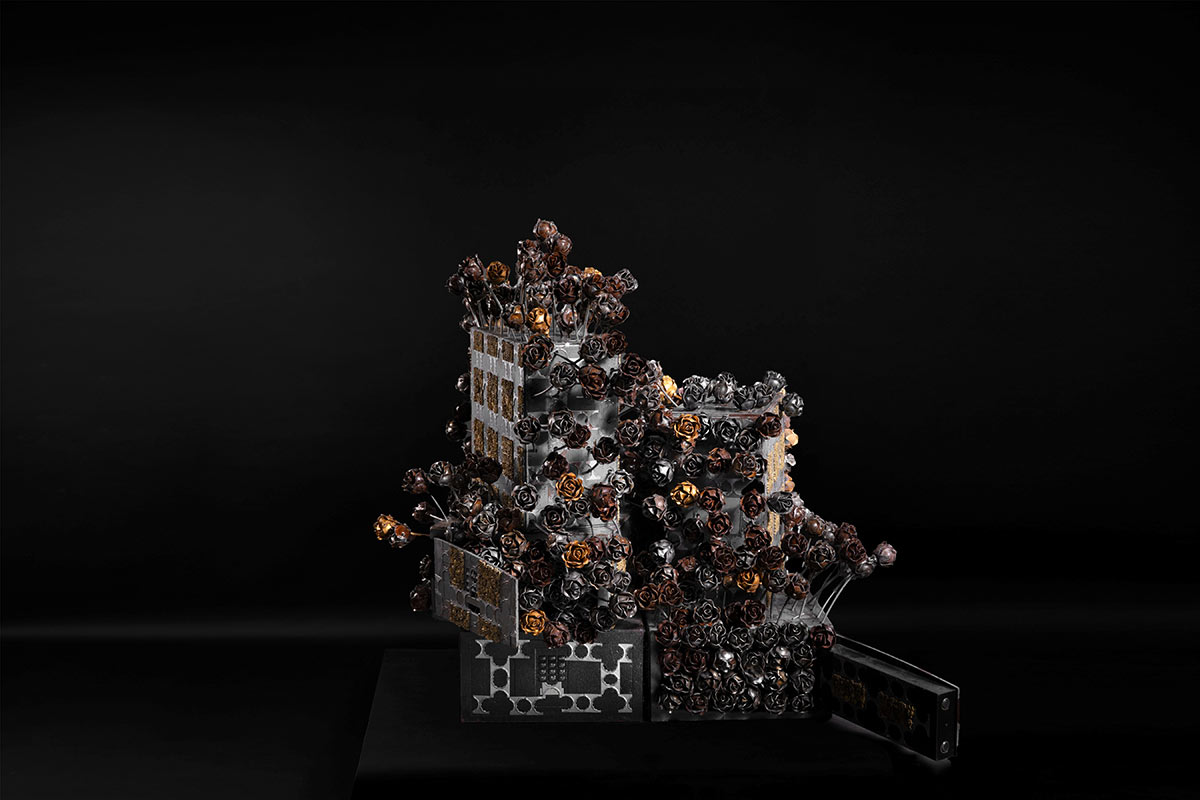
Breath features lungs made of brass that are nestled within “flowering ruin.” This piece dissipates a sense of healing and celebrates physical and spiritual revitalization. It depicts breath as a political and emotional act of survival. The Lovers in the Garden directly poses a challenge to the colonial grid. It shows flowers blooming defiantly within rigid structures.
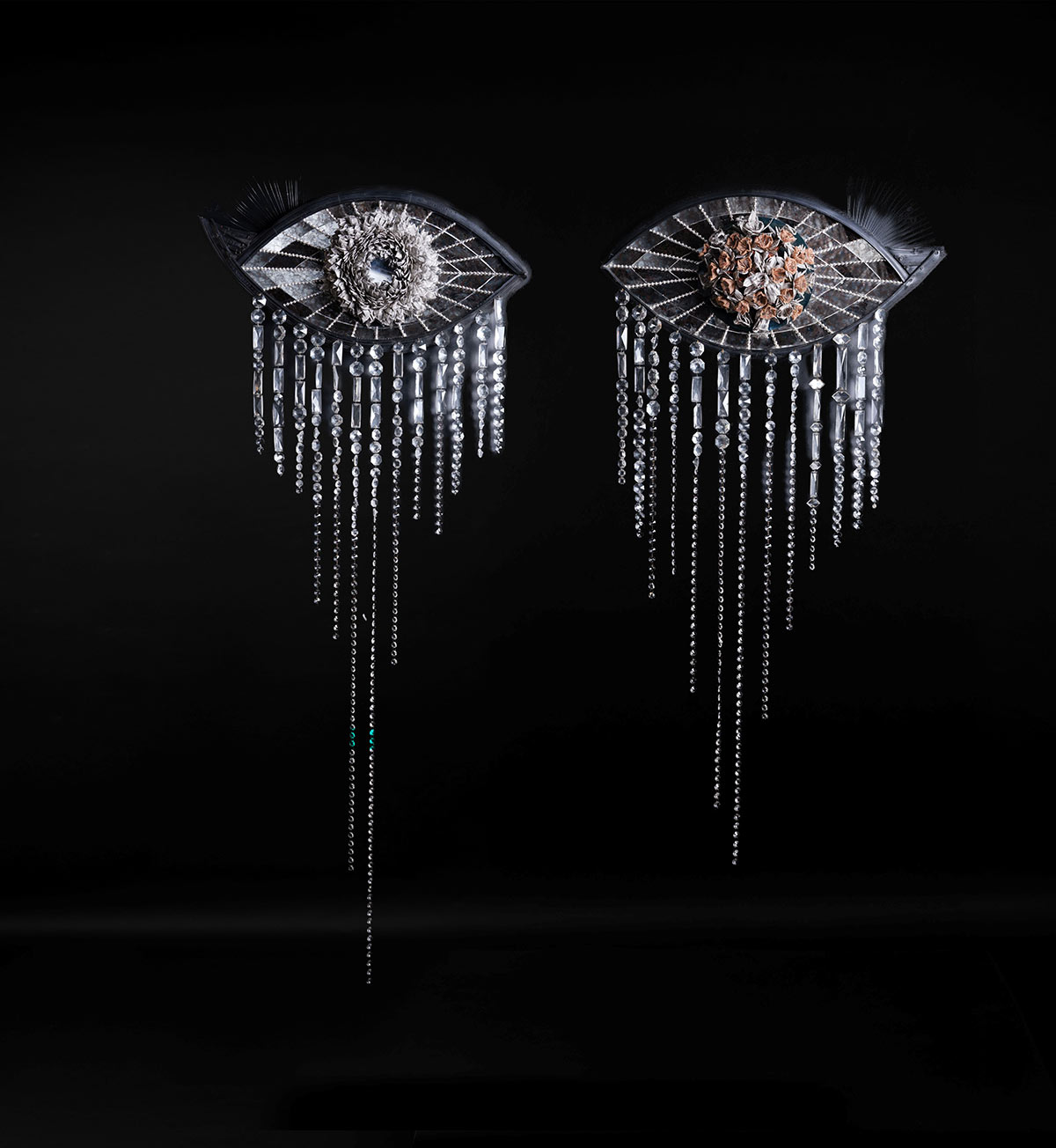
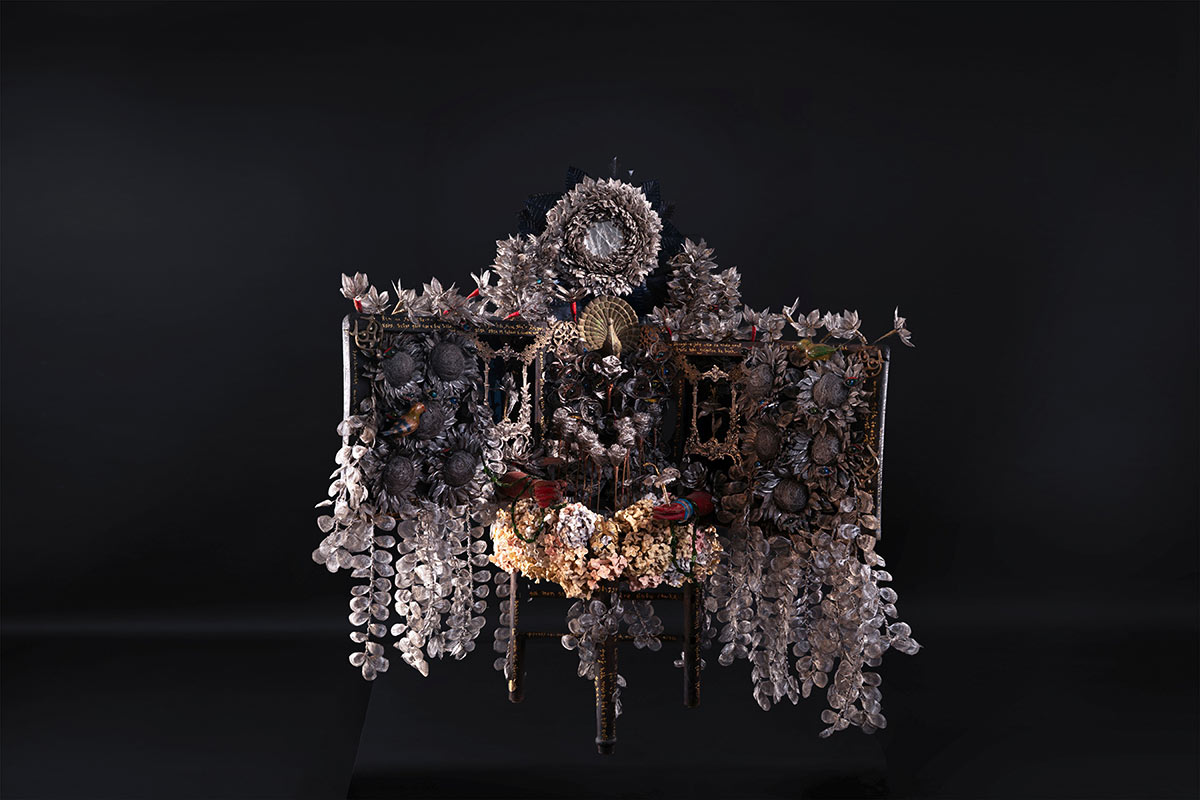
The Gul Baghi is perhaps the most literal representation of “safe-keeping.” This segment transforms discarded vaults and safes into vessels of poetic beauty. This overturns the capitalistic riffraff into effulgent refuges. And the Eye for an Eye seamlessly blends shattered mirrors and ceramic eyes to reconstruct a “haunting recollection” of humans into the niche of longing, surveillance, vulnerability, and grace.
Key Highlights
- Six major WOLF works enter the KNMA collection, personally selected by Kiran Nadar
- On view at the Heritage Gallery 47-A, Khotachiwadi
- Free public entry during Mumbai Gallery Weekend
- Reinterpretation of the charbagh as a metaphor of resilience
- Use of discarded materials such as scrap metal, textiles, safes, and mirrors
- Curated by Srila Chatterjee, known for championing experimental material practices
- WOLF proves that “found objects” can hold the same emotional and market weight as traditional media when handled with poetic intent.
- The acquisition by KNMA places these works in the most prestigious private collection in India, ensuring their long-term preservation and study.
Material as Memory
The WOLF has emerged as artists who directly delve into the critical discourses that vehemently expand the creative vocabulary of contemporary art and the modern indian materiality. Their gardens do not romanticise ruin; they dignify it. The WOLF opined that “These works are built from fragments, poetic, historical, intimate. We’ve always imagined the garden as both refuge and rebellion. To find our pieces resonate with Kiran Nadar’s vision is a profound honour.”
The acquisition of the Gul collection by the Kiran Nadar Museum of Art is a watershed moment as it validates the “aesthetic of the discarded.” In an era where climate consciousness and cultural preservation are at the forefront of global discourse, WOLF’s ability to find “insurgent beauty” in scrap metal is deeply radical. It suggests that our memories and our history are not lost just because they are broken. By including these masterpieces in the permanent collection of the KNMA, the art patron Kiran Nadar has preserved a blueprint for how we might navigate a fractured world. The world today requires more tenderness and understanding to keep blooming.
Takeaway
“GUL” is more of a manifesto that enables people view art from a different perspective, which emphasizes intimacy, care, and resilience. KNMA continues its legacy, engaging with artworks that emphasize storytelling and let people walk off with a part of it imprinted in their hearts. Furthermore, the free, accessible, and profoundly moving Gul stands as one of the most emotionally resonant contemporary art presentations in Mumbai this season, reminding us that even from fragments, gardens can still grow. Gul reminds us, with quiet conviction, that even the most broken fragments can still learn how to bloom.