Method Delhi’s winter programme is housing a mesmeric exhibition by artist Kunel Gaur, christened “Signs of Life”. This solo exhibition is on display from December 11, 2025, running until January 25, 2026, with a private preview scheduled on December 10, 2025. His art focuses on capturing the coded tones of the contemporary world and presents those in a very eye-pleasing form. His latest solo explores a hoard of these artistic explorations. Located at D-59, Block D, Defence Colony, this exhibition provides an immersive sensory experience through masterfully engineered pieces that define 21st-century life.
The colours, structures, and codes defined in the paintings of Kunel symbolize the contemporary life of industrial orientation and the mechanization of human life. He employs architectural materials such as wood, concrete, metal, and acrylic to repurpose these elements into his vision of creativity. This method is inspired by functional design and brutalist architecture. His artworks probe into how identity, memory, and emotion move through the niche of art and are featured as elements that represent the rawness of life.
The Prime Foci
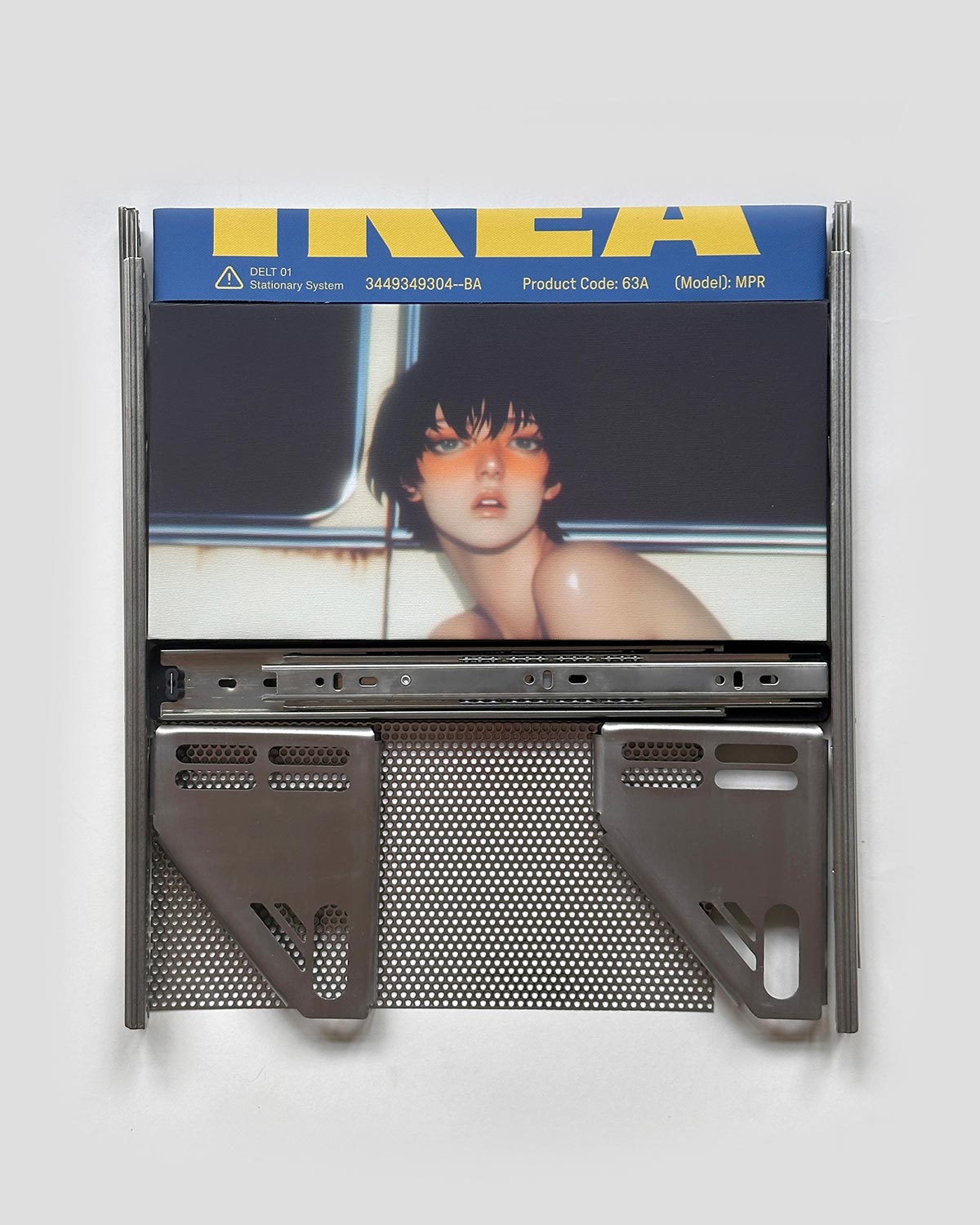
The very essence of contemporary life is the heart of this solo. Kunel seeks to explore the nook and corner of how people’s mechanical lives are sculptured by technology, industries, and a new emerging culture. His artistic practice finds its origins in graphic design and architecture. His background is pretty predictable, given the precision of his art forms and the composition. Despite using architectural elements, he skillfully makes the art appear “soft.” This reflects vulnerability, trapped memories, and emotional dregs.
The emotional warble is synced by the series, Colour Field Studies. Here, the lush environment is held by rigid frames. The visual effect of the series generates a tension, a free-flowing wave of emotions that confides in the void between control and vulnerability. The artist next turns towards the human face in his “Interface Portraits.” However, the catch in his painting is that the human face does not conform to the traditional representations. Rather, these “portraits” are punctuated by signage and mass communication. The “human” identity gets filtered through interfaces that resemble screens, advertisements, or mechanical readouts. The beauty of these portraits is how the emotions are depicted. Humans are not stripped of emotions; they exist, but in a digitized space where they are fragmented and disorganized. This is a very strong stand that reflects the core of human life in the present. This series resonates strongly in an age of algorithmic selfhood, where the self is increasingly known through data, pixels, and profiles rather than flesh and presence.
Other Series
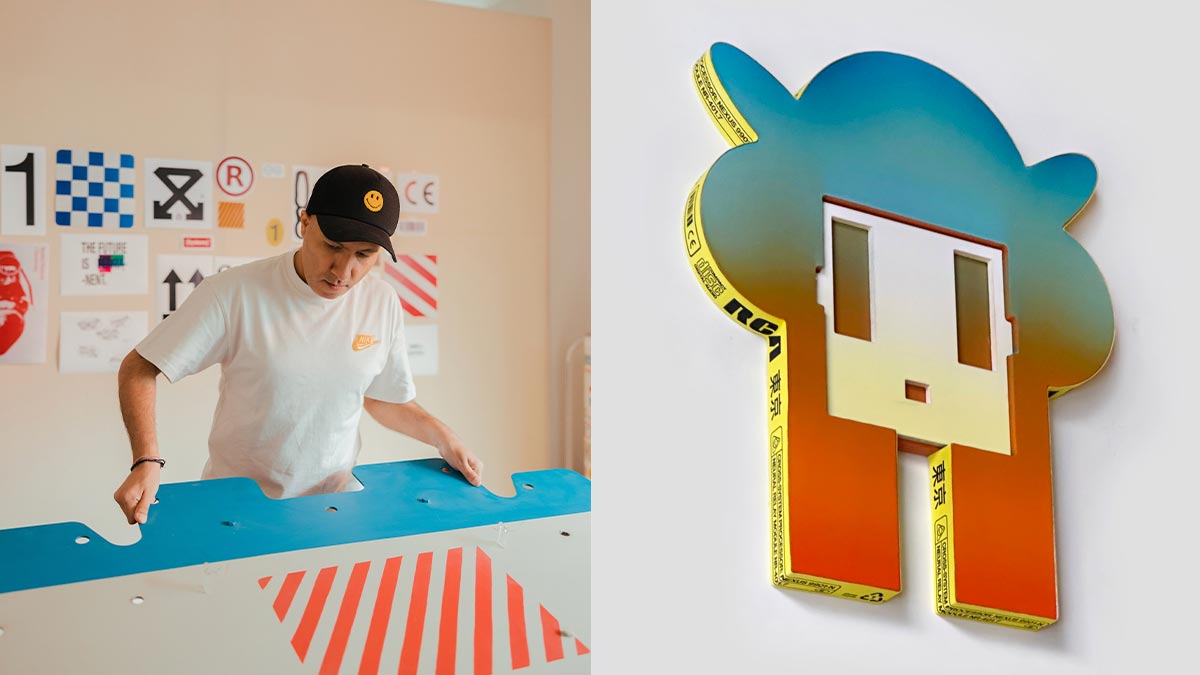
A more mischievous and quaint depiction is introduced to viewers through “KUMI”. This one critically analyses the intellectual dimensions of the exhibition. The artist got inspired form Japanese arts and graphic tradition and the Y2K aesthetics and presented this series in a singular character-like form, which appeared to be quirky and eccentric at first, but when seen through those, they represent a deeper meaning. Graphics become 3-D, blurring the boundaries between surface and structure.
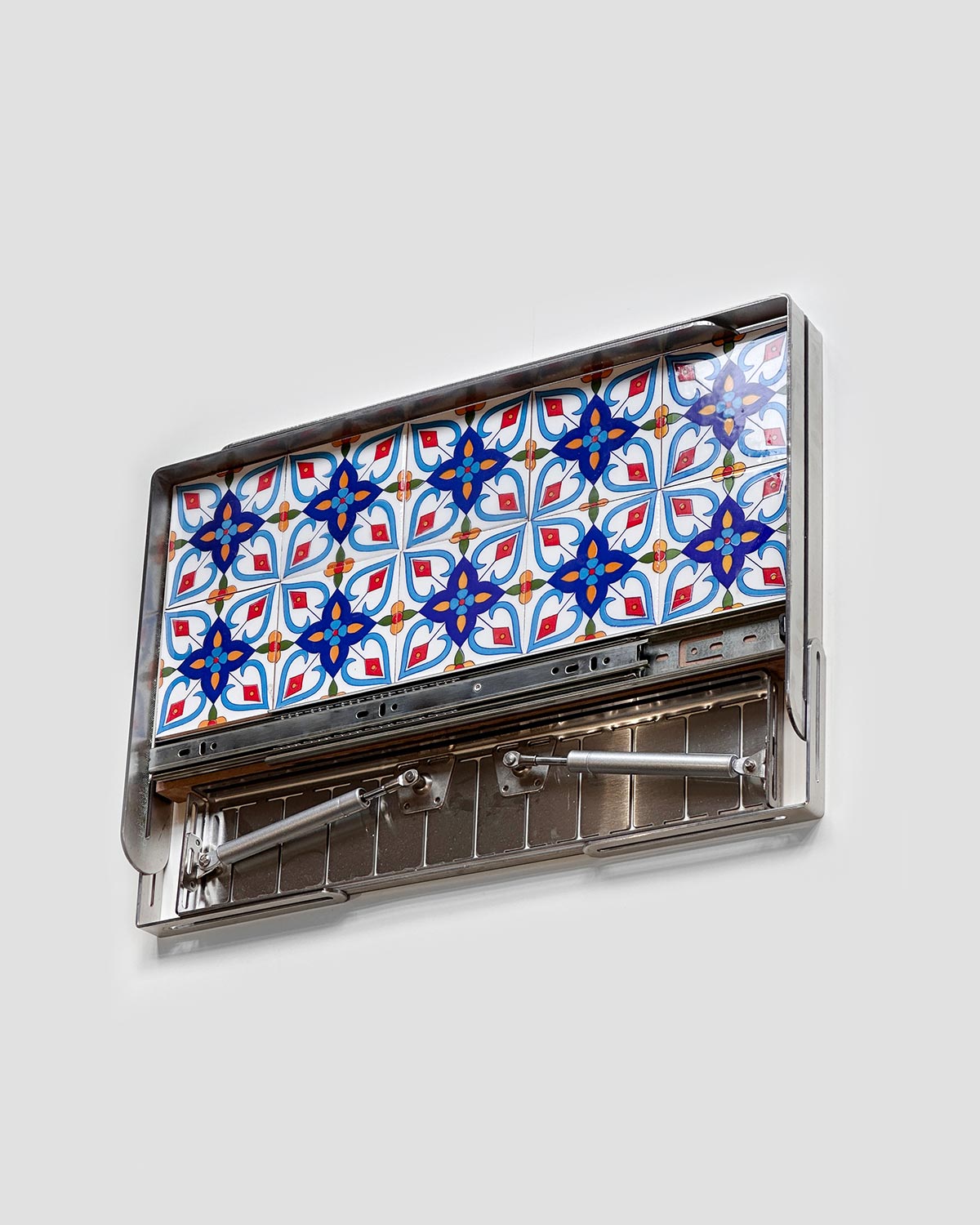
The Tile Assemblies, in contrast, feature the narratives of cultural inheritance and ornament. He uses different kinds of patterns to show that domestic spaces, crafts, and histories are subjected to mechanical restraint and industrial framing. The ornaments he drew, now become more fragmented, controlled, and forced to adapt within a new system. This states a very strong message that tradition is not always the result of seamless continuity, but a reconfigured negotiation with modern infrastructure.
Together, the four of these weave a fabric that constantly shifts between what is perceptible and the other framework that shapes the world. This solo does not give off a linear narrative, but builds many on a common base.
The Exhibition At a Glance
| Aspects | Details |
|---|---|
| Exhibition Title | Signs of Life |
| Artist | Kunel Gaur |
| Venue | Method, Delhi (Defence Colony) |
| Dates | 11 December 2025 – 25 January 2026 |
| Core Themes | Sensorial experience vs engineered systems |
| Major Series | Colour Field Studies, Interface Portraits, KUMI, Tile Assemblies |
| Artistic Medium | Assemblage, sculptural studies, interface-based portraiture |
| Broader Inquiry | Identity, memory, industrial design, visual systems |
Key Highlights
- Brings together four major ongoing series into a unified conceptual presentation.
- Gaur’s visual style is deeply inspired by the stripped-down rigor of 90s functionalism and the robust honesty of Brutalist design.
- Explores the intersection of emotional life and mechanical systems through material and visual language.
- Engages with contemporary urban aesthetics, industrial signage, and graphic design traditions.
- Reflects on how identity is mediated through technology, consumption, and interfaces.
- Demonstrates Method Delhi’s commitment to experimental and emerging contemporary practices.
- Extends Gaur’s internationally exhibited visual vocabulary into a cohesive curatorial narrative.
The Artist and His Craft
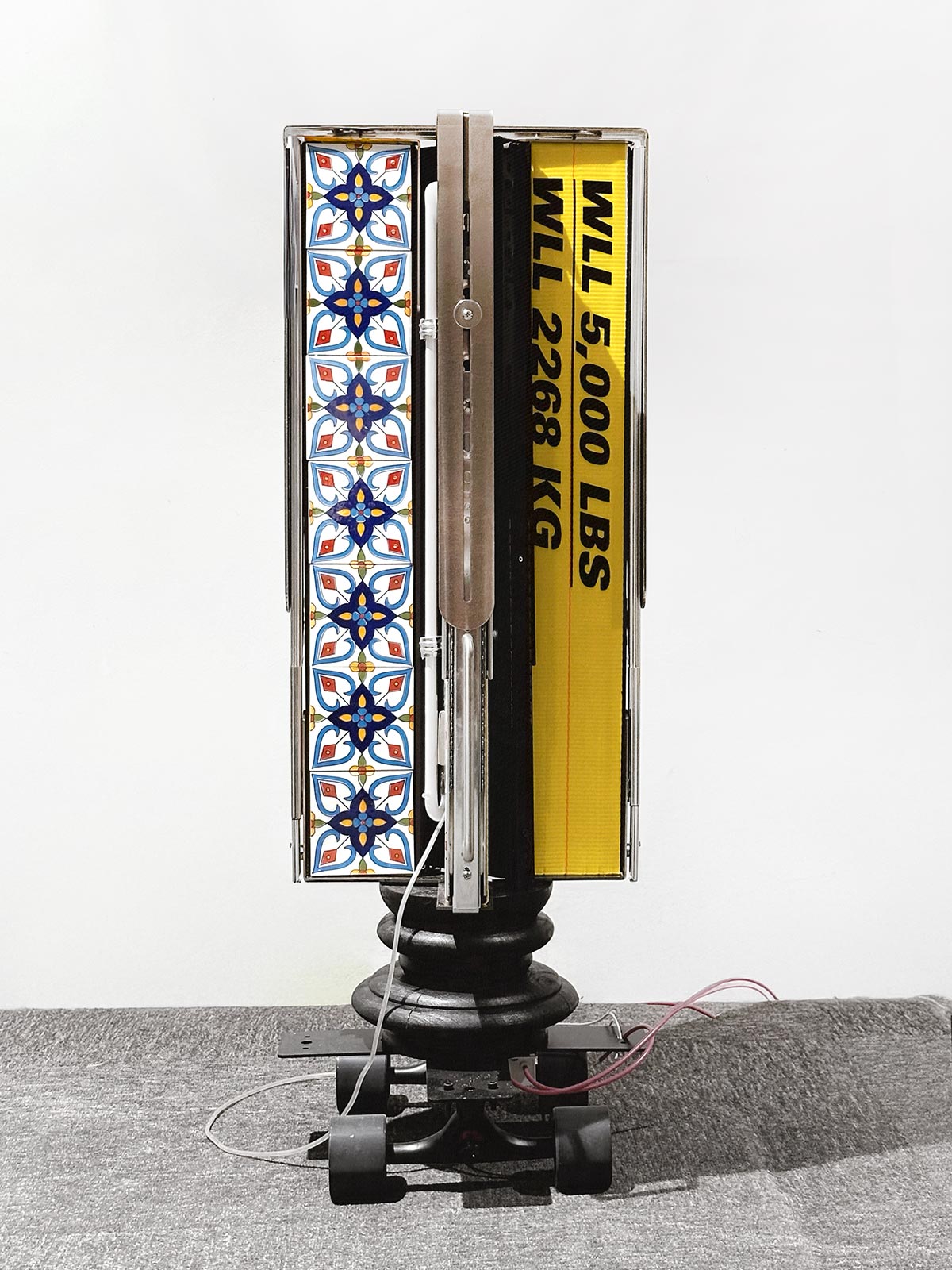
Kunel Gaur is a creative director and founder of projects like Indianama. He is an artist who is exceptionally skilled at distilling complex societal observations into minimal, high-impact compositions. He is an electrician, a machinist, and a carpenter rolled into one. His artistic practice is grounded in contemporary material culture. His craft is distinguished by the “technical” aspect, which helps him convert his portraits into refined queries of deep intellect. His paintings showcase the encounter between what is constructed and what is felt. The philosophy imbued in his artworks is of “introspection and extrospection.” His art reflects the interior pockets of the inner self as well as the superficial engagement with the socio-political realities. Therefore, The Signs of Life is a fragment of a bigger conversation amongst the art, the artist, and the spectators.
Takeaway
Today, the world is accelerating towards a speedy hybridization. In such circumstances, the artist picks up his tools to create a collection of artworks that compel people to inquire about their lives in an extremely winsome manner. His solo at Method Delhi is very adaptive and risk-taking in nature. He seamlessly departs from the traditional norms of depicting human lives and their mechanizations. Signs of Life is ultimately less about machines becoming human and more about recognising how humans are already within machines. It offers a fresh and rejuvenating perspective, as people ought to feel relatable. Our lives are no more ours; they are dominated by a packed schedule and a mechanized system.