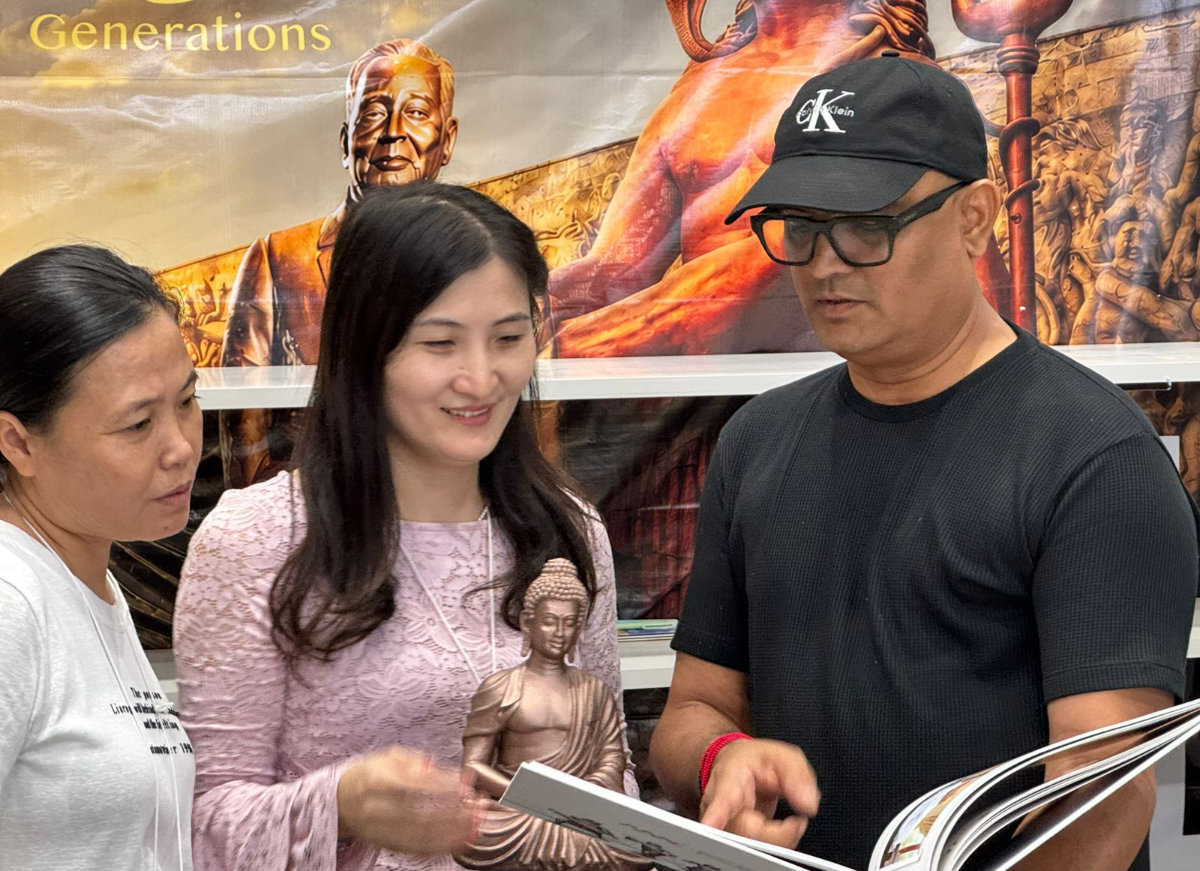
Renowned Indian sculptor Naresh Kumar Kumawat is representing India at the 102nd International Tokyo Festival, where he has been invited to present his artworks and discuss the traditions and concepts of India’s monumental sculpture. His participation has been facilitated by the Ministry of Micro, Small and Medium Enterprises (MSME), Government of India, as part of efforts to promote India’s artistic and cultural heritage internationally.
Representing India on an International Platform
The festival provides an international platform for artists and cultural practitioners from different countries. Kumawat’s participation places Indian monumental sculpture in front of a global audience while highlighting the historical narratives, national symbols and cultural traditions reflected in his work. According to the artist, monumental sculpture serves as a visual medium through which history, ideas and collective memory can be preserved and communicated.
A Career Built Around Monumental Sculpture
Naresh Kumar Kumawat is widely known for large-scale sculptures that combine traditional artistic symbolism with contemporary techniques. According to information available on his official portfolio, he comes from a family with a long sculptural tradition and has been involved in major public and commemorative projects across India. His works include sculptures of national leaders, spiritual figures and historical personalities, many of which occupy prominent public spaces.
His artistic practice focuses on preserving cultural memory through monumental forms, allowing audiences to engage with historical and spiritual narratives in public settings. This emphasis on heritage and identity remains central to his work and is reflected in his presentation at the Tokyo festival.
Cultural Exchange Between India and Japan
A key aspect of Kumawat’s participation is the role of art in strengthening cultural dialogue between India and Japan. Organisers and participants view such exchanges as opportunities to introduce audiences to different artistic traditions while encouraging mutual understanding.
Kumawat noted that representing India at the event is both an honour and a responsibility. He described sculpture as a medium that gives lasting visual form to a nation’s history, values and ideas. Through exhibitions and discussions, he aims to share the story of India’s monumental art with Japanese audiences and contribute to cultural engagement between the two countries.
Previous Engagements in Japan
The artist’s relationship with Japan extends beyond the current festival. According to the press release, his works have previously been exhibited in Tokyo, Osaka and Kyoto, helping maintain a continuing presence for Indian sculpture in Japan. These engagements have enabled Japanese audiences to encounter aspects of Indian history, culture and artistic traditions through sculpture.
Visit to the Indian Pavilion
During the festival, the Indian Pavilion received a visit from Mr. R. Madhu Sudan, Deputy Chief of Mission at the Embassy of India in Japan. The diplomat viewed Kumawat’s works and acknowledged his contribution to promoting Indian monumental art internationally.
Kumawat presented the Deputy Chief of Mission with a small model of one of his Hanuman sculptures as a gesture of respect and cultural exchange. According to the artist, the work symbolises spiritual values and reflects principles associated with Hindu philosophy while also representing India’s sculptural traditions.
Festival Highlights
The Tokyo Festival is one of Japan’s major international cultural events and brings together artists, performers and cultural organisations from around the world. The 2026 edition runs from 1 September to 3 November across multiple venues in Tokyo and aims to promote international cultural exchange through the arts.
Highlights related to Kumawat’s participation:
- Presentation of India’s monumental sculpture traditions
- Display of artworks inspired by Indian history and culture
- Cultural dialogue between Indian and Japanese audiences
- Engagement with diplomatic and cultural representatives
- Promotion of Indian artistic heritage on a global stage
Significance for Indian Art
Kumawat’s participation reflects the growing international visibility of Indian public and monumental art. By presenting sculptures rooted in India’s historical and cultural narratives, he contributes to broader conversations about heritage, memory and artistic identity. The event also creates opportunities for Indian artists and creative institutions to strengthen connections with the global cultural community.
The Tokyo appearance represents another chapter in Kumawat’s continuing efforts to bring Indian monumental sculpture to international audiences. Beyond the exhibition itself, the participation underscores the role of art as a medium for cultural communication and cross-border understanding.
Final Thoughts
Naresh Kumar Kumawat’s participation in the 102nd International Tokyo Festival highlights the continuing global presence of Indian monumental sculpture. By presenting works rooted in history, spirituality and cultural memory, the artist contributes to artistic dialogue between India and Japan. The event demonstrates how public art can serve as a bridge between cultures while expanding international awareness of India’s sculptural traditions.