Sohrai Painting – A Grand Folk Art form of Jharkhand with The GI Tag

1
Sohrai-Painting
Image – Maati Ghar/FB

It is with good reason that our elders say ‘Art is an expression of the soul’. Any good artist will willingly tell you how important art is for humanity. A story that began with a cave painting in Spain and went on to the birth of some of the greatest artists of mankind, art is a universal language conveyed by the swift stroke of a brush.

In India, too, art is highly regarded. There is no denying the fact that art has been an integral part of Indian culture since the dawn of the age. Indian rulers and the aristocrats have ever so often acted as a patron for local painters and artists. This heavily encouraged the upbringing and endorsing of art in Indian society, which luckily has continued over time. Indian painters like Raja Ravi Varma, Amrita Sher-gill, and many others have actively produced thousands of masterpieces that India is proud of. However, apart from the big-shot painters, we must also provide the appreciation that Indian regional paintings are due for. We’ve all heard of some renowned local painting art India is famous for – Madhubani painting, Warli painting, Tanjore painting, and others- but one of the lesser-known folk art forms of India which deserves to be equally known is Sohrai painting.

Sohrai Painting History

Sohrai-Painting-01A
Image – ART-Ds/FB

Sohrai paintings are beautiful tribal paintings that are usually based on natural elements of the universe, this includes forests, rivers, animals amongst others. These ancient paintings are made by tribal (Adivasi) women with the use of natural substances like charcoal, clay, or soil. It is also interesting to note that the word ‘Sohrai’ comes from soro – translating to ‘to drive with a stick’. The very primitive form of the Sohrai art was in the form of cave paintings. Although, with the advancement in human civilization and technology, it was expertly implemented in houses and mud walls (Yes, mud! In ancient Jharkhand women used to make art on mud walls with the intent to celebrate a good harvest season).

Talking about the origins of this art form, there happens to be a very interesting story behind Sohrai paintings. Taking reference from the Santhal tradition, in the ancient times, Jaher ayo (goddess of the forest), Marang Buru (god of mountains), and the Santhal’s elder sister would often descend upon the Earth to meet their brothers. During this time precisely, the famous harvest festival was celebrated by decorating the walls of the house with Sohrai art. Superstitions dictate that the Sohrai paintings bring good luck upon the household and thus, this art began to be well known all over India.

Sohrai Painting Process

Sohrai-Painting-03
Image – ART-Ds/FB

The making of the Sohrai painting is a unique and distinctive process, although somewhat time-consuming. As mentioned before, instead of using artificial colors, artists make use of natural resources. For instance, sometimes clay is thoroughly mixed with various forms of mud such as Kali Matti, Lal Matti, and Pila matti. This intermixing gives rise to a multitude of colors such as brown, red and yellow which are prominently seen throughout the painting. After making the colors, painters usually use a cloth to dip them in the colors and dab them on the walls to make attractive pictures. The go-to figures that painters usually create on the walls include a wide variety of natural components such as trees, animals like bulls and horses, deities, lotuses, and more. Usually, artists make sure that the animals are the centerpiece of the painting (hence are drawn to be gigantic and prominent), then the rest of the space of the wall is filled in by painting subsidiary figures such as flowers and trees.

Artists extensively make use of their memory to draw these figures instead of using a live reference. This is why the artist’s own experience with Mother Nature and his feelings towards it is paramount.

Cultural Significance of Sohrai Painting

Sohrai-Painting-04
Image – Wikimedia

The Sohrai art, while is visually pleasing, also carries several meanings to it. Firstly, this art form is passed down from the mother to the daughter as is tradition. This tells us about the importance given to the maintenance of harmony in a mother-daughter relationship. Secondly, the walls are covered with Black soil; this represents the womb of a woman and her ability to reproduce. Following that, the white earth (known as Dudhi) which covers the black soil is symbolic of the god of light and sperm. After the white and black soil is applied, a red line is drawn on the wall immediately. This red line portrays procreation, fertility, and the early ancestors of the family as well. The red line is followed by the marking of a black line which is representative of Lord Shiva and the Shiv Ling (which is famously worshipped as a symbol of Lord Shiva all over India). Next, artists approach the end of the painting by drawing outer lines encompassing the entire painting. This signifies the cultural values that the people carry – protection, chastity, and fidelity. At last, the last element of the painting, which is the white paint, is created by grounding old rice with milk until it is liquid. This white liquid portrays food.

Sohrai Painting in Present Time

Sohrai-Painting-05
Image – Wikimedia

The Sohrai paintings are truly a wonderful art piece that elevates the cultural heritage of India. With simple but alluring geometrical patterns and the use of thick bright paint to bring the painting to life, the Sohrai painting never fails to mesmerize its critics. Even after stressing the beauty of this indigenous art form, it saddens me to think how under-appreciated it is. Day by day, the Sohrai art is disappearing actively and the day won’t be far when it will be completely wiped out from the surface of Earth. However, recognizing this, the Government of India along with the people have avidly stopped this from turning into reality. One can see the Sohrai paintings drawn on the walls of railway stations and other government buildings frequently. Moreover, young artists and painters have been rapidly trying to revive this art form by incorporating it in their pieces. These along with other steps taken to make sure that the majesty Sohrai art doesn’t die will surely pay off. In the meantime, why don’t you try to make a Sohrai painting? With artificial colors, of course!

Nazar Battu to Keep You Safe from the Evil Energies

0
Nazar-Battu-01
Image – Satish Krishnamurthy/Flickr

A Nazar Battu (evil eye warder, evil eye protector) is a symbol, icon, or logo, a charm bracelet, a tattoo or a face mask, or any other object or pattern which defends and protects us against the evil eye. There is also a Hindu – Urdu slogan, Chashm-e-Baddoor, which is extensively used in North India and Pakistan to get rid of the evil eye. Its literal meaning is “far be the evil eye”. Another such slogan that is used in North India to a great extent is “Buri Nazar waale, tera munh kala” or “Kisi ki nazar na lagey”. This means “evil-eyed one; your face will be blackened”. These slogans and phrases are frequently and widely used in India when someone receives praise, achieves or accomplishes something, is successful, or has good luck. It is used in a protective manner as these events in someone’s life usually attract a lot of jealous attention and negativity. There are a lot of types and forms of Nazar battu which are used to ward off the evil eye. But, first, we shall know more about the evil eye and the reason why we try to protect ourselves and get rid of it so much.

What is the evil eye and why do people try to get rid of it?

There is a big difference between the evil eye amulet and the evil eye itself. While the real evil eye is actually a spiteful curse passed on through a wicked and harmful stare or look, the evil eye amulet is just an accessory to ward off it.

The evil eye (Nazar) is a harmful look, stare or gaze which may be intentional or unintentional, results in disease, negativity, bad luck, or disgrace to someone else. The evil eye is more often than not brought on by envy, greed, spite, grudge, desire, and jealousy. All these emotions towards a person transform itself into a curse which then causes harm to that person and changes its good luck and success into bad luck and failure. Other than this, anyone who is highly praised or gets more than what they deserve is also susceptible to the evil eye. These people may bring bad luck or have some mental or physical illness. A disease or illness with no immediately clear reason is also believed to be caused by the evil eye. Children are very vulnerable to this as parents, people, or even well-wishers who compliment the child or praise the child tend to attract and bring in negative energy, bad luck, failure or injury, illness, and even death. This may happen completely unintentionally and not at all deliberately.

Some people who are often accused of directing the evil eye are strangers, childless women, old women, and malformed people. Pregnant women and animals are also susceptible to it. People usually avoid themselves, their children, family, or possessions being praised or admired as they consider it unlucky. So, instead of praising someone or something, it is better to use phrases like “as God will” or “God bless it”.

The Types of Nazar Battu Used To Get Rid of the Evil Eye

We now know that a Nazar Battu is an evil eye warder or protector that helps us get rid of the evil eye or Nazar. Here, we will take a look at the types and forms of Nazar Battu by which we can protect ourselves.

1. The Evil Eye Bead Or Amulet

The-Evil-Eye-Bead-Or-Amulet
Image-Wikimedia

The blue glass evil eye beads are used as an amulet or a talisman. These are eye-shaped and are usually blue in color. Most probably because blue-colored beads are comparatively easy to create. Today, the evil eye amulet comes in various different colors like green and red. These amulets have various shapes and sizes and are worn as bracelets, pendants, earrings, rings, etc. One can even hang these beads inside their house and over the entrance of their house to keep the home well protected. They can also hang these in their office and car.

These evil eye amulets repel all the negative and evil energies cast at you and direct them back at the person who cast them. These talismans keep you protected and safe and make you feel secure no matter where you are. This shields you and reflects the curse back to the caster. In today’s time, people don’t know much about why these are worn. They wear them as a part of jewelry or because of a fashion trend and also if some celebrity wears it. The traditional deep cobalt blue color of the evil eye amulet is for positive energies, good karma, and protection against the real evil eye. It also helps in motivation and creativity.

2. Nimbu-Mirchi Totka

Nazar-Battu-Nimbu-Mirchi-Totka
Image – Jayaprakash R/Flickr

Nimbu Mirchi is yet another way to fight the evil eye. This is a very common practice in India. One can easily find a nimbu (lemon) and some Mirchi (chilies) tied together with mostly a black thread. Usually, one lemon and seven chilies are tied together and hung at the main door or entrance of the house and inside cars and vehicles. People also tie it in their offices or shops to protect themselves, their homes, shops, and businesses from the evil eye and negative energies.

The chief reason for tying the nimbu-Mirchi is because of Goddess Alakshmi. Goddess Alakshmi is the sister of a popular Hindu Goddess Lakshmi, who brings prosperity and good wealth. Unlike her sister, Goddess Alakshmi brings misery, bad luck, misfortunes, and poverty into people’s lives. It is believed that she likes spicy, hot, and sour food which is why people hang nimbu-mirchi at the entrance of their house or workplace. This way, she can satisfy her hunger at the entrance at once and leave without entering their house.

People replace it with the new one according to their choice. Usually, it is changed every Friday night and the new one is hung every Saturday morning but some people even change it daily. They throw the used nimbu-mirchi on open roads far away from their house or wherever it was hung.

3. Black Thread Anklet

Black-Thread-Anklet
Image-Daniel Proulx/Flickr

Many people can be seen wearing these black threads on their legs and that too, mostly on their left leg. These black thread anklets work as a Nazar battu or an evil eye anklet. These are also known as the nazariya. These were traditionally worn as a simple pain black thread but, people now add different accessories, motifs, and things to it. Some even add the blue glass evil eye amulet to the black thread. These are worn to ward off the evil eye and to protect ourselves from the negative energy. While it is mostly worn in the ankle, some people also wear the black thread in their arms, wrist, and neck.

The people in India have their own religious beliefs related to the thread and some consider the thread as holy. They wear the thread because they believe that the thread can remove all the pain and guard them against evil spirits. But, people nowadays only wear the thread because of the attraction and fascination towards it and also because they consider it stylish. According to astrology, the black color is considered as the symbol of Saturn or Rahu Ketu, and Rahu Ketu is believed to be responsible for the evil powers of sight. It is also known as the shadow planet and it is the planet of justice and karma. It is said that if these planets become troubled and disturbed or they enter the house of an enemy planet, then the person will end up in misfortune and bad luck and their life will be very disturbed.

To protect oneself from the inauspicious effects of Rahu Ketu, one wears a black thread in their left leg. There are a few things that one should keep in mind while wearing the black thread. It is best to bring the black thread from the Baba Bhairav Nath temple as it is holy. One cannot just wear any random black thread. Before wearing the black thread, it should have 9 knots in it. One should wear the black thread only at the auspicious time and as soon as one wears the thread, he/she should chant Shani Dev’s mantra twenty-one times. No other color thread should be worn or tied in the hand or wristwear one is wearing the black thread. If one is wearing the black thread in the wrist, the thread should be twisted 2, 4, 6, or 8 times.

4. Nazar Battu Beads

Nazar-Battu-Nazar-Battu-Beads
Image Source

Nazar Battu is in fact an actual fruit. It is a small, black–colored, raw fruit obtained from the Nazar tree. It is worn as a locket or mala by the people, mostly children. People usually wear it around their neck or arm. The Nazar battu protects the person from evil spirits, black magic, negativity, witchcraft, and the evil eye. People also hang these in front of their house above the main entrance or door to get rid of evil spirits and negativity and tie these in front of their vehicles, etc. Nazar Battu comes in a black thread and is easy to wear. The Nazar battu mala usually has a total of 54+1 beads in it. It helps in maintaining positivity around the person. It is very much recommended for the kids and women as they feel secure and protected while wearing it. This also helps in kid’s focus and concentration.

5. Kala Teeka

Nazar-Battu-Kala-Teeka
Image – Caleidoscope.in

The Nazar ka Tikka (Teeka) or Kala Tikka (Teeka) is a black dot on the forehead to protect and shield the possessor from the evil eye or Nazar. This is generally put on children as they are more vulnerable to it. The babies and children are sometimes overly praised or admired because of which they can get the evil eye and sometimes, people give them the evil eye due to jealousy or envy, as they are more at risk. Mothers usually put this Kala Teeka on their kid’s faces, usually on the forehead or behind the ear, just so the child looks ugly or unattractive or there is an imperfection to the child. They believe that because of this, the evil eye won’t attack the child and the Kala Teeka will ward off the evil spirits and the Nazar.

The Kala Teeka also protects the child from any illness, sickness, or poor health. People have experienced this which proves that this works. Anyone who stares and tries to give the child the evil eye would see the mark on its face which would distract him/her and the Kala Teeka would ward off the evil eye. The Kala Teeka is not only limited to babies or children, adults too put a Kala Teeka behind their ear. They usually use kajal to do so.

Other than this, people also get tattoos on their bodies of these evil eye amulets or hamsa, or anything which they believe would protect them from the negativity and the Nazar. People also wear different kinds of charm bracelets other than the blue glass evil eye amulet. They wear them according to what they believe and in the region where they live. There are also some masks and things which people hang in front of their homes or inside their homes which protects them from the evil eye like the Mahakal Black Face Mask.

These Nazar Battus are intentionally put in so that there is an imperfection in the object, place, or a person which will protect them from these evil spirits and the evil eye. When a house is decorated, an imperfection is intentionally introduced so that the house is not perfectly decorated. When one buys new things like a rug or a saree, an imperfection is added or made like a stitching flaw to the otherwise perfect rug or object so that the evil eye does not affect it. All these practices are very old in India and are now a part of its tradition.

The Entrancing Festivals of Tamil Nadu You Must Experience

0
Festivals-of-Tamil-Nadu
Cultural Dance, Chithira Annual Festival Madurai – Wishvam/Flickr

Tamil Nadu is a truly vibrant state, where all festivals are celebrated with the utmost enthusiasm and fervor adding to their joyous nature. The festival season is a time when the state truly reaches its peaks. The state is home to a variety of festivals whether they be religious, artistic, harvest, or seasonal, all with their certain charms. These festivals give us a rich glimpse into the beautiful culture, heritage as well as traditions of the state of Tamil Nadu. These festivals are popular throughout the country and serve as a major allure that attracts tourists. They are an immersive experience that you’ll never forget. Here’s a list of some festivals in Tamil Nadu that you must experience.

1. Pongal

Tamil Nadu Festivals-Pongal
Image/Flickr

Celebrated in the month of Thai, between January and February, this is a prevalent harvest festival in Tamil Nadu. A festival that commemorates the Sun God, Pongal festival is rejoiced for four days which are the Bhogi Pongal, Thai Pongal, Mattu Pongal, and the Kaanum Pongal. The four days are all marked with their unique charismatic activities that everyone zealously partakes in. The theme of this festival is majorly based upon ‘thanksgiving’ and the people express their gratitude to the gods for a good yield. The association of this festival with nature adds to significance, especially with our country’s primary activity being agriculture. A defining element of the festival is the namesake dish which is a delicacy that is a staple for every household in the state.

2. Chithirai Festival

Tamil Nadu Festivals-Chithirai Festival
Image/Arun Bharhath/Flickr

The Chithirai Festival is one of the most prominent festivals that is celebrated in the glorious city of Madurai. This festival brings about people from all over the state to what is the biggest and brightest festival in the city. Lasting for twelve days, this is a beautiful event that re-enacts the wedding of Lord Sundareswarar, an incarnation of Lord Vishnu with the sister of Lord Vishnu, Goddess Meenakshi. Legend states that for the next four months to come, the city shall be ruled by the revered Goddess. It occurs in either the month of April or May. The festival becomes unique as the devotees of Vishnu belong to a higher caste while the opposite is true for Lord Shiva, thereby bringing about the spirit of unity.

3. Tamil New Year’s Day

Tamil Nadu Festivals-New Year
Image/Wikimedia

The Tamil Nadu New Year or as locally referred to as Puthandu occurs on the very first day of the Hindu Solar Calendar or the month of Chithirai. On this day, you can witness people throughout the state greeting each other by saying Puthandu Nalvazhthukkal, which means Happy New Year! This auspicious day is started in a truly fitting fashion, with the preparation of kolams (colored rice flour) and can be observed at the entrances of countless houses. This is a day where people visit temples to pray and prepare Pongal and to extend their offerings to god for a prosperous year ahead. It usually falls in April and marks the day when the creation of the universe began by Lord Brahma.

4. Natyanjali Dance Festival

Festivals of Tamil Nadu Natyanjali Dance Festival
Natyanjali festival in Chidambaram – Arunan kapilan via Wikimedia

This vibrant dance festival begins with the commencement of the festival of Maha Shivratri and extends for five days. This festival is held at the city of Chidambaram, the home of the Nataraja temple dedicated to the very god of dance, Lord Natraja, an incarnation of Lord Shiva and it is due to the temple’s presence that the city has been considered to be a pious spot, especially for Shaivites. This is a festival that attracts tourists and dancers from not only the entire country but the entire globe who come here to showcase and dedicate their art to Lord Shiva by performing classical dances forms such as Kathak, Bharatanatyam, Mohiniyattam, Odissi, Manipuri, and many more. These mesmerizing performances take place in the outer surroundings of the temple which is a striking work of architecture.

5. Mahamaham Festival

Tamil Nadu Festivals-Mahamaham Festivals
Image/Wikimedia

This is a festival that has its quirks but it is undeniably a festival that you must attend. Hosted at its namesake, the Mahamaham Tank, situated in Kumbakonam. This festival is celebrated once every twelve years. The reason behind that is quite interesting for it is believed that the water of the holy rivers of our country’s two holy rivers: the Yamuna and the mighty Ganga are said to meet in this very tank every twelve years and so on the occasion of this festival, people from all over the country gather here to bathe in this water of utmost divination and cleanse their sins for a fresh start. During this festival, the state is completely crowded with pilgrims with sometimes the number crossing well over thirty lakhs and spell-binding special rituals are conducted in temples.

6. Avani Moolam Festival

Tamil-Nadu-Festivals-Avani-Moolam
Vignesh Studio/YouTube

The Avani Moolam Festival is one of the most celebrated in Madurai and is dedicated entirely to Lord Shiva. It commemorates Lord Sundareshwar’s coronation and is usually observed between August and September. During this festival, the city is crawling with devotees and simply lights up with fervor around, which includes everyone dressed in new and vibrant clothing and eating the delicacy of pittu. As a part of this auspicious remembrance, the priest of the temple recites the 64 miracles performed by Lord Shiva, in addition to the unique festivities organized at the Meenakshi Temple. Furthermore, the twelve Tiruvilayadals, which are the tales of the devout supporters of Lord Shiva are beautifully executed.

These festivals are only the event that they are because of the people’s passion and excitement for the same. We all look forward to festivals that are a great tribute in their way to our culture and heritage and the same is naturally the case in Tamil Nadu. It is rightly said, “The greatness of a culture can be found in its festivals.”Let us know in the comments section below about the festival of Tamil Nadu that you found particularly intriguing.

Top 10 Most Loved Indian Fashion Influencers You Must Follow

1

Top Indian-Fashion-Influencers

Fashion Influencing is growing at a fast pace with no inclination of slowing down. There is a wave of opportunities in this field – be it a full-time endeavour, a side hustle or even a hobby. Fashion Influencers in India have established a niche of setting trends, influencing buying choices and enabling a fashion revolution. 

Indian fashion influencers create content that is consumable and can be recreated by their niche audience. Some of them, however, go over the top with their fashion choices and promote exploration in styling. The 5 step formula for every influencer is – 

  1. Finding their niche
  2. Creating content around it independently 
  3. Pitching to companies and brands
  4. Promotions through various marketing strategies 
  5. Collaborating continuously for better reach

Indian audience is increasingly but slowly falling in love with fashion influencers, just as their love for celebrities. We have curated a list of India’s most loved fashion influencers and why you should follow them:

1. Komal Pandey 

Indian Fashion Influencers, Komal Pandey
Follow on Instagram

With a follower count of 14 lakh, Komal Pandey is one of the most popular fashion bloggers of her kind. Based out of Delhi, she continually experiments with fashion which is not ‘boring’. Her reels and videos explore the possibility of styling differently and uniquely. You can find how Poo would dress in 2021, kurta with jeans, headscarf styles and more!

2. Usaamah Siddique

Indian Fashion Influencers, Usaamah Siddique
Follow on Instagram

 A Mumbaikar himself, Usaamah Siddique graduated in Business Marketing and went to experiment with his romantic entanglements in fashion. He started working as a celebrity stylist & simultaneously invested time in his blog, The Dapper Label. The rest is history, Usaamah now is a well-known face of menswear.

3. Shalini Chopra

Indian Fashion Influencers, Shalini Chopra
Follow on Instagram

Based out of Bangalore, Shalini Chopra is a fashion influencer, with a keen interest in food, travel, beauty and lifestyle. She was awarded the best Blogger of the Year 2019. She is very active in collaborations, creating content around the same for her audience to know what’s new. 

4. Juhi Godambe

Indian Fashion Influencers, Juhi Godambe
Follow on Instagram

Juhi Godambe, daughter of famous make-up artists Bharat & Dorris, is a known name amongst fashion influencers. After graduating from London School of Trends, she started with her high street fashion brand called Arabella. She is a celebrated face in the influencing world. 

5. Siddharth Batra 

Indian Fashion Influencers, Siddharth Batra
Follow on Instagram

Siddharth Batra started as a style editor at mensXP. As a typical Delhi boy with his love for fashion and men’s beauty, he rose to fame. His Instagram is for every men who dreams of dressing comfortably and in a non-conforming manner. He does everything – from beauty care tips such as weird grooming hacks, makeup basics, how to hide hickeys to wearing corsets, crop tops and all bollywood-themed outfits.  

6. Nilu Yuleena Thapa

Indian Fashion Influencers, Nilu Yuleena Thapa
Follow on Instagram

Nilu Yuleena Thapa, who goes by the username BigHairLoudMouth, is a fashion influencer from West Bengal. She has contributed in the field of fashion & beauty, collaborating with brands as a model, stylist, creative director and digital influencer. She is experimental with colors, not just in her wardrobe but also with her goldy locks! 
7. Shaurya Sanadhya Tulshyan

Indian Fashion Influencers, Shaurya Sanadhya Tulshyan
Follow on Instagram

Pune-based Shaurya Sanadhya started her eponymous label for western & ethnic wear to lead an influencer-cum-entrepreneur life. She continues to influence her audience with beauty tips, fashion tips and a slice of her personal life all at once. 

8. Karron S Dhinggra 

Indian Fashion Influencers, Karron S Dhinggra
Follow on Instagram

Formerly a Tik Tok star, Karron S Dhinggra stepped in fashion influencing. With a huge following, he is a popular choice amongst men for fashion wear, grooming and luxury choices. His everyday tips and tricks prove helpful and resonate with his audience. 

9. Kritika Khurana

Indian Fashion Influencers, Kritika Khurana
Follow on Instagram

The Boho Girl, or simply Kritika Khurana is a fashion influencer from Delhi with a whooping following of 12 lakh. She is also the owner of the e- commerce label ‘THE HYPE’. Her free spirited styling sets her apart from other influencers and hence, make an unforgettable mark amongst the masses.

10. Lee Middleton 

Indian Fashion Influencers, Lee Middleton 
Follow on Instagram

Lee Middleton is a fashion influencer from Meghalaya redefining men’s fashion. His photographs, fueled with stunning scenery, playing with lights and shadows and minimalism, are a breath of fresh air. He is a step up in his fashion choices, combining simplicity with color pops, stripes, co-ords and more. He is also a certified make-up artist upscaling men beauty standards.

Fashion influencing continues to grow with new faces and trends emerging everyday. You can defo be drawn to new fashion, accessories, footwear and skincare to try and buy as suggested by above mentioned fashion and lifestyle influencers. Happy influencing!

Top 5 Best Holiday Destinations in Maldives

0

The Maldives is undoubtedly a lucrative destination for all types of travelers. Consisting of numerous exclusive and eye-relaxing destinations, Maldives has always stolen tourists’ hearts. Be it honeymoon trips or family vacations, Maldives has all flavors to offer. If you’re planning to have a refreshing trip to the Maldives, you firstly need to shortlist the destinations you want to visit directly. It’s impossible to cover all the attractions of the Maldives in a single trip. So, you need to figure out which locations you can’t miss visiting at any cost. Does that sound confusing? Well, in this article, we are suggesting the top destinations that you can’t keep out of your Maldives trip plan.

COMO Cocoa Island

Best-Holiday-Destinations-in-Maldives-COMO-Cocoa-Island
Image – Wikimedia

You can’t afford to exclude this exceptional island if you want to make your trip worth remembering. Besides the scenic white sand beaches of this heavenly island, the presence of luxurious cottages and villas make this island the perfect holiday destination for couples. You get the chance to experience overwater living as you book a charismatic villa on this outrageous island. The serene ambiance of the island, alongside mesmerizing sunrise and sunrise views, will take your mind to another world. So, this is an obvious choice if you’re eager to spend some peaceful days with your partner closer to nature.

Baros Island

Best-Holiday-Destinations-in-Maldives-Baros-Island
Image – Nattu/Flickr

All Maldives tour package prioritize Baros Island due to its alluring environment. You can turn down the elegant visual appeal of this island. Staring at the azure sea while sipping delicious desserts will freshen up your soul entirely. Apart from that, the top-notch services of the resort on this island will also please you and your partner. As you visit this amazing destination, you’re bound to achieve inner satisfaction. Therefore, we suggest you keep this outstanding location at the top of your preference list.

Mihiri Island

Best-Holiday-Destinations-in-Maldives-Mihiri-Island
Image – Wikimedia

The lush greenery of this special beach island will leave you spellbound for sure. Spending your holiday amidst the greenery of this island while having your eyes on the calm tides will make you lose track of time. If you want to spend some splendid days while keeping your mobile and other tech devices away, this location is perfect for you. Most villas and cottages of this island maintain tech-detox environments with no television or Wi-fi facility. No doubt that spending some relaxing days on this fascinating island must be your choice as you visit the Maldives.

Halaveli Island

Best-Holiday-Destinations-in-Maldives-Halaveli-Island
Image – Mac Qin/Flickr

This is another fabulous island that can overwhelm you with its out-of-the-box beauty. You feel a soothing and calming vibe wherever you go on the island. From exotic sea views to mind-whelming greenery, this island consists of everything you would like to enjoy. Besides that, the royal services of the villas and resorts of this island will enhance your overall trip experience. Almost every resort on this island has a separate swimming pool, plunge pool, and beautiful garden. Naturally, this island must be your choice for spending some amazing days with your friends and family.

Whale Submarine

As you visit this exciting destination, you will get the opportunity to have an underwater tour in a submarine. The submarine will take you to a deep layer of the sea where you can witness coral reefs and other underwater creatures. This activity is especially engaging for kids. However, adults can take part in this special activity. Exploring astounding underwater creatures will be a thrilling experience for you and your family indeed. So, never miss out on visiting this spectacular destination, and make sure you arrange a submarine trip for you and your partner too.

So, these are the splendors of Maldives that you can’t exclude from your Maldives trip plan. Each of the destinations mentioned above has some unique and attractive features to engage visitors. However, there are other destinations too that are worth visiting. Majeedhee Magu, National Museum, Tsunami Monument, Artificial Beach, Dhigu Island, Rangali Island, Huvahendhoo Island are some phenomenal destinations that you may like to visit if you have enough time and money in hand. But if you want to plan a concise trip, the locations mentioned above are the ultimate choices for you. So, pack your bags, plan your trip properly and set your steps towards the Maldives.

Pongal – The Festival of Harvest in Tamil Nadu Culture

0
Pongal-festival
Image – Wikimedia

It is well established across the globe that India is a land of diversity. Here, we have a plethora of regional languages, cuisine, culture, and festivals, and we make sure that each of them is celebrated and acknowledged with the zeal and splendor that they deserve. This harmonious coexistence with our fellow Indians, regardless of our differences, is what makes India so exuberant and colorful.

While there are numerous stunning facts about India, to me, the wide variety of festivals celebrated in our beloved nation will always continue to be amusing. Each region in India celebrates the festivities of its regional counterparts with much enthusiasm. Whether it may be Diwali or Bhai Dooj; there is no denying that the beauty of these festivals brings even the most different, together.

Tamil-Nadu-Culture
Pongal – Nithi Anand via Flickr

Talking about festivals, one of the most well-known festivals from the Southern part of India has to be Pongal. I remember that when I was a child, my family and I would be invited by our neighbors to celebrate this beautiful festival with them. We would take part in their traditional poojas with them and have a grand meal, in the end, it was then that I realized how meaningful and unique this festival is. Pongal is the harvest festival of Tamil Nadu. It is celebrated in the Thai month, which usually falls between January and February. This four-day festival is done after a good harvest of crops such as rice, turmeric, or sugar, to show their appreciation and devotion to the Sun God.

As you’ve probably guessed, Pongal is an ancient festival and has been around for quite some time now. And like every Indian festival, there is a good story behind it. According to popular myths and legends, once when the Age of God was prevalent, Lord Shiva asked Basava the Bull to go to Earth and convey a message to the humans. The message read that Humans are to have a bath along with an oil massage every day of the week. However, contrary to what Lord Shiva said, Basava announced to mankind that they’re supposed to eat every day and have an oil bath only once every month. Lord Shiva was displeased and highly furious with Basavas. Therefore, he cursed the Bull to help humans grow more food by plowing their agricultural land forever. This is why Pongal is celebrated to honor the bull (cattle) and crops.

Matu Pongal
Image – Aschevogel/Flickr

Another interesting legend revolving around the origins of Pongal involves Lord Krishna. The legend says that when Lord Indra became the king of the Gods, his arrogance had the best of him. To teach him a lesson, Krishna asked the villagers to stop worshipping Lord Indra. Infuriated by this notion, Lord Indra sent thunderous clouds over the village. However, Lord Krishna saved the day by guarding the village by sheltering the village under the Govardhan Hill (which he lifted with his pinky finger). To mark the day, the festival of Pongal is celebrated as a sign of devotion towards Nature and cattle.

The festival of Pongal has a massive cultural significance in Tamil Nadu. Pongal can be termed as the Indian equivalent of the American festival of Thanksgiving. This is mainly because, during Pongal, farmers show their gratitude towards Lord Indra (king of gods) and the Sun God for their blessings and a good harvest season. Traditionally, unwed girls observe penance for a month to pray for the agricultural welfare of the country. During this period, the girls are expected to refrain from consuming milk products and from applying oil to their hair. Along with this, they are expected to wake up early in the morning for the traditional bathing ritual as well.

Pongal- Sweet Dish
Image/Wikimedia

If you’re wondering, “What does Pongal mean though?”, you’re in luck, because I know just the answer to it. The ancient word ‘Pongal’ literally translates to ‘to boil’. The meaning of this word directly points towards the special dish prepared especially during Pongal. This exquisite dish is made from rice, jaggery, and milk, and is offered to the Gods and cattle as an act of reverence. Moreover, this spectacular festival is celebrated by decorating the horns of the bull and the house with beautiful kolam art, visiting temples, having a grand meal, and exchanging gifts with our loved ones.

All four days of the festival have different activities planned. The first day is known as Bhogi Pongal, wherein the day is reserved for families to have a great time together. The second day commences with the pooja of Surya or the Sun God. This is called Surya Pongal. The third day is termed Mattu Pongal, which is marked by the worshipping of cows. The cows are washed on this day, and their horns are painted and decorated beautifully with flowers. The day ends with offering the Gods the dish Pongal.

Bhogi-Pongal-festival
Image – Kiran SRK/Flickr

These festivities and traditions are a key feature of India’s cultural identity. In a world where everyone is drawn apart by electronics and urbanization, they have an important role to play in bringing people closer together again. After all, the whole point of celebrating these festivals is to show our love and concern towards our peers and to have some quality time with them. Cherishing these moments with our loved ones provides us with memories to carry forward for a lifetime, don’t you think so?

Tamil Language – The Oldest of the Dravidian Family

0
Tamil Language
Image/Wikimedia

Vanakkam! This is the greeting you will receive when you enter the southernmost state of our country, Tamil Nadu where people converse in their native language of Tamil. Apart from Tamil Nadu, this recognized classical language and one of the twenty-two official languages of our country is spoken in parts of other states of southern India, the union territory of Pondicherry as well as in countries abroad such as Sri Lanka, Singapore, Malaysia to name a few. It is the official language of the aforementioned countries. It belongs to the Dravidian family of languages which refers to those languages that are predominantly spoken in northern Sri Lanka and South Indian states. Tamil is a language that is widely spoken throughout the globe, even if it by small communities with a total number of speakers totaling around 74 million making it the eighteenth most spoken language in the world.

As aforementioned, Tamil is a recognized classical language. That is because of three main reasons; its origins can be traced back a significant period, it contains a substantial amount of ancient text as well as literature, and last but certainly not the least, its unique and independent tradition because of which it holds a prestigious position as a written language. Furthermore, following legend, the grammatical laws of Tamil are said to have been formulated by the gods themselves which only adds to its prominent status. As true for any language, Tamil has its unique writing system. With a total of 12 vowels and 18 consonants, the language consists of 216 compound characters.

Tamil Language-Script
Tamil Script/Wikimedia

One would be justified in saying that Tamil is an ancient language as the earliest clear evidence in the form of inscriptions of the origins of it leads back to the 5th century BCE making it one of the oldest languages in the entire world. It is also the first language of India to ever be published. That’s another record that Tamil takes home. Tamil, being the language that it is, is inspiring and has influenced various words as well as grammar in other languages, approximately 400, which includes Sanskrit, Korean, Greek and even, Latin, throughout the globe.

However, to say that the language remained the same would be incorrect because naturally, over time various noticeable changes occurred in the grammar and dialect of the language which led to it being divided into three main periods: Old Tamil, Middle Tamil, and Old Tamil. The writing of this language visibly has roots in the script of Brahmi but of course, did change drastically. A noteworthy change in the writing style occurred with the assimilation of Grantha Letters, the roots of which lie in the Pallava script. That is the thing about this language. It survived because it is ever-evolving and even now, in different parts of the state of Tamil Nadu, the colloquially spoken language differs. The local dialects or as commonly called koduntamil and the formal language or centamil of Tamil vary and this is referred to as diglossa, for example, Tamil’s form differs with caste, class, and region.

Tamil Literature is a field so vast that it may just require a piece on its own, but the works of this language are truly magnificent. Prominent pieces often include epics or religious poetry such as devotional pieces dedicated to Nayanmar, Alvars with, later on, great focus on the Bhakti Movement as well as Sangam literature. A rise can be seen among the Chola and Palla rulers providing patronage to poets and authors. Tamil Nadu has produced many great writers and one such, we’re all aware of is Subramanian Bharti who is credited with the start of the modern literary Tamil movement.

Tamil Language-Literature
Tamil Manuscript/Wikimedia

A product of this language that is everyone’s favorite and we all immensely enjoy is the Tamil Cinema, which is now the second-largest network in the country. The industry’s action-packed, entertaining movies are popular throughout the world. Various movies now also inspire their Bollywood adaptations. All the South Indian movies which give us such pleasure wouldn’t have been possible without the glorious Tamil language.

An interesting fact about the etymology of the word Tamil itself is that it has various meanings, apart from denoting this rich classical language, it also refers to beauty, naturalness, and sweetness it remains one of the languages in the entire language that is personified. It is indeed a shocking fact but one that is true that Tamil is treated like a ‘mother’ or a ‘goddess’. UNESCO endorses a variety of documentary heritage in its register: Memory of the World and can you see the inscriptions of which language are featured in it? Of course, the beautiful language of Tamil. Talking about what makes Tamil such a unique language, it is time to bust a common myth. The word Tamil is pronounced as Tamizh. In the language, three different characters are denoting ‘la’ which causes a difference in pronunciation. These little quirks are what is even more fascinating.

There are truly myriad classical languages that are unfortunately not prevalent anymore. However, Tamil remains to have stood the test of time and that is primarily because of the people’s will. The existence of a language depends solely upon the way it is utilized in everyday conversion and written text and in that regard, what is something to appreciate is the efforts of the natives of the state because the language plays such an important role in their culture, heritage and mainly, lives that it is taught to younger generations and is spoken in households. It was Theodore Roosevelt who rightly said, “Nothing worth having was ever achieved without effort.”

Best Outstation Taxi Service in Pune

0

Taxi-Service-in-Pune

The sister city of Mumbai, Pune is gradually becoming the most sought after destination amongst millennials owing to its emerging IT infrastructure and incredible weather! There’s a huge influx of professionals and students every year to Pune from across the country. With the rise in its young population, the city has already evolved its local tourism and nightlife, offering a plethora of options to explore during weekends. For those seeking an outstation trip near Pune, the city has a lot to offer in terms of weekend getaways as well.

Whether you are a Punekar or a tourist looking to explore nearby destinations, safe, sanitized and affordable car rentals in Pune are a must. For your outstation cab requirement in Pune, let us introduce you to Savaari Car Rentals. Present in 2000+ cities, Savaari is India’s leading online chauffeur-driven car rental service. Here is why Savaari could be your best travel partner for outstation trips from Pune:

Quality of Service

Founded in 2006, Savaari is one of the most experienced players in the car rental industry. Their customer-first approach will ensure an unmatched service quality, coupled with reliability, convenience and transparency in billing. Moreover, they have vehicles in Pune which are suitable for every requirement – hatchback, sedan, SUV, luxury tempo traveler and more. Savaari’s top notch service quality is validated in its excellent ratings and reviews on Google, Play Store as well as TripAdvisor.

Roadtrip Expertise

Savaari has executed over 10 lakh road trips in the country. In fact, their mission is to make every Indian fall in love with road trips. Savaari drivers assigned for a trip are trained to be local experts on the routes. They can guide you on the best sightseeing spots and eateries on the highways. You also get travel kits and real time SMSes to help you discover the hidden gems and photography points along the route. If you need any assistance planning your outstation trip from Pune, you can reach out to Savaari’s 24×7 customer service. They will help you plan a customized itinerary based on your interests and preferences.

Value for Money

Savaari is known for its affordable intercity services. In fact, the fare for Savaari’s outstation cabs starts from as low as Rs 9/km. They have the lowest fare in the industry based on the quality of service they provide to the customers. Moreover, if you are looking for a one-way drop service from Pune to any other city in India, you may book a Savaari. No matter how small or remote your destination is, you will only pay one side fare. Savaari has recently scaled its one-way services across 15 lakh routes in India.

Safe and Sanitized Cabs

Covid has changed the way people commute. Safety is now the number one priority, no matter whether you are taking a local or an outstation trip. With Savaari, you get the promise of a safe and sanitized ride. Their cabs are regularly sanitized and the drivers undergo a 30-point checklist, ensuring you travel with the best safety standards. 

You can book your cab with Savaari either through the website or by installing their mobile app. The customer app also provides features like location and trip tracking which is the first of its kind for outstation services. The app is rated 4.5/5 – one of the best rated car rental apps!Apart from one-way and round-trip outstation cabs, Savaari also offers local hourly rentals and airport taxi services in Pune. If you are looking for a trusted and affordable cab service from Pune to Mumbai, Mahabaleshwar, Lonavala, Igatpuri, Shirdi or any other cities in Maharashtra or any other state in India, you can consider Savaari Car Rentals.

Mumbai Language – Simple Guide to Commons Words of Aamchi Mumbai

0
Mumbai-Language
Illustration – Shreya Dasgupta/Caleidoscope

“Mumbai is not just a city, but it is a feeling, a feeling of being home. It is “Aamchi Mumbai” for all its people.”

Mumbai city is a meeting point for various cultures and traditions. There are people from different parts of India who have their dialects and they add their tone to the language of Mumbai. Everyone speaks differently in Mumbai even if they are speaking in the same language. 

What Language Speak in Mumbai?

The official language of Mumbai is Marathi and it is far the maximum used language of the State of Maharashtra as well. However, Mumbai being a cosmopolitan city additionally accepts numerous different languages which include Gujarati, Kannada, English, Telugu, Konkani, Dangii, Varhadii, and Hindi. Marathi is a modified version of the Maharashtri language, which is one of the forms of Prakrit, a deviation from the original Sanskrit language. Due to several immigrants from different parts of the country, a new form of language originated withinside the city known as the ‘Mumbaiya’ or ‘Bambaiya’ version of Hindi. It is a local dialect, a slang language, that is a colloquial mix of Hindi, English, and Marathi.

Mumbai Slang Language

You might have come upon this shape of language in diverse Bollywood movies. One may also find some sections of the population using this version of the language. With a literacy rate of 86%, people in this city display a good flair for lifestyle and education.

“Apun” is a common word used for saying “we”. “Mereko” is used to say “for me”. The original Hindi term for “for me” would be “Mujhe”, however, we end up using the Bombay slang. In Hindi, we say “Aap” for elders and for showing respect towards people. We say “Tu” or “Tum” for people our age like our friends. However, in English, it only translates to “You” where elders and the youth are treated equally. “Kaali-Peeli” is a common word used for cabs in Mumbai because they are yellow and black. Cabs are a lot in demand in Mumbai and they are a common mode of transport. This makes the word important around the city. 

“Chai” is a common term for tea and the working class uses this word often. Tea is an important part of everyone’s lives in Bombay and various people are addicted to consuming tea. I know people who have tea twice a day, every day. “Sir dard” is a common phrase for headache. People generally say that they will get a headache due to the frustration of city life or because they haven’t had tea since morning. 

When you are going shopping, the shopkeeper generally asks “Kya chahiye”- what do you want. Then, in the politest tone, they too offer you tea! “Kal” is a complicated word in Mumbai and it depicts both “Yesterday” and “Tomorrow”. This is comically showing us the struggle in India because various residents’ tomorrow will be the same as yesterday because of the monotony of city life. When college students want to hang out together, they say “Chal, milte hai”. The word “Chal” here translates to “let’s” and the remaining just means “meet”. 

“Locha” means problem and people often use this slang. “Lafda” is likewise similar to locha. “Vaat lag gayi” means that the person is in huge trouble. Since various people are unable to spend a lot in the city, the word “Chindi” or “Kanjoos” is used for the people who do not spend a lot. “Nikal” is common slang for “leave” and it depicts annoyance and anger. People generally say “Jaa Be” when they are not as angry and they only want to pretend like they are angry. “Kya, Yaar” means “What?” which is used to show a disagreement with what the second person is saying. “Achcha” is used to depict shock at something, the feeling of surprise, or the feeling of sarcasm. “Chamaat” is slang for a slap and people use it when they are frustrated and angry during arguments.  

Keeping all these negative words aside, there are Hindi slangs to depict excitement as well. These include “Jhakaas” and “Mast”. These words are used for things that people like or they are used if people are feeling great about something. 

The most famous phrase used by people is “Aamchi Mumbai” which means “My Mumbai”. Mumbai is a great city that makes every citizen in the city fall in love with it and the phrase “Aamchi Mumbai” shows that all the Mumbaikars love the city and call it theirs. Mumbai is not just a city but it is a feeling and all the residents’ feel its rush and thrill in their lives. 

Since most of the college crowd is well educated, the sad part is that they have started cowering from speaking in Hindi as they consider it to be an inferior language. Even people belonging to the higher-earning segments look up to people speaking in English and refrain from speaking in Hindi. People need to understand that language is merely a mode of communication and every language has an ingrained culture that cannot be looked down upon. Hindi is deeply present in the everyday lives of people. 

There is a vast diversity even in the accent of Mumbaikars. Some of them can speak in heavy American accents, some speak in an Indian accent, if you are lucky enough, you could also find a South Indian here who speaks in a South Indian accent. 

There are many languages present here and the people are very diverse. However, everyone is very accommodating in terms of the language, and there seem to be very few problems in communication as people are multi-lingual. 

Mumbai Slang Phrases Pocket dictionary

Aamchi – My

Mumbaikar – a resident of Mumbai

Mereko – for me

Mujhe – for me

Aap – you (with respect for elders)

Tu – you (for friends)

Kaali-peeli – cabs in Mumbai

Sir dard – headache

Kya chahiye – what do you want

Kal – tomorrow

Kal – yesterday

Chal milte hai – let’s meet

Vaat – deep trouble

Locha, lafda – problem

Chai – tea

Nikal – leave

Jaa be – leave (impolite way)

Chindi, kanjoos – people who spend less

Achcha – to depict shock

Chamaat – slap 

Jhakaas, mast – excellent

Kidhar – where

Khana – food

Paisa – money

Kitna paisa – How much do I need to pay?

Haal- chaal – How are you?

Rasta – What way?

Exquisite Temples in Kerala that You Must-Visit for Divine Experience

0

Kerala remains known for this rich cultural beauty and is a place that is truly God’s Own Country. The art and architecture of this state when combined with the devoutness of the people naturally lead to magnificent temples that truly provide your soul with spiritual guidance and a calming sense of serenity. With more than a hundred temples in Kerala, this is a great destination for devotees to visit but it also makes it all the more difficult to navigate. But need not worry for we have here a list of some of the most enchanting temples of Kerala.

1. Attukal Bhagavathy Temple

Temples in Kerala-Attukal Bhagavathy Temple
Image/Wikimedia

This holy temple can be found at the very capital of Kerala, Thiruvananthapuram, and is dedicated to Goddess Bhadrakali, a symbol of salvation and affluence per Hindu Mythology. The architecture of this temple shows great influences of the traditional style of architecture in Kerala as well as Tamil Nadu and is truly exemplary. Furthermore, the intricate carvings of various gods and goddesses are admirable but the greatest attraction of this temple is without a doubt the Pongala festival held here every year which is a prominent festival of the state.

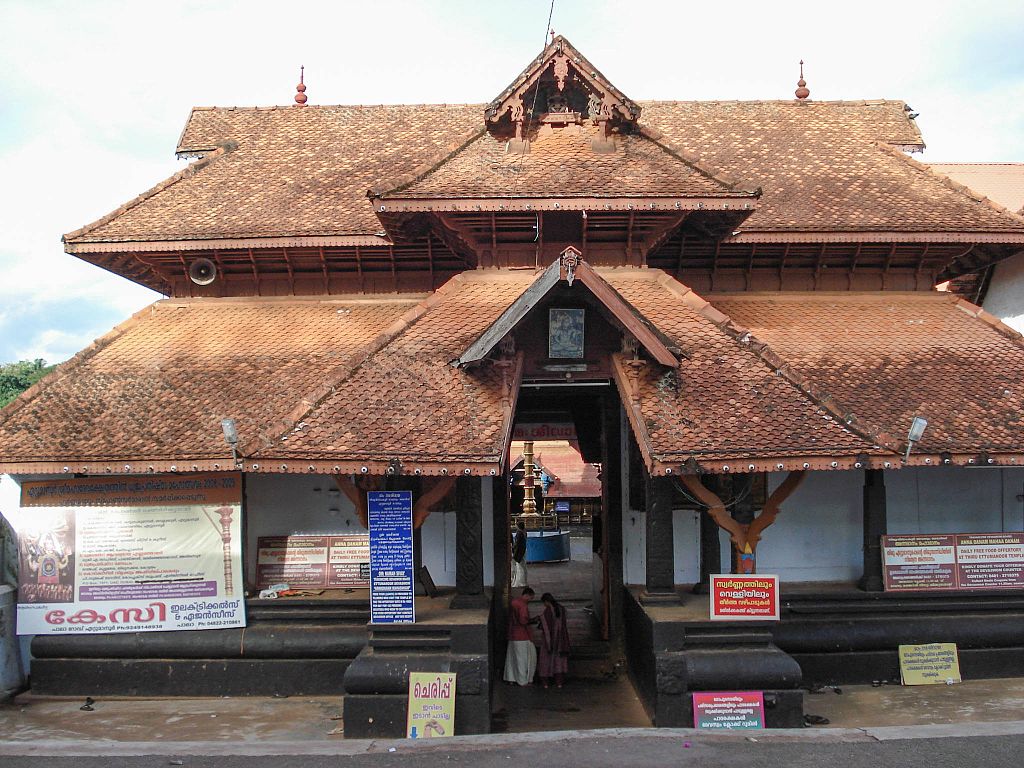
2. Ettumanoor Mahadeva Temple

Temples in Kerala-Ettumanoor Mahadeva Temple
Image/Wikimedia

The Ettumanoor Mahadeva Temple, situated in Kottayam, is one of the most popular temples in Kerala. This sacred structure was built in dedication to Lord Shiva. This temple is certainly admirable not only from an architectural point but also from the aura of the temple which provides such solace. This temple is known for the murals on the wall that are actually in the Dravidian style but the main allure of this place is the well-known painting on the temple tower of Nataraja or the God of Dance.

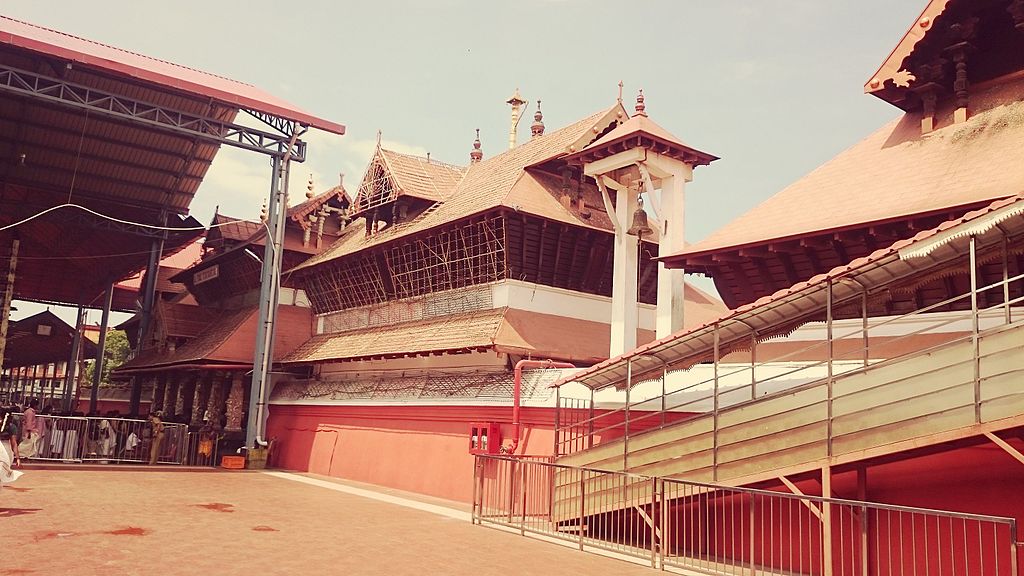
3. Guruvayoor Temple

Temples in Kerala-Guruvayoor Temple
Image/Wikimedia

This sacred temple is dedicated to its namesake, Lord Guruvayurappan, an incarnation of Lord Vishnu with four arms at the time he was in the avatar of Krishna. This temple is visited by thousands of Hindus, being an important place of worship. Also popularly referred to as the ‘Dwarka of South India’, this temple, due to its holy nature, is considered to be the holy abode of Vishnu on Earth, only adding to the religious significance of this temple.

4. Sri Padmanabhaswamy Temple

Temples in Kerala-Sri Padmanabhaswamy Temple
Image/Reji/Flickr

An embodiment of the fusion of native architecture of Kerala and Dravidian architecture, this temple is again situated at the capital of the state, Thiruvananthapuram. The chief deity remains the namesake, Lord Padmanbhaswamy who was worshipped by the royal family of Travancore. The temple looks particularly stunning, especially with all its golden glory and allure. This temple’s main fascination is the treasure that was excavated from its hidden and inner sanctums which are estimated to be above one trillion dollars.

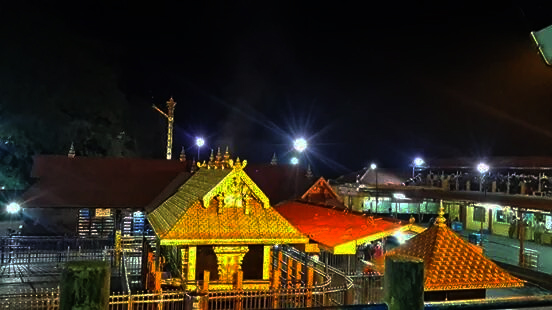
5. Sabarimala Sastha Temple

Temples in Kerala-Sabarimala Sastha Temple
Image/Wikimedia

Located in the Sabarimala temple complex that can be found inside the Periyar National Park, this temple attracts millions of pilgrims and devotees from not only India but from all around the globe. This temple is dedicated to Lord Ayyappam, an incarnation of Vishnu, and is also considered to be the god of growth. The scenic beauty and lush greenery of the Western Ghats surrounding this temple add to the charm of the place. Furthermore, the architecture is fascinating and anyone is bound to get mesmerized by its beauty.

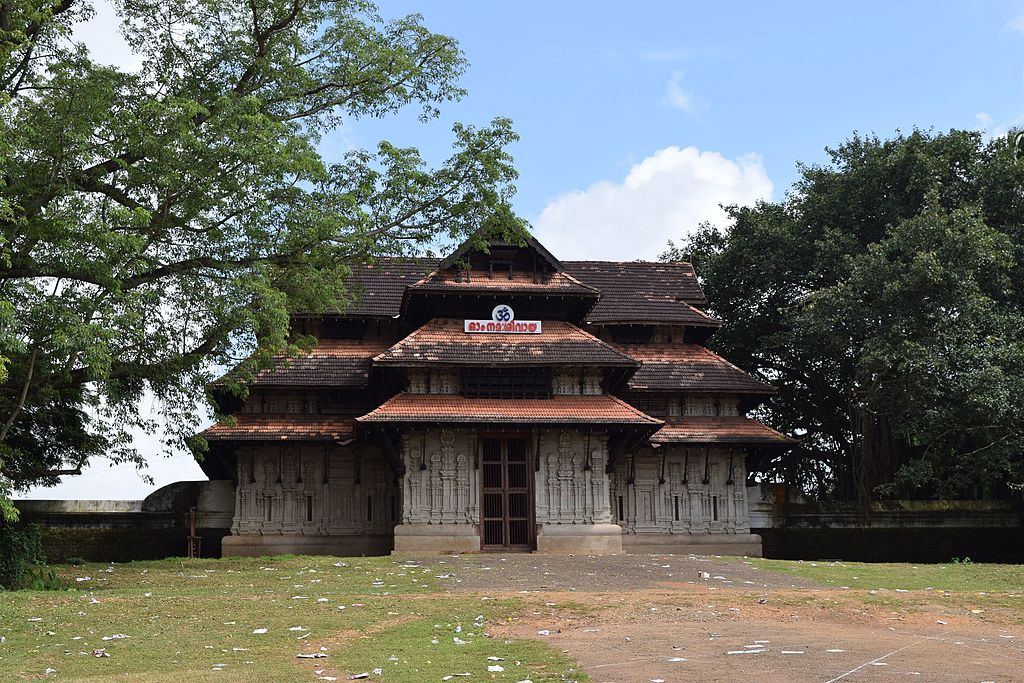
6. Vadakkunnathan Temple

Temples in Kerala-Vadakkunnathan Temple
Image/Wikimedia

The Vadakkunnathan Temple is situated in Thrissur and is dedicated to Lord Shiva. This temple is of great spiritual as well as historic importance to Hindus and was declared as a National Monument by the Government of India. Furthermore, it was also recommended to be included in the list of UNESCO heritage sites. It is a great example of the classic architectural style of Kerala. The major attractions of this temple are the mural paintings found inside that depict stories from the Mahabharata as well the festivals celebrated there such as Thrissur Pooram and Maha Shivratri.

7. Mannarasala Nagaraja Temple

Temples in Kerala-Mannarasala Nagaraja Temple
Image/Wikimedia

As its name suggests, this temple is dedicated to the serpent king Nagaraja, who is believed to be gifted with the form of Lord Vishu as well as the spirit of Lord Shiva. It is situated in the Alappuzha District of Kerala and as one walks around this fascinating temple, one can observe images of snakes all around in homage to the chief deity. It is also a popular rumor here that coming here to pray and worship can help a child to a family who’s struggling with fertility problems. These families later re-visit the temple with their children to show their gratitude.

8. Vaikom Mahadeva Temple

Temples in Kerala-Vaikom Mahadeva Temple
Image/Wikimedia

The Vaikom Mahadeva Temple is situated in the Kottayam District of Kerala and is a temple dedicated to Lord Shiva. It is one of the oldest temples in Kerala and the Shiva Linga that can be found there is believed to belong to the Treta Yuga, the second yuga, following legend. The architecture is splendid and one must simply see for themselves. As it is enclosed by the river Vembanad, the scenic beauty and the depiction of the peaceful town life is entrancing.

9.Chottanikkara Devi Temple

Temples in Kerala-Chottanikkara Devi Temple
Image/Wikimedia

This temple is dedicated to the goddess Bhagavati, an incarnation of Mahalaxmi. It is one of the most well-known temples, especially for Hindus, in Kerala. It is furthermore considered to be a site for ‘exorcism’ due to its ability to remove your inner demons. It is a popular belief that if someone who is struggling with mental health prays at this shrine, they shall be cured due to the healing powers of this temple. An important festival that is celebrated at this temple is Makom Thozhal.

Enticed to buy a ticket to Kerala? It is natural after reading about the entrancing temples of Kerala. If doing so, it is additionally highly recommended to attend one of Kerala’s well-known temple festivals of Kerala which are surrounded by great fanfare and fervor! So, which one of these temples of the Land of Gods caught your inner devotee? Let us know in the comments section below.