Your bedroom is supposed to be your getaway, a personal cosy & warm space, and a sanctuary that brings out your real personality and style. The sight of a well-decorated bedroom not only lifts your spirits high but also promotes a good night’s sleep. Implementing some makeover ideas only to feel your bedroom like a retreat is justifiable. After all, here’s where you rest & recharge yourself after a long, tiring day.
So, what’s the first thing that strikes your mind when you think of surveying about bedroom wall decor online? To figure out how you would hang that flat-screen smart TV? Stop thinking immediately, because this post will help you think out of the (idiot) box! Here’s presenting the spectacular wall decor ideas to fit the appeal of a warm bedroom.
1. Bring Your Outdoor In
Who told you that going tropical is out of fashion? An eye-soothing wall decor idea is to bring the outer space inside your bedroom. When you incorporate a green corner inside your bedroom, it not only adds an organic touch but also magnifies the setup. Add a little of nature by hanging planters and bring life to the walls.
2. Paint a Mural
Sprucing up an empty wall in your bedroom is unquestionably an excellent idea. If you don’t want to splurge on wall shelves, you can try putting a creative hat on by creating a mural. Murals are best to add an extraordinary texture to your room. Painting a mural is a creative take that you can adopt into one of your bedroom walls.
3. Mirror! Mirror on Your Wall!
Imagine painting a mural on one wall and installing a mirror on the opposite wall. If the opposite wall has a contrasting colour (in comparison to the mural), don’t you think it will enhance the gorgeous appeal of your bedroom? Besides, bedroom wall mirror serve a purpose for ladies and lads while decking up. Installing it will reflect light and brighten up the setting.
4. A Wall Galley with Loads of Memories
Wouldn’t a gallery wall full of a collection of miniature photographs be nostalgic? There are certain times in life when you choose to walk down the nostalgic trail of life, sitting by the side of a window. Ah! That’s a kind of personal feeling. But now you can create your nostalgic corner inside your bedroom. And a gallery wall can serve the purpose.
5. Installing Sculptural Sconces
Answering whether or not these have gone outdated is nowhere challenging; because it’s a resounding no. And anyone who has sat under the unappealing bulbs before already understands that good lighting would make the differences. Sculptural sconces are the final bet in this post due to their true-blue reasons. While sconces can add sophistication, dimmers would add romance. That’s how different styles of lighting can create different moods.
Final Thoughts
Remember, when you want to craft an eye-soothing and calming bedroom, it must hold a comforting and cosy appeal. Besides, you’d never want to wake up at the sight of a bare white wall, would you? Keeping all these things in mind, you can take inspiration from here and plan to decorate your intimate space with inviting wall decor ideas.
Created with finesse with delicate strokes of the brush and bold use of colours, the tradition of miniature painting in India began with palm leaves for canvas. It was done on smooth surfaces with exquisite natural colours and delicate brushstrokes. Under the reign of the Mughals, this form of painting fledged to its potential, along with various other art forms of India. Today, we trace the different types of style and influence that the miniature paintings of India went through throughout history, since its origin.
Pala School of Miniature Painting
Painting from a Manuscript of the Ashtasahasrika Prajnaparamita – Metmuseum.org
The Pala school traces its origin back into the 7th century AD when it grew under the patronage of the Palas of Bengal. The themes and stories that it portrayed were primarily inspired by Buddhist texts and scriptures. The symbolic and subtle use of colours, graceful strokes of lines, and delicate forms of figures was emphasized upon. The intricate concepts and styles of the Pala school were taught at the Buddhist monasteries of Nalanda, Somapura Mahavihara, Odantapuri and Vikramasila.
Jaina School of Miniature Painting
Lustration of the Infant Jina Mahavira: Folio from a Kalpasutra Manuscript – Metmuseum.org
Jainism influenced the rise of miniature paintings in western India from the 12th to the 16th century AD. The Jaina paintings depicted stories from religious texts like ‘Kalpa Sutra’ and ‘Kalkacharya Katha’ and prevailed in regions of Malwa, Rajasthan and Gujarat. Some of the characteristic features of these paintings include enlarged eyes and square-shaped hands. Organic colours, including the paint derived from the dust of stones and metals like gold and silver, were used for painting. The stories that were depicted were inspired by Jain religious texts, like the figures of Tirthankara goddess and Gandhara Sudharma. Primarily using red, green, yellow and blue colours, the subjects in the paintings were ornamented heavily.
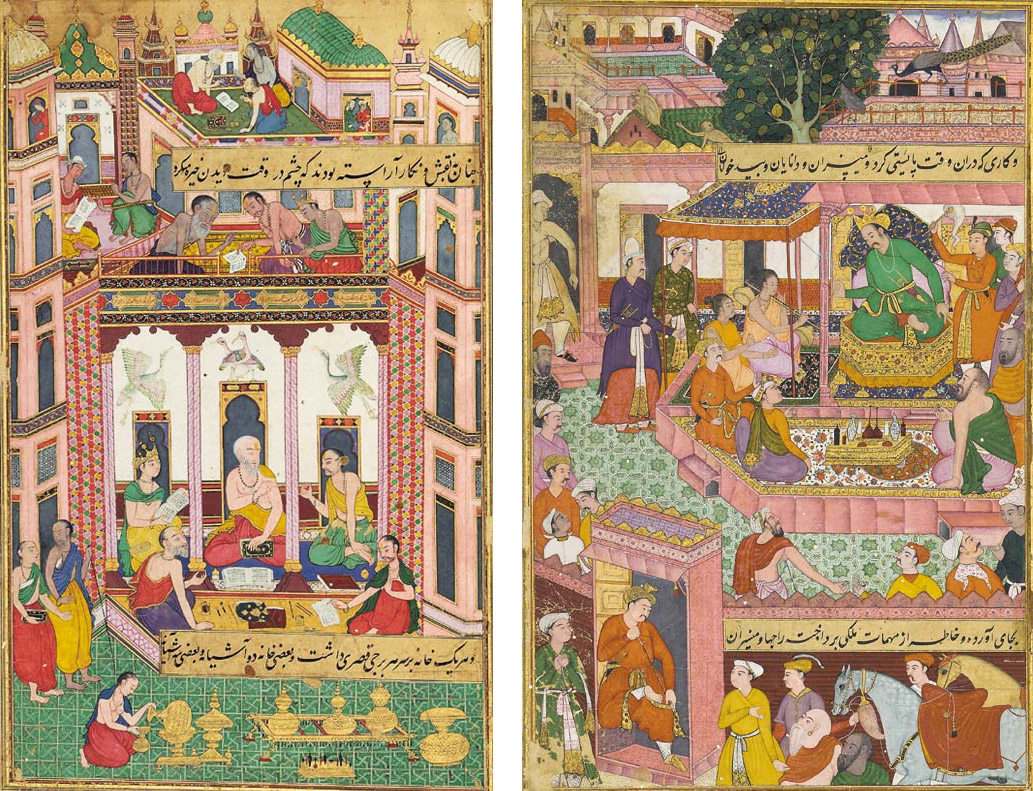
The fine and intricate depiction of the Mughal School of miniature painting was a blend of both Indian and Persian styles. These paintings flourished from the 16th to the 18 centuries AD and were based on naturalistic observation of contemporary life, also influenced by religion and traditions. Thus, they documented scenes of the royal court, hunting expeditions, wildlife and nature as well as battlefields. Every inch of detail was entrusted with rich ornamentations and delicate strokes. Often, many manuscripts were chosen to be illustrated in the paintings and scenes of ascetics and mystics were also depicted. Throughout the reign of the Mughals, there was a different emphasis on the subject of portrayal. Under Akbar’s reign, royal achievements and courtly scenes were significant. While Humayun and Jahangir chose scenes from their own lives to be depicted, artists during Shah Jahan’s time gave importance to portraiture. Bichiter, Anup Chattar, Chaitaraman, and Inayat were some of the most renowned artists during this age. The practice of art began its decline during Aurangzeb’s time because of the emperor’s staunch religious beliefs that Islam prohibits the practice of art.
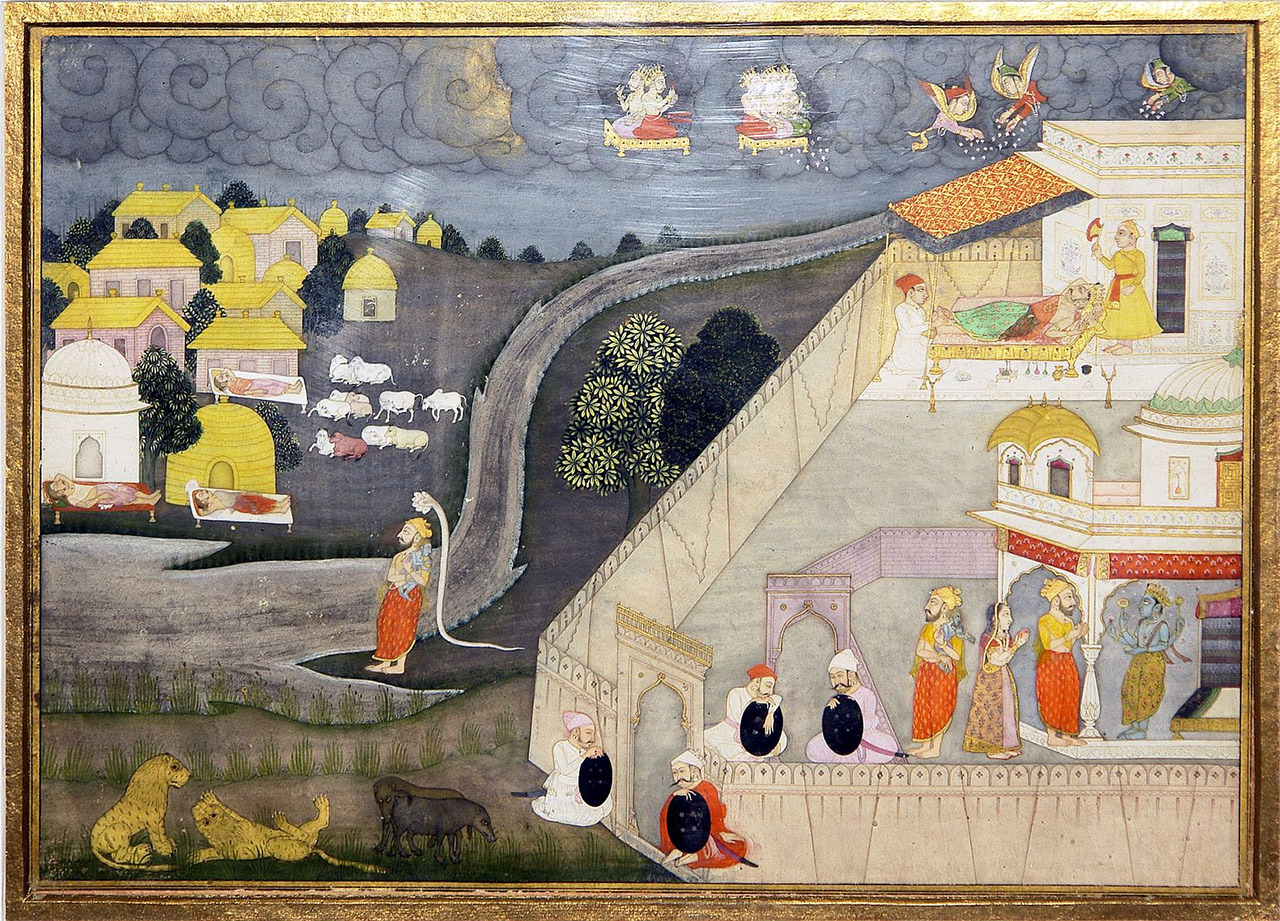
With the Mughal form declining, the Rajasthani schools began to rise as the artists sought for different patronage. The Rajput style of miniature painting centred around the epic works of Ramayana and Mahabharata and also depicted the mythical love stories of Lord Krishna. Its most distinct schools include the ones established at Malwa, Mewar, Hadoti, Marwar and Amber. Despite the variance in style from one region to another, the artists had the common ground of life in the Rajput Kingdom to base their paintings on. Exaggerated features like elongated eyes, fingers and necks served as a distinct characteristic feature of these paintings. Fine brushes were used to colour the paintings in contrasting details and the paints were extracted from plants, minerals, shells and even metals like gold and silver. Today, this painstaking form of art is practised on paper, ivory or silk canvas using manufactured synthetic colours.
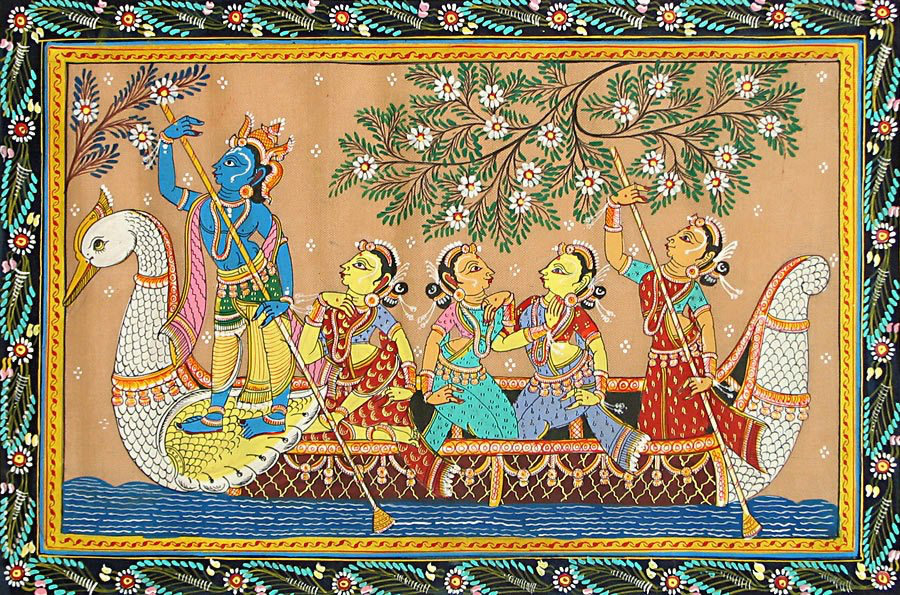
Depicting mythical stories from ‘Krishna Leela’ and ‘Gita Govinda’, the Orissa school of miniature painting came to significance during the 17th century AD. With bold strokes of the colour, the artists expressed the beautiful landscapes of eastern India in rich detail. The contrasting colours gave a majestic appeal to art.
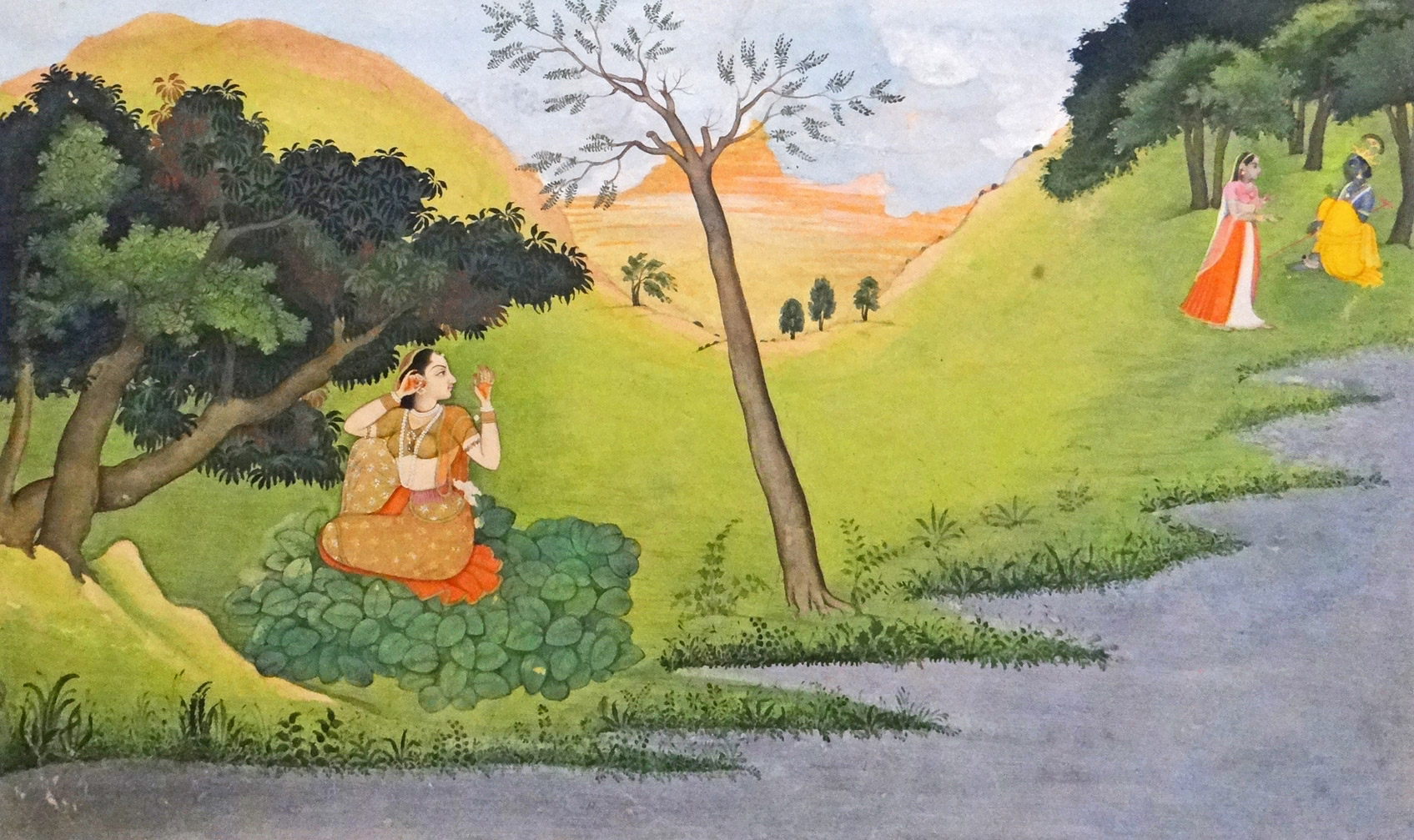
Developed from both the Mughal miniature art and Vaishnavite stories, the Pahari school flourished in the northwestern region of India. The Pahari school of miniature painting has its further division into various sub-schools. The bold Basohli art with its use of monochrome colours and multi-floor structures, the delicate Kangra style with its lyrical portrayal of naturalism and ‘sringar’ or adorning. To name a few others would be the Guler and the Kullu-Mandi schools. With bold colours and ornamented frames, the paintings usually depict deities, mythological scenes, and the subjects were often portrayed against the backdrop of the magnificent beauty of the Himalayan mountains.
Deccan School of Miniature Painting
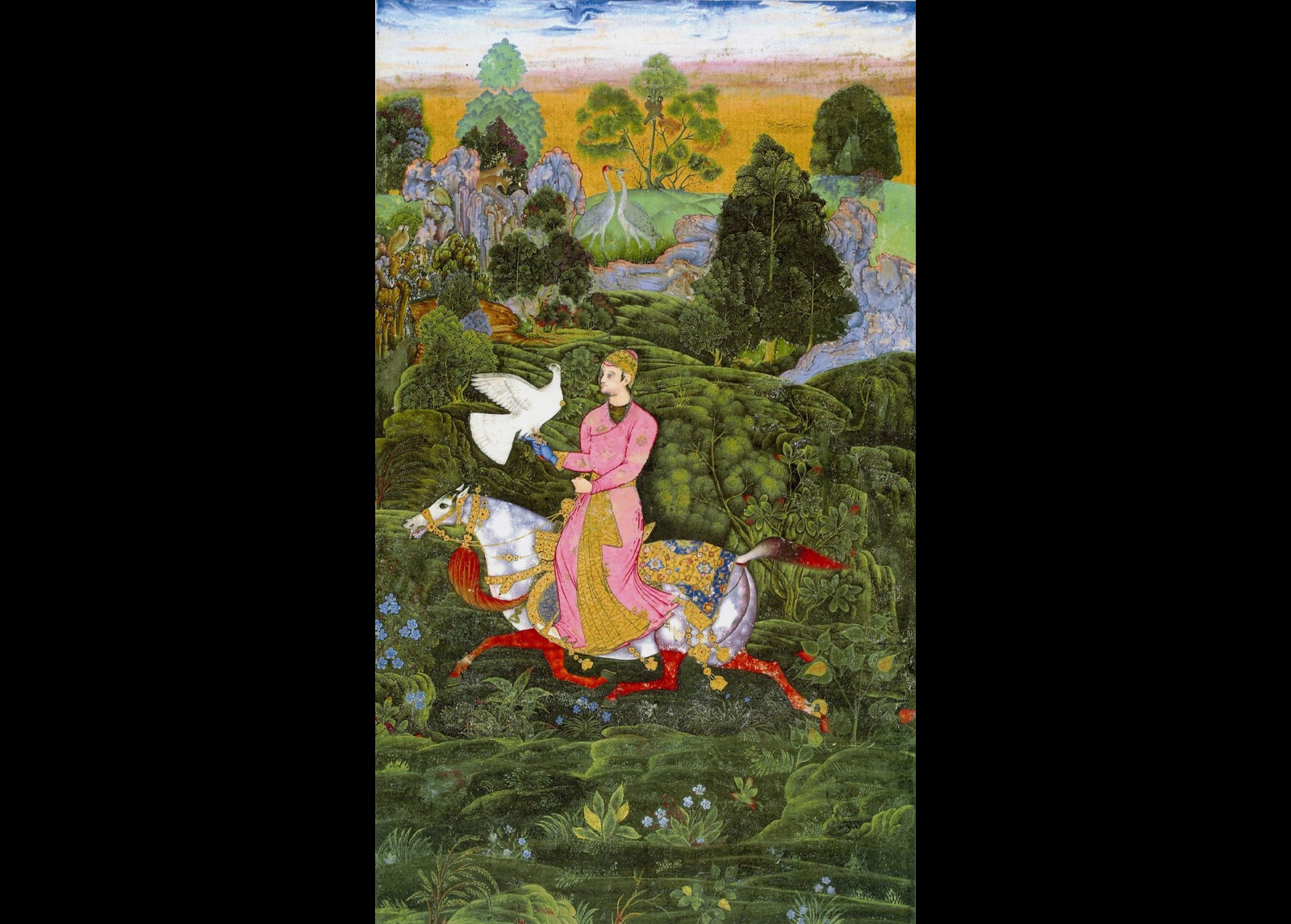
The young Ibrahim Adil Shah II hawking via Wikimedia
The Deccan school incorporated elements from the Iranian, Turkish, Arabian and South Indian schools of miniature paintings. It had spread its stronghold in the regions of Ahmednagar, Tanjore, Golconda, Hyderabad and Bijapur from the 16th to 19th century A.D. With intense colours and sensual figures, the Deccan school emphasized the practice of symmetrical arrangements of the subjects. The paintings were derived from the text of the Holy Quran and the Surahs. Later on during this era, indigenous art forms, romantic elements and Mughal styles were assimilated into the art form.
The scenes and subjects depicted in the miniature paintings of India unravel stories through their intricate details. Although the practice of these paintings during modern times is not as exceptional as the original tradition, the importance of the art form lies in its role as a chronicler of historical times. Museums and forts today house these inimitable works of art.
Food always plays an integral part in our daily lives. Apart from helping us to survive, food also plays an essential role in our culture and traditions. Every community and every region from around the world has its own diverse and varied food culture, which is quite distinct from that of the others. Food plays a vital role in the life of an individual. From the nostalgic memories of the childhood snacks to the current food habits, it serves nourishment to the individual’s heart and soul. Food also serves as a unifying factor in bringing together different communities and in helping us view the world from each other’s perspectives. The major distinctions in India’s cuisine is between North Indian and South Indian Cuisine. In India, every region has its variety of types of Indian Cuisine, which portray the diversity that the country is home to.
Punjabi cuisine is famous all over the country for its delicious flavor. Milk products are an essential part of the cuisine of the state, and hence a glass of Lassi and buttermilk is necessary to every Punjabi meal.Wheat is the staple food of most North Indian people and different dishes made of wheat, such as Aloo Paratha, Makki Roti are also widely consumed.Apart from these, vegetarian dishes such as Rajma Chawal and Kadhi are also extremely adored in the state. The most popular dishes of the state of Punjab include Paneer Tikka, Dal Makhani, among others.
The state of Rajasthan is widely known for its distinct variety of dishes. Milk and butter are major parts of the Rajasthani cuisine. Gram flour is also used widely in preparing the dishes. Lentils, beans, corn, millet, among others; form a significant portion of the diet of the people. Dal Bati Churma, Mawa Kachori, Mirchi Bada, and Kalakand are some of the most popular dishes from Rajasthan.
Bengali food is a combination of fish, rice, and lentils. The dishes prepared in the state have a unique blend of spices and are hence quite popular. The most popular dishes of Bengali cuisine include Aloo Posto and Doi Maach, among others. Bengali sweets are perhaps the most popular desserts in the country. They include Mishti Doi, Rasmalai, Kacha Gola, among others.
Tamilian Cuisine
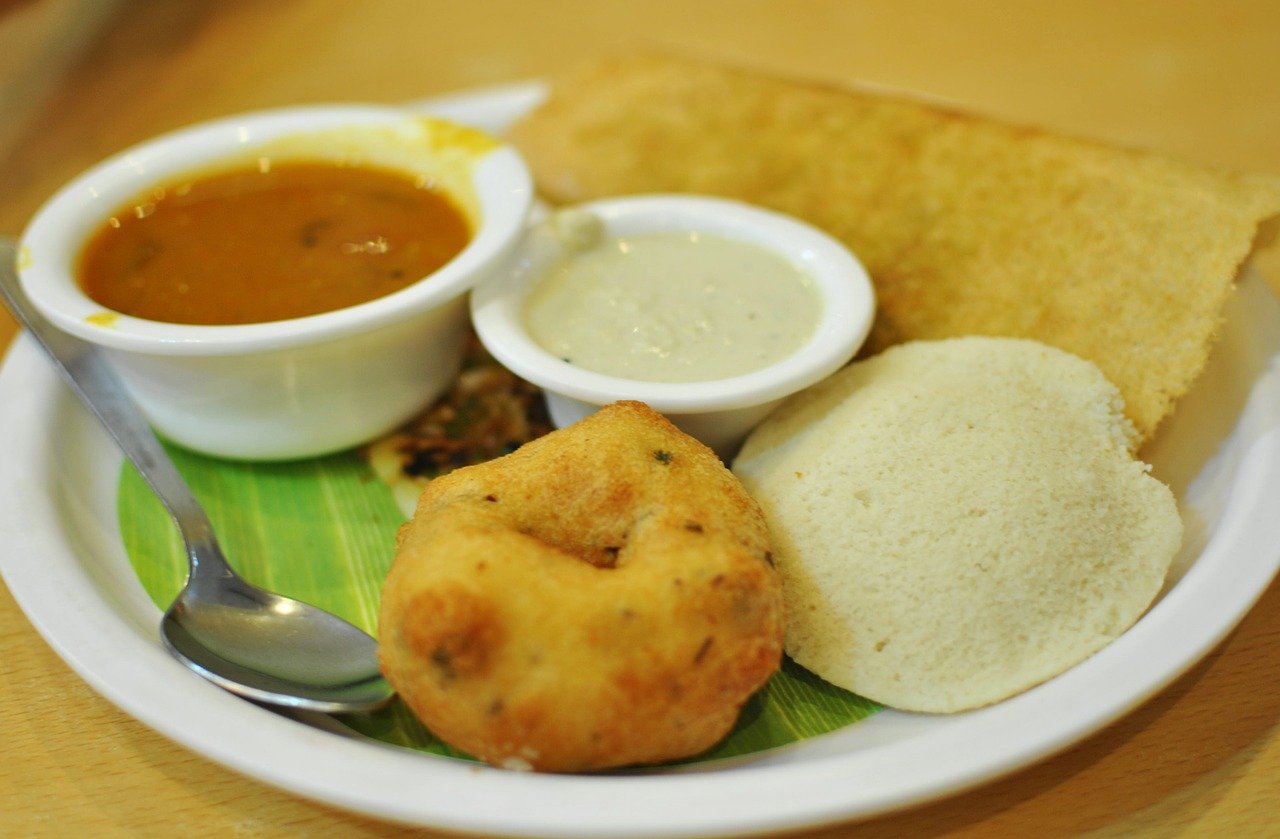
Image by Nisha Gill
Tamil Nadu belongs to the southern part of India and is notable for its delicious food. Tamilian food is mostly vegetarian and includes dishes such As Idli, Vada, Dosa, and Sambar. Rice is the staple of the place. The spicy and tasty blend of the Tamil Nadu cuisine is worth experiencing. The most popular dishes include Uttappam, Takali Soru, Murukku, Paruppu Payasam, among others. Here, people prefer coffee over tea as a beverage. Tamil Nadu is thus home to a unique and distinct cuisine in the country.
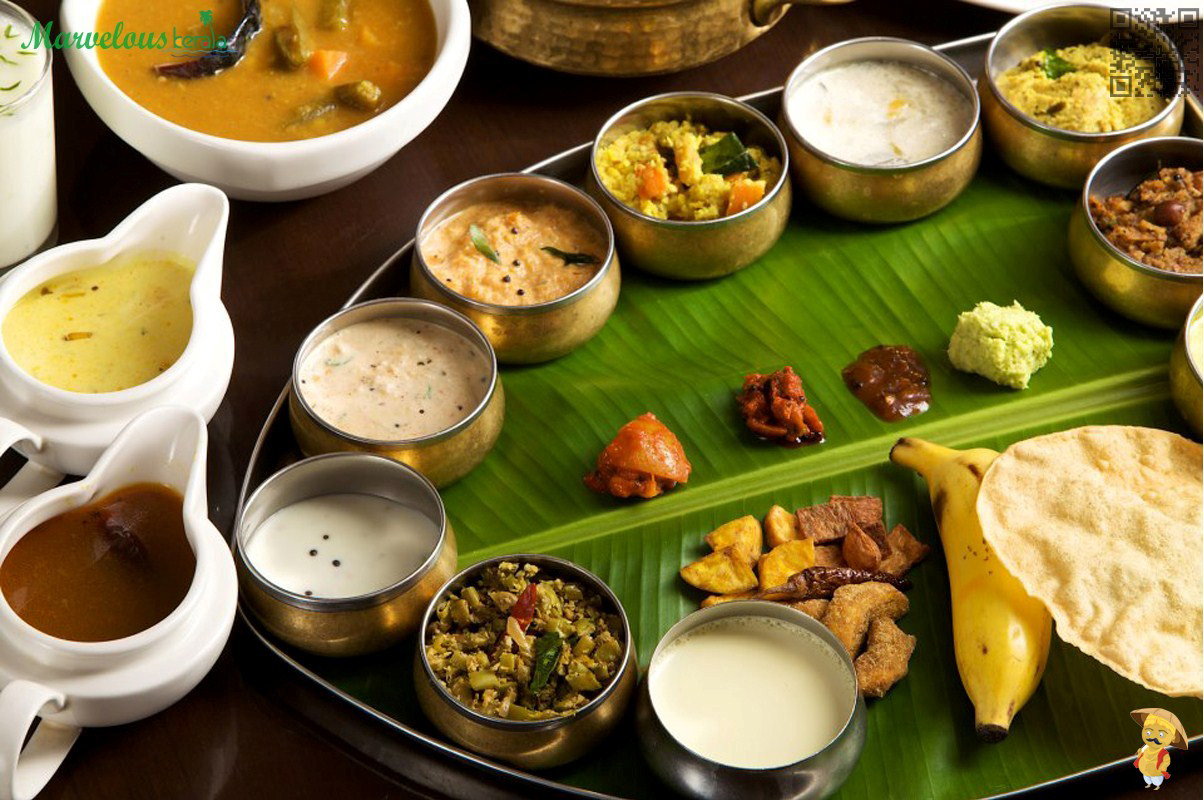
The state of Kerala lies in the southern part of the country. The principal food of the state is rice, along with a variety of side dishes. Food lovers frequent the state from all parts of the country due to its marvelous delicacy. The unique blend of the spices and distinct flavours are a treat to the taste buds. Kerala cuisine is rich in spices, such as chillies, ginger, black pepper, etc., is what makes the cuisine of this state different from that of others. Sadhya is perhaps the most popular meal of the state. It comprises rice and more than thirteen different and unique side dishes. The most popular dishes of the state include Karimeen Pollichathu, Palada Payasam, Puttum Kadalayum, among others.
The cuisine of the state of Andhra Pradesh is prominently known for its distinctive collection of spicy food. The cuisine comprises both vegetarians as well as non-vegetarian food. Rice is again an essential part of the cuisine of the state. Apart from that; red chili, ragi, and jaggery are also present in the food culture of different regions of the state. The vegetarian dishes and their style of cooking are quite popular among food lovers. The addition of red chillies make almost all their dishes on a spicier side. Panasa Puttu Koora, Gutti Vankaya Kura, and Boorelu are some of the most popular items in the state.
Telangana cuisine is also quite spicy in comparison to that of other states. It comprises various ingredients like tamarind, red chilies, sesame seeds, which add a prominent flavor to the food culture of the state. Bread and roti are also quite popular. Sarva Pindi, Dakinadu, Malidalu, and Pachi Pulusu are some of the most popular dishes in Telangana.
North Indian Cuisine
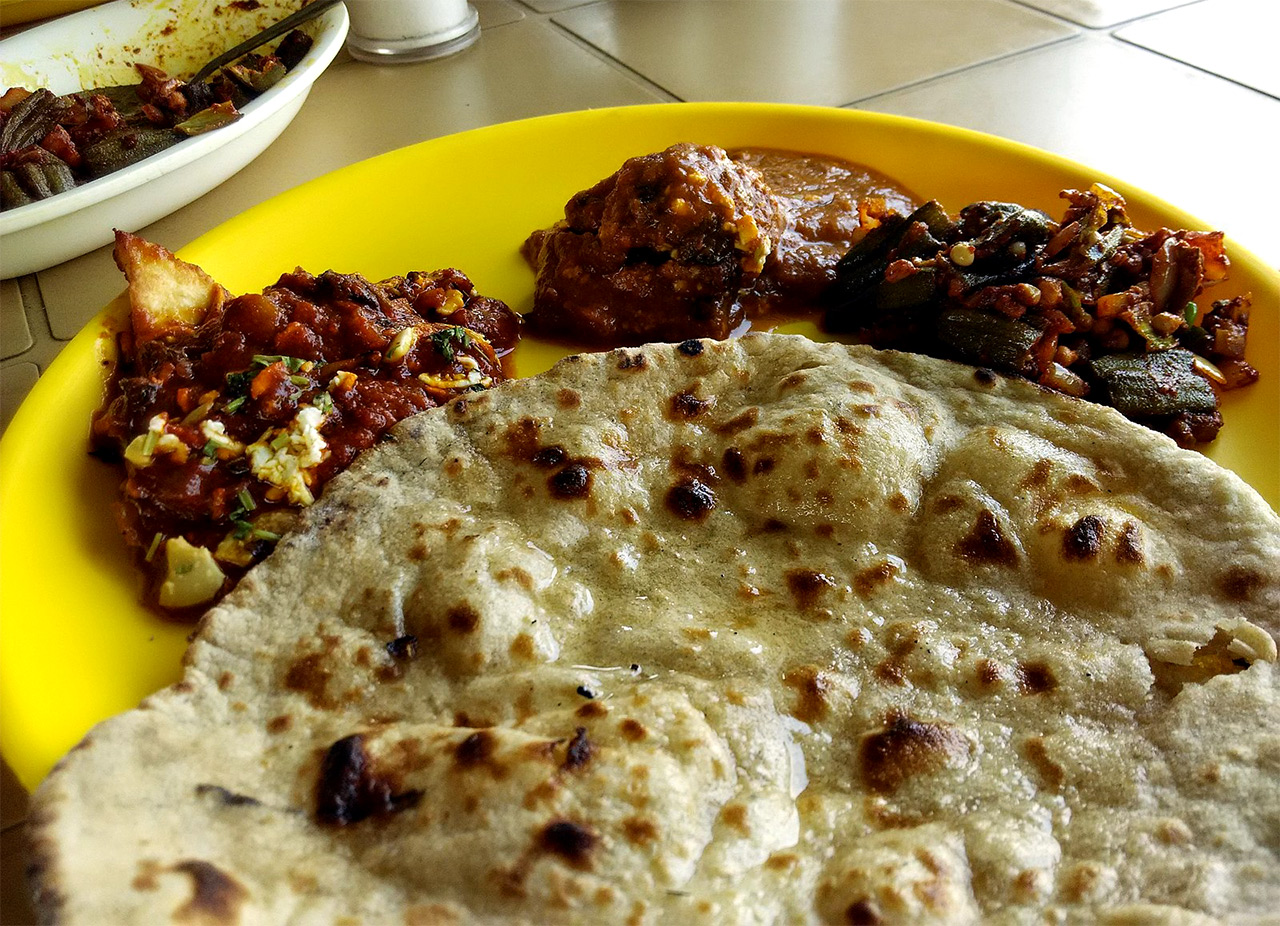
Photo by Marvin Ozz from Pexels
North Indian cuisine is varied and diverse. Every dish which belongs to the cuisine is exceptional in its own way. When compared to the other popular cuisines of India, one can see that the delicacies of North India have an abundance of ghee, fresh cream, and butter, among others. Chole Bhature, Aloo Samosa, Dahi Bhalla, Pani Puri, are some of the most loved dishes of north Indian cuisine.
South Indian Cuisine is notably distinct from that of North India. Delicacies of the south make more use of chillies and spices and almost always include rice. These dishes are much loved by food lovers from all parts of the world. Idli, Dosa, Appam, Medu Vada, Rava Upma, Uttapam, and sambhar are some of the most popular dishes that are quite popular and loved all over the country.
The Diversity in Indian Cuisine
India is a land of diversity, and this is definitely reflected in the cuisine of the country. From the Chole Bhature to the Rava Upma, the dishes are remarkably diverse. For instance, the delicacies prepared in the northern part of the country differ widely from that of the southern part of the country. Even within a state, specific regions have their own food culture, which contradict that of the other parts of the state. Each cuisine prepared in the country has an exotic flavor and is special in its own way.
Have you been stuck in a negative pattern as of late? Sometimes people get in a rut and they wind up having a tough time getting out. You might be making the same choices over and over again that keep leading you back to negative results. It might not always be obvious to you that you’re doing this, but it’s good to try to recognize when you’re stuck in a negative cycle.
If you wish to break out of a negative cycle in your life, then you’ll want to take specific actions. Read on to learn about important tips that can place you on a better path. Utilizing these tips will make it easier for you to start living the positive life that you want. It might take time to turn things completely around, but you can find success when you put your mind to it.
Start Thinking More About Your Choices
A negative cycle in your life can occur simply due to you not being careful when making choices. Every choice that you make is going to have consequences. Sometimes choices will lead to great things, but choices can also make your life tougher. Even the choice to eat unhealthy foods instead of nutritious ones can contribute to putting you on a negative path.
If you can take a step back to start thinking about the choices that you’re making in life, then you’re going to do much better. This allows you to consider your choices more carefully before doing things. You should understand the ramifications of the choices that you make so that you can be comfortable with the potential outcomes. Take more time to consider the big choices in life, and try to be more mindful of the consequences of small choices as well.
Develop Good Physical Habits
Developing good physical habits might help you to break out of a negative cycle in life. Sometimes you can fall into a rut due to feeling depressed, anxious, or stressed. You might even have issues with your physical conditioning that will put you in a bad place mentally. If you can start making good choices about exercise, then you’ll turn things around.
Try to get more exercise so that you can start to feel better about yourself. Even simple choices like taking the stairs instead of the elevator can help you to stay in better shape. When people feel like they’re in good physical health, it’s going to be easier for them to lead positive lives. Exercise won’t solve all of your problems in life, but it can alleviate stress while making you a happier person overall.
Talk About Things with Your Support System
Talking about things with people will help you to develop a better perspective on the events of your life. Don’t be the type of person who keeps things to themselves all the time. It’s good to discuss your life and your worries with a few close friends that you can trust. This is known as having a support system, and you can be there for each other so that you will stay on the right path.
Try to meet up with your support system to talk about any worries that you have. You can sometimes get great advice from friends, but even just having someone to talk to can help you to make better decisions. Talking things out gives you time to think, and it might be just what you need to break negative cycles in your life. If you have people that you can trust in your life, then you should talk to them more often.
Consider Therapy
Therapy might be the right thing for you if you’re having a tough time in your life. Some people have difficulties breaking negative cycles on their own. You might need the advice of a professional so that you can start making better decisions and move forward in life. Click here to learn a bit about how therapy can help people to turn their lives around over time.
When a person is cranky or moody, we tend to think they didn’t get enough sleep. While getting plenty of rest each night is essential, lack of proper nutrition could also affect your mood. The food you eat plays a significant role in your mental health. It affects your mood, energy, and your ability to think clearly. A balanced diet may improve each of these areas, but it helps to get some advice from a professional source when understanding your body’s dietary needs. Here are a few things to consider when reviewing your diet and how to improve it to benefit your physical and mental health.
Manage Your Emotions with a Good Diet
Understanding how food affects your mood includes doing research about which foods are right for you. It may also help to learn more about how food and mental health work hand-in-hand and how they play a role in influencing lifestyle choices. There are many aspects to eating healthy, but there are other elements that can make healthy eating work even better for you and your mental health, such as:
Avoid skipping meals. Eating regularly helps maintain blood sugar levels. If you feel depressed, tired, or irritable, your blood sugar may be unbalanced. Limit or avoid foods high in sugar to reduce the rapid rise and fall of your blood sugar.
Eat small meals or smaller portions to help you eat during the day, especially when your appetite is low.
Consume foods known to help the body produce natural energy when you need an energy boost during the day. Foods like nuts and whole-grain bread may provide energy throughout the day.
Eat a variety of fruits and veggies daily. It will allow your body to get vitamins and minerals from natural food sources to ensure physical and mental health support. Consider eating fresh or frozen fruits and veggies and explore options such as juices or smoothies.
Healthy Eating for Mental Health Includes Stomach Health
Your mood can affect how well your gut digests your food. Some people experience an upset stomach when they’re not in a good mood. If you are anxious or stressed out, your stomach may break down food faster or slower than it should. Also, it could take your stomach longer to get used to changes made to your diet. Be patient and give your tummy time to adjust. Practice techniques to calm yourself down when feeling stressed to avoid upsetting your stomach.
Additional Smart Eating Tips
Eat foods high in protein to help regulate hormones associated with your feelings and thoughts. Minimize caffeine consumption to avoid emotional and energetic highs and lows. Get to know the right fats to eat, such as omega-3, which can also help regulate your mood. If you are taking prescribed medicine, keep in mind that it could have dietary restrictions affecting the medicine’s effectiveness.
In some cases, certain medicines could also affect how your body breaks down food. Discuss any health concerns with your primary care doctor. Working with a therapist could also give insight into changing your living habits to improve your mood. Therapy and lifestyle counselingcan provide additional strategies to create a balanced approach to mental and physical health. One approach some people explore is CBT, which focuses on identifying thought patterns that may influence behavior and mood.
Your physical health is the only thing that depends on a healthy diet. Your mental health benefits when the right foods are incorporated into a regular diet. Nutritional eating advice from experts may vary as we learn more about how food affects our bodies. It is essential to stay up to date by talking with your doctor or dietitian. Nutritional needs vary from person to person. What works for one person may not work for someone else. Keep your options open and continue learning how to keep your diet interesting and healthy.
Visualization is a method used to calm the mind and body through mental imagery. The concept is compared to daydreaming, in which you visualize an image or scenery to encourage self-calm. Visualization has helped people cope with stress. It also promotes healing so the body can focus on self-repair. People who suffer from panic attacks or anxiety disorder have found visualization useful. When practiced regularly, it may help your mind and body improve its ability to relax and rest through imagery exercises.
What is Visualization and How Does It Help People?
The process includes using calming or serene images to help relax the mind. Visualization helps control anxious thoughts or calm the mind when you feel panic. When the mind gets caught up in worry and anxiety, it is difficult to focus on making decisions and solving problems. Visualization exercises help you train your mind to calm down racing thoughts by focusing on a comfortable environment. Then, you proceed with deep-breathing techniques to help the rest of your body calm down. The process may include engaging in muscle relaxation exercises to encourage in-depth body relaxation.
Most Common Visualization Exercise/Scene
The beach setting is a familiar environment people refer to when practicing visualization exercises. The beach presents a calm and relaxing atmosphere. If you’ve visited a beach before, you know how it can affect all of your body senses. The tranquility of the water waves, the warm sun, and the sound of the ocean water waves and winds together help people unwind. You can practice this exercise yourself or get it as a homework assignment if working with a counselor or therapist. Online counseling service providers like BetterHelp can connect you with licensed professionals who may guide you through such exercises as part of therapy.
The idea is to close your eyes and visualize yourself at the beach. Take notice of the things surrounding you, including the sky’s color, the movement of the water, and the sand between your toes. As you visualize this scene, relax your body muscles. Some like to change the motion of their breathing and sync it with the water waves’ motion. There is no right or wrong way to do this but do so in a comfortable manner for you. Take your time with the exercise and enjoy the sights with little effort. At the end of the exercise, imagine yourself leaving the beach slowly and remember this is your special place to return to when need. Open your eyes slowly.
Visualization Lets You Get Creative
The beach scene is a great idea, but you can choose any scene to help you get comfortable practicing visualization. You can get as creative as you want with your ideas. You can choose a nature scene such as the mountains, a private island, or a rainforest. The scene you imagine should allow you to use all five of your senses to create a mental state of calmness. It should help your body to relax.
When you are ready to end your exercise, slowly leave the scene by bringing your mind back to the present. Being creative with your scenery encourages you to practice your exercises regularly. Explore other ways to incorporate visualization with other concepts such as meditation and mindfulness.
Gaining benefits from visualization takes practice. Making time during the day includes choosing the best time of day and making it a routine. Practice when your anxiety levels are low. Practice will make it easier in time to use the technique when you need it the most. When you notice anxiety or stress symptoms begin to bother you, it is a good time to start your visualization exercise.
Going through some type of tragedy in your life will change you in many ways. When you’ve dealt with traumatic experiences such as losing loved ones, it’s not going to be easy to cope with what has happened. Some people even wind up experiencing significant issues with depression. You might be worried about what you can do to help yourself feel better, but you aren’t sure what to do about the way that you’re feeling inside.
Many people have decided to turn to therapy to help them get through the emotional trauma that they’re experiencing. If you know that you’re having a tough time in life because of a tragedy in your life, then you could use help. It’s a good idea to have someone on your side that understands what you’re going through. The decision to go to therapy could wind up changing your life for the better.
Acknowledging the Trauma
Acknowledging the trauma is an important step when you want to move on in life. Some people try to move forward by forgetting what happened or trying to bury it somewhere deep inside. This might work for a time, but those negative emotions will start to creep to the surface eventually. It’s important to grieve and allow yourself to go through the emotional process.
When you bottle up your emotions, it’s going to cause them to build up more pressure over time. Eventually, they’re going to come bursting out, and this can make it worse than usual for you. Instead of dealing with a little depression, you might wind up being very depressed. This is why acknowledging the situation and learning how to deal with things is the best route to take.
A therapist can help you out by talking to you about what you have experienced. It might be uncomfortable at first, but you will feel better as you move forward with therapy. You can come to terms with your feelings about your tragic experience. You’ll learn how to express your emotions in healthy ways, and you should be able to let go of the grief that you feel inside over time.
Learning How to Cope
Learning how to cope becomes easier when you have a therapist on your side as well. Going through some type of traumatic experience in life can make you feel anxious or depressed. Coping with those feelings in healthy ways is essential, and a therapist will work to help you develop strong coping mechanisms. If you get anxious in certain settings, then a therapist can help to teach you calming exercises so that you can find your center.
When you learn how to cope in healthy ways, it helps you to move forward in life. Instead of making bad choices that will make things worse, you’ll be able to cope and make yourself feel better. For example, some people overeat when they’re depressed because they’re trying to make themselves feel better. You’ll have better coping mechanisms to use than that, so you’ll be able to avoid the negative consequences of bad coping methods.
Therapy Can Be Convenient
Therapy can be convenient even if you’re a busy individual. You need help to work through the tragic experiences that you’ve had in life, but you might not have a lot of time to travel to therapy offices. Online therapy is the solution to this because it allows you to get help without having to leave the house. You can sign up for online therapy easily and it’s even possible to get a great deal. Many online therapists also offer treatments like cognitive behavioral therapy, which can be tailored to help with processing trauma and building healthier coping strategies.
Click here to learn more about how people can work through traumatic experiences in therapy. If you’ve been having a hard time after going through a tragic event, then you can get the help that you need. Having someone on your side will make a world of difference.
Have you been feeling like you’re having a tough time with your mental health as of late? Sometimes people go through difficult times in life, and you might wind up dealing with issues like depression and anxiety. If you’re feeling down, then you need to have good support so that you can feel better. Getting through mental health struggles alone is going to be even tougher than usual, and no one should have to try to do that.
Keep reading to learn about what you can do to get through a tough time with your mental health. You’ll learn about why support is so crucial and how you can use it to cope with everything that you’re going through. Over time, you’re going to feel substantially better if you’re able to follow this advice.
Coping with Mental Health Issues the Right Way
One of the most important reasons why you need support is that you need to be able to cope with mental health issues the right way. Some people turn to negative things when they feel depressed or anxious. A person might think that drinking alcohol or overeating will make them feel better. In reality, things like that have the potential to make your life worse, but you don’t always make the best decisions when you’re struggling with mental health.
If you have the support that you need, then you’re going to be more likely to avoid bad choices. Bad choices can lead you down a darker path that will be difficult to get off of. When you try to deal with mental health issues alone, it becomes that much tougher to cope with what is happening to you. Coping becomes easier when you have people that you can turn to, and this is why you should try to open up to those that care about you. In addition to seeking support from loved ones, structured methods like CBT can offer practical tools for managing anxiety, depression, and other mental health challenges.
Having People to Talk To
Having people to talk to about mental health issues will make such a big difference in your life. When you’re going through a difficult period in life, it’s easy to get melancholy and feel like things will never turn around. If you’re dealing with thoughts like these by yourself, then your mental health might wind up getting worse. Ruminating thoughts can lead to greater despair, but you can inject positivity into the situation by having good people in your life.
Talking to close friends and family members about what is going on can help you to feel better. You can acknowledge the issues that you’re having problems with so that you can feel better. Sometimes your support system will have good advice for you, but it can also be cathartic to just talk things out. Having someone who cares enough to listen is very valuable, and it can make it a lot easier to cope with mental health issues.
Therapy Helps Many People
Talking with your friends and family members is great, but you might need more support than that. Support therapy can help you to turn your life around and get things back on track. Click here to learn a bit more about how therapy can make a difference in people’s lives. If you are looking for the right one, search “therapist near me” to find the best professional help in your area.
You have the option of signing up for online therapy so that you can talk to someone about what’s going on. This is great for so many reasons, but it’s especially good for those who have busy schedules. You can talk to a therapist whenever it’s convenient for you to do so, and you won’t ever have to leave the house. You can video chat with a therapist, talk on the phone, or even just send texts back and forth.
Look into the available therapy options so that you can get the support that you need. No one should ever feel that they have to face mental health issues like depression and anxiety alone. There are people out there who care, and you’ll always be able to reach out to a compassionate therapist.
The enthusiasm to reach Madikeri, the district headquarters of Coorg in Karnataka never waned, though our day began so early, hours before 6 AM when we boarded the Shatabdi from Chennai to Mysore, and the 3-hour drive from Mysore to our destination took a toll on us. Choi Myunghee, my travel buddy had everything in her backpack to keep us going. The otherwise quaint quiet hill station was noisy and crowded because of the imminent Dussehra procession. Unbounded merrymaking was largely written on all faces. After a warm shower, we could not wait any longer to explore. Dasha Mantapas, towering mechatronic statues, colorful shops, bargaining voices that rose above blaring music and gleeful faces, the aroma of foods and spices defined the run-up to the most famous festival of the country. Coming together of people belonging to different faiths looked glamorous.
Scenic beauty of Coorg
After a few minutes of chatting with Buddhist Lamas, we met in Shree Kote Mahaganapathi Temple. That gave us an inkling of the historical significance of the festival and the extravaganza. It goes back to more than 100 years when the people of Madikeri suffered from a grave disease and the then King sought a divine intervention by carrying out ‘Karaga puja’ to appease the four ‘Shaktidevata,’ and the spread of the epidemic was contained. Ever since celebrating the victory of good over evil happens in the best possible ways with moving Mantapas that showcase Puranas or mythological stories. Looks of disappointment were clearly written on their faces upon knowing we missed the previous nine days of Karaga show.
Dussehra at Madikeri
Dussehra at Madikeri is a lifetime experience for anybody from any part of the world. The night grew darker, the floats began to move, crowds trickled in, ready-to-rock DJs held sway, Madikeri danced away to an enticing mix of Kannada and Hindi rap, my legs grew tired and I half-heartedly made my way to Treebo Trend Oleander after a heavy dinner at Coorg Cuisine, the much sought after restaurant for Akki (rice), roti, and bamboo pork.
Early the next morning, we found ourselves among the last revelers. Statues of Field Marshal K M Cariappa, first Indian Commander-in-chief of the army adorned Madikeri and spoke volumes of how the natives revered him. To me, it felt as though this proud son of the soil was overseeing everything that’s happening in his hometown. The reeling floats finally halted.
Treeboo Oleander
Our driver regaled us with stories of past Dussehras till we reached Nisargadhama, a delta formed by river Cauveri. The hanging bridge that led us into the reserve did sway a bit. I was nervous. So, I kept myself mentally occupied by trying to remember a word, and before I crossed the bridge I got it right: gephyrophobia- fear of bridges. Human-sized figurines offered visual storytelling. Just when I needed an adrenaline rush, I spotted ziplining. Before I could decide if those screams I heard meant panic or excitement, I was already pushed down the line. Spotted deer and stags loitering about slowly with their curved three-pronged antlers stood and stared, posed for all. Watchtowers provided me with the satisfying view of the whole islet; not to mention the shaky wooden ladders.
Namdroling Monastery Golden Temple – Bylakuppe
Our next stop was Bylakuppe, the second largest Tibetan settlement in the world outside Tibet after Dharmashala. Despite the tourists, the place was tranquil and quiet. It took much of my effort to learn the names of the three towering gold plated statues of three saints set against intricate murals and impress a few. A word of prayer to saint Padmasambhava for making me more kind and compassionate, one to saint Sukhayami for peace that passeth all understanding and last one to Buddha Amitayus for a long life. A casual chat with Pawan monk Rigchog who seemed to know a handful of Indian languages gave me a vivid idea of what is required of monkhood. He enjoyed the question-answer session but glances from other tourists who wanted to meditate made me forget the other dozen questions I had in my mind.
Namdroling Monastery Golden Temple – Bylakuppe
After the chance encounter with Rigchog, I found my nerve to interact with many more. Many conversations began with a Namaste, continued through uninhibited chuckles and debates and ended with cool photographs. Given the beautiful frescos that depict Buddhist mythology and traditional Thangka paintings in smaller Padma Sang-Ngag Choekhorling and Tashi Lhunpo monasteries, I got lost in time. Rhythmic chants, flickering butter lamps and moon-faced monks held my attention, helping me realize that I have finally learnt to sit still and silent. Oh, that big bell in the courtyard. Alas! It was tongue-tied. Yes, all bells in Bylakuppe should ring for a reason.
My hunger pangs disappeared on seeing quad bikes. My fantasies gave way to fear and excitement as I failed to maneuver the machine through steep slippery slopes and slushy swamps. Neither I nor my fellow riders were surprised when my bike stopped. My travel buddy quipped, “Nothing ends a perfect ride quicker than a broken chain”. Thankfully, the broken chain came as a saving grace giving me my much-needed relief and time to gaze at the plantations and farmlands around. As if the instructor already knew what was coming, he made sure I was on another bike in less than fifteen minutes. The 4km trail did test my endurance, strength and courage.
Colorful ‘Dream house’ of a coffee planter (read the plaque)
An hour later, I woke up to sounds of hawkers and costermongers crying, ’Buttered corn!’, ‘Oranges!’ and ‘Spices!’ We were at Raja’s seat, a beautiful misty laden place and a famous sunset point in Madikeri. Sipping my last drop of tea, I sighed, ‘Kings of Yore and their consorts were lucky’. Suddenly the clouds lifted up revealing lush green valleys, rolling hills and winding roads. A chill wind brushed softly against my face now and then but somewhere between the sudden bursting of the sky into colours and the swirling, moving, dimming, brightening and fading, I stopped complaining about how cold I felt. The sun had set in all its splendour.
In my mind’s eye, the movie did not end till we reached Omkareshwara Temple, built by King Lingarajendra II in the 18th century to honour Lord Shiva. A few locals turned storytellers. This temple, a token of a King’s penance for murder, reflects a unique blend of Gothic and Islamic architecture with a huge dome in the centre and four minarets in four corners. Carps in the water tank soothed my troubled soul and I forgot when I stopped deliberating on, ‘A temple to appease a murdered soul!’
Coorgi Food Kadubu
Coorg Cuisine overflowed with golfers who were there to play a tournament at the Mercara Downs Golf Club. An avid golfer herself, Choi soon found herself in the company of a few friendly golfers and the kindest of all Shri. Ranjan Sood extended an invite, which we gratefully accepted.
Next morning, our trekking guide B B Chennappa fondly called as ‘Trekstar’ greeted us with an ‘Are you ready’. But for Choi’s passion, I wouldn’t have opted for a 15 km trek. We boarded a bus that dropped us at Galibeedu, the starting point of the trek. Along the 7km drive, the bus stopped a dozen times, once for tea at the only tea shop I saw in that entire stretch; another time to collect a letter from somebody; few minutes to collect a lunch box from a home; once again for a chat with a person who was familiar to all in the bus except the two of us; at a temple on request from a passenger and at a beautiful place to let us take some good photos.
For the love of Poinsttias
With the magic of wind and mist against our faces, we began our trek. Trekstar turned a leech hater, botanist, zoologist, herpetologist and news reporter depending on the questions I posed to distract myself from what I was exactly attempting half-heartedly for the first time- A trek.
A dark secret followed my introduction to Angel’s trumpets as flowers with medicinal properties. Fever, delirium, hallucinations, agitation, persistent memory disturbances, flaccid paralysis, convulsions and death will result if eating the flower turns from best to worst. Will the flower be renamed Devil’s trumpet? ‘This is the Common Nettle plant which the tribes use to treat painful muscles and joints, eczema, arthritis, gout, and anemia’ said Chennappa.
My curiosity to take a closer look prompted him to yell out its other name ‘Stinging Nettle’ and I froze for a second. “Leaves of Agaves are used to make tequila and we have plenty here”, he said showing us wildly grown blue-green succulent plants. Eyes wide with excitement, my friend hummed, “Cause you and tequila make me crazy, run like poison in my blood”. Then a conversation ensued regarding which one is better- Kenny Chesney or John Anderson’s ‘straight tequila night’. Amidst our chitter-chatter, gurgling streams, burbling rivers and cricket stridulation, I wondered “Am I going on a hunt for ‘Blood Orchid’?
Astream that quenched my thirst
For the next few hours, I listened to Choi and Trekstar as I negotiated and enjoyed completely contrasting landscapes, steep and narrow and believe me, weather too. Drizzles cooled us, in no time winds dried us up. Spotting a tribal dwelling meant a short break because Trekstar stopped to explain the type of hut, the small solar panel on the roof which was meant to light one bulb, their small vegetable patch, white cloth pieces that kept wild pigs away from their gardens and pet dogs which barked their lungs out at us.
He explained at great length till somebody stepped out of the hut to exchange a few words with him about the recent developments in the family, around and about the place. We spotted a few tree snakes, snails, some big bugs, and beetles. Stories of tribes trading tusks of dead elephants for old clothes saddened me. How and why they look out for ‘Magic mushrooms’ is another sad story. Cold, inviting streams eased our tired feet occasionally.
Avocado trees and honeycombs on cliffs enhanced my self-doubt that my favorite things do not easily fall in place, in the right place. Trekstar’s familiarity of names, places and smells along the trails assured me that he can guide us, even blindfolded. A plethora of views along the trail kept me from nagging Trekstar and Choi with questions on the kilometers covered and yet to cover. Surrounded by mountains on all sides, it felt isolated, wild and in a way better than usual. Did I hear him say, “That’s Nishane Motte peak”? Yes, I heard it right.
Beauty in eternity
The joy of running towards a summit, the exhilaration on reaching one and the breathtaking picturesque vista cannot be written or said, but they are to be felt and experienced. Chapatis, bananas and hot coffee recharged us. The spotlessly clean trail that led us to the mesmerizing peak belied Trekstar’s statement that Nishane motte is a favourite spot of trekkers. Animal footprints, sounds and droppings did not bother me. I almost became part of the wild with a leave no trace policy.
On and off, we had to pause for the dramatic clouds to pass by. Empty water bottles did not upset me. Thanks to water sources. To me, anything looked like magic, everything came across as unthinkable, clouds that limited our visibility to zero seemed marvellous, accidental slips and loud shrieks and getting stuck in mud made me feel intrepid. Nishani Motte peak stole my heart. I will definitely climb many more mountains and marvel at many more views, but Nishani Motte will always be my first love. In every way, it was the Coorg I was looking for.
Woods of Nisargadhama
Another morning, I lost my battle against waking up with the chirping sparrows by my window sill and a loud shrill whistling of an unknown bird heard from afar. With Choi still asleep, I took a quick walk to Madikeri Fort to see how Raja’s seat looked like from the fort. I envied kings and queens. Stone turtle inside the palace with the name of King Vijayarendra engraved on it could mean or convey anything to inspire. One cannot decide if it’s, ‘Slow and steady wins the race’ or ’10,000 years of happiness’ or ‘Heaven and earth united’ or ‘Everything we own is on our back’ because turtles are symbolic of Mother Earth.
An unusual early morning stir in the government offices happened because offices were being shifted out of the Fort to the new building of Zilla Panchayat in the wake of the High Court direction to hand over the Fort to the Archaeological Survey of India to be renovated and restored to its historical glory.
Dubare elephant camp
Faizal drove us through coffee plantations with palatial farmhouses and cottages. Poinsettias flourished everywhere, along the roads, in gardens and in the wild. For a moment, it felt like Christmas. The delightful fragrance of eucalyptus filled the air. We reached that large body of water. Broken bottles frustrated me. Experts around the world are yet to figure out whether Indians in their inebriated mood break bottles before throwing them away or they get broken after being thrown away. One perfect spot for perfect landscape photography with the Chiklihole reservoir sandwiched between rich green woodlands and a green meadow but the liquor bottles warn lone travellers.
Unplanned visit to this place turned out to be the first best experience of Day 3. Grazing cows, the still waters and songbirds had a hold on me until Faizal reminded us of the probable rush at Dubare elephant camp. The serpentine queue at the elephant camp surprised us. White water rafting was an option. Being a first-timer, I googled frantically. Sooner, I found myself on a rubber raft with a guide and five others- including two schoolboys Nitin and Nishanth aged ten and sixteen. The 11km stretch with four rapids and few whirlpools thrilled us. On reaching still waters, a perfect swim zone, Girish took it on himself to push scared adamant ones like me into the river to give me a ‘never again never before’ experience for which I am thankful to him. At the end of it all, seven of us felt victorious.
Heroes rest in Gaddige
Basavanhalli was another pit stop with hundreds of look-alike houses. Greetings were acknowledged with warmth and reciprocated with an invite for a cup of tea at Shri Saami’s house. Project Manager at Nirmithi Kendra, Shri. Asangi Kareppa was already relishing his cuppa. His narration of the story behind the relocation of Jenu Kuruba, Beta Kuruba, Errava and Soliga tribes of the Diddalli reserve forests after years of agitations under Saami, representations to concerned officers, nude protests and the unfolding of political dramas held us in rapt attention. Meanwhile, Kamalakshi, Saami’s adorable teen daughter served us delicacies and confessed her love for Tamil, a language she spoke nice and easy. Goodbyes were not hard to come, for I will see them again, to know them better.
Off we drove to Gaddige, a place for both history and nature lovers. Indo-Saracenic style monuments, which are nothing but the tombs of King Veera Rajendra, his wife, and his brother Linga Rajendra, adorn the place. Gaddige also houses tombs of Raja’s priest Rudrappa and two brave army generals Biddanda Bopu and Biddanda Somaiah who fought Tipu Sultan. Looking through the bronze bars set in sculpted stone at the gilded domes in the centre and minaret –like turrets, each topped with images of bulls at the four corners got me an exclusive panorama of the uneven Madikeri skyline. Ranjan’s phone call jolted me out of my imagination mode. From afar, the golf dunes, elevated greens and trees welcomed me into a make-believe Scottish world. No plain talk is the first rule of ‘Golfish’- language of the golfers.
Downs golf course
Everything ought to be adorned and top-dressed. Woods surrounding the course, fluffy clouds floating down to caress us and the tremendous sense of camaraderie Choi and Ranjan displayed as golf lovers made me think Golf is worth the time, dress code, money and effort for anybody who can afford it. Not because I was visiting a golf course for the first time but I knew I’ll never get comfortable with the idea of someone being able to hit a ball into 18 different holes hundreds of yards away. To any non-golfer, the most uplifting elements of the golf course were the endless greenery, the cleanliness, decorum of the club, poise, and good deportment of golfers and of course the food and drinks. If Downs Golf Club was a wonderland, I was Alice.
Three days and nights were not enough to explore Madikeri to my heart’s content, but travelling is not just about the places we visit. It is more about the people we meet, friendships we forge, and fond memories that urge us to retrace journeys. Summer berries and memories of Coorg sustain me. Well, there is a first time for everybody.
Situated in the southern most state of India, Tamil Nadu shares its borders with the states of Kerala, Karnataka, and Andhra Pradesh. A land of exhilarating and breathtaking beauty, Tamil Nadu has a distinct place in India. The state is home to great historical heritage and tradition. Tamil Nadu culture is super rich and truly vibrant, hence the state is frequently visited by travellers and history enthusiasts from all parts of the world. The people of the state give immense importance to their culture and traditions, and this is evident from their daily life.
Kanyakumari, the southern tip of India, is a marvel in itself, the fascinating and mesmerizing beauty of the place is beyond description, and is also one of the places frequented by tourists. Tamil Nadu is home to an ancient history spanning over two thousand years. Throughout its history, the state has been under the rule of different dynasties, such as the Pallava Dynasty, The Pandya Dynasty, the Chola Dynasty, and the Chera Dynasty. The state’s vast and rich heritage can be observed in the historically relevant and culturally rich monuments that adorn the state.
Majority of people in Tamil Nadu speak Tamil, and hence it is also the official language of the state. A part of the Dravidian language family, Tamil has speakers around the world. It is also the official language of Srilanka and Singapore and is also spoken in considerable numbers in the countries of South Africa, Mauritius, Malaysia, and Fiji. Recognized as a classical language of India due to its independent tradition, significant ancient literature, and ancient origins, the language is also recognized as one among the 22 languages which are included in the Indian Constitution. As the oldest and the longest surviving classical languages prevalent in the world today, the language is also heir to a fascinating collection of ancient literature.
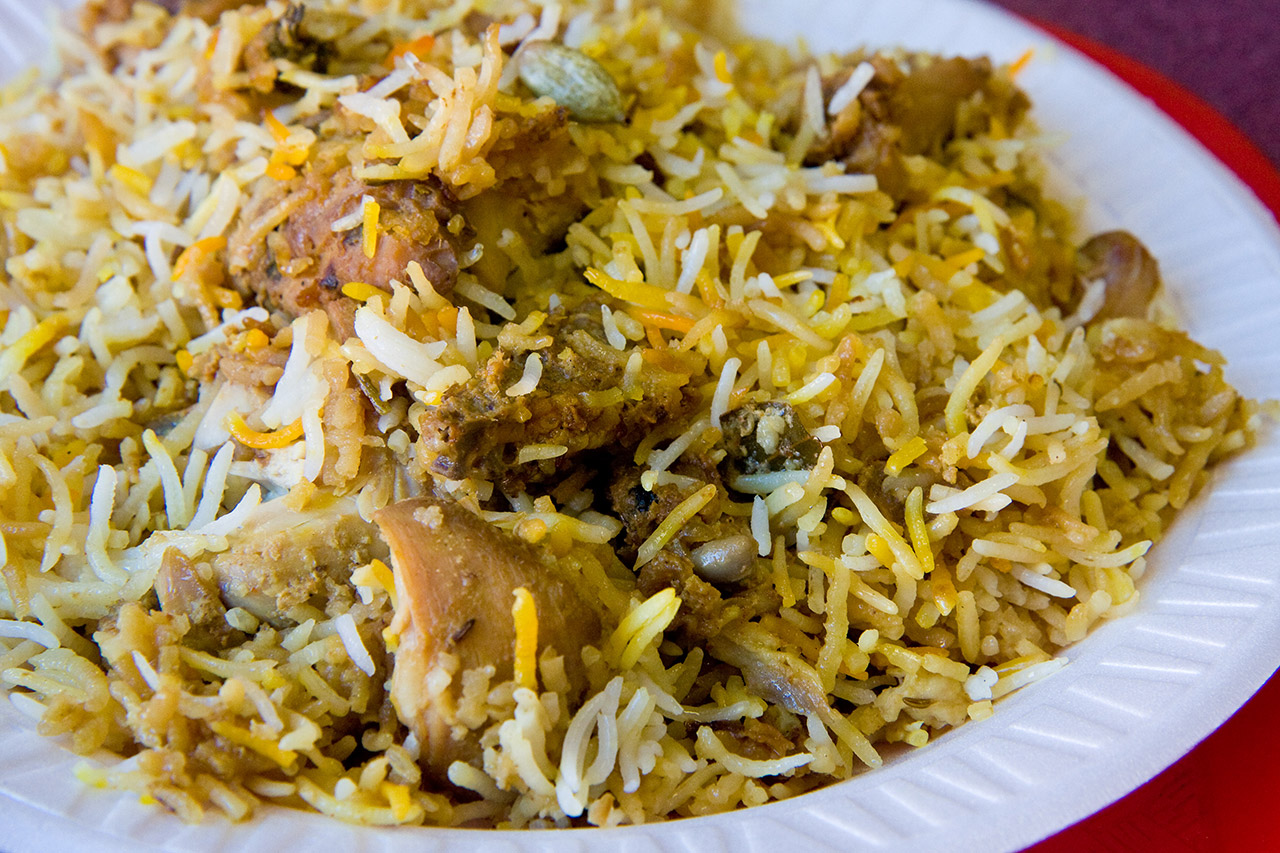
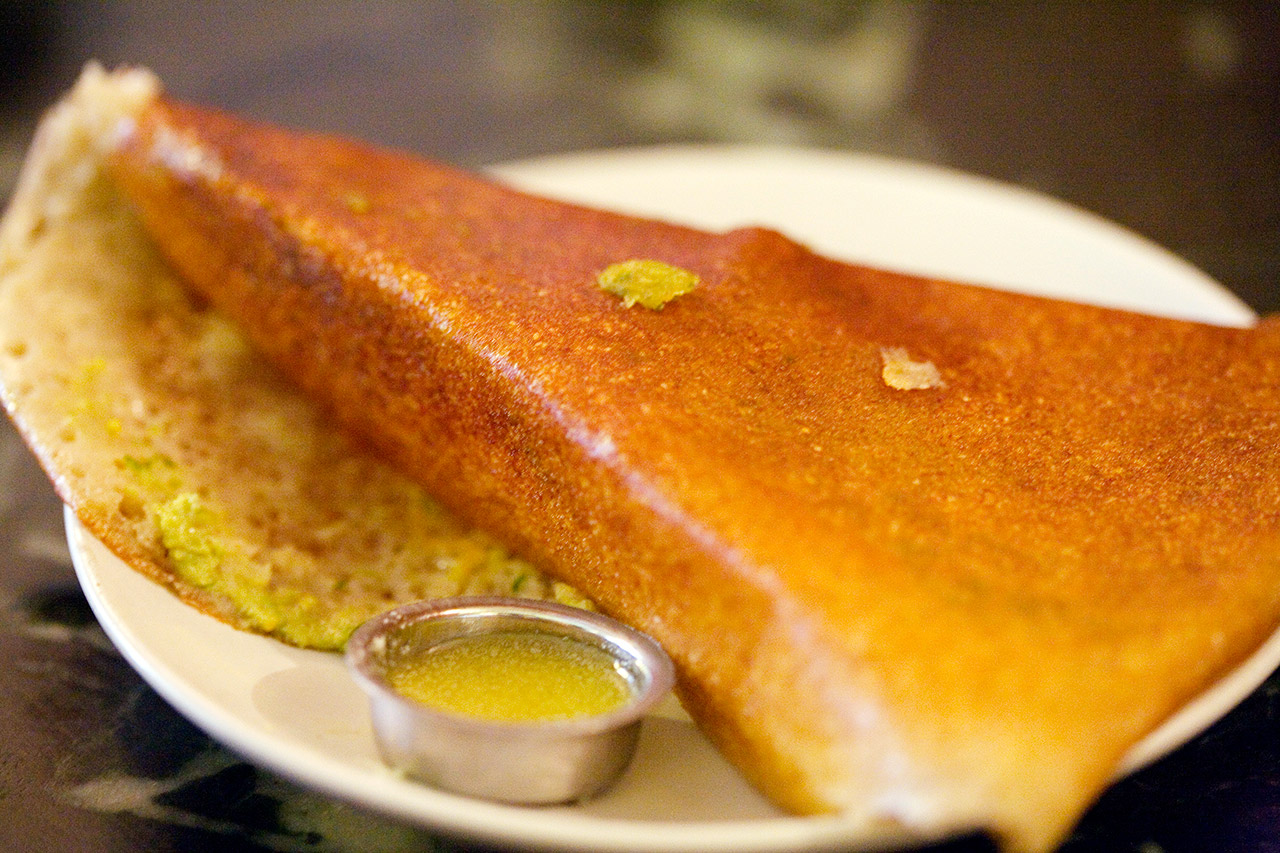
South Indian food is quite popular for its remarkable delicacy and the unique blend of spices. The Tamil Nadu cuisine too is no exception and offers a wide range of dishes to choose from. Rice is the staple food of the Tamilians and includes a variety of the same. From the ordinary plain rice to the different rice varieties such as lemon rice, Thakkali Soru (Tomato rice), Thengai Soru (Coconut rice), Paruppu Soru (Lentil rice) is prepared in the state. Sambar, Rasam, Coconut Chutney are among the most popular side dishes in the state. Breakfast usually includes Dosa, which too has several varieties or idli along with coconut chutney or sambar. Uttapam, a dish identical to the Dosa but with tomatoes and other spices, is also a common breakfast dish in the state.
On special occasions, the people of Tamil Nadu prefer to have food on a banana leaf. Other dishes include Poriyal, Puliyodharai, Medhu Vadai, paniyaram among others. For those with a sweet tooth, Tamil Nadu is also home to some a variety of sweet dishes and desserts such as the Arisi thengai payasam, Pasi Paruppu Payasam, among others. The state also has some enjoyable snacks such as the Murukku and Seedai, among others.
For the people of Tamil Nadu, their attire is an important part of their culture as it represents their rich tradition. Women usually dress in sarees, which are known for their elaborate, elegant designs and vibrant colours. The Kanjeevaram saree is the most popular kind of saree in the state and is widely worn by the women of the state, mostly during special occasions. Young girls usually wear the half saree which comprises a blouse, a full-length skirt and a shawl known as Davani. Tamilian men wear a lungi and a shirt along with an Angavastram which is a crucial piece in their wardrobe. The traditional dresses are usually worn along with traditional accessories, such as Chains, Oddiyanam, and payals made of gold. They also adore their hair with flower garlands in a particular fashion, called gajras.
The cultural festivals of any state are instrumental in highlighting and celebrating their culture. As a land with a rich heritage, Tamil Nadu is also home to several cultural festivals, which portray the vivid and diverse Tamil Nadu culture.
Pongal is perhaps the most significant and popular cultural festival of the state. The festival takes place in January and is celebrated as an expression of gratitude for the Harvest, and hence is also known as the Harvest festival of the state. The festival takes place in a span of 4 days, and each day has its own significance. The first day is called Bhogi Pongal, and is seen as a new beginning; all the houses in the state are decorated on this day. The second day is known as Surya Pongal; on this day people wear traditional clothes. The third day of the festival is known as Mattu Pongal during this time the famous Jallikattu event happens, and the last day is Kaanum Pongal, which marks the end of the celebrations.
Natyanjali festival in Chidambaram – Arunan kapilan via Wikimedia
The Tamil New year, also known as Puthandu, is another immensely popular festival of the state. This day marks a new beginning filled with hope and joy for the people of the state. On this day, beautiful kolams are drawn with the use of eye catching colours. People adorn themselves with new clothes and prepare special dishes for the day.
The Natyanjali Dance Festival held in Tamil Nadu has admirers from around the country. The festival gathers around close to four hundred dancers from around the country to bring together the unique and varied forms of art, such as Bharatanatyam, Kuchipudi, among others. Other popular cultural festivals include Karthigai Deepam, Thiruvaiyaru Festival, among others.
Carnatic Music is the most significant part of the Music of Tamil Nadu. It is considered the Classical Music of Southern India and is said to be one of the oldest systems of Music prevalent in the world. Carnatic Music is not unknown and is beloved by music lovers all around the world. Apart from Carnatic Music, the state also abounds in folk music and is home to some of the renowned singers of all time.
Apart from the Music, the state is also home to some of the elegant and mesmerizing dance forms prevalent in the world today. Bharatanatyam is perhaps the most popular dance form in Tamil Nadu and has gained admirers from around the world. Considered to be one of India’s Oldest dance forms, Bharatanatyam is said to be the precursor of all other styles of classical dances. The costumes worn by the performers are both striking and vibrant, this along with the ornaments, makes the dance more beautiful. Other folk art forms of Tamil Nadu includes Karakattam, Devarattam among others.
Art is an inevitable part of Tamil Nadu’s culture. From the Kolam that is drawn at the entrance of each home at sunrise to the spectacular Tanjore paintings, the state is indeed a great spot for art enthusiasts from every corner of the world. For the women of the household, their day begins with the making of a Kolam at the entrance of their homes; with an intricate and beautiful design. The Tanjore paintings and Tanjore Dolls are quite famous as they are embellished with gold.
Apart from the paintings, the state is also known for its pottery, musical instruments, and amazing crafted jewellery. Pottery is an ancient practice that is well preserved in the state. The state is also known for its production of enchanting silk sarees, created through the traditional methods, which are in massive demand throughout the country.
Tamil is one of the oldest languages prevalent in the world today and is hence a proud heir to a rich ancient literature. In fact, Tamil has the oldest literature prevalent in India today. The literature spans from the 4th century with the Chilappatikaran and the Thirukkural, to modern literature. Tamil literature has a soul of its own and is quite different from that of others. The cultural richness and the varied heritage of the state are well represented in Tamil Literature. Tamil literature also has to its credit many literary gems, who continue to be loved and acclaimed by many.
The state’s heritage can be witnessed in the architectural brilliance and the historical significance can be observed in the temples built here. Almost all the dynasties that ruled the state valued and promoted art and architecture, which led to the building of countless temples in the state, representing the distinct features of the period when it was built. These temples were built here by the rulers of various dynasties and accurately represent the Dravidian culture and art. In the Chola dynasty, the architecture of the state underwent a significant evolution. The rulers of the dynasty built several temples, such as the Brihadisvara Temple, Airavatesvara Temple at Darasuram, among others.
The Brihadisvara temple, situated in Thanjavur, is one of the largest temples in Southern India. UNESCO has termed the group of temples, built during the Chola dynasty in Tamil Nadu as the “Great Living Chola Temples”, and they are recognized as a UNESCO World Heritage Site. Brihadisvara Temple at Thanjavur, the Temple of Gangaikonda Cholapuram, and the Airavatesvara Temple at Darasuram together form the “Great Living Chola Temples”. Apart from them, the other monuments that portray the rich heritage and architecture of the state include the Valluvar Kottam, dedicated to the poet Valluvar and Thirumalai Nayakkar Mahal. Chettinad Palace is a great example for the tasteful architecture that Chettiars incorporated in their lifestyles.
The majority of the people of Tamil Nadu engage in agriculture and it is known as the backbone of the state. A variety of crops are cultivated, including millets, pulses, paddy, and even commercial crops such as sugarcane, sunflower, cotton, and coconut, among others. Apart from agriculture, the people of Tamil Nadu also engage in a variety of other professions.
Tamil Nadu is the land of enchanting beauty, vibrant cultures and grand traditions. Through its fascinating heritage and historical significance, the state has managed to capture the attention of the world.