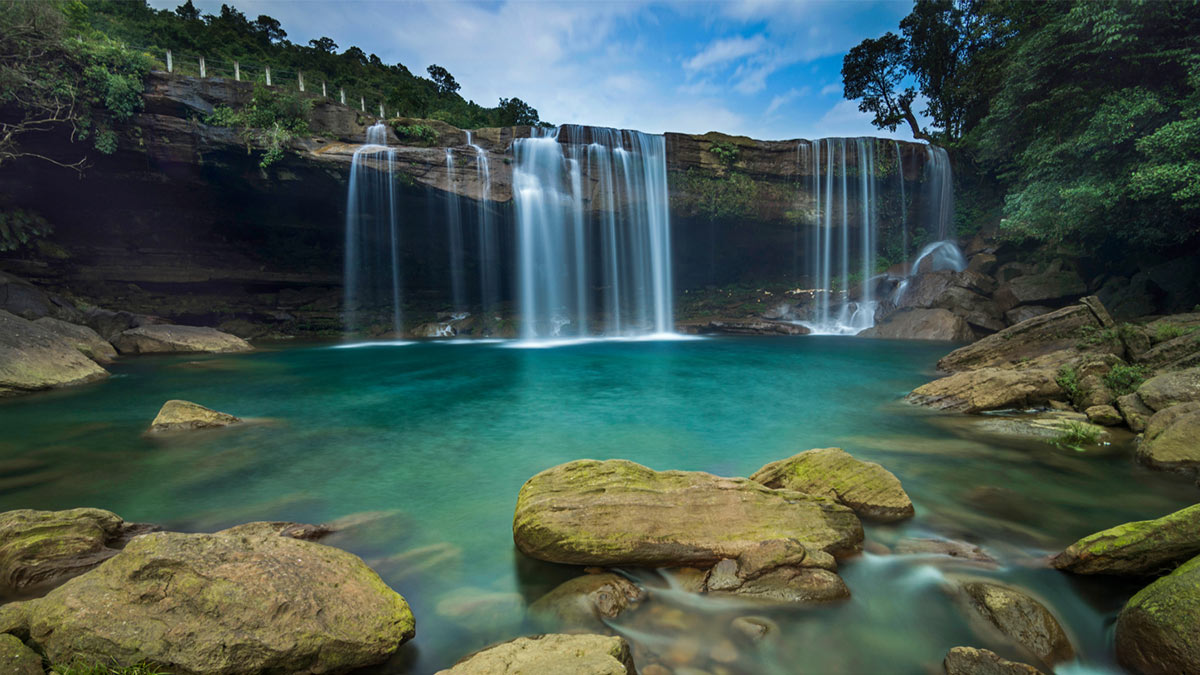
Hampi Utsav 2026: Tracing Culture, Heritage and Legacy of the Vijayanagara Empire

1

Hampi-Utsav-2026

The Cultural Renaissance of the Vijayanagara

Hampi, the august capital city of the quondam Vijayanagar Empire, is anew and prepared to transport people to a dimension shift and teleport them to the “Golden Age” of Indian History. The Government of Karnataka has averred about the long-awaited Hampi Utsav 2026. The utsav will span three days and is scheduled to be on air from February 13-15, 2026. The three-day grandiose spectacle is traditionally known as the Vijaya Utsava. This utsava is a resplendent acknowledgement of the grandeur, art, and architectural brilliance of a city that Abdur Razzaq Samarqandi once mentioned- “a city the eye had never seen the like of, with immense grandeur and population.” Interestingly, the cessation on February 15 coincides with the Mahashivratri. This is utterly significant as lord Virupaksha (Shiva, worshipped as the consort of Pampa Devi) is Hampi’s presiding deity. Even the rulers of Vijayanagara ruled in the name of Shri Virupaksha. 

A slight glance at history reveals that the region of Hampi resembled ‘Kishkindha,’ the monkey kingdom mentioned in Ramayana. The term Hampi is an anglicized form of the Kannada word “Hampe.” Hampe is derived from the word “Pampa,” an ancient name of the Tungabhadra river and the local river goddess of the region. According to the Sthala Purana, Pampa was the daughter of Brahma, who later became a manifestation of the goddess Parvati. Thus, the region came to be known as “Pampa-Kshetra.” With the passage of time, the “pa” sound got transformed in the local dialect and became Hampa, then Hampe, and eventually anglicized as Hampi

This utsav is supposed to reinvigorate a spark of life into the ruins of Hampi, a UNESCO World Heritage site. It is a vibrant tribute to South India’s artistic legacy, where history, music, dance, and folklore converge against the backdrop of magnificent temple architecture and monumental landscapes. The 2026 edition is expected to draw record-breaking crowds to the banks of the Tungabhadra River.

The Essence of Hampi Utsav

The Hampi Utsava is not just another seasonal fest; it is a grand cultural peregrination into India’s medieval setup. The polity of Vijayanagara thrived during the 14th-16th centuries, and this festival resembles the artistic heyday of the empire. It is a colossal exposition orchestrated by the state government to promote tourism and keep the legacy of the “city of Victory” alive. The fest is a convention of  “Nada Kacheri” (folk music), classical dance performances like Bharatanatyam and Kathak, etc. 

The state government reimagines the trail of the Vasantotsava of the empire in a contemporary perspective that amalgamates heritage commemoration and public celebration. The “Janapada Kalavahini” is one of the most spectacular vignettes of the utsav. It encompasses a grand procession of folk troupes, decorated elephants, and local artists showcasing the diverse martial arts and dance forms of Karnataka. Once the dusk arises, the ruins of Hampi are illuminated with thousands of lights. It creates a phantasmagoric ambience that truly resembles what medieval travellers opined about the place. 

Glimpses of The Festival

Aspects Details
Title Hampi Utsav 2026
Official Dates February 13th, 14th, and 15th, 2026
Primary Location Hampi (Vijayanagara District), Karnataka
Organisers Government of Karnataka and the district administration
Historical Context Celebrates the cultural zeitgeist of the Vijayanagara Empire
Major Highlight Confluence with Mahashivratri (Feb 15)
Entry Fee Generally free for the public (selected shows may require passes)
Key Attraction Sound and Light Show (Vaibhav) & Shobha Yatra
Venue Highlights Historic sites, including Virupaksha Temple and other ancient monuments
Cultural Elements Dance, folk music, processions, puppet shows, and illumination shows
Participation Artists, troupes from Karnataka and beyond; applicants required
Public Participation Deadline Artists and troupes to apply by January 20, 2026

Activities & Attractions

The Hampi Utsav aims to showcase a wide variety of cultural activities that engage visitors of all ages and interests. People can expect traditional music, folk songs, and dance forms that reiterate the heterogeneous cultural fabric of Karnataka. There will be large-scale processions, traditional puppetry, and theatrical representations of mythic & historic narratives that offer a sneak peek into the folk arts of the region. Alongside, local artisans will also display their hand-crafted wares. Visitors will also get to delve into the regional cuisines and other cultural endeavours. 

The Cultural Impact: A Broader Context

The Hampi Utsav is a major propagation of “Heritage Conservation through Awareness.” This three-day festival single-handedly brings in funds for the upkeep of the 1,600 surviving monuments. Beyond the music and dance, the festival includes “Hampi By Sky” initiatives and photography contests that document the changing landscape of the ruins. The 2026 edition also emphasizes “Sustainable Tourism.” Unlike urban festivals, Hampi Utsav integrates performance spaces into archaeological landscapes, making the festival a living museum rather than a staged recreation. 

Key Highlights

  • Celebrated annually as a tribute to the artistic legacy of the Vijayanagara Empire
  • Scheduled for February 13–15, 2026, by the Karnataka Government
  • Folk music, dance, and Janapada Kalavahini form the festival’s heart
  • Processional spectacles with costumed performers and decorated elephants accentuate visual impact
  • Historic temples like Virupaksha serve as evocative venues for performances and lighting displays
  • The festival typically hosts three to four main stages (including the Gayathri Peetha and Hampi Vasanta Madapa), where renowned national and international artists perform
  • In recent years, the district administration has introduced helicopter rides for an aerial view of the ruins, along with rural sports like wrestling and kabaddi
  • A dedicated ‘Shilpa Kala’ section allows local craftsmen to showcase terracotta, wood carvings, and the famous Lambani embroidery, providing a boost to the local economy
  • A high-tech “Son et Lumière” show narrating the rise and fall of the Vijayanagara Empire against the backdrop of the monoliths
  • The Shobha Yatra features various tableaus representing the historical triumphs of Krishnadevaraya

Takeaway

The Hampi Utsav stands as a riveting model of how cultural heritage can be promulgated through a creative approach and community engagement. Hampi Utsav’s immersive enactment of music, dance, and procession reasserts the communicative power of tradition. While the crowds can be overwhelming, the sight of a Bharatanatyam dancer performing under a full moon amidst the stone chariot is an experience that transcends time. For any traveler or history buff, Hampi Utsav 2026 is not just an event to visit but a legacy to experience. By bridging past and present, this festival operates not merely as a commemorative spectacle but as a testament to living culture.

Shakuntala in Paintings – Revisiting the Famous Play by Kalidasa

0

Shakuntala-in-paintings-revisiting-the-famous-play-by-Kalidasa

Who is Shakuntala?

Shakuntala is a heroine in ancient Indian literature, best known for her portrayal in the ancient Sanskrit play Abhijnanashakuntalam which means ‘recognition of Shakuntala’, written by the classical poet Kalidasa in the 4th or 5th century AD in Sanskrit and some use of Prakrit. Her story, however, originates in the Hindu epic, the Mahabharata, where she appears in the Adi Parva. Shakuntala is the daughter of the sage Vishwamitra and the celestial nymph Menaka. Abandoned at birth, she is raised by the sage Kanva in a forest hermitage. She later falls in love with King Dushyanta and becomes the mother of Bharata, a celebrated emperor of India who is the ancestor of Pandavas and Kuru kingdom in Mahabharata. Let us see some depictions of her life through the lens of India’s celebrated artist Raja Ravi Varma (1848 – 1906) and others including a medieval depiction.

Sage-Vishwamitra-refuses-to-accept-Shakuntala-after-her-birth-by-Menaka
Sage Vishwamitra refuses to accept Shakuntala after her birth by Menaka, chromolithograph of painting by Raja Ravi Varma, 19th century, Wikimedia

The Kalidasa Version

Kalidasa’s play presents a version of the story in which Shakuntala is cursed by Rishi Durvasa, causing King Dushyanta to forget her entirely. His memory is later restored when he discovers a golden ring of his own inside the stomach of a fish. Another version of this tale appears in the Adi Parva of the Mahabharata, traditionally attributed to Veda Vyasa.

Although Kalidasa’s work is an adaptation of the original narrative found in the Mahabharata, it has become far more popular over time. Many readers and audiences now regard it as a complete and independent story in its own right. Further details of the narrative are elaborated in the following account.

The storyline 

Long, long ago, during a hunting expedition, King Dushyanta of the Puru dynasty encountered Shakuntala, a young maiden living in a hermitage. The two are instantly drawn to each other and soon fall deeply in love.

1940s_Vintage_Hindu_Print_Dushyant_&_Shakuntala
Dushyanta meets Shakuntala, Vintage Hindu Print, 1940s. Wikimedia

In the absence of her father, they get married through a ‘Gandharva’ marriage—a union based on mutual consent, with nature itself as their witness. When it was time for Dushyanta to return to his palace, he promises to send messengers to escort Shakuntala to the royal court. As a token of his love, he gives her his signet ring.

Shakuntala and Dushyanta marry in the Gandharva way, chromolithograph of painting, by Raja Ravi Varma,19th century, Wellcome Collection Gallery. London, U. K.
Shakuntala and Dushyanta marry in the Gandharva way, chromolithograph of painting, by Raja Ravi Varma,19th century, Wellcome Collection Gallery. London, U. K. Wikimedia

One day, the sage Durvasa arrives at Shakuntala’s hut seeking hospitality. Lost in thoughts of her beloved, she fails to notice or respond to his calls. 

Hey girl, you are the one causing disrespect to a guest. You are engrossed in whose thoughts. You are not paying heed to a hermit like me. The person you are trying to remember would forget you in spite of immense efforts of recollection in the same way as an insane person forgets his past”.

Shakuntala lost in thoughts of Dushyanta, painting by Raja Ravi Varma,19th century.
Shakuntala lost in thoughts of Dushyanta, painting by Raja Ravi Varma,19th century. Wikimedia

Offended by this neglect, the quick-tempered sage thus curses her, declaring that the man occupying her thoughts would forget her completely.

Her companions exclaim –

“Alas, alas! Something very unfortunate has happened. It seems as if Shakuntala, under the state of delirium due to infatuation for her husband, the king, has offended a sage. She has not offended an ordinary man. She has hurt maharshi Durvasa who, after invoking curse on our beloved confidante, is going back from the ashram at a fast pace”. 

At the request of her companions, Durvasa softens his curse, adding that the king would regain his memory only upon seeing a meaningful token.

Durvasa_Shakuntala
Sage Durvasa curses Shakuntala, Chore Bagan Art Studio, lithograph,19th century, British Museum, UK. Wikimedia

Time passes, but no one comes from the palace to fetch Shakuntala. She spends time with her friends Anusuya and Priyamvada and is lost in grief.

Shakuntala writing on a lotus leaf, painting by Raja Ravi Varma,19th century, Kowdiar Palace, Thiruvananthapuram, Kerala.
Shakuntala looking backwards for Dushyanta as she removes a thorn, painting by Raja Ravi Varma,19th century, Sree Chitra Art Gallery, Thiruvananthapuram.
Shakuntala looking backwards for Dushyanta as she removes a thorn, painting by Raja Ravi Varma,19th century, Sree Chitra Art Gallery, Thiruvananthapuram. Wikimedia
Shakuntala with her companions, Anusuya and Priyamvada, oleographic print of painting by Raja Ravi Varma,19th century.  
Shakuntala with her companions, Anusuya and Priyamvada, oleographic print of painting by Raja Ravi Varma,19th century. Wikimedia  

Eventually, her father decides to send her to Dushyanta himself, as she is carrying the king’s child. 

Priyamvada says to Sage Kanva –

“As the fire dwells inside the tree of Shamee, similarly O brahmarshi! The ambience of Puru king Dushyant, dwells inside your daughter. Arrange to send her to her place”.

As Shakuntala prepares to leave, sage Kanva says –

“O the trees of the tapovan that is replete with forest gods! She never used to drink water without watering you. She never touched your delicate leaves, despite the fact that she loves ornaments. She was always delighted upon seeing your new buds. The same Shakuntala is going home. You see her off her love”

A sound from the skies comes –

May the journey of Shakuntala be fruitful. Ponds teeming with blue lotus on her way! May there be trees planted intermittently with dense shadow to save her from sunshine. May the dust have the delicacy of the lotus pollen and may the breeze, offering succour, keep blowing on the way to her home”.

Shakuntala leaving for King Dushyanta's palace
Shakuntala leaving for King Dushyanta’s palace, painting by Bamapada Banerjee, 1925, Indian Museum, Kolkata. Wikimedia

During the journey, however, Shakuntala accidentally drops the signet ring into a river, losing the very object that could have saved her. When she reaches the royal court and presents herself before Dushyanta, the curse takes full effect. The king fails to recognize her as his wife and rejects her claims.

King Dushyanta says –

I have tried to recall repeatedly but cannot recall anything… I have ever married this ‘devi’ is not striking my memory”.

Shakuntala thinks –

“When the king is not prepared to recall anything, what would be the use of reminding him of the love that he had expressed at that time? Now my misfortune alone has remained in my life”.

Heartbroken and helpless, Shakuntalaprayes to the gods for justice. Meanwhile, fate intervenes when a fishermandiscoveres the lost signet ring inside the stomach of a fish.Upon seeing the ring, Dushyanta’s memory returns and he is overwhelmed with guilt and remorse for the wrong he has done.

Shakuntala says –

Aryaputra! But tell me how did you remember this petty, agonized woman? 

King Dushyanta –

“Let me remove my thorn-like agony first. I shall tell you everything. O beauty! On that day your tear drops were flowing down your cheeks and hurting your lips. I had inadvertently insulted those precious tears on that day. The same tear drops are visible in your eyes even today. Until I wipe them with my own hands my mind will not find peace”. 

Shakuntala says – 

“Aryaputra, this is your ring”.

King Dushyanta says – “Yes, I was able to recollect all those incidents after getting this ring”. 

Shakuntala says – 

It had really done a vicious act. When I was going to show it as proof to you, it had disappeared at the very moment. I don’t know where it had fallen”.

King Dushyanta says – 

“No, no. Now, I have no faith in it. Let Aryaputra wear it”. 

Shakuntala forgives him, and the couple are joyfully reunited. In time, she gives birth to a son who is named Bharata, after whom the land of India came to be known as ‘Bharat’.

The Version in Mahabharata

In the Adi-parva of Mahabharata, Sage Kanva who finds the abandoned baby left near his hermitage by Menaka and is protected by the ‘sakunta’ birds says thus –

She was surrounded in the solitude of the wilderness by sakuntas,

therefore, hath she been named by me Shakuntala.

In the Mahabharata version of Abhijnanashakuntalam, though there is a lot of similarity in the storyline, Shakuntala is separated from her husband, King Duṣhyanta, for a long time. Their reunion comes only after the birth of their son, Bharata.

Dushyanta meets Shakuntala, folio from Razmnama
Dushyanta meets Shakuntala, folio from Razmnama (Persian translation of Mahabharata), Mughal school, 16th century. Wikimedia

One day, Duṣyanta comes upon a young boy in the forest fearlessly playing with lion cubs, prying open their mouths with his bare hands to count their teeth. Astonished by the child’s courage and strength, the king questions him about his parents.

King Dushyanta says –

Hey, who is this courageous boy”? 

Two female hermits are coming behind him. The cubs have not adequately fed themselves with milk from their mother’s teats. That boy is pulling the cubs apart and forcing them to play with him. 

Child says – “O lion! Open your mouth; I will count your teeth”.

First lady hermit says – “O prankster! Why do you harass those who we have reared as our children? Hai! Your pranks are growing day by day. The rishis have named you Sarvadaman. Plausibly, they would have given you this name after thorough deliberation”.

Second lady hermit says – 

Look, if you did not spare these cubs, the lioness, their mother, will attack you”.

Bharat_playing_with_Lion_cubs
Bharata playing with a lion cub, painting by Raja Ravi Varma, 19th century. Wikimedia

The boy leads Duṣhyanta to the hermitage of Sage Kaṇva, where the king meets Shakuntala. At that moment, Dushyanta’s lost memories return, filling his heart with warmth and joy. Reunited at last with his wife and son, he takes them back to Hastinapur, restoring his family and his happiness.

This tale from India’s ancient literature is of immense interest and very popular Even today it is enacted before appreciative audiences. The storyline still captivates even though centuries have passed since its initial narration.

References –

  1. Ashok Kaushik (tr.) (2020) Kalidas’ Abhignan Shakuntalam, New Delhi: Diamond Pocket Books (P) Ltd.
  2. https://rsmraiganj.in/wp-content/uploads/2020/04/Untitled-document-2-10.pdf (accessed on 26.12.2025)
  3. https://mahabore.wordpress.com/2014/03/12/shakuntala-and-dushyanta-the-mahabharata-version/ (accessed on 26.12.2025)
  4. The translations are by Ashok Kaushik.
  5. http://www.sacred-texts.com/hin/m01/m01073.htm (accessed  02.01.2026)

Divine Manifestation: Exhibition by Meena Sansanwal at Black Cube Gallery

0

Divine-Manifestation-Exhibition-by-Meena-Sansanwal-at-Black-Cube-Gallery-01

India’s au courant artscape is about to be illuminated by a solo exhibition by Meena Sansanwal, titled “Divine Manifestation.” This exhibition is set to open at the Black Cube Gallery in Hauz Khas, New Delhi. The exhibition seamlessly amalgamates sacred symbolism, mythology, and contemporary visuals. The preview of this exhibition is scheduled on January 7, 2026, and will be on view until January 22. The core of the exhibits circumnavigate the themes of feminine divinity, cosmology, and metaphysical elements. This show sheds a spotlight on a significant point in her career. Meena’s paintings carefully protract the viewer’s eyes into an “inner universe.”

Artistic Exploration

 Her representation of this intimate space becomes the syncretic plane where physical and metaphysical forms form a horizon. Meena’s artwork is associated with a group of contemporary artists who reimagine the sacred mythos beyond traditional religious boundaries. The figures etched by her represent the cosmic forms of Shakti, Durga, and Ardhanarishvara. They are structured through a surreal, ornamental geometry that echoes postmodern mythic abstracts. Meena possesses this distinct skill to elevate her craft through a more surrealist lens. She employs geometric patterns and a distinct colour palette comprising golden yellows and earthy browns.  

The Root of The Art


View this post on Instagram


A post shared by Meena Sansanwal (@meena_sansanwal)

The broader thematic line of her artwork unveils a corpus of art that presents a consistent engagement with the “Shakti” or the primal energy. In “Divine Manifestation,” Meena elongates this concept by coalescing symbols such as horses (power and transcendence) and celestial beings that become the thread linking the viewer with the divine. The artwork represents the “female” form as an argosy of anima mundi and cosmic creation. She is often noted for her ingenuity in melding the “sacred and the surreal.” This technique makes her artwork feel more immediate and intimate. 

She employs the concept of the “cosmic eye,” resonating with the “third eye.” This represents a higher consciousness and omniscient perception. Globally, artists such as Hilma af Klint, Alex Grey, and Indian contemporary masters like Anjolie Ela Menon and Baiju Parthan have explored similar metaphysical iconographies. Meena also emphasizes the hybrid divine conformations by associating them with puranic mythologies, where “divinity” is fluid. In her canvas, the divine is multi-form and is in a state of anthropogenic novelty. 

Glimpses of The Exhibition

Aspects Details
Exhibition Title Divine Manifestation
Artist Meena Sansanwal
Venue Black Cube Gallery (G12A, Hauz Khas, New Delhi)
Preview Date January 7, 2026 (5:00 PM – 8:00 PM)
Duration On view until January 22, 2026
Core Themes The Female Form, Spiritual Energy, Celestial Beings
Cultural Context Indic metaphysics, tantric symbolism, Puranic references

Key Highlights

  • Reinterpretation of the divine feminine through surreal sacred geometry
  • Mandala-inspired symmetrical compositions for meditative contemplation
  • Fusion of mythological symbolism with contemporary abstraction
  • Emphasis on the cosmic eye as a metaphor for higher consciousness
  • Strong visual alignment with tantric, yogic, and metaphysical philosophies
  • Revival of spiritual narrative art within contemporary gallery culture
  • Positioning of feminine divinity as both creative and cosmic authority
  • She utilizes a meticulous layering technique that gives her flat surfaces a sense of three-dimensional depth and spiritual weight
  • The location of the gallery in the historic Hauz Khas village adds a layer of architectural heritage to the viewing experience
  • The exhibition is structured as a “journey,” leading the viewer from earthly representations to increasingly abstract manifestations of the divine
  • By reimagining traditional deities, she contributes to a new visual language for 21st-century spirituality in India

The Path of Discovering The Artworks

Meena’s art stands at a critical counterpoint against the pure market-driven commercial abstracts. Her paintings revivify spirituality, symbolism, and mythic philosophy in the gallery space. Her imagery nudges the viewers to engage with it existentially. She actively invites introspection and contemplation. This exhibition promises an immersive cosmological experience that is crafted through carefully etched mandalas that also behave like a portal, teleporting the spectator to a new world. By making the feminine the core of her art, she quietly conveys her stand on women as cosmic creators. She resonates and hallows the notions embedded in Indic Philosophy. As the modern art world subscribes to cynicism over reverence, her paintings emerge as a mediator that shows the “other side.”

Takeaway

The artist does not cling to the inertia of choosing between the traditional and the Outré.  Instead, she finds a “middle path” that honors the craftsmanship of the past while addressing the spiritual voids of the present. Her paintings radiate a rarity amidst the digitally dominated world. Her paintings are visually “dense” and aesthetically place the female figure at the core of the cosmos. She doesn’t just paint “about” divinity; she manifests a space where the viewer can experience the sublime. It is a bold, beautiful, and deeply soulful celebration of what it means to see the sacred in the self. This show is a must-visit for anyone looking to see how ancient symbols can be reclaimed to tell a story of modern empowerment and cosmic unity.

Kerala Literature Festival 2026 Brings Global Voices to Kozhikode

0

Kerala-Literature-Festival-2026

KLF 2026: Where the World Reads Together

The Kerala Literature Festival (KLF) 2026 will be held on the golden sun-washed beaches of Kozhikode from January 22 to 25, 2026. This Literature Fest is recognized as Asia’s largest and most attended literary conclave. This year, the KLF is hosting its 9th edition and will celebrate Kozhikode’s status as India’s first UNESCO City of Literature. This colloquium tertulia, organized by DC Books, has evolved into a literal literary carnival. 

It is now a major public platform featuring an amalgamation of literature with cinema, economics, art, heritage studies, children’s education, wellness, community history, and international cultural diplomacy. The 9th edition will host 400+ speakers from 17 countries. Organizers have expressed an expectation of about half a million footfall this year. This is one of those extraordinary extravaganzas that was conceived as a local gathering into a global movement of ideas, culture, and social discourse.

A Confluence of Global Thought and Local Heritage

The 2026 edition of KLF has invited Germany as this year’s guest nation. This partnership, facilitated by the Goethe Institute, will feature a German Pavilion, writing residencies in Vagamon, and a specialized Creative Writing Workshop for young Malayalam writers. The oceanfront will house a mammoth light installation by the German artist Philipp Geist

One of the most buzzed-about awaited sessions would be the one featuring Japanese bestseller Satoshi Yagisawa. Among the best highlights is the presence of Sunita Williams, the legendary NASA astronaut, as the guest of Honour. Her presence introduces an eccentric STEM-humanities interface. The major Indian Economist, Nobel Laureate Abhijit Banerjee, will also grace the venue, as he judges the society through the lens of food. Other Indian stalwarts such as Shashi Tharoor, Devdutt Pattanaik, Anand Neelakantan, Sarnath Banerjee, Peggy Mohan, and many more will be present. Globally celebrated intellectual Pico Iyer will speak on mindfulness and global belonging. Alongside, there will be filmmaker Pa. Ranjith, whose cinema focuses on marginalised narratives and caste realities. 

A Festival for Young Minds: CKLF

The KLF aims to situate itself as an inclusive body, and thus, they have also arranged a dedicated segment called the Children’s Kerala Literature Festival (CKLF). This literary segment is focused on meaningfully investing in early literary formation. Through storytelling sessions, creative writing workshops, art-based learning, and author interactions, CKLF nurtures imagination, empathy, and curiosity among children. This ensures that literature becomes a lived experience rather than an academic subject. 

Culture, Heritage and Living Histories

KLF 2026 is an abode of public history and community heritage. The scale and grandeur of this conclave are visible in its lavish institutional backing, including Goethe-Institut, Curating for Culture, and others. These institutes engage in tracing Kozhikode’s intercultural trade histories and synthesize them with narratives woven from printing, tile manufacturing, weaving communities, and migrant livelihoods. This repositions KLF not merely as a literary fair, but as a curator of regional identity and cultural memory.

Glimpses of The Literary Conclave

Aspects Details
Event Name Kerala Literature Festival (KLF) 2026
Edition Ninth Edition
Dates January 22 – 25, 2026
Venue Kozhikode Beach, Kerala
Guest Nation Germany
Guest of Honour Sunita Williams
Major International Voices Pico Iyer, Satoshi Yagisawa, and others
Key Attraction Children’s Kerala Literature Festival (CKLF)
Speaker Scale 400+ global speakers
Heritage & Public History Germany–India collaborative exhibitions

Key Highlights

  • Presence of a NASA astronaut as the Guest of Honour
  • Dedicated Children’s Literature Festival (CKLF)
  • Germany–India cultural heritage collaborations
  • Interactive quizzes, runs, and youth engagement formats
  • Kozhikode’s identity strengthened as India’s City of Literature
  • The festival will host a constellation of stars, including Nobel Laureates Abdulrazak Gurnah, Olga Tokarczuk, and Abhijit Banerjee. Other headliners include astronaut Sunita Williams, business icon Indra Nooyi, and literary stalwarts like Pico Iyer, Shashi Tharoor, and Shobhaa De
  • Interactive sessions are spread across seven parallel tracks covering everything from science and cyber security to folklore, feminism, and sustainability

Takeaway: Why KLF Matters

Kerala Literature Festival 2026 exemplifies what a 21st-century literary festival should become. The KLF appears like a civic conglomerate with a syncretic living archive of heritage, and a cultural bridge that moulds a future-building platform. KLF redefines literature as a public good rather than a niche pursuit. It makes literature a “people’s festival.” The organizers acknowledge that literature does not exist in a vacuum; it is the fabric that connects all human endeavors. Kozhikode is not merely hosting a literature festival; it is curating a worldview.

Suggested Story:10 Best Literary Festivals of India that Every Book Lover Must Attend

‘Art N Art’ Annual Exhibition 2026: A Premier Platform for Indian Artists

0

‘Art-N-Art’-Annual-Exhibition-2026

Celebrating Creativity in ‘art N art’ 

India’s artscape is getting a vibrant makeover this year, with the orchestration of art events that work to mitigating the hiatus between traditional craftsmanship and contemporary expression. One such forum is the “art N art” Annual Art Exhibition, organized by the Nav Shri Art & Culture Organisation (NSACO). It will be on air on January 16, 2026. It is a meaningful space offering a nation-level rostrum for artists and enthusiasts to showcase their art before a multifarious crowd. NASCO is a registered Delhi-based cultural NGO, and this upcoming art exhibition will be their 9th recapitulation of a growing annual tradition designed to edify artistic cachet. 

The 2026 edition has been planned with a pellucid roadmap for the artists across the nation to showcase their artworks in a refined mise-en-scène. This exhibition is a judiciously laid journey that handpicks the artists after a scrupulous digital screening and finds its final expression in the exhibition. 

Delving Into The Artistic Crescendo

The All India Art N Art Annual Art Exhibition 2026 is presenting itself with a broader motto. It aims to provide an alternative to the emerging practitioner beyond the urban metropolitan marketspace. This exhibition unfolds with a distinct and panoramic approach. It invites participation from artistic practice encompass cross-disciplinary and exploratory route. Events like “Art N Art” cater to the domestic art infrastructure that sustains talent and encourages artistic eclecticism. One of the most distinctive features of the exhibition is that it facilitates direct contact between the artists and the visitors. This week-long display facilitates an immersive engagement of the visitors with artworks across a plethora of genres. 

About Participation

The registration process for becoming an exhibitor is meticulously structured. Once an artist uploads their artwork, they will know their status in the selection cohort within three days. This scale of efficiency is seldom noticed in large-scale exhibitions. Following the approval, a nominal fee of Rs. 500 is to be paid for registration in order to reserve a spot. Furthermore, the art N art has very transparent regulations regarding the size of artwork and submission timelines. Through this, the organize are erecting a fresh corpus of artworks with a contemporary touch. They have also included distinct segments of “Arts & Crafts” and “printmaking” to diversify their means of engagement. 

The eligibility criteria require artists to be at least 18 years old with a mandatory online registration. These proceedings ensure that the quality of the exhibition is maintained and the desired standard is continued. Initiatives like these often act as launchpads or stepping stones for artists to network and showcase their artworks. 

Glimpses of The Exhibition

Aspects Details
Event Name All India ‘Art N Art’ Annual Exhibition 2026
Organizer Nav Shri Art & Culture Organisation (NSAC)
Edition 9th National Level Art Exhibition
Venue Artizen Art Gallery, Pearey Lal Bhawan, New Delhi
Eligibility Minimum age of 18 years; open to Indian and foreign nationals
Registration Deadline December 28, 2025 (Sunday)
Exhibition Dates January 16 – January 22, 2026
Categories Accepted Drawing, Painting, Digital Art, Sculpture, Photography, Illustration, Installation, Printmaking, Art & Crafts
Initial Registration Fee ₹500 (payable after digital artwork approval)
Fee Conditions Non-refundable; special discounts available for NSAC members
Standard Artwork Size Up to 24 × 36 inches (60.96 × 91.44 cm)
Oversize Submission 24 × 36 to 36 × 48 inches (additional 25% fee applicable)
Artwork Submission Window January 5 – January 12, 2026
Membership Benefit 10% discount on fees for NSAC members

Key Highlights

  • The exhibition includes multiple art categories, embracing traditional and modern media, such as drawing, painting, digital art, sculpture, printmaking, photography, installation art, and arts & crafts.
  • Artists from across India are invited to participate, enabling a confluence of regional styles, thematic concerns, and formal approaches under one roof.
  • A structured registration and approval workflow ensures that participants submit clear images of their works for pre-approval; approvals are issued within three days of registration. 
  • To maintain quality, artists must upload high-resolution images of their work for initial approval. Only approved artists proceed to the payment and physical submission stages.
  • Original works must adhere to size regulations, and all framed paintings must conform to specified dimensions; oversized works are permitted but subject to additional fees.
  • The exhibition is held at Artizen Art Gallery on Bhadurshah Zafar Marg in New Delhi, providing visibility in one of the country’s major cultural hubs.
  • Participants are accountable for shipping costs and the safety of artworks during transit to the venue. 
  • To ensure professional gallery aesthetics, all paintings must be properly framed before submission.
  • The event traditionally culminates in a public showcase and award presentation, positioning emerging talent alongside seasoned practitioners.
  • As an “All India” exhibition, it draws talent from various states, providing a networking hub for regional artists to meet urban collectors and critics.

About NSAC

The Nav Shri Art & Culture Organisation has historically been a non-profit entity dedicated to promoting art. Hitherto, they have showcased exhibitions in reputed venues like the Artizen Art Gallery in New Delhi. This platform is dedicated to offering significant exposure to the media and art cognoscenti. The 2026 edition is also supposed to tread the same path. It offers equitable opportunities for both the debutant sculptor and the veteran painter alike.

It represents one of the most systematized and structured platforms that is tailored to be artist-friendly. While many national level artexhibitions might feel like they are gatekeeping their representative circuit to an elite circle, this one stands in an opposite position. NASCO’s digitally permeable entry ensures that talent is the only ticket to entry, making it highly meritocratic. For any serious artist looking to build their CV or gain national visibility, the NSAC lifetime membership is a strategic investment that pays for itself through waived entry fees in subsequent years. 

Takeaway: A Final Retrospection

The Art N Art exhibition is a vital space that promotes contemporary Indian art. It emphasizes accessibility, diversity, and inclusivity. Art N Art contributes meaningfully to cultural democratization and reflects a growing dynamism within India’s creative industries. Consistent support for such initiatives can nurture a more inclusive art scene that balances local authenticity with broader artistic innovation. Ultimately, this exhibition is a testament to the thriving, multifaceted nature of Indian creativity, and it remains a “must-apply” event for the upcoming 2026 season.

Thinai Exhibition at Muziris Contemporary Explores Sangam Ecology

0

Thinai-Exhibition-at-Muziris-1

Reimagining Ancient Worlds Through Contemporary Eyes

During the Tamil Sangam era, the “Thinai” (திணை) was an ecosophical and poetic scaffolding that classified the Tamizhagam (meaning the home of Tamil) into five distinctive tableaus (Ainthinai). The five places represented cultural life, occupations, deities, flora, and fauna. It also conjoined human emotions with the natural environment. This systematic classification dates back over two millennia to the Sangam period. 

As Kochi metamorphoses into a global hub for art with the onset of the 6th Kochi-Muziris Biennale 2025-26, it showcased a beguiling and contemplative exhibition titled “Thinai.” Housed in Fort Kochi, this exhibition is an aesthetic foray into the ancient Tamil idea that attests to sustainability even when it was not a globally recognized phenomenon. This is the inaugural exhibition at the Muziris Contemporary, which offers a thoughtful purview into the ecological and emotional thought processes of human life.  This exhibition presents an immersive exploration of how place, emotion, and ecology can be read as interdependent systems of meaning.

Exploring the Landscapes of Memory

The conceptual philosophy of Thinai bridges the five classical landscapes with today’s socio-environmental realities. It brings in the masterful works of artistic stalwarts like CN Karunakaran, Senaka Senanayake, and KG Babu. The exhibition places the human body and the natural world as inseparable receptacles of memory. From a poetic perspective, the Thinai signifies a terrain that encompasses the Kurinji (mountains), Mullai (forests), Marutham (croplands), Neithal (seashore), and Palai (desert). These were never just geographical entities; they are psychic contours manifested in physical formats. 

The exhibition’s curatorial vision reflects dialogues between antiquity and the present. Thinai draws direct references and inspiration from the ancient Tamil Literature and creates the sense of a moving plane that is experiencing love, longing, conflict, patience, separation, and reunion. Muziris Contemporary has reimagined this essence into a perceptible body of artworks that are up for viewing at the biennale. It presents the works by nine pioneering artists from across the Indian subcontinent whose practices echo these ancient world-making systems.

The Confluence of The Artists

The canvases of Senaka Senanayake evoke the spirit of Mullai, focusing on the biodiversity of the rainforest. Santhi EN’s work mirrors the groundedness of Marutham. Kamala Das’s Akam (interior emotional world) sensibility resonates alongside Riyas Komu’s Puram (external, socio-political), confronting war, violence, and collective numbness. Smitha G.S.’s engagement with shola forests symbolizes Marutham’s fertile reciprocity between people and land. C.N. Karunakaran’s wetlands echo agrarian ecologies. The exhibition seamlessly aligns with the bigger motto of the Biennale, “For the Time Being,” curated by Nikhil Chopra, which focuses on the body as a site of “embodied knowledge.” In Thinai, the landscape is the body, and the body is the landscape

Artist Arieno Kera’s rhododendron-based art enhances the ambit of Thinai-like sensitivities into the Himalayan region. K.G. Babu’s portraits represent human figures as inseparable from the dense forests. The representational brilliance of this exhibition settles in with the positioning of diverse artworks under the umbrella theme of Thinai. The exhibition also pays homage to the local roots of the Muziris region, addressing the mythical past of the ancient port through modern installations that appear like “archaeological finds” of the future.

The Event At A Glance

Aspects Details
Exhibition Title Thinai
Venue Muziris Contemporary, Kochi
Dates 12 December 2025 – 25 January 2026
Conceptual Framework Sangam thinai (ecological-emotional landscapes)
Number of Artists 9 artists from the Indian subcontinent
Core Themes Ecology, emotion, memory, landscape, belonging
Artistic Forms Painting, works on paper, organic material-based works
Key Artists KG Babu, Senaka Senanayake, Kamala Das, C.N. Karunakaran, Santhi E.N., Smitha G.S.
Artistic Mediums From traditional oil on canvas to site-specific organic installations

Key Highlights

  • Inaugural exhibition at Muziris Contemporary, marking a new chapter in Kochi’s contemporary art scene.
  • The exhibition serves as a form of “eco-poetics,” using ancient classifications to highlight modern climate anxieties.
  • Rooted in the ancient Sangam literary system of thinai, bridging classical Tamil poetics with contemporary visual practice.
  • Many works draw direct inspiration from Sangam poems, translating the Ullurai (inner meaning) of the verses into visual metaphors.
  • Features nine prominent South Asian artists whose works are mapped to specific emotional-ecological landscapes.
  • By featuring both Sri Lankan masters like Senanayake and local Kerala icons like Karunakaran, the show emphasizes a shared “maritime cosmopolis.”
  • Large-scale immersive paintings dominate the exhibition, creating enveloping sensory environments.
  • The use of “found materials,” spices, and earth in several installations nods to the historical trade legacy of the Muziris port.
  • Strong ecological and emotional consciousness, foregrounding land as a living, emotional entity.
  • Offers a rare philosophical coherence between curatorial concept and artistic execution.
  • As part of the wider “People’s Biennale” ecosystem, the exhibition is designed to be accessible, moving art from elite galleries into the lived spaces of Fort Kochi.

Takeaway

The Thinai is a bigger philosophical fabric manifested through artworks. It is not another satellite event; it is a crucial, erudite segment of the biennale. Today, the climate crisis is no longer “tomorrow’s concern, ” it is an issue of the present, and this exhibition brings people one step closer to climate-based sensitization by experiencing it in avisual format. The artists do not merely “paint nature”; they inhabit it. The exhibition also treats Sangam literature as a living, breathing guide for survival. By resurrecting Sangam cosmologies within contemporary artistic practice, the exhibition does more than aestheticise ecology; it re-sacralises it. Thinai stands as a rare, intellectually rigorous, and emotionally resonant intervention that reminds us that the future of ecological consciousness might well lie in our oldest poetic systems of understanding the world.

Festival of New Choreographies – KalaYatra 2026

0

Padma-Vibhushan-Dr.-Sonal-Mansingh

A Civilisational Confluence in Motion

As India steps into 2026, New Delhi serves as the stage to host the Festival of New Choreographies – KalaYatra 2026, curated by Padma Vibhushan awardee Dr. Sonal Mansingh, India’s preeminent cultural doyen and classical dance virtuoso. This assembly is organised by the Centre for Indian Classical Dances (CICD), also known as Shri Kamakhya Kalapeeth. This five-day festival offers a stage to the newly emerging classical choreographies entrenched in the Sanatan civilizational philosophy, cultural anamnesis, and socio-ethical rectitude. 

The 5-day festival is scheduled to take place on 13th, 14th, 15th, 28th, and 29th January 2026 at Kamani Auditorium, New Delhi. This is more than just a dance festival; this is a cultural statement where classical danceforms will be expressed as pure forms of devotion. The KalaYatra brings together 10 illustrious dance institutions and Gurus from across India and offers a “new” conception of classical practice. This is a panēgyris of of the “sanatan” history that reinstates the spiritual and moral aspect of the “Bharatiya Sanskriti.” The gurus and the renowned institutes will bridge the gap between ancient traditions and contemporary social consciousness.

New Choreographies Meet Ancient Civilisation

Amrut-Manthan-2

Dr. Sonal Mansingh has unwaveringly espoused classical dance as a cerebral form, one that eloquently expresses social ethics, ecological balance, gender justice, spiritual enquiry, and philosophical continuity. Kalayatra celebrates these themes by showcasing original choreographic works.

The grand festival is set to open with “Amrut Manthan.” This will be followed by performances that range from environmental themes in Athijeevanam (Kathakali) to mythic and philosophical narratives such as Karna, Bound by Fate, Duryodhana, Chakravyuha, and Sita Bibaha Bihar. They also have a dedicated spot for “Matrika” by the Rainbow Dance Troupe, India’s first professional LGBTQ+ classical ensemble, making it omnibus.

CICD’s 49-Year Cultural Legacy

The foyer exhibition at CICD titled “CICD CANVAS” celebrates its five decades of cultural custodianship (1977–2026). It features rare archival photographs, climactic performances, and documentations that narrate the institute’s catalytic role in metamorphosing and preserving classical dance while engaging with social reforms. They have highlighted almost every domain of their engagement, starting from ecological awareness to women’s empowerment.

The CICD came into being in 1977 and has functioned as both an academic and philosophical hub ever since. This institution has trained generations of performers with holistic discipline integrating mind, body, and spirit. It stands tall as an andragogic model rarely sustained in modern performing arts institutions.

Glimpses of The KalaYatra

Aspects Details
Festival Name Festival of New Choreographies – KalaYatra 2026
Curator Dr. Sonal Mansingh (Padma Vibhushan)
Organizer Centre for Indian Classical Dances (CICD)
Dates January 13, 14, 15 & January 28, 29, 2026
Venue Kamani Auditorium, Mandi House, New Delhi
Time 6:30 PM onwards
Total Productions 10 new classical choreographies
Milestone Celebrating 49 years of CICD (Established 1977)
Special Feature Archival exhibition in the auditorium foyer

Key Highlights

  • Ten new classical choreographies premiered nationally
  • The festival focuses on fresh, never-before-seen works that reinterpret mythological parables through a modern lens
  • Participation of Gurus and institutions from multiple Indian states
  • From the Yakshagana style of Karnataka to Kathakali and Odissi, the festival spans the geographical and stylistic breadth of India
  • Integration of Sanatan philosophy, mythology, ecology, and social justice
  • CICD’s 49-year archival exhibition at the venue foyer
  • A curated exhibition titled “CICD Canvas” will trace the nearly five-decade-long journey of the Centre, showcasing rare photographs and vintage memorabilia.
  • Inclusion of India’s first LGBTQ+ professional classical troupe
  • Curated entirely by Dr. Sonal Mansingh
  • Dr. Mansingh herself leads the opening with the magnum opus Amrut-Manthan, a production that exemplifies her deep scholarly vision

The 5-DAY Itinerary 

The festival is judiciously divided into two segments. The first half, taking place on January 13-15, is dedicated to nature and divinity. This segment will feature Guru T.B. Jagadeesan’s focus on nature and Guru Keremane Shivananda Hegde’s Yakshagana presentation of Girija Kalyana. These sessions invite Rasikas (art connoisseurs) to witness the coordination of body, mind, and spirit. 

The second segment is scheduled for January 28-29. This segment discloses the epic narratives of the Mahabharata and the exploration of identity. The performance of Chakravyuha by Shriram Bharatiya Kala Kendra and the closing act Matrika represent the festival’s commitment to both tradition and the evolving social fabric of 21st-century India.

A Brief About Dr. Sonal Mansingh: The Visionary

Dr. Sonal Manshingh is a Padma Vibhushan Awardee and a Guru, choreographer, scholar, cultural philosopher, author, kathakar, and social reformer. She has earned global recognition in more than 90 countries. She is celebrated for her philosophy, literature, sculpture, and mythological symbolism in classical dance. She seamlessly amalgamated these elements into classical dance and metamorphosed performances into a powerful medium for addressing pressing societal concerns. She has meddled in issues such as environmental degradation, river pollution, women’s empowerment, social justice, and prison reform

She has also revived the ancient narrative form christened as “Natya-Katha,” and her landmark choreographies, such as Devi Durga, Draupadi, Pancha-Kanya, Bhava-Ganga, Karmyogi, and Amrut-Manthan, reflect a rare coalescence of spirituality and creative expression. She is also the founder of the Centre for Indian Classical Dances (est. 1977). She created history in 2018 as the first classical dancer to be nominated to the Rajya Sabha and chosen as a Navaratna for the Swachh Bharat Mission by the Prime Minister of India. 

Dr. Mansingh also served as the Chairperson of the Sangeet Natak Akademi, a trustee of the IGNCA. She is also a visiting professor at IIT Kharagpur. Her extraordinary life and legacy have been chronicled in multiple books and the documentary SONAL by Prakash Jha. At 81, her “ZigZag Mind” continues to invigorate classical artforms as a living medium of social change. 

Why KalaYatra Matters in Contemporary India

Padma-Vibhushan-Dr.-Sonal-Mansingh-

Today, artforms are highly commodified and output-driven. In such a climate, Dr. Mansingh’s KalaYatra 2026 is like a much-needed ideological intervention. The festival transitions classical dance as a path to demonstrate cultural continuity and socio-ethical conscience. The curator herself is highly noted for her redefining position in the niche of classical arts and transcending those from entertainment to ethical pedagogy. Internationally, her work has been referenced in academic discourses on cultural diplomacy and intangible heritage preservation. This places the Indian classical dance as a “civilisational export.”

Takeaway

KalaYatra 2026 aims to be the axis that keeps India’s cultural identity in its orbit. This festival is a reclamation of India’s civilisational confidence in a rapidly globalising world.  Dr. Sonal Mansingh’s vision reminds us that tradition is not stagnation, but a living dialogue between the past and the future. This festival honors India’s “Sanatan” roots while embracing a progressive, inclusive future. For the youth of India, KalaYatra is a way forward to remind everyone that our civilizational soul is our greatest strength in a fragmented world. It reinstates the fact that Bharat’s classical arts are not relics of history, but living instruments of national consciousness.

India–Korea Art Exhibition: A Celebration of Artistic Dialogue Between Nations

0
India–Korea-Art-Exhibition-A
Image Courtesy – korean-culture.org

The Korean Cultural Centre India (KCCI) in New Delhi has recently unveiled a newfangled exhibition titled Travelling Sketch: Beyond Us, Between Us. This is a climactic juncture in the unremitting exchange between India and South Korea. This exhibition heightened the transcultural symbiosis between the two countries. This event marks the 13th anniversary of KCCI and also expresses the depth of bilateral relations and artistic collaboration that ultimately deepen the mutual understanding. 

This exhibition will showcase over 200 artworks created by 4 artists, two from India and two from Korea. Their artworks are ingrained in experiences of travel, observation, and intercultural encounters. This exhibition will continue on display until February 28, 2026. This exhibition offers ample opportunity for all to engage with a plethora of visual narratives that bridge geographical and cultural divides. 

A Convergence of Visions: Bridging New Delhi and Seoul

The exhibition inimitably expresses the collaborative effort of the 4 artists. The Raison d’être of the exhibition is  the “exchange of gaze.” The Korean artists, Son Sangshin (Bereka) and Heo Dasom, offer their perspectives on India, and the Indian artists, Reeka Nartiang and Samiddha Choudhuri, bring to life their interpretations of South Korea. This paradigmatic reciprocal role exchange is particularly thrilling. This exercise permits visualisation of each other’s “own cultures” through the eyes of another. This motivic development ensures the growth of empathy and mutual understanding. 

Hwang Il Yong, the Director of KCCI, emphasized that travel is the “starting point of art,” as it allows individuals to break free from preconceived notions. The main element of these paintings is a shift of focus from landmarks and monuments to “everyday life.” This way, the artists have tapped the “dynamic” essence of both nations. There are beautiful transitions from the bustling streets of Seoul to the quiet and serene rural landscape of India. This exhibition follows a series of high-profile K-Art events in Delhi, including the “Indomitable Spirit” exhibition and KCCI’s participation in the India Art Fair 2025. These collective efforts indicate a strategic shift toward “Soft Powerdiplomacy, where art becomes the primary vehicle for strengthening the India-Korea partnership.

Glimpses of the Exhibition

Aspect Details
Event Name Travelling Sketch: Beyond Us, Between Us
Occasion 13th Anniversary of the Korean Cultural Centre India (KCCI)
Featured Artists Son Sangshin, Heo Dasom (Korea); Reeka Nartiang, Samiddha Choudhuri (India)
Mediums Used Pen drawings, watercolours, digital art, textiles, and ceramics
Exhibition Venue KCCI Gallery, Lajpat Nagar, New Delhi
Closing Date February 28, 2026
Primary Theme Cultural exchange through travel and artistic interpretation

Key Highlights

  • The exhibition features works by artists who have drawn inspiration from their travels in India and Korea, reflecting an embodied intercultural dialogue.
  • The showcase spans over 200 artworks.
  • Visitors can experience a wide range of media, including pen drawings, watercolour, digital compositions, textiles, and ceramics, evidencing both traditional and contemporary art practices.
  • Heo Dasom’s work stands out for reimagining ancient Sanskrit scripts into contemporary visual forms, bridging the gap between historical linguistics and modern digital art.
  • Korean artist Son Sangshin displayed large-scale pen drawings alongside three published books that document her travel experiences across the Indian subcontinent.
  • Indian artist Reeka Nartiang utilized her expertise in textiles to interpret Korean masks and the traditional Hanbok, blending Indian craftsmanship with Korean aesthetics.
  • Samiddha Choudhuri’s digital series captures the vibrant street food culture of Korea, offering a relatable and sensory entry point for the Indian youth.
  •  The opening event included a guided walkthrough where the artists discussed their creative processes, offering an educational layer to the exhibition. 
  • The show is accessible to the public, emphasizing cultural outreach and engagement beyond elite art circles.

A Detailed Account of The Artworks

The 4 artists have embodied their travel experiences across the two nations on their canvases. Son Sangshin has created expansive pen drawings and watercolour paintings to represent a vivid description of India’s distinct landscapes and everyday life, accompanied by published books that documented her travels. Heo’s digital art series, which playfully and critically reimagines ancient Sanskrit scripts, invites viewers to reconsider the dynamic interplay between language, history, and contemporary visual form.

On the other hand, Indian artists Reeka Nartiang and Samiddha Choudhuri contributed by expressing their perceptions of Korea. Reeka is noted for her textile works. She borrowed the elements of Korean mask motifs and traditional attire (Hanbok) and portrayed them through an Indian artistic lens. Samiddha presents a suite of ceramic pieces, digital portrayals of Korean street food culture, and fine pen works reflecting moments from Korean cityscapes.

Takeaway: Other Perspectives

The younger generation is the key to the India-Korea relationship, and this exhibition greatly taps into that niche. The showcase of the two nations through each other’s eyes is a beautifully executed initiative that not only celebrates the heritage and lifestyle of the two nations but also coalesces them. Exhibitions like these are central to contributing to long-term bilateral rapport built on reciprocal learning and creative synergy.

This “Traveling Sketch” format has a very contemporary touch and is vital in the act of cultural mirror-imaging. Today, geopolitical relationships are measured by trade figures and defense pacts. Amidst this, such a grassroots artistic approach to interpret the essence of life in Korea and conversely. By embracing this format, KCCI proves that it is no longer a part of the older versions of displaying art; instead, it believes in weaving neo-cultural dialogues where the observer becomes the observed

This event is a model for future artistic collaborations that can bridge divides, cultivate curiosity, and embed cultural exchange within the broader framework of India–East Asia relations. This exhibition successfully proves that while our languages and traditions may differ, the curiosity we feel toward the “other” is a universal constant that can unite even the most diverse societies.

Project Tarasha Craft Exhibit 2026 in Mumbai: Craft, Community, and Creative Dignity

0

Project-Tarasha-Craft-Exhibit-2026 Mumbai

With the dawn of 2026, The Titan Company Ltd., in collaboration with Creative Dignity, is thrilled to celebrate the soul and skill of Indian craftsmanship through a social initiative titled “Project Tarasha.” They have recently announced a flagship event of the project, christened the “Tarasha Craft Exhibit.” This flagship event epitomizes a decisive convergence of heritage crafts, rural enterprise development, and engagement with mundane modernity. The exhibition is scheduled to take place from January 9 to 11, 2026, at The Vintage Garden, Bandra (West), Mumbai

Connecting Heritage to Modern World

This craft exhibition does not fit into the traditional setup and entails a more modern curation, design, and market access. This collaboration stems from their efforts and dedication to empower rural artisans and creative sustainable livelihoods across India. This three-day exhibition is a cultural movement that aims to mitigate the existing gap between artisans and modern consumerism. 

The Project Tarasha aims to address systematic scleroitism and deep-rooted institutional inertia in the Indian craft sector. This venture aims to connect artisans directly with consumers, train them in digital literacy and enterprise management. It enables the craftsmen to participate in a high-visibility rostrum, where their work will receive the appropriate appreciation and economic value. 

Crucial Glimpses of The Event

Aspects Details
Event Name Tarasha Craft Exhibit 2026
Organizers Project Tarasha (Titan Company Ltd.) & Creative Dignity
Primary Goal Supporting craft artists and handcrafted traditions
Dates January 9, 10, and 11, 2026
Timings 10:00 AM – 7:00 PM
Venue The Vintage Garden, Bandra (West), Mumbai
Entry Fee Free for all attendees
Focus Indian crafts, artisan engagement, heritage art forms
Objective Empower artisans and promote sustainable craft enterprises

The Essence of Project Tarasha

Project Tarasha has earned the status of being a long-term pharos for the “Handmade in India” movement. This project, backed by the corporate social responsibility (CSR) wing of Titan Company Ltd., zeroes in on the socio-economic empowerment of craft communities. Their partnership with Creative Dignity is also a stupendous step. This institution is a pandemic-born movement that is dedicated to the betterment of the Indian Handmade sector. They also pose as a crucial mediating entity that facilitates digital upliftment of these people. 

The craft exhibition that stems from this collaboration ensures that the artists receive fair wages, credit for their labor, and a platform that respects the ancestral lineage of their work.

The 2026 exhibition is the culmination of months of fieldwork. The prime feature that makes these craft exhibits stand out is that the team has conducted extensive research to identify and represent clusters of “dying art forms,” such as Gond art, Chola bronze casting, and intricate hand-weaving techniques.

A Cultural Fiesta with Economic Purpose


View this post on Instagram


A post shared by Project Tarasha (@projecttarasha)

Socio-cultural initiatives like this also act as economic catalysts in the artisanal economy. Historically, Indian artisans have been systematically deprived of direct access to the market and were under the heavy subjugation of numerous middlemen. This resulted in increased interference by the intermediaries, erosion of the actual workers’ profit margins, and dilution of cultural integrity. 

Project Tarasha’s intervention aims at tackling all these issues with judicious measures. They work to facilitate direct market access, enabling craftpreneurs to interact with visitors, receive direct feedback, and engage in sales without burdensome participation fees or commissions. This model strengthens community cohesiveness and preserves the original crafts, monetizing them. 

Tarasha’s programming includes hands-on engagement opportunities, with artisan-led workshops to provide an insider glimpse of their work to the visitors, demonstrating the craft processes while offering a nuclear showcase of the labour, skill, and narrative embedded in each piece.  

Key Highlights

  • Visitors meet master artisans and hear personal stories behind each craft.
  • Visitors can expect a wide range of products, including hand-loomed textiles, sustainable home decor, and handcrafted jewelry that mirrors Titan’s legacy of precision and design.
  • Regional craft forms from across India are represented, reflecting the multiplicity of heritage arts.
  • Live craft demonstrations and participatory sessions enhance cultural immersion.
  • The event encourages broad public access, fostering inclusivity.
  • Beyond a showcase, the platform is part of a broader ecosystem approach supporting rural craftpreneurs with digital training and market connectivity. 
  • Unlike commercial malls, this exhibit features “Maker Spaces” where visitors can witness the labor-intensive process of creation, from the first stroke of natural dye to the final polish of a metal artifact.
  • The choice of “The Vintage Garden” in Bandra is intentional. 
  • The event uses social media polls (as seen in the announcement) to let the audience influence the product curation, making it a community-driven experience.

Contextualising The Exhibition


View this post on Instagram


A post shared by Project Tarasha (@projecttarasha)

Project Tarasha demonstrates a paradigm shift into “Ethical Consumerism.” Today, the world is dominated by fast fashion and mass-produced plastic goods. Amidst this, this exhibition staunchly represents a “counter-culture.” Hitherto, Creative Dignity has marked its success in digitizing artisan catalogues, but this physical exhibition in Mumbai deserves applause. This initiative highly reflects the values such as “slow living.” This also attracts the urban youth and makes them a part of something meaningful. 

In India, “craft” is more than something aesthetic. It is not just an artefact, it is a living archival assemblage of our own culture, history, and society. Events like this reclaim these sensitivities and transform them into a sustainable model that focuses on capacity building and direct artisan empowerment. Moreover, the placement of this event in Mumbai directly joins rural artisanalship with an urban metropolis. 

From a developmental perspective, such platforms are indispensable in enhancing visibility for underserved craft communities. They also play a subtle yet significant role in heritage preservation. Platforms like these are vital in engaging youth with first-hand craftsmanship and integrating their interests in artforms like these. This initiative also boosts creative entrepreneurship. 

Takeaway: Craft as Cultural Capital

Tarasha Craft Exhibition is a strong representation of India’s artistic fervour. While the government promotes ‘Make in India,’ initiatives like Tarasha ensure that we don’t forget the ‘Hands of India.’ The collaboration between a corporate giant like Titan and a grassroots collective like Creative Dignity provides a scalable model for how heritage can be modernized without being diluted. By providing a free-entry platform in a prime location, the organizers are democratizing access to luxury. It is a space where artistic traditions adapt, thrive, and connect with broader markets while maintaining their cultural essence. This model, which balances heritage with innovation, offers a sustainable blueprint for craft ecosystems across India and beyond.

Banaras Lit Fest 2026: International Art Exhibition and Creative Camp

0

Banaras-Lit-Fest-2026

The Banaras Lit Fest (BLF) has evolved largely from a literary gathering into a multi-disciplinary cultural hub. A notable aspect of this event is the International Art Exhibition and Camp, a remarkable segment that has bridged the distance between the written word and the etched image. Set against the timeless soil of Kashi, the 2026 edition promises a remarkable experience that combines creativity and tradition with a subtle contemporary touch. This exhibition is slated to run from January 30 to February 1 at the Taj Ganges, Varanasi. 

A Convergence of Hues and Heritage

This event is an expansion of BLF’s scope beyond literature. It buries its foot into the vast realm of visual arts and places itself as a multidisciplinary celebration of creative expression. Now, BLF is perceived as a platform that coalesces artists, connoisseurs, and enthusiasts under one roof. This setup is further adorned by the natural ambience of Varanasi, which is aesthetic and unique in itself, as it embodies tradition by engaging with modernity. 

The thematic philosophy revolves around the notion that the Art Exhibition and Camp aims to facilitate a vibrant exchange of artistic ideas and practices. This event opens a rare window to see through the skillful curation of figures like Rajesh Singh and Shalini Yadav. and the engaging artworks of evolving practitioners. This exhibition caters to a huge number of people with a dual mindset: it provides a gallery for established and emerging artists while also hosting a live “Art Camp.” 

The Event At a Glance

Aspects Details
Event Name BLF presents International Art Exhibition and Camp
Event Dates January 30 – February 1, 2026
Venue Hotel Taj Ganges, Nadesar Palace Grounds, Varanasi
Curators / Mentors Prof. S Pranam Singh, Rajesh Singh, Shalini Yadav, Dr. Sunil Vishwakarma
Registration Deadline January 20, 2026
Exhibition Fee ₹1,500 per artwork
Camp Registration ₹4,500 (includes materials such as canvas and colours)
Core Theme Visualising the “Soul of Banaras” through contemporary expression
Focus Visual arts exhibition, art camp, and live demonstrations
Participants Eminent and emerging artists from across India
Artistic Activities Live painting, demonstrations, and curated discussions

Art Meets Literature: Contextualising the Exhibition

The introduction of an art camp within a literary fest itself is an innovative step to integrate two different niches under one cultural umbrella. This blurs the creative distinctions between the artistic and literary disciplines. It also makes art and literature permeable and fluid. There is a vogue among major international art biennales and cultural festivals to integrate visual art with literature, performance, and digital media to create immersive cultural ecosystems.

In the Indian context, Varanasi’s rich artistic core and historic aesthetics make it the “switch” in completing this art circuit. It encompasses classical paintings, folk art, music, crafts, and contemporary practices by offering a fertile ground for a democratic and interdisciplinary showcase. 

The art camp also shifts from the traditional enclosed purview of showcasing art and brings participants to display their work in a lively and interactive environment. This format allows the artworks to catch a nerve of their own and get embedded into the eyes of the beholder. It permits visitors to witness the evolution of ideas and techniques as they unfold in real time. The list of artistic contributors includes people like Prof. S Pranam Singh, Prof. Vijay Singh, Dr. Sunil Kumar Vishwakarma, and Rajesh Singh. 

Key Highlights

  • Live art demonstrations and interactive sessions with leading artists
  • Exhibition of diverse artistic mediums, including painting, mixed media, and conceptual art
  • The exhibition features a wide spectrum of art, from traditional Madhubani and folk styles to modern abstract realism and graphic arts.
  • Unlike static galleries, the Art Camp allows visitors to interact with artists as they paint, offering a rare glimpse into the techniques of masters.
  • Opportunity for emerging artists to showcase work alongside established practitioners
  • Insightful discussions on the role ofthe  visual arts within contemporary cultural discourse
  • Engagements that explore the interplay between literature and visual aesthetics
  • Immersive camp experience promoting creative exchange and learning
  • Participants work alongside academic heavyweights and professional artists, including professors from leading fine arts departments.
  • Artists from across India and international borders converge to interpret the spiritual and physical landscape of Varanasi
  • The event is strategically placed within the Lit Fest, allowing for cross-pollination between poets, authors, and painters
  • Artworks are available for sale, with a small percentage (10%) supporting the Nav Bharat Nirman Samiti’s future cultural initiatives

Bridging Tradition and Contemporary Practice


View this post on Instagram


A post shared by Banaras Lit Fest (@banaraslitfest)

BLF’s foundational philosophy emphasizes the importance of literary excellence but also the role of culture as an integrative force that unites disparate traditions, languages, and art forms. This represents a deep dive into “Kashi on Canvas.” For centuries, the ghats, the sadhus, and the rhythm of the Ganga have been the muses for artists worldwide. However, the BLF Art Exhibition pushes the boundary further. It encourages artists to look past the “realistic part” of Banaras and explore its modernity.

For the 2026 edition, the organizers have invited over 50 artists to the camp, emphasizing the scale and impact this segment has achieved. It honours the city’s heritage as a creative hub while positioning it within a larger conversation about the future of Indian art and culture.

Takeaway: A Milestone for Multidisciplinary Cultural Festivals

The International Art Exhibition and Camp at Banaras Lit Fest 2026 represents a paradigm shift from traditional art shows and expands the festival’s cultural ambitions. In doing so, it challenges traditional event frameworks that isolate artistic disciplines from one another. This provides invaluable exposure and learning opportunities for artists and also boosts the cultural thrill for audiences. For a city like Varanasi, this fusion is a continuation of its civilizational zeitgeist.