Poetry is not just read—it is seen, heard, and experienced. It transcends form and language, converging into a deeper field of meaning.
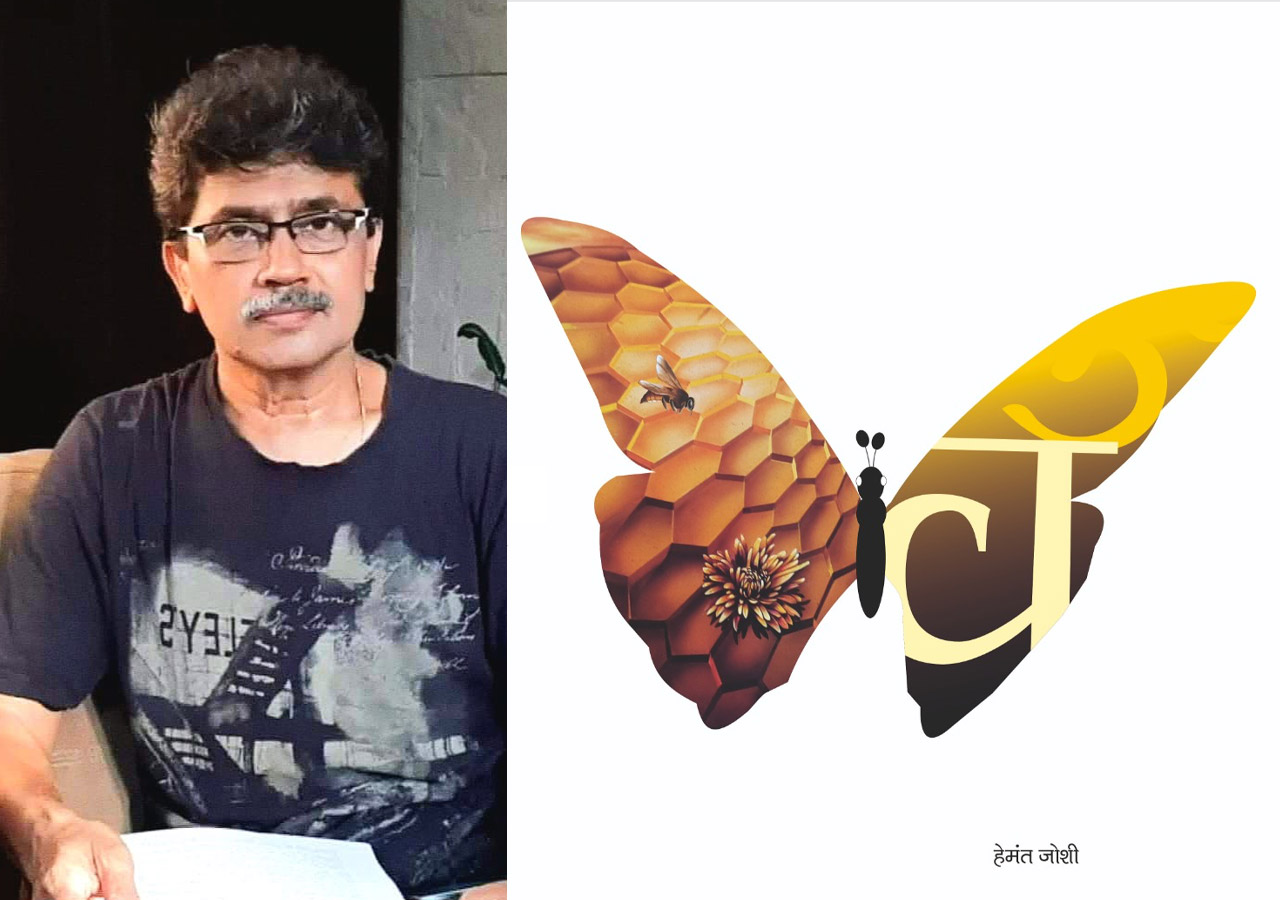
Drukkavya is the first of its kind—a book that blurs the boundaries between language and visual art. Created by artist and poet Hemant Joshi, Drukkavya invites readers to enter a space where words, images, and idioms converge. It is poetry not just meant to be read, but to be seen and experienced.
The juxtaposition of Marathi and English, the use of fragmented phrases, and abstract symbolism explore themes of cultural hybridity, perception, and the search for meaning. Joshi urges us to set aside our assumptions about what is seen and what is imagined.
As surrealist René Magritte once said: “An object is not so attached to its name that we cannot find another that would suit it better.” That philosophy is central to Drukkavya’s poetic language.
Hemant Joshi, a former creative director whose professional work spans sectors from finance to travel and international tech brands like Panasonic, brings decades of experience across media. A published Marathi poet—his previous book launched at Granthali, Bandra in 2023—he is also a visual artist whose work has been showcased in solo and group exhibitions at venues including Jehangir Art Gallery (Mumbai), Lalit Kala Akademi (Delhi), and other cities across India.
Drukkavya reflects his lifelong engagement with the intersections of language, image, and philosophical inquiry.
Within its pages, words bend, break, and reassemble, detached from fixed meaning and reimagined anew. It offers a rare dialogue between poetry and image—image as poem, poem as image—drawing from surrealist lineage while carving its own visual language. Inspired in part by Guillaume Apollinaire’s calligram: “Every image is a poem, and every poem is an image,” Joshi builds on a tradition that traces back to 1918, when Apollinaire first coined the term “surrealism”, influenced by Chagall and de Chirico.
If art history laid the groundwork, Drukkavya stands uniquely at the crossroads of visual poetics and Marathi language experimentation. In the way Geeta Vadhera brought Devanagari calligrams to the fore in the 1990s, Drukkavya suggests a new possibility: a Marathi visual poetry renaissance.
Drukkavya is more than a poetry collection—it is a quiet yet radical act of hybridisation. It reflects a maturing literary-visual consciousness in Marathi, while joining a global continuum of visual poetics. It deserves recognition not only as a literary work but as a significant artefact of contemporary art, design, and linguistic experimentation.
With its launch at NCPA and growing interest across art and literary circles, Drukkavya marks not just a milestone in visual poetics, but a beginning—a lens into how language might look, and how imagery might speak.
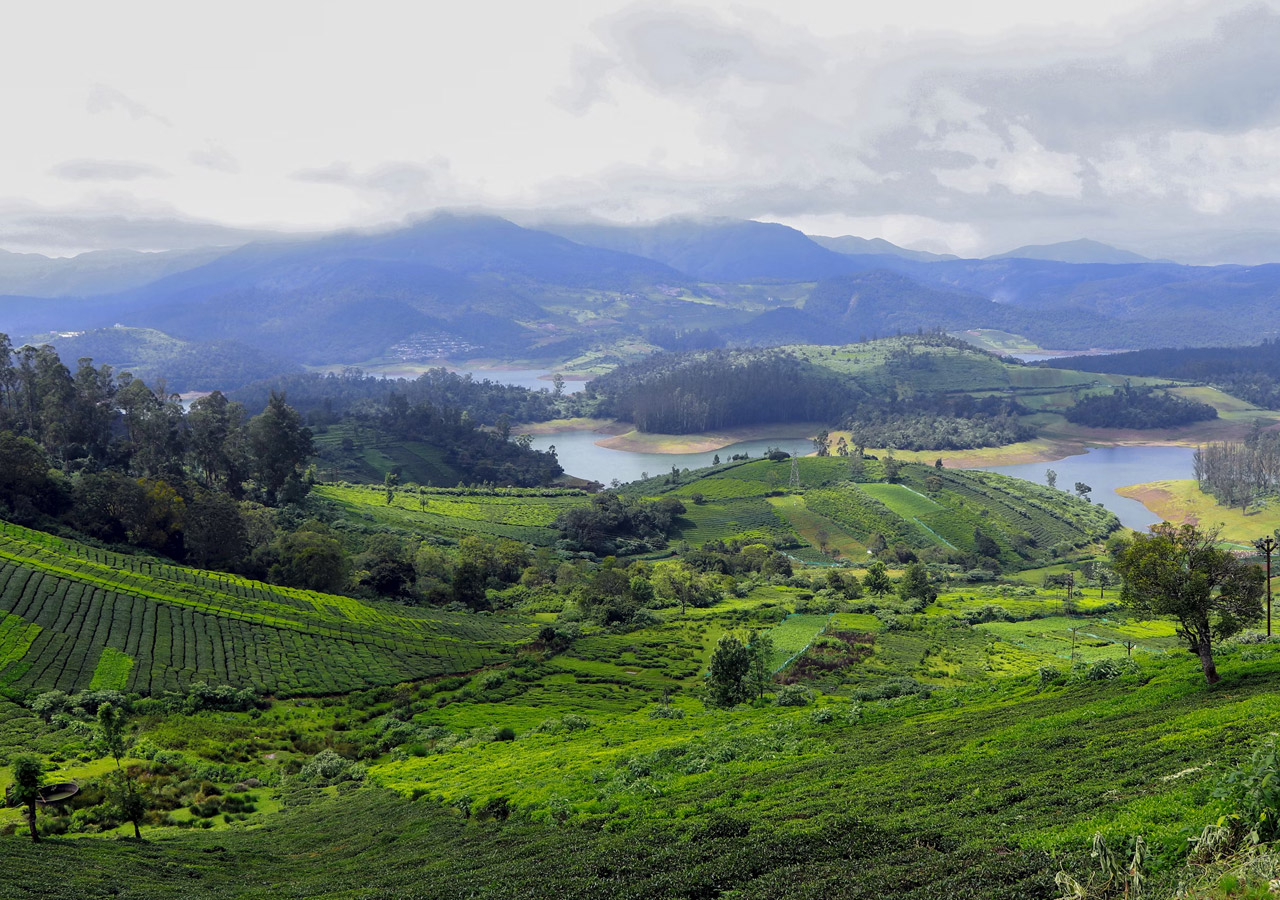
Situated high in the Nilgiri Hills, Ooty is a hill station that’s equally known for its stunning views and aromatic tea estates. With cool mountain air, mist-covered plantations, and rolling green slopes, it’s a haven for tea lovers and curious travellers alike.
If you’re a connoisseur chasing rare brews or just want to sip something warm with a view, Ooty’s tea trails promise an unforgettable experience. So, if you’re ready to swap city noise for rustling leaves and the scent of fresh tea, this guide is just for you.
The Charm of Ooty’s Tea Culture
Rooted in the region’s colonial history, tea cultivation was introduced during British rule and has since become an essential part of the Nilgiris’ identity. The region’s high altitude, cool climate, and fertile soil create perfect conditions for growing some of India’s finest teas.
As you stroll through the beautiful step plantations, you’re surrounded by a centuries-old tradition. Watch how delicate leaves are handpicked, carefully processed, and transformed into the brews we love.
Visiting these scenic plantations becomes even more enjoyable when you have the comfort of an Ooty car rentalto explore at your own pace.
Must-Visit Tea Estates in Ooty
If you’re new to Ooty or even a returning traveller, these tea estates are definitely worth adding to your itinerary.
The Tea Factory & The Tea Museum
Just 5 km from Ooty town, The Tea Factory & The Tea Museum is a must-visit stop for anyone curious about the tea-making process. The factory offers an interactive walkthrough of each step, from plucking to packaging, making it both educational and fascinating.
The museum adds an extra layer of depth, showcasing vintage tools and detailing the tea heritage of the Nilgiris. At the end of the tour, you get to taste a selection of local teas, allowing you to enjoy the region’s rich diversity of flavours.
If you’re looking to pre-book a cab to visit tea estates, downloading the Savaari taxi service appwill help you have a smooth experience.
Glenmorgan Tea Estate
Located away from the usual tourist crowds, Glenmorgan Tea Estate is an idyllic, serene spot surrounded by green forests and offering breathtaking views of a shimmering reservoir. One of the oldest estates in the Nilgiris, Glenmorgan takes you back in time with its heritage tea practices.
The scenic journey to this estate makes it an adventure on its own, and hiring a reliable cab service in Ooty ensures a smooth ride while you take in the surrounding beauty.
Highfield Tea Factory
Set amidst eucalyptus groves, Highfield Tea Factory blends heritage with hands-on experiences. Dating back to the British colonial era, this estate offers guided tours through its factory, where you can see the full tea-making process.
The climate and altitude contribute to bold, aromatic brews, especially their orthodox black tea and spiced blends. If you’re here to learn, sip, or just stroll through the misty fields, Highfield delivers both authenticity and atmosphere in one scenic visit.
Getting here is part of the charm, especially with the ease of an Ooty car rental to take you through those dreamy, winding hills.
Brooklands Tea Estate
Brooklands Tea Estate is all about staying close to the roots—literally. It uses time-tested, minimal-intervention farming techniques that allow the natural character of the leaves to shine through.
The estate’s Nilgiri black tea is smooth, slightly brisk, and has subtle floral hints, while their green tea offers a clean, earthy finish. Less commercial and more local in vibe, it’s perfect if you’re looking for authenticity.
Just you, the gardens, and the soft crunch of gravel underfoot. It’s the perfect escape, made even smoother with a dependable cab service in Ooty to get you there without a fuss.
Stanes Tea Factory Welbeck Estate
Part of the historic Stanes Amalgamated Estates group, Welbeck Estate sits just outside Ooty and offers an authentic taste of the Nilgiris’ tea legacy. The estate follows traditional manufacturing methods, producing high-quality orthodox teas that are both rich and aromatic.
Known for its sustainable farming and eco-conscious approach, Welbeck also crafts organic blends that appeal to modern tea drinkers. Its proximity to Ooty makes it a convenient yet enriching stop for anyone looking to explore a working estate with deep roots in South India’s tea culture.
Just tap into your favourite taxi service app and you’ll be there before your tea even cools.
Wrapping Up
Tea trails in Ooty are more than a tourist activity—they’re a deep dive into the culture and craft that defines the Nilgiris. Whether you’re a tea geek or someone just looking to try something new, these trails are refreshing, educational, and truly calming.
If you’re planning a smooth, scenic trip around the town and its outskirts, Savaari Car Rentals offers reliable chauffeur-driven rides that ensure you explore every tea estate at your own pace and comfort.
AstaGuru’s recently concluded ‘Collectors’ Choice’ auction witnessed remarkable results for two rare and historically significant offerings by Nobel Laureate Rabindranath Tagore, reaffirming his enduring legacy and cultural resonance.
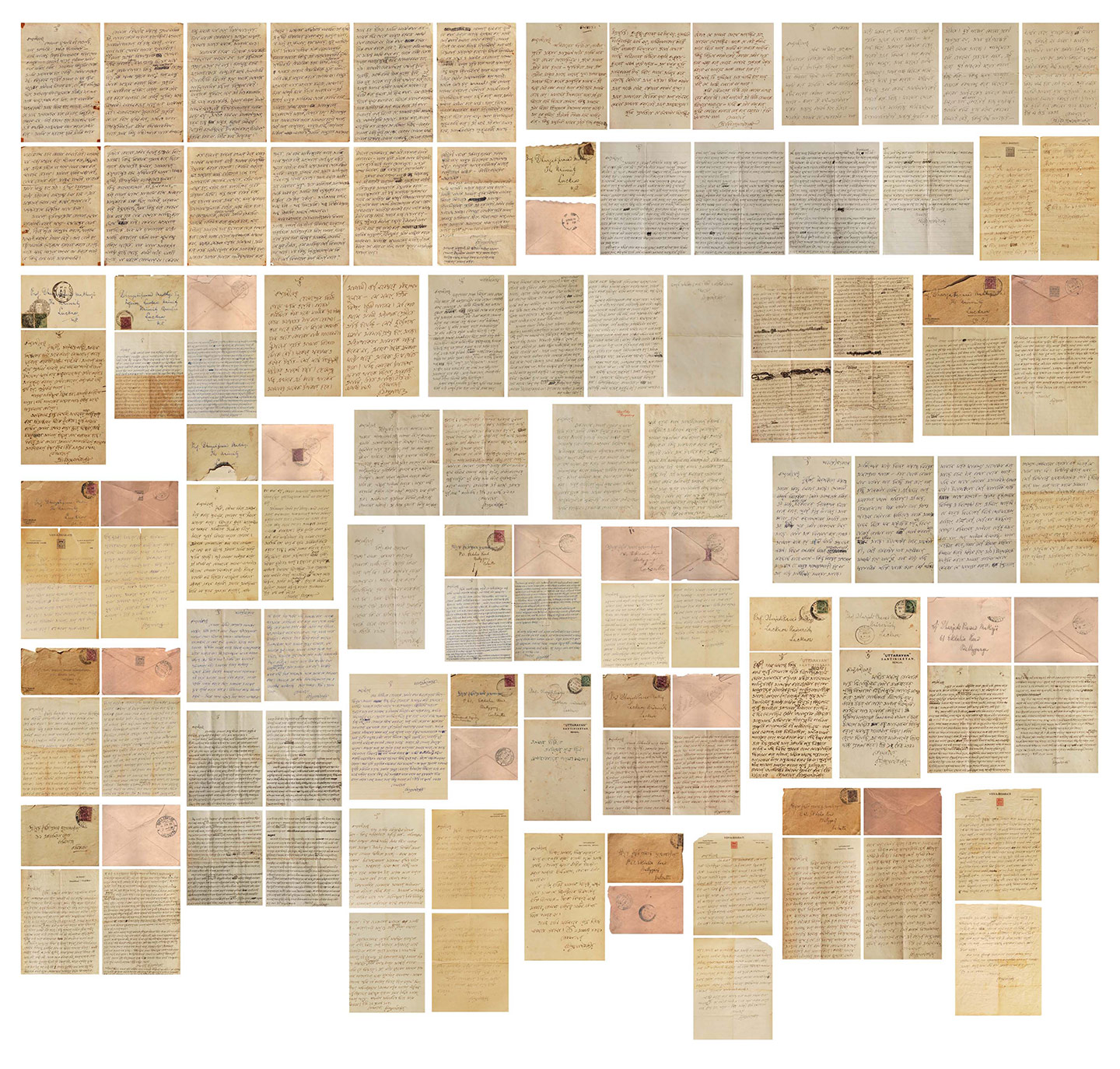
Lot no 5, an extraordinary archival lot of 35 handwritten letters with 14 envelopes that Tagore penned to sociologist Dhurjati Prasad Mukerji, sold for ₹5,90,00,000. Written between 1927 and 1936, the letters offered deep insight into the poet’s creative evolution, philosophical reflections, and transition from literary to visual expression.
Dhurjati Prasad Mukerji was a leading intellectual of his time and a pioneering figure in Indian sociology, associated with the Lucknow School of Thought. His academic work was deeply rooted in Indian cultural traditions, and his long-standing relationship with Tagore was based on a shared commitment to education, philosophy, and nation-building. The letters exchanged between the two are more than personal correspondence—they serve as rare historical documents capturing the exchange of ideas between two of India’s greatest minds during a transformative period in the country’s history.
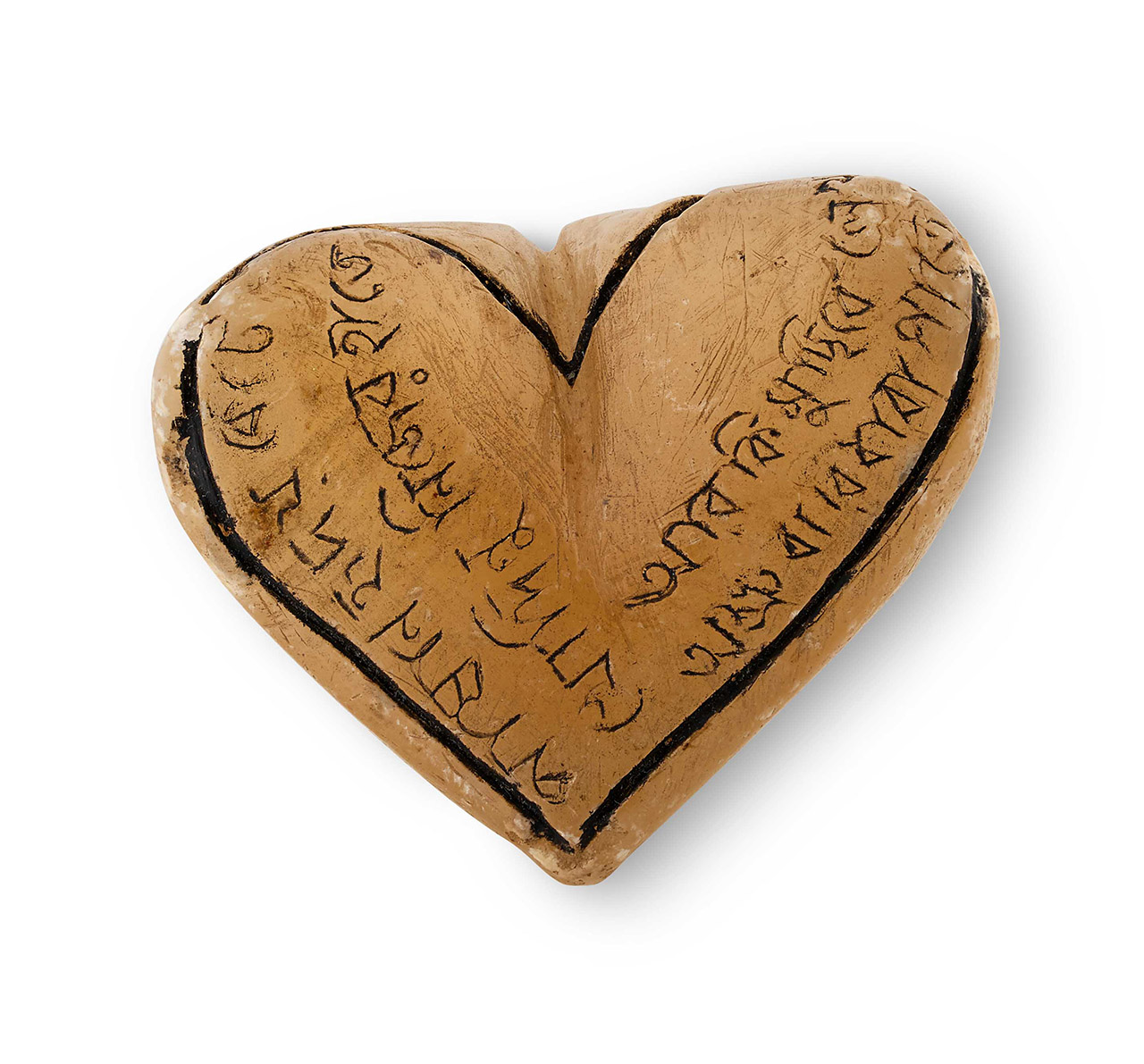
The Heart – Rabindranath Tagore
The result is especially significant considering the lot was not a visual artwork but a manuscript-based archive and yet became the second-highest price ever achieved for a Rabindranath Tagore creation at auction. The collection’s emotional candour, combined with its scholarly value and provenance, captivated collectors and institutions alike.
Lot no. 2, ‘The Heart’, the only sculpture ever executed by Rabindranath Tagore sold for ₹1,04,52,210. This emotionally charged and deeply personal object not only expands the understanding of Tagore’s artistic practice but also offers a rare glimpse into his inner world during a formative period.
Commenting on the results, Sneha Gautam, Director at AstaGuru said,
“We are deeply honoured to have presented these rare and intimate creations by Rabindranath Tagore. The overwhelming response to both lots—particularly the extraordinary result achieved by the letters—reinforces the growing recognition of archival and manuscript-based material as valuable cultural artefacts. These works offer not just collectible value, but living, breathing connections to India’s intellectual and artistic heritage.”
With these historic sales, AstaGuru once again affirms its position as a leading platform for culturally significant treasures and continues its commitment to preserving and presenting India’s artistic legacy to a global audience.
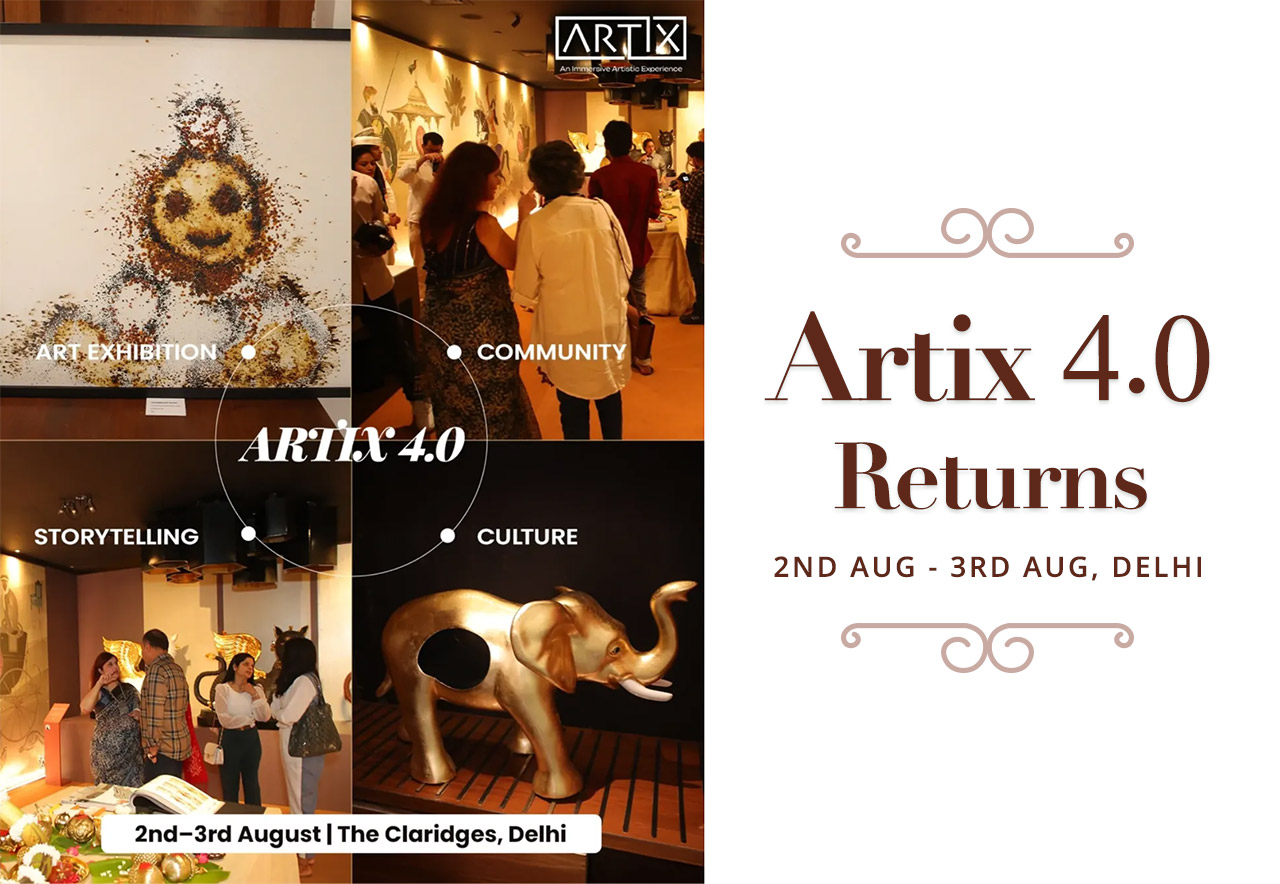
India’s groundbreaking pan-India hotel art fair, Artix, is making a much-anticipated return to its home turf—the national capital, New Delhi. With its fourth edition, Artix 4.0, the event promises to elevate the artistic landscape through a visionary blend of indigenous traditions and global creativity.
A Revolutionary Format for Art Lovers
Taking place on August 2 and 3, 2025, at the elegant Claridges Hotel, this year’s edition reimagines how we engage with art. Instead of traditional gallery settings, hotel rooms are transformed into private, immersive art spaces—inviting viewers to experience artworks in a more intimate and narrative-driven environment.
This unique setup fosters deeper connections between art and audience, as every room becomes a curated vignette of innovation, heritage, and luxury.
A Fusion of Textiles, Talent, and Timeless Aesthetics
1 of 9
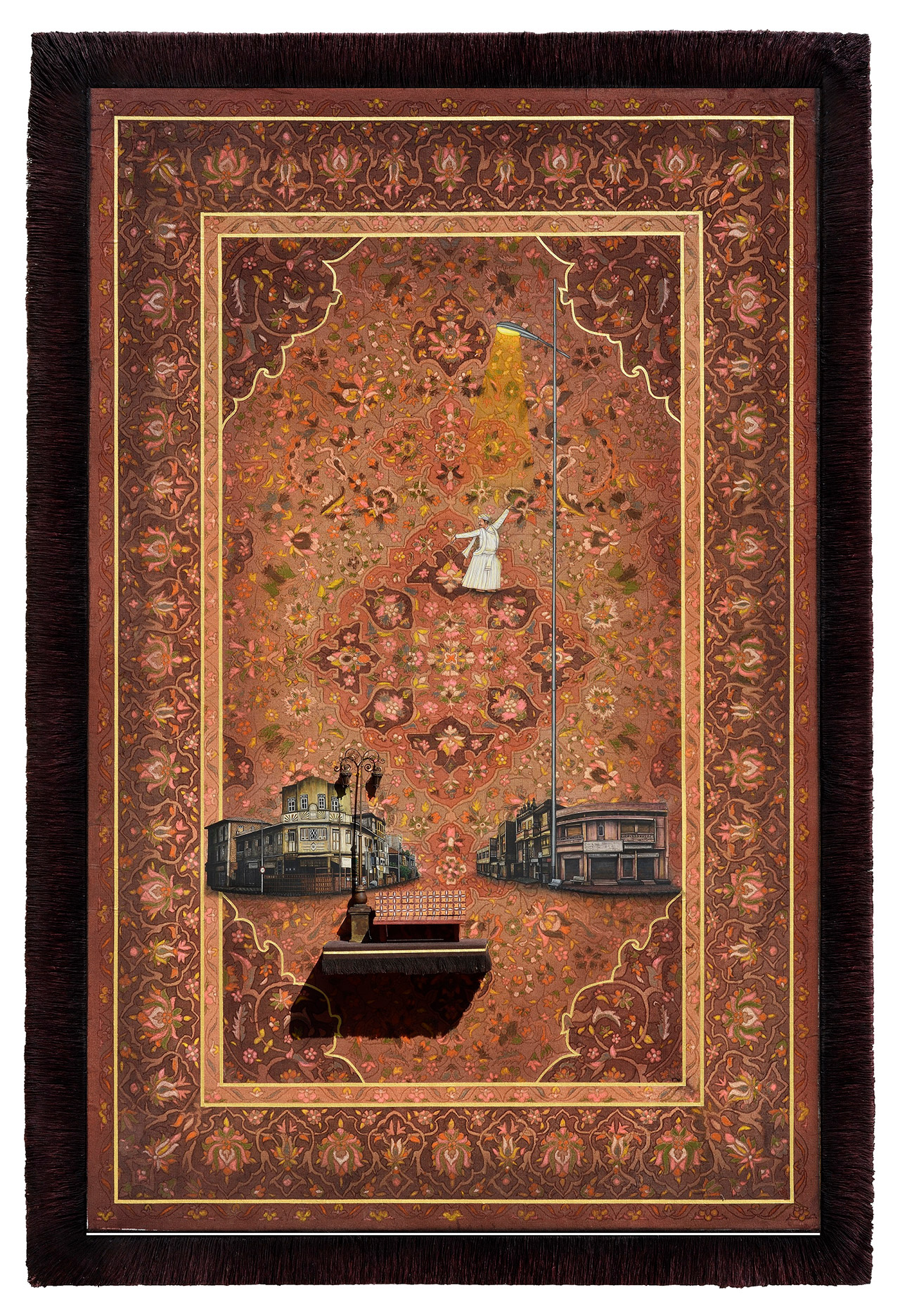
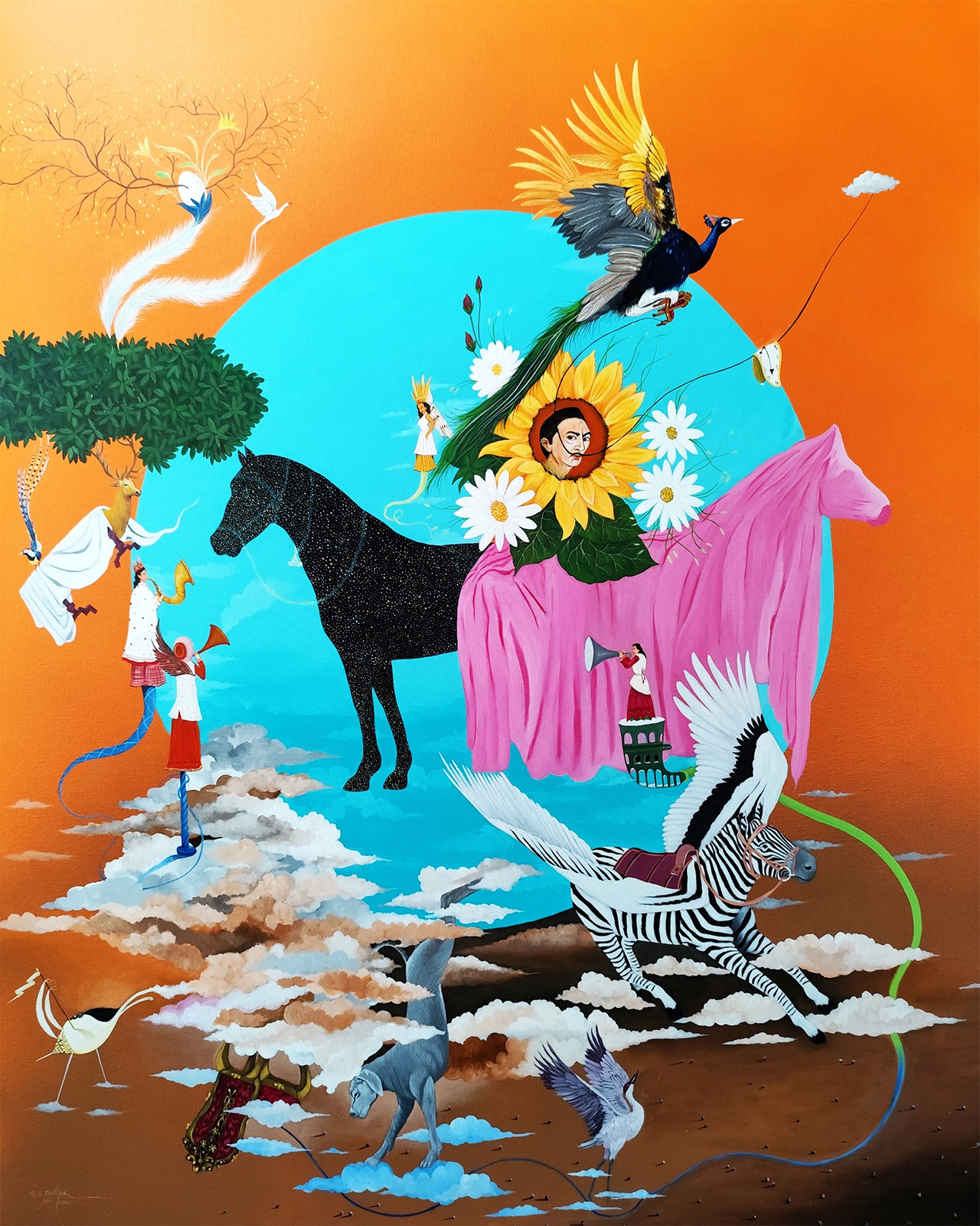
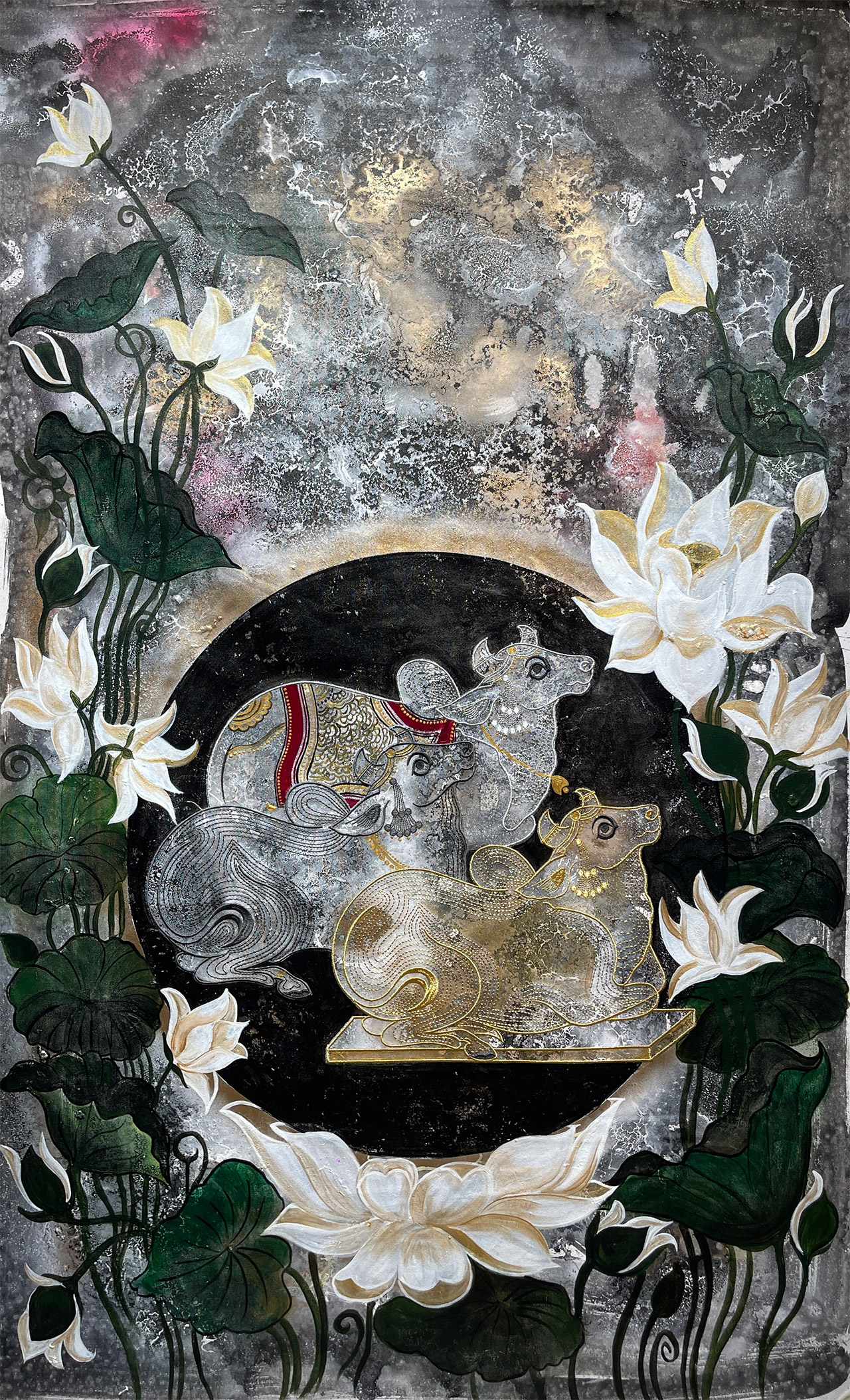
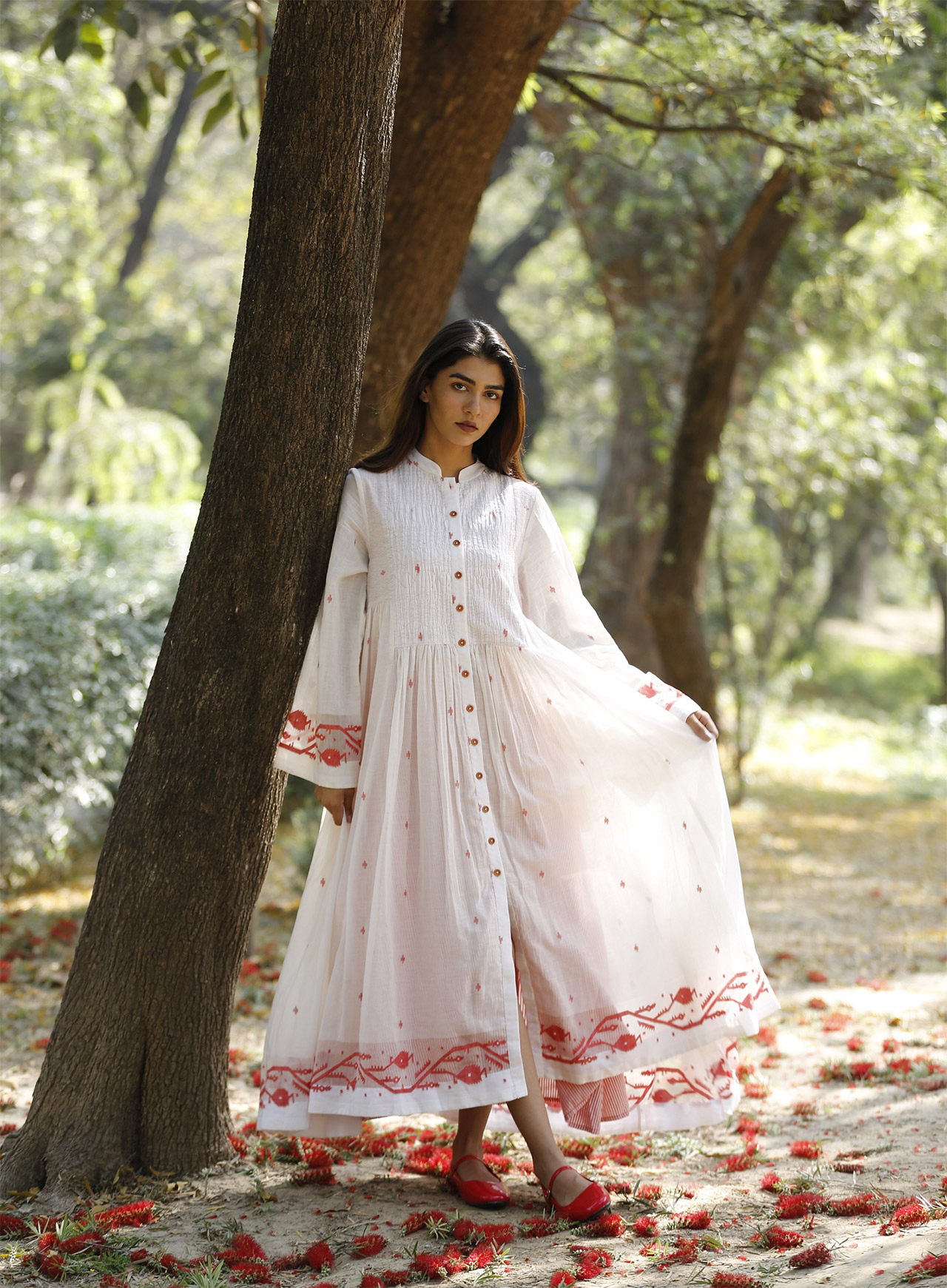
Artix 4.0 is not just an exhibition—it’s a cultural conversation. From ancient textile crafts like Chikankari and Jamdani to modern-day expressions of luxury in jewelry, fashion, and accessories, the event highlights the convergence of handcrafted heritage and contemporary design.
Curated over two days of vibrant sessions, Artix 4.0 showcases emerging artists, noted galleries, and craft-focused collectives. This season features names such as:
Ashvita’s, Arushi Arts, 108 Art Projects, Art Nouveau
Solo talents like Shruti Kasna Gupta, Prarthana Modi, Parnika Mittal, and Akansha Chaturvedi
Textile and luxury brands including House of Tarina, Aadyam Handwoven, Dharki Handwoven, Baroque by Samiksha Chowdhary, and Lotus Art De Vivre
Together, they offer a richly textured display of India’s evolving artistic identity.
Powered by Visionaries
Artix 4.0 is spearheaded by a dynamic trio—Payal Kapoor, Malvika Poddar, and Sethu Vaidyanathan—who collectively bring vision, style, and substance to the platform. Describing this edition, they note:
“Artix 4.0 is more than just an exhibition; it’s a unique, more intimate and immersive idea in the art world. This season, we’re infusing new energy and fresh appeal to brighten the artistic tapestry and cultivate a new generation of art enthusiasts and collectors.”
Their mission: to break traditional boundaries and establish Artix as a dynamic bridge between artists, collectors, and the curious.
✨ Event Details
Event Details Open to all: 2nd August and 3rd August, 2025 Time: 11 :30 AM – 8:30 PM Venue: The Claridges Hotel, Motilal Nehru Marg, New Delhi
Whether you’re a seasoned connoisseur or a curious newcomer, Artix 4.0 invites you to step into a world where art lives, breathes, and surrounds you. Join this one-of-a-kind celebration and witness the future of Indian art unfold—room by room.
About Artix: Driven by boundless artistic ability and commitment, Artix serves as a platform for expressive artistic endeavours and unlimited vision that transcends all boundaries and offers an exceptional journey that enables art enthusiasts, connoisseurs, and collectors to navigate the depths of art and its verticals.
“Manzil milegi, bhatak kar hi sahi, Gumarah to wo hain, jo ghar se nikle hi nahin” – Mirza Ghalib
Shayari is one of the most loved forms of poetry, not only in India but also worldwide. A sher is essentially a poem written in Urdu, Persian or Hindi. And the poet who pens the sher is called a shayar. India has been fortunate to be the home of some of the most gifted and talented shayars, who have with their words, couplets, shers left an impact for generations to come.
What Makes Shayari so Magical?
There is almost a magical quality that shers possess. The rhythm and play of words, along with the sweetness of the language itself, have made shers a popular medium to express several emotions. From love to betrayal, to socially important ideas to a state of mind, this form of poetry has been adapted in different ways. Shayars quote their shers in ‘mehfils’ and some of the most poignant shayaris have been converted into songs and musicals.
Each word is steeped in meaning, and very often the listeners instantly exclaim, ‘Wah Wah,’ on the completion of the sher. The poetry is further elevated in style either in the form of soulful songs or ‘mushaira’, where stalwarts like Jagjit Singh have lent their voices or the shayars themselves have mesmerized the audiences with their diction and conviction.
The Great Shayars of India
When a sher itself is so powerful, how can one not admire the pen and person who composes them? There are some poets, all over the world, whose writings and poetry have survived the tides of time and remain lessons till eternity. Shayars have used the medium of language to bring forth umpteen human desires and emotions, be it love, sadness, happiness, hope, despair, longing and much more. Here is a look at the famous shayars of India.
Born in the 13th century, Amir Khusrau is perhaps one of the earliest shayars in the world. He was a poet, scholar, composer who served the Delhi Sultanate. Though his works are mainly in Persian, he also wrote in Hindavi. His love poetry transcends into the divine and mystical, making him a pioneer of shayari in the country.
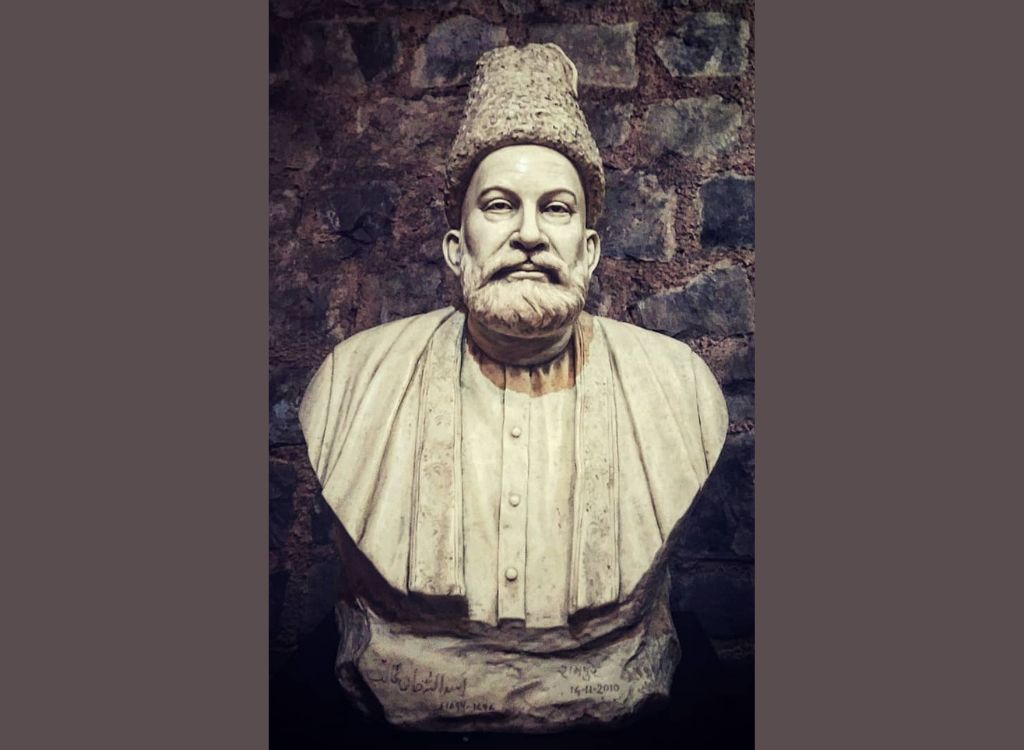
A list of best shayars of India has to start with none other than Mirza Ghalib. One of the most famous shayars, Ghalib wrote in Persian and Urdu. He started writing at a young age of 11 and his poetry is the hallmark of deep thought coupled with beautiful word play. However, sadly Ghalib in his lifetime hardly saw the fame or influence that his shayari would have for ages to comes. An orphan he changed his pen name from Mirza Asadullah Baig Khan to Mirza Ghalib and moved from Agra to Delhi. He passed away in 1869, but his poetry still lives on.
Another poet who hails from the bygone eras, Mir Taqi Mir was a leading poet of the 18th century. Often called the best Urdu poet of all times who also helped in shaping the Urdu language. His shayaris on compassion and love are popular till date. He belonged to the Delhi School of ghazals in Urdu and one can learn more about him in his autobiography, Zikr-e-Mir.
Born in 1777, Khwaja Haider Ali Atish moved to Lucknow from Faizabad which happened to be the literary hub of poetry and poets. He lived on his own terms, not affiliated to any school or court. He wrote in Persian and Urdu and interestingly, he was the contemporary of another legendary poet, Imam Baksh Nasikh.
Imam Baksh Nasikh
Imam Baksh Nasikh was born in 1776 and his rivalry with Khwaja Haider Ali Atish is well known. Both the poets had several followers and this era is often referred to as the golden period for Urdu poetry. Both are known for their amazing and thought provoking ghazals.
Muhammad Iqbal was born in 1877 and passed away before Independence. He is also known as Allama Iqbal, a title that means ‘learned’. Most of his works are written in Persian followed by Urdu. He has also been called the ‘Poet of the East’, and though he has a large repository of work, he is most well remembered for writing ‘Saare Jahan Se Achha Hindustan Hamara’.
Raghupati Sahay was the real name of the renowned poet Firaq Gorakhpuri. His father Munshi Gorakh Prasad was also a poet and played an important role in shaping his son’s literary and creative genius. Firaq was an English professor who went on to write about 40,000 couplets. He has been awarded the Padma Bhushan.
Rahat Indori or Raht Qureshi was born in 1950 was an Urdu professor and a poet. He is also a well known lyricist who has penned lyrics for popular Bollywood songs. Besides, Rahat Indori was invited for mushairas all over the world.
Sahir or Sahil Ludhianvi has been an influential song writer for Hindi cinema. He has written in Urdu, Hindi and English. The range of his poems and songs include romance, futility of war, materialism, social change and more.
The real name of Majrooh Sultanpuri was Asrar-ul Hassan Khan. Another popular lyricist, he has written a number of melodious songs that we continue to hum even today. From ghazals to songs, his command over the language was the fundamental on which his thoughts were conveyed.
A well known poet and lyricist, Nida Fazli is another common name that is often associated with the Hindi film industry. Awarded the Padma Shri, his poetry touches upon relationships, search for purpose and more.
Kaifi Azmi
Image Source
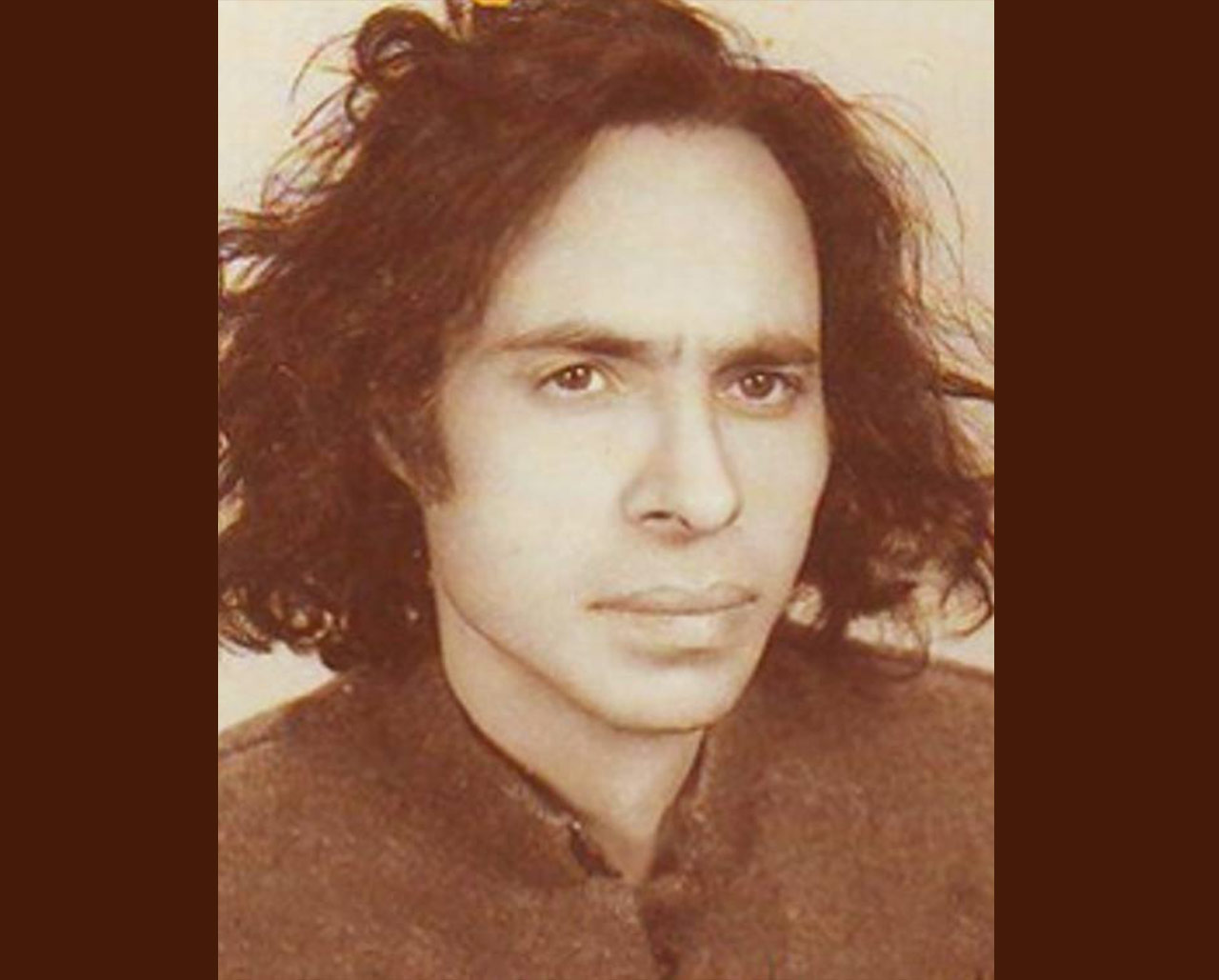
Known as someone who paved the way for Urdu literature in Indian cinema, Kaifi Azmi is popular name in the world of shayari. Along with his contemporaries, Juan Elia and Pirzada Qasim he participated in various mushairas.
Gulzar is one of the stalwarts of Hindi cinema. However, his writings, shers and poetry talk about various aspects and emotions of life. Undoubtedly, one of the best shayars of our times, he dons multiple roles in the form of a novelist, poets, lyricist, dialogue writer, play writer and more. However, his work is not just limited to the entertainment industry, for he is also renowned as a poet respected by the literary world.
Javed Akhtar is an Urdu poet, lyricist, script writer, dialogue writer of this generation. Along with Gulzar, he has popularized shayari and shers for the current modern generation and thus contributed in keeping the love and respect for it alive.
Shayars from The Subcontinent
India gained Independence in 1947, however, there have been stalwarts poets who were born in India during the British rule, but became citizens of Pakistan after Independence. Though strictly speaking, they may not be counted as shayars of India, however, their poetry is well acknowledged by the people of both the countries. We cannot forget their contribution in shaping the future generations of Indian poets. Here is a look at some of them:
One of the modern shayars, Faiz Ahmad Faiz was born in 1911. He wrote in Urdu and Punjabi (Pakistan) and also wrote for the Pakistan Times after independence. Although Faiz Ahmad Faiz is a Pakistani, he was born during the British era and his poetry is thus acknowledged and loved by both the countries of the subcontinent. His life’s later works were dedicated to improving the social status of his country.
Born in 1924, Ada Jafri is known as the ‘First Lady of Urdu Poetry’. She has won many awards and accolades given by the Pakistan government and she is popular for her romantic shayari and ghazals.
Ahmed Faraz’s real name was Syed Ahmad Shah. Born in 1931 he was an Urdu poet and also a scriptwriter. He often criticized the military and its rule in Pakistan but was awarded posthumously the title Hilal-e-Pakistan for its unwavering contribution to Urdu poetry.
Jaun Elia was a popular shayar and poet known for his unconventional writings. Born as Syed Sibt-e-Asghar Naqvi he began writing at the age of 8. But his first published works called Shayad came out only when he was 60 years old. He was a communist and staunchly opposed the partition of India. However, he migrated to Karachi and eventually lived there. He stressed on the correct use of language and his poems often touched upon sadness and idealism.
List of Famous Shayars
Famous Shayars
Era / Region
Specialty / Andaaz
Amir Khusrau
13th Century / Delhi Sultanate
Sufi mystic and pioneer of Hindavi-Urdu poetry; blended Persian, Arabic, and local culture into verse.
Mir Taqi Mir
18th Century / Delhi School
Father of the Urdu ghazal; known for emotional intensity and humanistic themes.
Khwaja Haider Ali Aatish
Late 18th – Early 19th Century / Lucknow
Fearless and passionate poet exploring dignity, resilience, and spiritual intensity.
Imam Baksh Nasikh
19th Century / Lucknow School
Refined poetic structure and grace; a pillar of classical Urdu expression.
Mirza Ghalib
19th Century / Mughal Era
Philosophical master weaving love, loss, and existential themes with brilliance.
Allama Iqbal
Late 19th – Early 20th Century / British India
Philosopher-poet of selfhood, revival, and Islamic consciousness in Urdu and Persian.
Firaq Gorakhpuri
20th Century / Modern Urdu
Romantic voice who reshaped modern Urdu poetry with secular appeal.
Faiz Ahmad Faiz
20th Century / Pakistan
Blended romance with revolution; iconic voice of protest poetry in South Asia.
Sahir Ludhianvi
Mid 20th Century / India
Poet of social realism; impactful lyricist known for bold and progressive thought.
Majrooh Sultanpuri
Mid 20th Century / India
Blended classical Urdu with mainstream appeal through memorable film lyrics.
Ada Jafri
20th Century / Pakistan
First major female voice in Urdu poetry; explored womanhood and identity.
Ahmed Faraz
20th Century / Pakistan
Romantic rebel poet known for accessible language and rich emotional imagery.
Kaifi Azmi
20th Century / India
Activist-poet whose work championed equality, justice, and the working class.
Nida Fazli
Late 20th Century / India
Explored everyday emotions with philosophical depth and lyrical simplicity.
Jaun Elia
Late 20th Century / Pakistan
Cult icon known for rebellion, sarcasm, and raw poetic honesty.
Gulzar
Contemporary / India
Minimalist master of metaphor; blends poetic expression with cinematic beauty.
Rahat Indori
Contemporary / India
Stage sensation; powerful orator blending protest, identity, and romance.
Javed Akhtar
Contemporary / India
Modern voice of reason and introspection; scriptwriter and poetic visionary.
Key Takeaways
There are several other shayars whose works are deep and mesmerizing. Be it from the past, such as Hasrat Mohani, Daagh Delvi, Mirza Mohammad Rafi Sauda or Momin Khan Momin. Or from the later and more modern times, such as Nasir Kazmi, Munawwar Rana, Amrita Pritam, Wasim Barelvi, Juan Elia, Parveen Shakir, Bashir Badr and more. The history and present of India has some of the finest shayars and we cannot be more grateful for it.
FAQs about Best Shayars of India
Question: Who is the most famous Shayar?
Answer: Mirza Ghalib is the most famous and celebrated shayar in word of Urdu, Persian and Hind poetry.
Question: Who is the No.1 Shayar in India?
Answer: Well, it will be unfair to name a single shayar as no.1 but many believe that Mirza Ghalib is considered as No. 1 shayar in India.
Question: Which country is famous for shayari?
Answer: Shayari culture is famous in India and Pakistan hence both the countries are famous for shayari.
Question: Are there Shayars who are loved by both people in India and Pakistan?
Answer:Yes, There are well Known poets in both India and Pakistan. Some of them are Faiz Ahmad Faiz, Jaun Elia and Ahmed Faraz.
Question: Who is considered the pioneer of Shayari in India?
Answer: There is evidence that Shayari began in India within the 13th century, and the founder of this tradition can be called a poet and scientist Amir Khusrau, who created works in Persian and Hindavi.
Nestled amidst lush landscapes near Pune, Abhay Prabhavana Museum and Knowledge Centre is a first-of-its-kind institution which stands as a luminous tribute to India’s spiritual, ethical, and philosophical legacy. Conceptualized by visionary leader Shri Abhay Firodia, this groundbreaking institution is not merely a museum – it is a sanctuary of curiosity and thought, a canvas of cultural enrichment and a beacon for future generations.
Conceptualized with deep reverence for India’s civilizational roots, the museum blends the ancient with the avant-garde. Through immersive storytelling, state-of-the-art design, and thought-provoking exhibits, Abhay Prabhavana brings to life the profound tenets of Jain philosophy, Indian heritage, and the message of compassionate and conscious living.
In order to extend this message beyond walls and into the hearts of young learners, the Abhay Prabhavana Museum and Knowledge Centre has launched immersive educational initiatives. This initiative seeks to ignite and instill pride in India’s value system, encouraging students to explore and embody the civilizational wisdom encoded in ethics, thought and in art.
Tailored for school and college students across disciplines – from humanities to design – the programme features thoughtfully created group tours led by academicians. These guided journeys unveil 30 state-of-the-art galleries, each a portal into themes such as philosophy, traditions, artistic expressions and social practices.
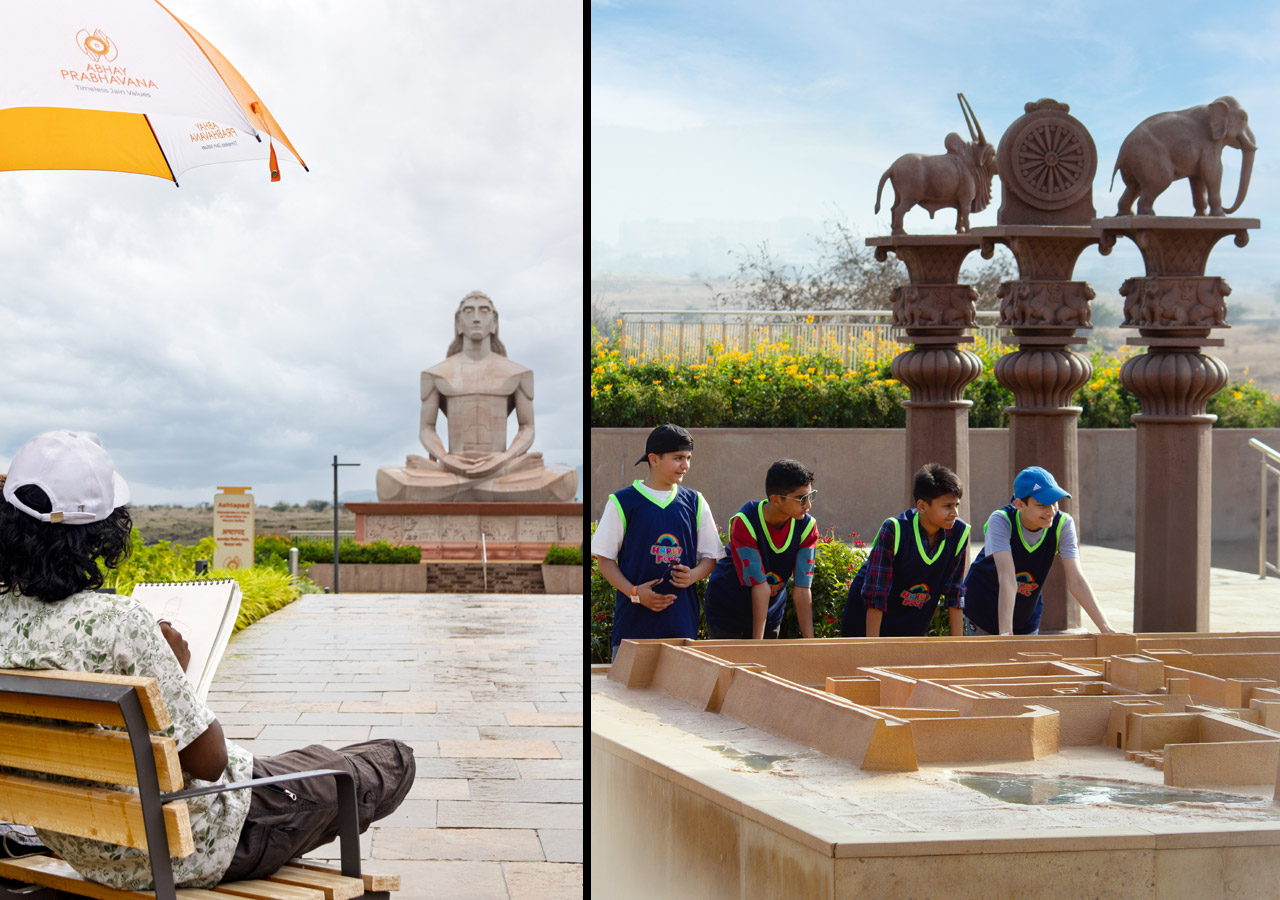
The experience is both panoramic and personal. Set amid 20 acres of landscaped gardens, highlights include the towering 100 feet Manstambh, symbolizing spiritual elevation, the resplendent 43 feet sculpture of Rishabhdev: the first Tirthankar who introduced civilizational markers, and the Plaza of Equanimity, designed to inspire inner reflection. These architectural marvels are not just monumental, they are living metaphors of India’s inclusive and enduring ethos.
Through immersive experiences, digital installations, and aesthetic design, students encounter India’s heritage not as a static relic, but as a dynamic, lived experience. They are then invited to reflected and respond – through articles, speeches, sketches, and creative expressions – fostering a personal connection with the values they witness.
This initiative marks a significant stride in cultural education. It creates a space where heritage meets imagination, and where tradition inspires innovation. In nurturing this dialogue between the past and the future, Abhay Prabhavana is cultivating a generation of conscious citizens, thoughtful artists and value-driven designers.
Reflecting on vision behind the project, Shri Abhay Firodia, Founder of Abhay Prabhavana Museum and Chairman of the Amar Prerana Trust, shared, “Design, creativity, and knowledge must be rooted in meaning. Through this initiative, we hope to encourage young minds to understand and carry forward the spirit of our civilizational ethos – one where values are not merely remembered, but lived and reimagined through new forms.”
In a world often consumed by challenges, Abhay Prabhavana emerges as a timeless guidepost – a place where wisdom is not just preserved, but awakened, embodied, and set in motion for generations to come.
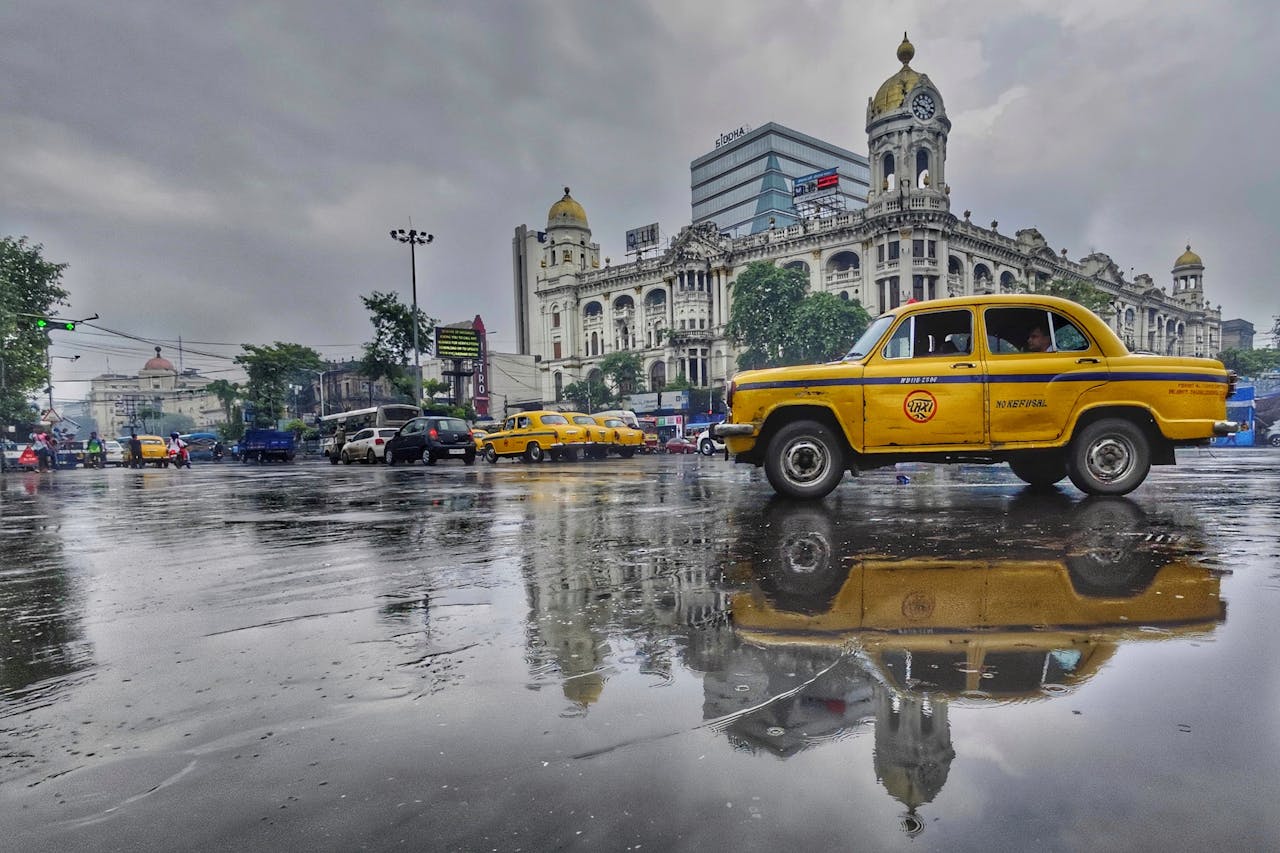
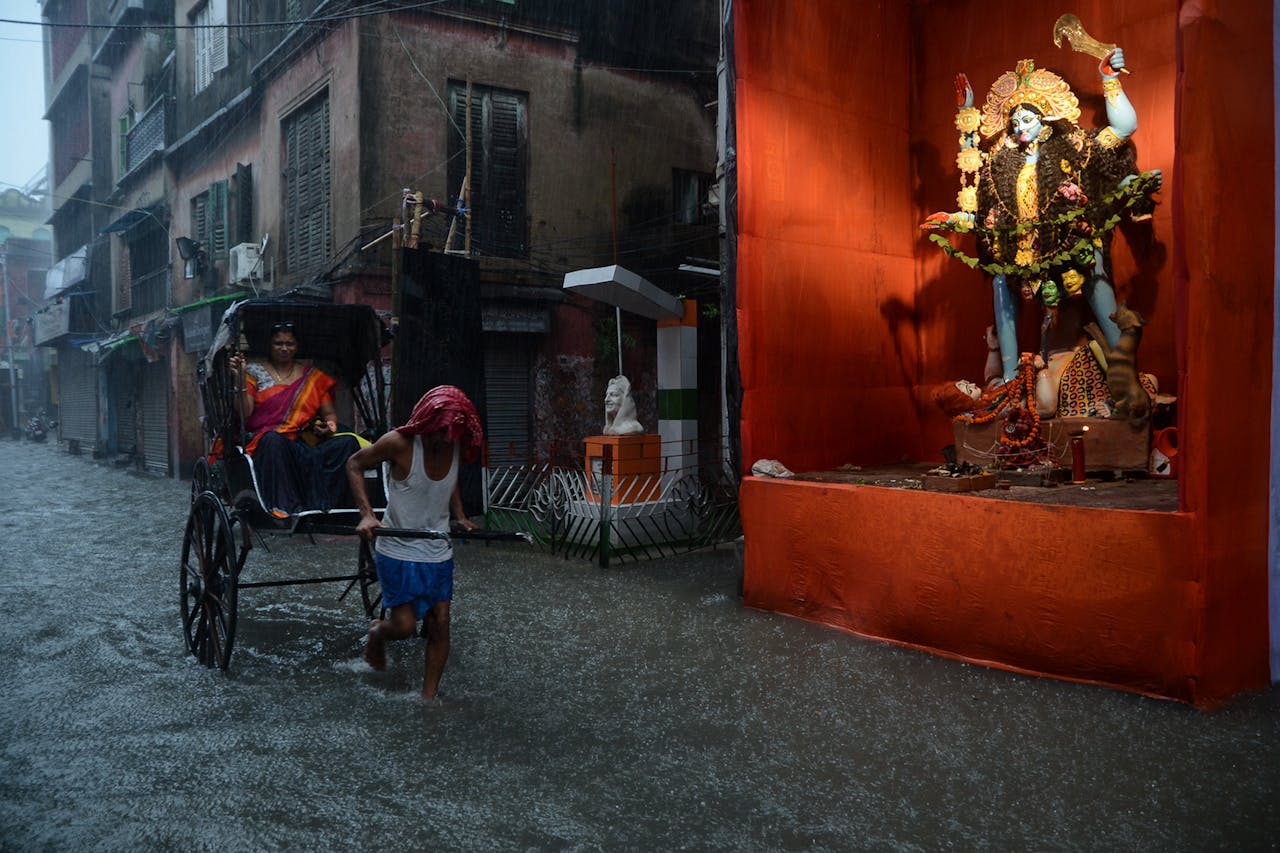
Monsoon in Kolkata are an enticing flashback to all of our childhood. As the sky turns from clear bright to a grey, overcast with a thick layer of clouds, one is compelled to be transported back to the childhood years. It reminds us of the days when one used to get drenched in the rain while cycling back home from school or tuition. Young couples would ride bicycles and seek refuge at roadside tea houses, and sip steaming hot masala tea and fritters waiting for the rain to stop. And the old at home will breathe a sigh of relief as the scorching humid climate dwindles to comfort. Thunderstorms roll in like background drums, wrapping Kolkata in a cocoon of sound and silence.
After weeks of blistering sun and suffocating humidity, the first real downpour in Kolkata is like a community-wide breath of fresh air. Usually sweeping in around mid-June, the rain cools the city almost at once and wraps everything in a brisk, promising hug. The dry earth soaks up eagerly, and the air is heavy with the wet, earthy smell of petrichor – a smell firmly implanted in the shared memory of the city. While traffic snarls and waterlogging are inevitable companions, Kolkatans generally embrace the rain. The storm signals relief from summer’s grip, a guarantee of vibrant new leaves, stocked ponds, and milder evenings that ease the daily commute.
With the skies grey and the air thick, the season’s arrival also reshapes what people feel like eating. As humidity grows higher, cravings for crisp, light fritters-and any other warm bite that offers comfort-surge almost instantly.
Pakoras and Telebhaja: When clouds start to pour, stalls burst with crisp pakoras and telebhaja. You’ll find aloo chop, beguni, mocha’r chop, and fish cutlets, each one bubbling in hot oil and begging to nestle beside a brimming cup of fresh cha. The duet of rain drumming on rooftops and these snacks shattering between your teeth sums up a true Calcutta monsoon.
Khichuri: On a soggy afternoon, nothing hits the spot quite like khichuri, a cozy mix of rice, lentils, and whatever vegetables are handy. Pile on some ilish bhaja, dim bhaja, or another beguni, and the steaming bowl wraps the whole family in a warm, edible hug.
Ilish (Hilsa) Season: Monsoon also brings the single most awaited window for ilish, that linchpin fish of Bengal. Cooks leap at the chance to make sorshe ilish, bhapa ilish, and countless other classics, turning every arrival of the silvery catch into a small household festival.
Monsoon and Art, Literature, Music
The monsoon has deeply impacted Bengali art, literature and music so that it has been used as a strong muse through the centuries.
Poetry and Prose: Rabindranath Tagore, the winner of the Nobel Prize, celebrated the monsoon in his numerous poems and songs, expressing all the moods of this storm of a nature: he wrote about its tender rains and violent rains. His prose is given to infusing the romance, sentiment and wistfulness of the rainy days. There are other Bengali writers and poets too who have been overwhelmed by the grandeur of the monsoon by writing tales and composing poetry.
Visual Arts: Rainy streets become the subject of painters who portray droplets of rain and shining trams under the streetlights and contrasting umbrellas with the grey sky. Not only does monsoon provide a different palette and mood that artists in Kolkata often use, the city has an emotional attachment to rain.
Music: Indian classical and folk music use ragas and tunes which remind of the monsoon season as well. An example is the Malhar raga, which historically has a connection with rain and numerous compositions seek to represent the sound and effect of rain.
Monsoon and Festivals
Celebrations at Rath Yatra
Though Durga Puja, the city’s biggest celebration, usually lands at the monsoon end, the wet months still hum with smaller, daily rituals that give the rain a festive feel.
Jhulan Yatra: This festival, mainly celebrated in the month of August, is one in which the idols of Radha and Krishna are swung on beautifully ornamented swings. It is a festive event usually with devotional songs and the slow swings indicate the calm beat of the rain.
Ratha Yatra: Ratha Yatra is normally celebrated during the early monsoon (June-July), but the preparations made and the following celebrations especially of the Ulto Rath (return journey) are usually done in full swing of the monsoon months giving it a special flavour in the rain drenched streets.
Outdoor Activities and Leisure: Kolkatians find a way of enjoying the season despite the rains. Many find the chance in making a slow-moving boating trip on the Hooghly river and enjoy the rain splashing on its surface. A leisurely stroll in the green lung of the city Maidan, which is a sprawling tract of park lands in Kolkata, proves to be a cool experience. Kids play in fields of muddy football and many find it nostalgic.
Although romanticized, the Kolkata monsoon is also a problematic experience. Waterlogging is an enduring issue that causes traffic and daily mobility to be affected. More humidity is not only a health issue but also an infrastructure-related issue. Yet Kolkatans are quite resilient and managing. The essence of the city has been such that these adversities are mostly settled with pragmatic acceptance and individuals learn to adjust to the freight by its own special mixture of humor and determination.
Conclusion
The monsoon of Kolkata is more than a state of the atmosphere. It is rooted strongly in the culture of the city and closely integrated in the food culture, art, and creative activities, festival schedule, and daily life of the city. It arouses a set of emotions, from excited elation of relief to the reflective atmosphere of analysis and it makes the City of Joy come alive in its own unique and rain-washed beauty.
FAQs about Monsoon in Kolkata
Question: When does monsoon usually occur in Kolkata during the year?
Answer: Monsoon normally arrives in Kolkata during mid-June and provides relief from heat during summer.
Question: In what ways does monsoon affect cultural life in Kolkata?
Answer: The monsoon brings life to Kolkata’s cultural landscape. Rabindra Sangeet becomes a backdrop in homes, Adda (informal conversation) bloom in coffee shops, and literary centers like College Street ring with gossip and tales.
Question: What are popular monsoon foods in Kolkata?
Answer: Locals yearn for telebhaja (deep-fried fritters) during rains, beguni khichuri, hot jhalmuri, and steaming masala chai. The comfort foods are a rage throughout the season and relished by people of all ages.
Question: Are there some festivals or events at Kolkata during the monsoon?
Answer: Yes, monsoon more or less coincides with initial preparations of Durga Puja. Also, in vogue at that time are some cultural events, plays, and poetry recitals, mostly indoors because of the climatic conditions.
Question: Where are the best places to admire Kolkata’s monsoon beauty?
Answer: Some of the mythical spots are Victoria Memorial, Princep Ghat on Hooghly, bookstalls on College Street, Kumartuli’s terracotta icon factory, street stalls and tea stalls where the true monsoon magic unfolds.
Seven Lines About Kolkata Monsoons
The first downpour paints Kolkata in fresh green and makes the pavements gleam like wet glass.
Every rain brings back that earthy petrichor, reminding everyone the season’s wheel has finally clicked into place.
No shower feels complete without crunchy telebhaja and steaming cups of sweet masala chai.
The arrival of the monsoon also marks hilsa season, a fish lovers’ cherished reason to celebrate the clouds.
Tagore songs and poems echo the storm’s mood, turning every balcony into an impromptu reading room.
Kolkatans wade through flooded lanes armed with laughter, improvised bamboo sticks, and a healthy dash of patience.
Beyond soggy shoes and delayed trains, the rains drip new life and rhythm into the city’s vibrant culture.
The International Day of Yoga (IDY), observed on June 21 every year, has become a global phenomenon, marking a decade of profound impact on health and well-being worldwide. Once a proposal of India, though it is currently an international phenomenon that has brought millions of people to unite and rediscover the ancient benefits of this old-time practice. It is a testament to the increasing popularity of yoga that spreads not only across the borders of geographical separation but also cultural. It is a measure of how appealing a theme can be on a purely universal scale which appeals to the body as well as to its soul. Each year, the day is a strong reminder of the ability of yoga to promote harmony in the world and peace within us resulting in a healthier and harmonious world society.
Understanding the IDY Logo
The IDY logo is most representative of yoga. Folded hands indicate yoga itself, showing the synthesis of individual consciousness and cosmic consciousness and the ultimate harmony of mind, body, and nature.
Even the colour and symbols used in the logo bear a meaning: brown leaves are symbolic of the Earth; green leaves are symbolic of Nature, blue is symbolic of Water, the shiny parts are symbolic of Fire and the Sun is the source of inspiration and source of energy. The combinations of all these exemplify the message of yoga: peace and harmony to the entire humanity.
A Decade of Distinguished Growth
The history of the International Yoga Day has been phenomenal indeed. Movement participants increased between 2018 from about 9.59 crore (95.9 million) participants to approximately 24.53 crore (245.3 million) around the world in 2024. This remarkable development presents yoga as highly popular and having the potential to boost global well-being.
Yoga for One Earth, One Health: The 2025 Theme
In this 11 th International Day of Yoga, the theme of the international day of yoga is “Yoga for One Earth, One Health.” It is an inspiring topic which reminds everyone about the nexus of nature that reminds us about health, balance of the environment and well being on earth. This is why exactly it aligns with the Indian vision of One Earth, One Family, One Future that was a driving force behind the Indian G20 presidency.
In honour of a decade of transformational power, IDY 2025 has ten special Signature Events, all of which have the aim of spreading the yoga message to all parts of society.
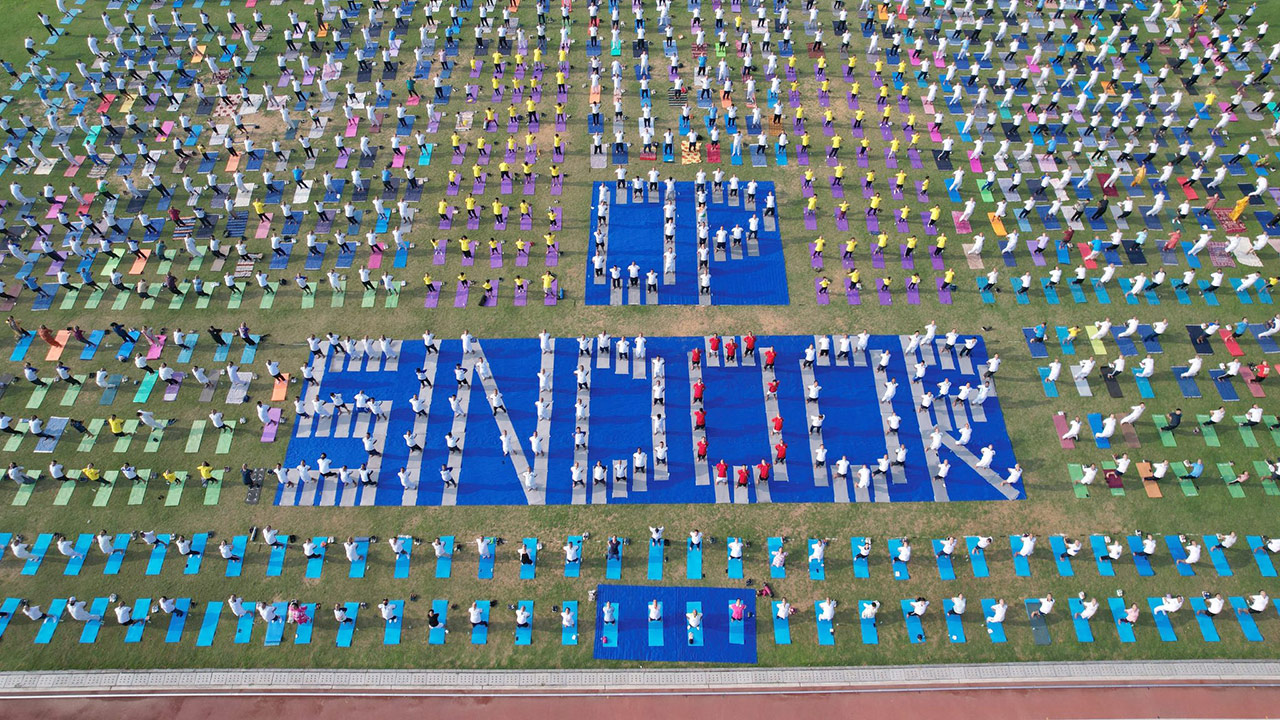
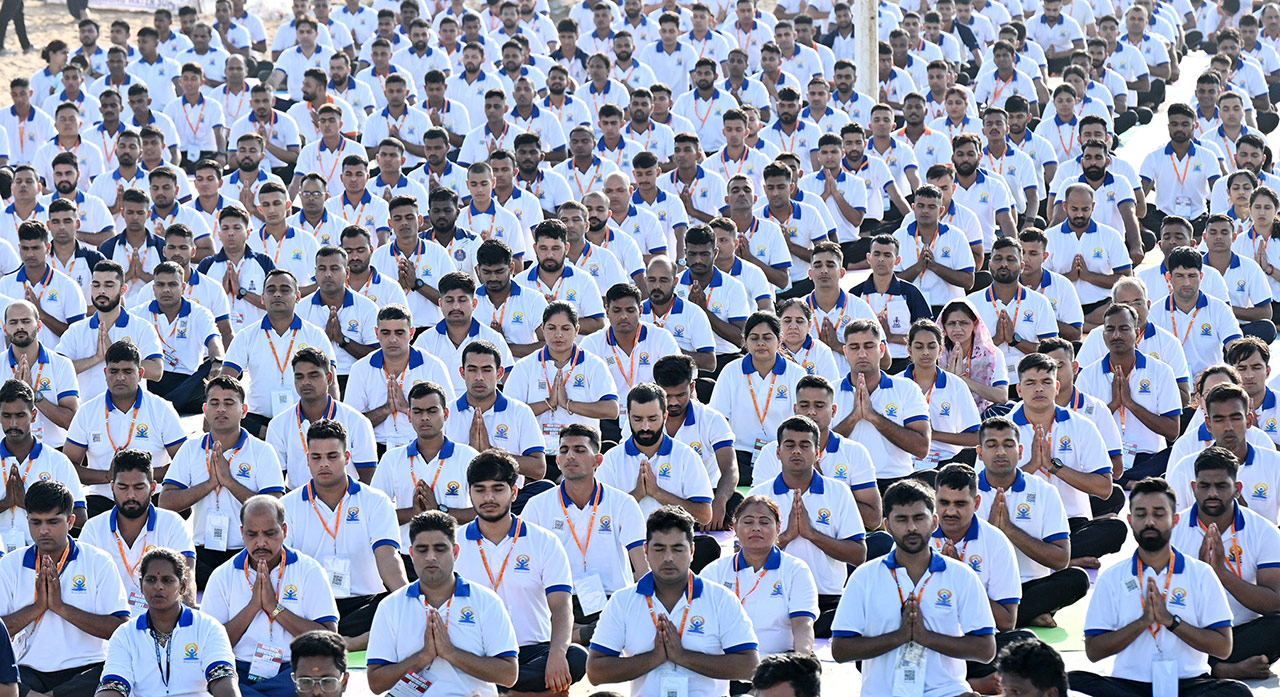
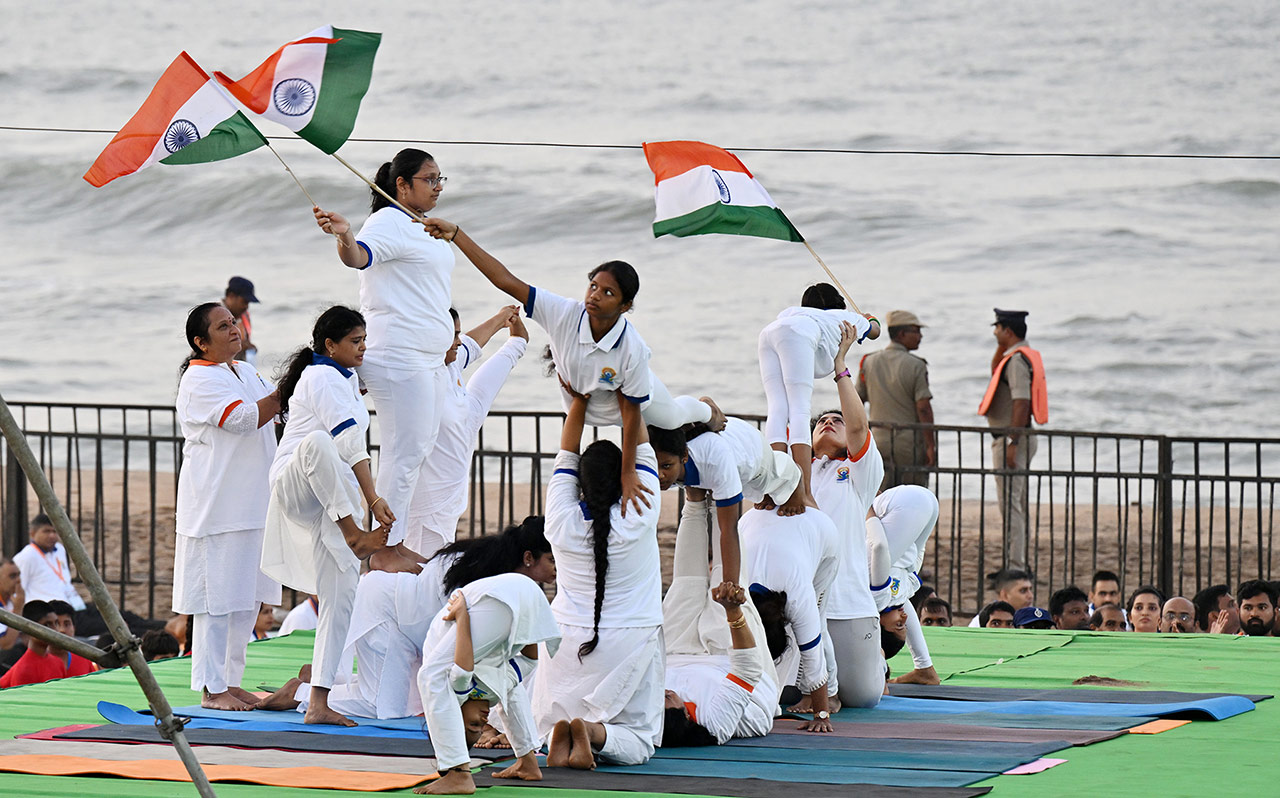
Yoga Sangam: Yoga Sangam, the flagship national event for International Day of Yoga (IDY), will witness synchronized mass yoga sessions at over one lakh locations across India on June 21, 2025. Prime Minister Narendra Modi is set to lead the main celebration from Visakhapatnam. These large-scale gatherings will follow the Common Yoga Protocol (CYP)—a standardized set of practices curated by the Ministry of AYUSH. To ensure inclusivity, the CYP resources are made available in 22 regional languages, the six official UN languages, and nine additional international languages.
Yoga Bandhan: It is a global exchange program that facilitates yoga practice by engaging in partnership with other countries. It involves exchange visits of yoga practitioners and Indian as well as foreign delegates, further facilitating each other’s activities and exchanges.
Yoga Park: A proposal for the upgradation of existing parks in rural and urban areas into exclusive Yoga Parks. The public space will feature daily yoga classes by expert instructors and information boards for self-practice to ensure that everyone, including children and senior citizens, has access to it.
Yoga Samavesh: An initiative to universalize yoga and reach special needs populations. It has standardized yoga protocols for diabetes, hypertension, and bronchial asthma, among others, as well as for age-related groups and problems such as mental health and alcohol and drug abuse.
Yoga Prabhav: A comprehensive research work that has quantified the far-reaching effect of IDY over the decade. Its results will guide the future generation of wellness initiatives and preventive healthcare programs.
Yoga Connect: A global summit organized in a mixed mode, where yoga leaders from across the world convened to work together, exchange culture, and attain wholesome well-being. The findings of Yoga Prabhav were also shared at this event.
Harit yoga: This scheme uses yoga in a bid to preserve nature. Actions such as planting trees and sanitation exercises are put in place, as well as information sessions about climate change and sustainable life.
Yoga Unplugged: It is a program set up to make the youth adopt yoga both by online and offline plans. This would comprise quizzes, essay contests, social media challenges, workshops and establishment of youth festivals with the inclination being the Yoga Fusion, where traditional yoga is incorporated in modern music and movement.
Yoga Mahakumbh: A gigantic performance of yoga in 10 cities with various organizations. These events are theme based like environment, youth, and inclusiveness as other signature events.
Samyoga: This project promotes sharing and discussion the focus on whether yoga would be included into mainstream medicine and other traditional healing modalities of Ayurveda and Homoeopathy. It is focused on developing a list of key yoga activities to be included in public health programs.
Leading up to IDY 2025, the Ministry of AYUSH organized nationwide countdown events:
100-Day Countdown Event: Yoga Mahotsav 2025 in New Delhi officially inaugurated the countdown to the 11th IDY.
75-Day Countdown Event: The event in Bhubaneswar was attended by more than 6,000 participants and inaugurated the Harit Yoga campaign with more than 5,000 medicinal plants being planted.
50-Day Countdown Event: In Maharashtra, more than 6,200 individuals witnessed a large-scale Common Yoga Protocol demonstration, and the registration portal of the Yoga Sangam was launched.
25-Day Countdown Event: Conducted in Pondicherry, it was witnessed by more than 4,000 people.
The PM Yoga Awards 2025 also recognize excellence in promoting and practicing yoga, with four awards (two national and two international) celebrating significant contributions to this ancient practice.
Conclusion
International Day of Yoga 2025 is not the standalone day of celebration. It represents the long-time commitment of India towards the holistic evolution of health and harmonious coexistence with nature and elevation of the entire humankind. Due to the reflective nature of its topic and distinct events in all fronts, IDY continues to attract steadily more efforts on a global scale. It continues as a leader to demonstrate how physical health can be combined with mindfulness of being conscious to enforce a universal message of peace and harmony.
FAQs on International Day of Yoga
Question: On which day International Day of Yoga is celebrated, and why has that date been chosen?
Answer: Yoga Day is a yearly festival which is celebrated on 21 st June. The reason this date has been chosen is that this date symbolizes the Summer Solstice (the longest day of the year in the Northern Hemisphere) and this day symbolizes harmony and balance in other cultures.
Question: What is the main aim of International Day of Yoga?
Answer: The main aim of International Day of Yoga is to develop international awareness of several benefits of yoga practice towards physical, mental, and spiritual, as the means of popularizing the holistic approach to health.
Question: Who has proposed the idea of the International Day of Yoga?
Answer: The idea of an International Day of Yoga was proposed in the speech of India Prime Minister, Narendra Modi, during the 69 th session of the United Nations General Assembly in September 2014.
Question: Why is One Earth, One Health: Yoga an appropriate theme of IDY 2025?
Answer: The IDY 2025 theme, i.e., Yoga for One Earth, One Health will unite India and the world on the vision of oneness of earth, people and our future.
Question: How has International Day of Yoga participation increased in recent years?
Answer: The population celebrating has grown immensely year after year, and approximately 24.53 crore (245.3 million) individuals have taken part in celebrations in 2024, which marks its sheer popularity.
Seven Lines on International Yoga Day
June 21 International Yoga Day brings together millions of individuals across the globe for the practice of well-being.
The word “yoga” in Sanskrit refers to the inner harmony of mind, body, and soul.
India’s move led to the United Nations pronouncing June 21 as a global day of global well-being.
The motto “Yoga for One Earth, One Health” gives personification to world peace and conservation of nature.
From large-scale participation to signature events, IDY promotes an all-around health revolution by health experts.
Yoga provides a doorway to inner harmony, peace, and more harmony with nature.
A decade of IDY has established it as a strong worldwide movement of public health.
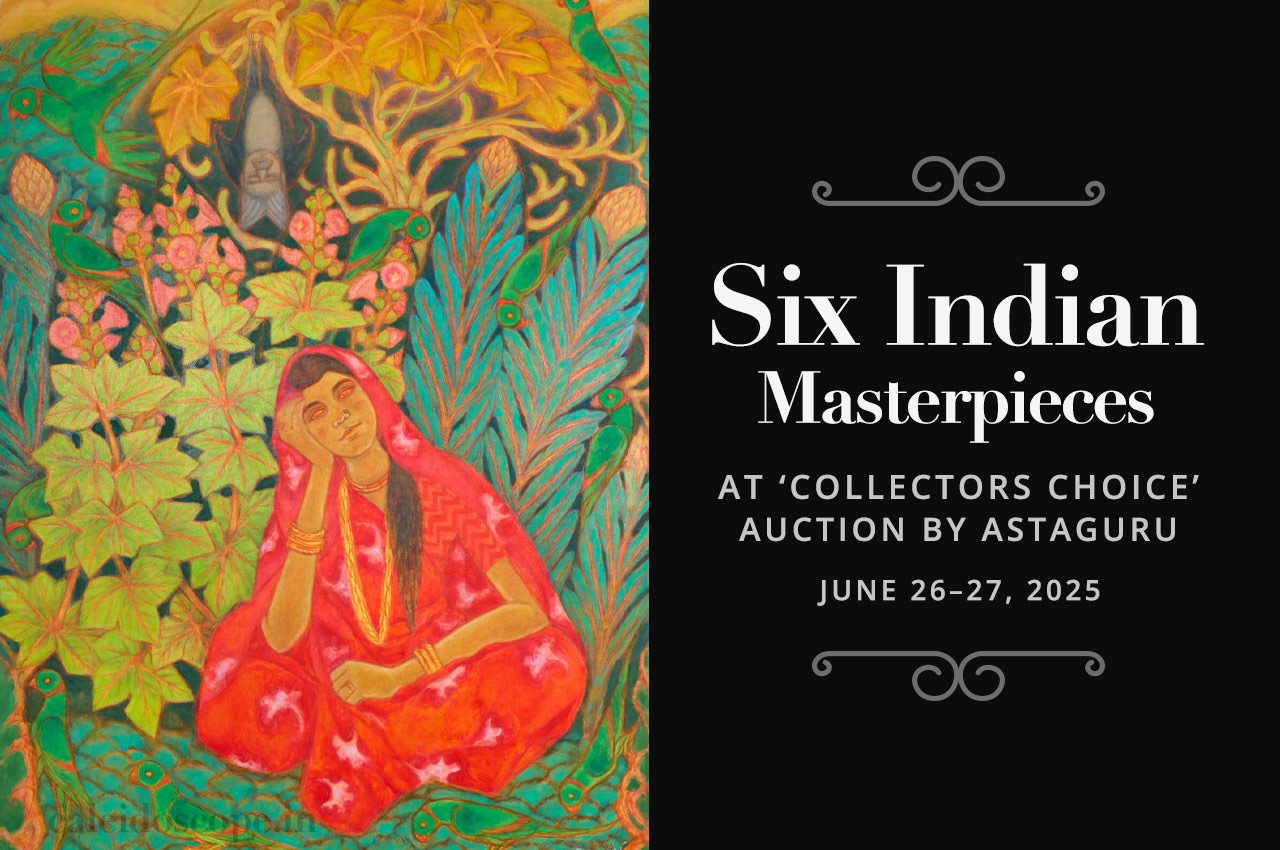
AstaGuru’s ‘Collectors Choice’ online auction, taking place on June 26–27, 2025, brings together an eclectic and historically significant selection of works by India’s foremost modern artists. Spanning rare archives, myth-infused canvases, and evocative figuration, the lots reflect a spectrum of styles and sensibilities that defined Indian modernism in the 20th century. These six standout entries offer a compelling glimpse into the auction’s depth:
Rabindranath Tagore
35 handwritten letters and 14 envelopes penned by Rabindranath Tagore
Lot 5 | Medium: Pen & Ink on Paper | Estimate: ₹5–7 Cr This extraordinary archive comprises 35 handwritten letters and 14 envelopes penned by Rabindranath Tagore to sociologist Dhurjati Prasad Mukerji between 1927 and 1936. The correspondence, rich in personal reflection and philosophical insight, reveals Tagore in creative transition—from poet and public figure to visual artist and private seeker. Designated a National Art Treasure, this lot is non-exportable and represents one of the most significant literary holdings to appear in a modern Indian art sale.
M.F. Husain
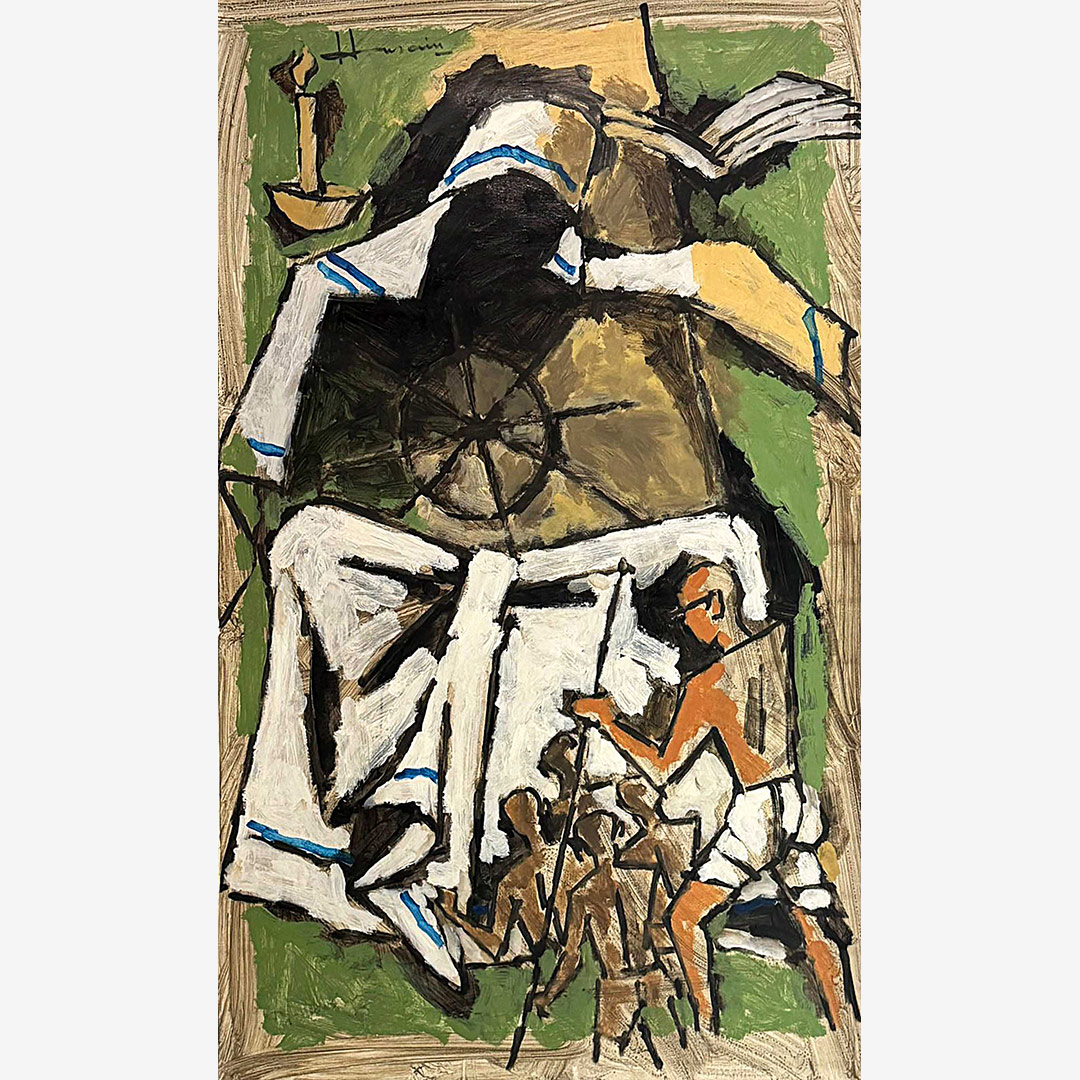
Mother Teresa and Gandhi by M F Husain
Lot 59 | Medium: Acrylic on Canvas | Estimate: ₹2–3 Cr This large-format painting from around 2000 brings together two towering figures of moral and spiritual influence—Mother Teresa and M K Gandhi—within M.F. Husain’s expressive visual idiom. The faceless representation of Mother Teresa in her distinct nun’s attire and Gandhi with his dhoti and walking stick is characteristic of Husain’s ability to convey identity through silhouette and gesture. Other symbolic elements, such as the chakra and lamp, further embed the work in a distinctly Indian visual and cultural lexicon. Executed in a restrained palette of black, white, brown, and blue, the painting enhances the dark yet deeply emotive quality of the piece.
A. Ramachandran
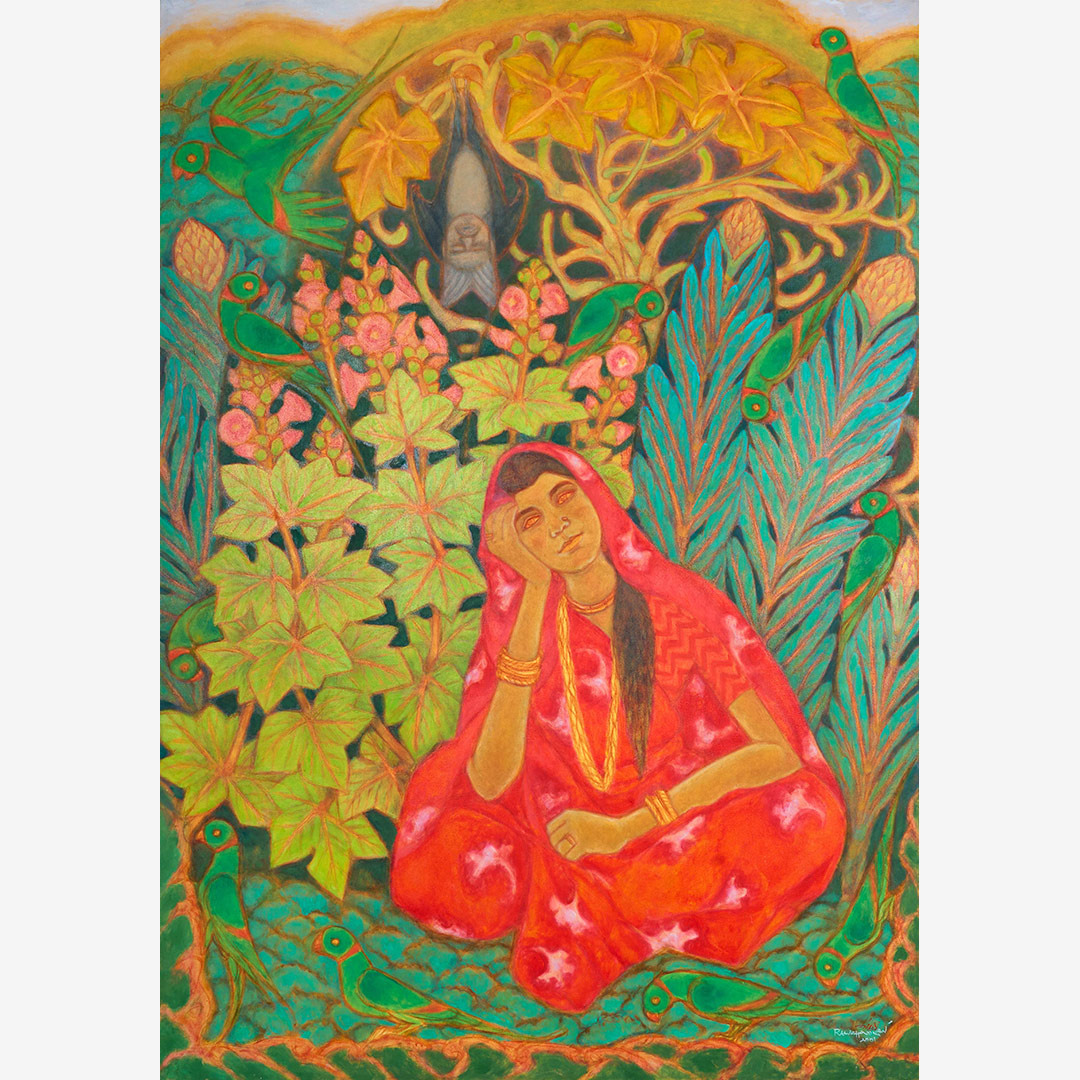
Visions of Ramdev – Ahalya in Red by A Ramachandran
Lot 66 | Title: Visions of Ramdev – Ahalya in Red | Medium: Oil on Canvas | Estimate: ₹1.2–1.6 Cr Ramachandran’s mythological reinterpretation draws from the tale of Ahalya in the Ramayana, presenting the figure in a moment of awakening. Rich reds, detailed foliage, and architectural forms surround her, invoking both narrative tension and visual abundance. Painted in 2001, the work exemplifies Ramachandran’s ability to integrate classical themes with a contemporary painterly vocabulary steeped in ecological and cultural symbolism.
J.P. Gangooly
Untitled by J P Gangooly
Lot 2 | Medium: Oil on Canvas | Estimate: ₹1–1.5 Cr This circa 1930 landscape by one of Bengal’s early plein air painters captures a winding path flanked by autumnal trees and distant hills. Gangooly’s romantic naturalism and tonal subtlety give the composition a meditative quality that echoes the early stirrings of Indian modernist thought, as it began to absorb and localize Western techniques.
Krishen Khanna
Untitled (Bandwalla) by Krishen Khanna
Lot 17 | Medium: Mixed Media on Canvas | Estimate: ₹40–60 Lakhs Khanna’s recurring subject—the bandwalla—is revisited here with quiet power. The lone trumpeter, painted in mixed media, stands in contemplative stillness, symbolising endurance, anonymity, and performance. Part of a decades-long exploration, the work reflects Khanna’s deep engagement with Indian street life and the visual poetics of sound and procession.
Nandalal Bose
Untitled by Nandalal Bose
Lot 3 | Medium: Watercolour & Ink on Paper | Estimate: ₹25–35 Lakhs Created in 1953, this lyrical composition reflects Bose’s Bengal School roots, combining soft gradations and fluid rhythm with an economy of line. His work, influenced by indigenous folk traditions and contextual modernism, continues to resonate for its quiet formal strength. This National Art Treasure is also non-exportable and offers a significant entry point into the artist’s post-Santiniketan period.
Final Thoughts
The Collectors Choice auction by AstaGuru stands as a thoughtful reflection on the journey of Indian modernism—charting shifts in vision, form, and cultural dialogue. From Tagore’s introspective writings to Husain’s powerful figuration, each artwork encapsulates a unique moment in India’s artistic evolution. As these works come together on June 26–27, 2025, they offer not just a glimpse into the past, but a reminder of how art continues to shape our understanding of identity, history, and creative legacy.
The Bengal School of Art, referred to as the Bengal School of Painting, emerged as a significant art movement and style during British India in the early 20th century, specifically from 1900 to the 1930s. It served as a reaction rooted in nationalism and revivalism against the Western art styles that colonial institutions enforced, and it was crucial in shaping modern Indian art. Under British colonial rule, the influence of Western academic realism overshadowed Indian art education, particularly at institutions such as the Government College of Art in Calcutta. Numerous artists from India received training to replicate Western methods such as oil painting, perspective, anatomy, and chiaroscuro. As a result, traditional Indian art forms like miniature painting, folk art, and murals became marginalized.
Birth of Bengal school of Art: a national awakening
Established in Calcutta by Abanindranath Tagore, who is the nephew of Rabindranath Tagore, the Bengal School arose in response to the impact of Western art on India’s artistic heritage. Drawn from Indian customs and pan-Asian artistic influences, especially those from Japan and China, this movement aimed to bring back native styles. The primary figures associated with this school included Abanindranath Tagore, who initiated the movement and gained fame for works like Bharat Mata and The Passing of Shah Jahan. Gaganendranath Tagore introduced elements of Cubism and abstraction into the realm of Indian art.
Nandalal Bose, a student of Abanindranath, gained recognition for his murals and illustrations. He played a key role in the Haripura posters for Mahatma Gandhi at the session of the Indian National Congress, held in 1938 in Gujarat, presided over by Subhas Chandra Bose. Asit Kumar Haldar combined contemporary styles with themes from Indian mythology. Kshitindranath Majumdar, Jamini Roy (in his initial creations), Mukul Dey, Manishi Dey, and Ramkinker Baij, recognized as the trailblazer of ‘’Modern Indian Sculpture’’, were significant figures in this movement. This school drew crucial inspiration from Mughal and Rajput Miniature Paintings, characterized by fine lines, subdued hues, and spiritual motifs, Ajanta murals, which are the historic Buddhist cave artworks in Maharashtra, and Japanese wash methods, brought to India by Japanese artists Okakura Kakuzō and Yokoyama Taikan.
The individuals linked to this Indo-Far Eastern model were Nandalal Bose, Benode Behari Mukherjee, Vinayak Shivaram Masoji, and B. C. Beohar, Rammanohar Sinha, and later their students and several others. Thinkers such as Sister Nivedita and Swami Vivekananda advanced spiritual and nationalist concepts.
Growth of the school:becoming famous
It is noteworthy that the Bengal School gained fame when E. B. Havell served as the head of the Government School of Art in Calcutta from its founding in 1854, when Western art training began. By 1896, he began to advocate for Indian artistic styles and supported Tagore’s methods. In 1897, Abanindranath Tagore began his teaching career at the school, where he started to create a distinctive Indian art style. It eventually acquired a pan-Indian impact via Santiniketan, which was founded by Rabindranath Tagore in 1919 with the establishment of Kala Bhavana, where Nandalal Bose played a crucial role. His notable creation, Siva Drinking the World’s Poison, was an impressive piece. Even though Rabindranath started painting later in his extensive and fruitful life, his concepts had a significant impact on Indian modernism.
Tagore created small, colored drawings using inks in private, drawing on his unconscious mind for inspiration for his primitivism. Rabindranath Tagore’s vision of honoring traditional values, exemplified by themes like rural communities, particularly the Santhal tribes, materialized in the arts-focused institutions of Viswa-Bharati University located in Santiniketan. Rabindranath’s primitivism in public life can be seen as a form of resistance against colonialism, similar to the efforts of Mahatma Gandhi. Focus on mythology, literature, history, and spirituality of India. A style that is soft, poetic, and filled with symbolism, characterized by smooth lines, soothing colors, and watercolor techniques. Dismissal of materialism and realism; emphasis on personal feelings and cultural identity. The Bengal School began to lose prominence in the 1930s due to the emergence of modernist and progressive movements. The series of Krishna Leela was created by different artists who gained recognition for their beautiful and gentle imagery.
Methods and expression: wash, watercolours and tranquility
The Bengal School is known for its use of watercolors, wash painting, natural dyes, and handmade paper, employing methods such as the wash technique. This involves applying layers of thin watercolor to produce gentle, luminous effects. The palette consisted of subdued, natural colors – gentle greens, browns, soft reds, and yellows. No strong differences. The artwork featured fine, smooth lines with little shading. Inspired by Japanese art and miniatures. The subjects included mythology from India, historical events, spiritual beliefs, stories about the homeland, and ethical narratives. The artworks exuded a tranquil and contemplative atmosphere, showcasing idealism, emotion, and spirituality, rather than being completely realistic. The incorporation of Indian aesthetics into contemporary arts by the school acted as a form of artistic expression for the Nationalist movement.
Bengal School – depictions from Indian mythology and history
The Bengal School of Art often showcases Indian mythology and history, especially in artworks that were inspired by the ‘Swadeshi’ movement during the fight for Independence and the creations of Abanindranath Tagore along with his pupils, such as Nandalal Bose and Asit Kumar Haldar. Inspired by Indian folk art, ancient murals, and Mughal miniatures, these artists developed a distinctive style that fused traditional aspects with a contemporary flair.
The artists of the Bengal School, such as Nandalal Bose and Asit Kumar Haldar, were significantly inspired by the National movement that sought to enhance Indian art and culture. They dismissed the artistic standards of the West and sought inspiration from native art forms and historical Indian art. They created a unique style that blended aspects of Indian folk art, ancient murals (such as those in the Ajanta and Bagh caves), and Mughal miniatures. The outcome was artworks characterized by gentle, fluid lines, subdued hues, and an emphasis on poetic and romantic subjects, frequently illustrating moments from Indian mythology, such as Radha and Krishna.
The Bengal School frequently depicts Hindu mythology including Radha-Krishna in numerous divine and romantic scenarios, highlighting Radha’s deep devotion to Krishna, their playful exchanges, and the essence of their transcendent love. The Hindu mythological and historical paintings from the Bengal School are viewed as important contributions to Indian art. They showcase a distinctive mix of tradition and contemporary elements, playing a key role in the evolution of modern Indian art. The impact of the Bengal school on the Indian art landscape began to diminish as modernist concepts emerged after independence.
Let us now look at a few paintings from Hindu mythology and Indian history from this iconic Bengal School of Art –
Ashoka’s queen
Ashoka’s queen by Abanindranath Tagore – Wikimedia
Abanindranath Tagore (1871-1951) was the pioneer and leading exponent of the Bengal School of Art as already mentioned. He aimed to modernize indigenous Mughal and Rajput traditions in his paintings, countering the Western art influence prevalent in British Raj art schools. His highly influential work became recognized as a national Indian style. This particular print portrays Asoka’s Queen gracefully standing before the railings of the Buddhist monument at Sanchi, built during King Asoka’s reign. This painting captures an important moment in Queen Tissarakshita’s life when she is looking at a wilting Bodhi tree with hanging jewels, thinking that King Ashoka has brought them for other women. She has poisoned the Bodhi plant out of jealousy as it is a favourite of King Ashoka. It is based on an original painting housed in the Royal Collection at Windsor Castle in the United Kingdom.
Paintings by Nandalal Bose
Nandalal Bose (1882-1966) popularly known as the Master Moshai, was a disciple of Abanindranath Tagore. In 1921, Nandalal Bose accepted Rabindranath Tagore’s invitation to become the principal of the art school Kala Bhavan at Visvabharati University in Santiniketan. He also painted a series of posters for the Indian National Congress at Haripura in February 1938 as already mentioned.
In the painting ‘Birth of Krishna’ we see concerned parents, Vasudeva and Devaki as they are trying on a rainy night to relocate their newborn son Krishna to Nanda’s house which is across the Yamuna. The painting captures the seriousness of the situation.
Parvati embarked on her penance at the sacred site of Gangotri, a place where Lord Shiva himself had meditated. She renounced royal comforts, donned simple attire, and began her austere practices. During summer, she meditated surrounded by fire; in the rainy season, she sat exposed to the elements; and in winter, she immersed herself in icy waters. Initially consuming fruits, she gradually gave up all food, surviving solely on air and water, earning her the name ‘Aparna’. faced scorching heat, biting cold, and torrential rains without flinching, her focus unwavering. Parvati’s penance symbolizes the power of devotion and the belief that unwavering faith can overcome all obstacles. Her story is a testament to the strength of determination and the transformative power of love and devotion.
This painting depicts Uma or Parvati as exposing herself to severe weather conditions. She is facing a biting cold as we see her in the river formed by cold water flowing down the mountains.
In the tale of Nala and Damayanti, Damayanti, a princess of Vidarbha, chooses Nala in a swayamvara (a ceremony where a woman chooses her husband). Damayanti had heard about Nala and was captivated by his virtues, even before seeing him. She chose him over the gods, who had disguised themselves as Nala to test her devotion. Nala’s beauty and righteousness impressed Damayanti, leading to their union. The painting here captures the essence of the swayamvara as Damayanti is choosing her husband with a bowed head and a garland, from a group of suitors who all appear to be Nala, however Damayanti chooses Nala, as the disguised Gods reveal themselves on her plea. Nala was known for his beauty, righteousness, and virtue, making him a worthy suitor. His devotion to Damayanti and his willingness to serve the gods further solidified her choice.
Three paintings by Kshitindranath Majumdar
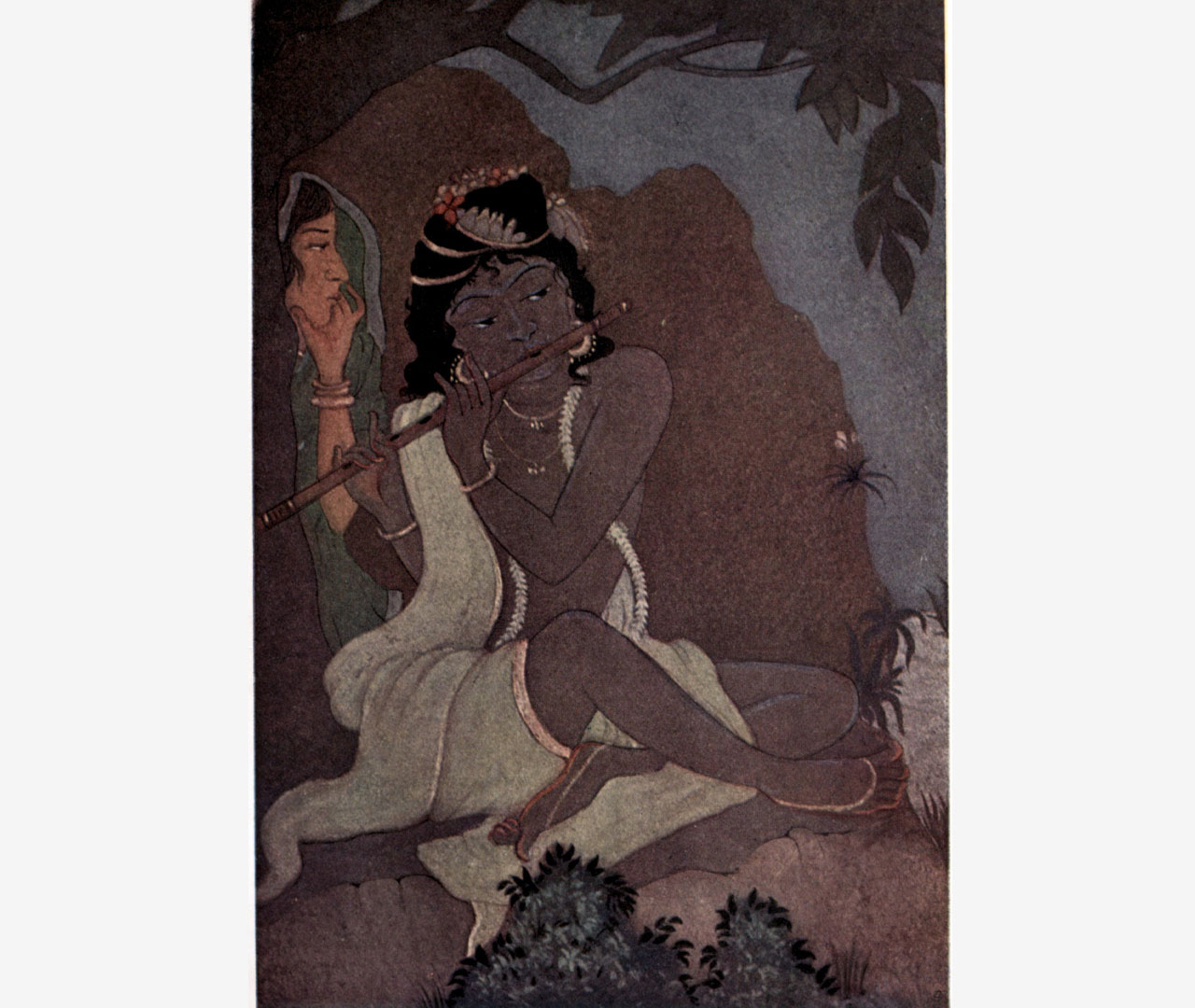
Kshitindranath Majumdar (1891–1975) was a prominent Indian painter and a key figure in the Bengal School of Art, renowned for his devotional and mythological themes. Majumdar was raised in a Vaishnavite household. His early exposure to devotional hymns and local theatre productions, particularly those centered around Krishna Leela, profoundly influenced his artistic sensibilities. Here we see three of his paintings. The first one relates to the divine couple Radha-Krishna – there is a sweetness and romance of this scene, as Radha sits next to Krishna, her gaze filled with love, Krishna plays his flute.
Radha-Krishna by Kshitindranath Majumdar
Radha-Krishna by Kshitindranath Majumdar – Wikimedia
To gaze on Krishna was my greatest wish, Yet seeing him was filled with danger. Gazing has bewitched me, no will remains, I cannot speak or hear. Like monsoon clouds, My eyes pour water. My heart flutters. O friend, why ever did I see him And with such joy deliver him my life?……………………………a translation from ‘Vidyapati’s Love songs’ by Deben Bannerjee
Kaliya damana by Kshitindranath Majumdar
Kaliya damana by Kshitindranath Majumdar – Wikimedia
The story of Kaliya Daman is a popular episode from the childhood of Lord Krishna, narrated in the Bhagavata Purana. Kaliya was a venomous multi-headed serpent who resided in the Yamuna River near Vrindavan. His presence poisoned the river, causing harm to the environment and the people living nearby. The villagers were terrified, and even Garuda, the eagle and enemy of serpents, could not approach due to a curse. One day, Krishna decided to confront Kaliya. He dived into the river and was ensnared by Kaliya’s coils. Undeterred, Krishna expanded his form and began dancing on Kaliya’s heads, causing the serpent to vomit poison and blood. Kaliya’s wives prayed to Krishna for mercy, and he pardoned Kaliya, instructing him to leave the river and return to his home, Ramanaka Island. Krishna assured Kaliya that Garuda would not harm him, as the imprint of Krishna’s feet on Kaliya’s heads would protect him.
This event symbolizes the triumph of good over evil and the restoration of purity to the Yamuna River. The subduing of Kaliya is reflected in this painting with his wives pleading to Krishna to forgive him. The strength of the snake can be made out by his sheer size, whereas Krishna’s gaze and hold on him shows his might as the halo around his head glows softly depicting his divinity.
The birth of Ganga byby Kshitindranath Majumdar
The birth of Ganga by by Kshitindranath Majumdar – Wikimedia
Ganga is believed to be a divine river, the daughter of Lord Brahma, the creator of the universe. When Lord Vishnu took the Vamana (dwarf) avatar to humble King Bali, he pierced the sky with his toe. From this point, the heavenly waters began to flow. These celestial waters became known as Ganga, residing in Brahmaloka (Brahma’s abode). King Bhagiratha, a descendant of King Sagara, performed intense penance to bring Ganga to earth to purify the ashes of his ancestors who were cursed by Sage Kapila. Pleased by his devotion, Brahma allowed Ganga to descend. Since the force of Ganga’s descent would shatter the earth, Lord Shiva agreed to catch her in his matted hair to break her fall. He released her gently, allowing Ganga to flow as a river on earth. Ganga thus descended to Earth and followed Bhagiratha to the ocean, where she purified the ashes of his ancestors, granting them salvation. Ganga represents purity, salvation, and divine grace, and is revered as both a goddess and a river. Bathing in her waters is believed to cleanse one of sins and aid in attaining moksha (liberation).
The painting here by Kshitindranath Majumdar depicts Lord Shiva catching the forceful Ganga in his locks and then allowing her to flow through his lightly upturned hands. His closed eyes depict his willingness to carry out this deep, sacred and benevolent action for earth.
Paintings by Asit Kumar Halder
Asit Kumar Haldar, who was Rabindranath Tagore’s grand-nephew, started his painting journey early in life after being born in 1890. Later, he received training at the Government School of Art in Calcutta. Between 1909 and 1911, he traveled to Ajanta on an expedition alongside Lady Harringham and collaborated with two other Bengali artists to record the murals found there. Between 1911 and 1915, he served as a teacher at Shantiniketan and held the position of Principal at Kala Bhavan School until 1923, where he supported Tagore in cultural and artistic endeavors.
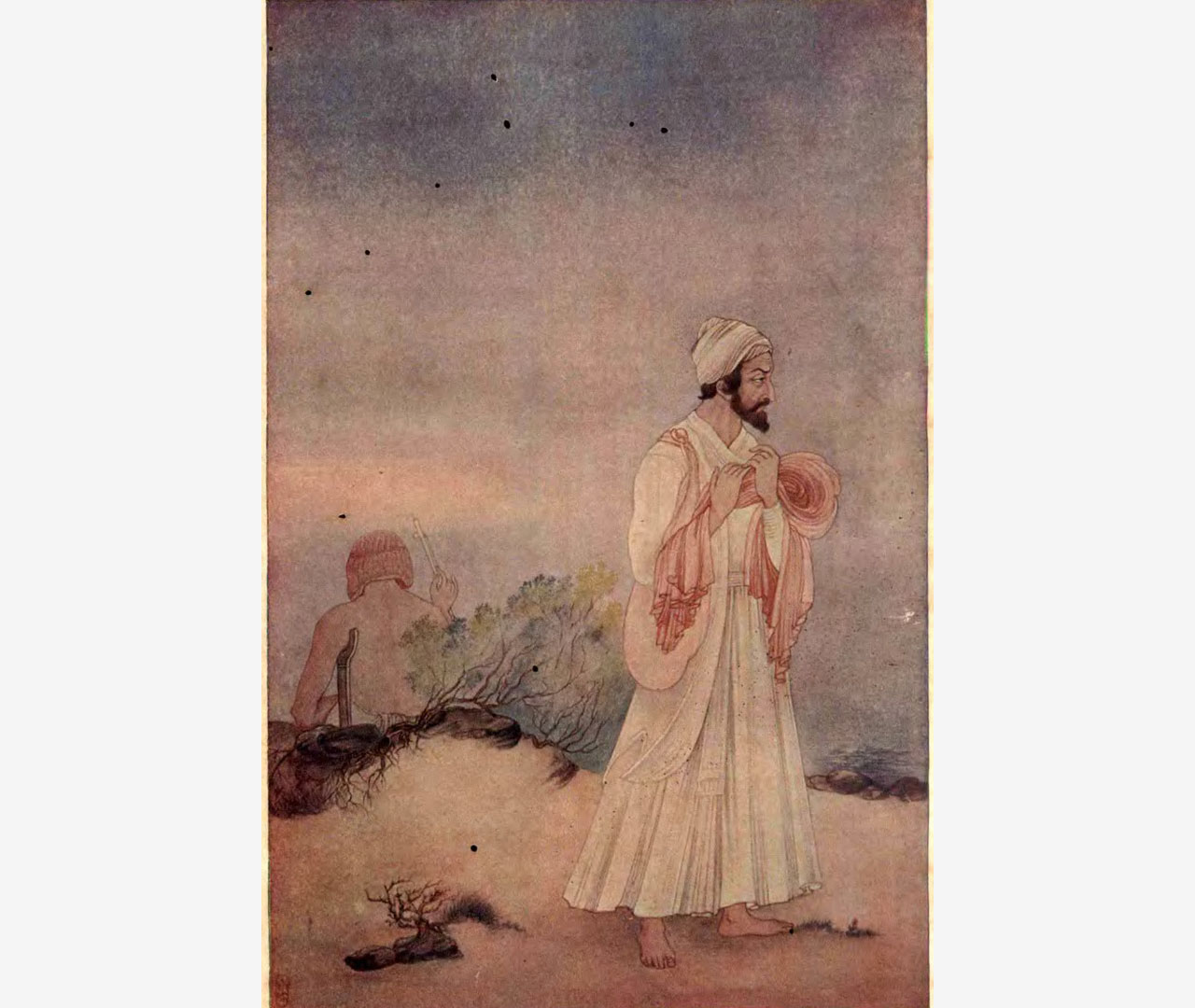
Ramdas and Shivaji by Asit Kumar Halder
Ramdas and Shivaji by Asit Kumar Halder – Wikimedia
In this painting Chhatrapati Shivaji Maharaj, the founder of the Maratha Empire, and Samarth Ramdas Swami, a prominent saint and philosopher, are often associated as a guru-disciple duo. While they did not have a formal mentor-disciple relationship, their lives and philosophies are often intertwined, with some claiming Ramdas Swami played a significant role in Shivaji’s development. Asit Kumar Haldar portrays the Maratha leader Shivaji barefoot in a sombre mood, returning after meeting Ramdas who can be seen seated; which is vividly felt through the rich warmth of the colours. Haldar’s artwork, created in oil, tempera, or watercolors, draws inspiration from the deep stories of Indian mythology and sometimes history as well.
Paintings by Jamini Roy
Jamini Roy, who lived from April 11, 1887, to April 24, 1972, was a painter from India. He is widely recognized as one of the most notable students of Abanindranath Tagore, E. B. Havell. The impact of E.B. Havell and the lectures by Rabindranath Tagore led him to understand that he should seek inspiration from his own cultural heritage instead of Western traditions; thus, he turned to the vibrant folk and tribal art for motivation. The ‘Kalighat Pat’, known for its bold sweeping brush strokes, had a significant impact on him. He shifted from his previous work in impressionist landscapes and portraits, and during the years 1921 to 1924, he initiated his first phase of experimentation using the ‘Santhal’ (a tribe) dance as his foundation.
Rama-Sita and Lakshmana with a golden deer by Jamini Roy
Rama-Sita and Lakshmana with a golden deer by Jamini Roy – Wikimedia
His later paintings are not typical of the Bengal style but a composition in Pat idiom painted in his iconic style is depicted here. Lord Rama, his wife Sita and brother Lakshmana are looking at a golden hued deer which has captured the attention of Sita devi.
Radha-Krishna in Kalighat paintings
Kalighat paintings do not belong to the Bengal school, although they originate from Bengal and is a standalone from influencing artists like Jamini Roy. In the early 19th century, the Kalighat Temple located in the southern area of Kolkata, formerly known as Calcutta, drew many pilgrims and some foreign tourists, in addition to the local residents. The temple grounds offered an ideal chance for artisans and craftsmen to market their products. Included in this group were the patuas, talented artists originating from rural Bengal, particularly from the regions of Midnapore and the 24 Parganas. Traditionally, these artists depicted extensive narrative tales on scrolls made of cloth or hand-crafted paper, with lengths that frequently exceeded 20 meters. This art form was referred to as patachitra, with each part called a pat, which is why the creators were called patuas. Confronted with the need to increase their production speed and inspired by various surrounding art styles, these artists replaced their typical extended narrative approach with individual frames of chouko (square) pat, showcasing one or two figures. Travelers from foreign lands, colonial rulers, and Europeans who visited the city during this era brought back these artworks, described as “perfect” and “portable” for their concise designs, as ‘oriental’ or ‘exotic’ keepsakes. This style features wide, sweeping brush strokes, vibrant colors, and a simplification of shapes.
We can see here a Radha-Krishna done in pat style. Krishna is playing on his flute and Radha stands next to him listening to the music holding the covering of her head.
Radha-Krishna, Kalighat painting, 19th/20th century
Thus, we see that the Bengal school was not only unique during its halcyon days but remains iconic even today with the paintings made during the time, being sold as prints and retrospectives of every major artist being held regularly in India and abroad. They are now preserved in private collections, collections of major Indian and world museums including art galleries.

















_03.JPG)


