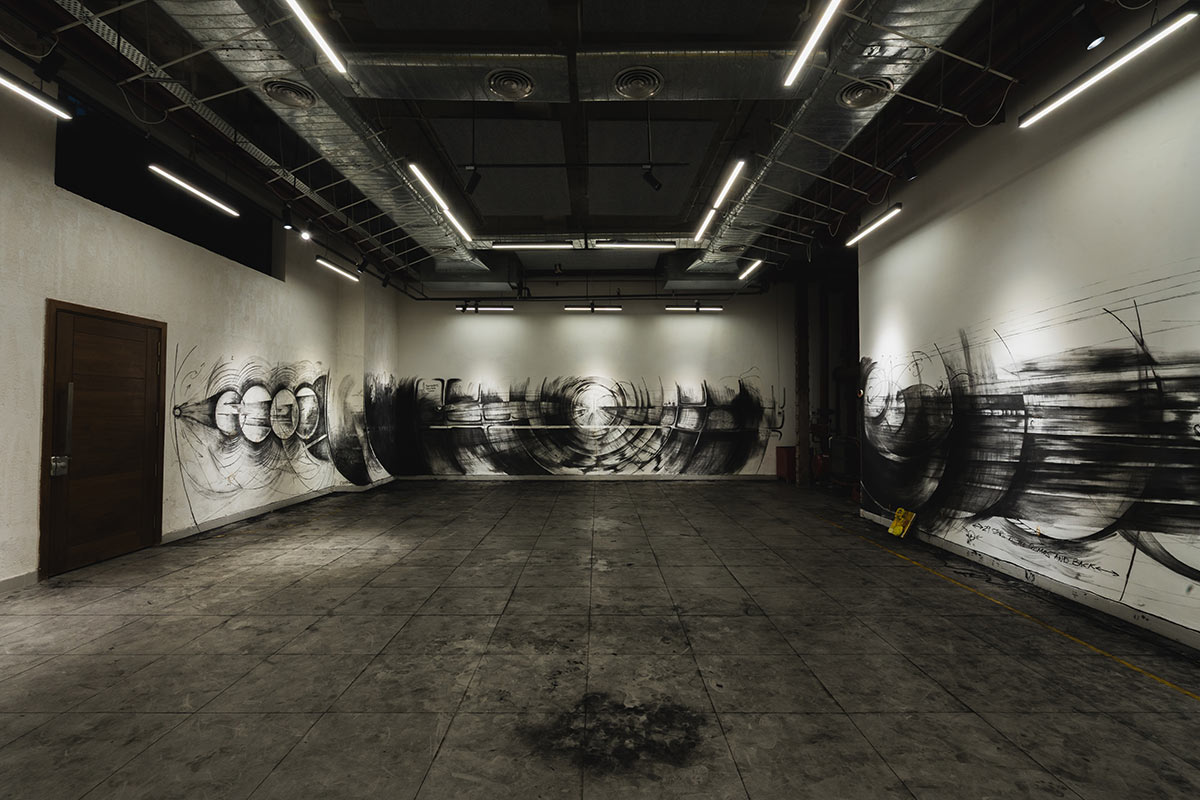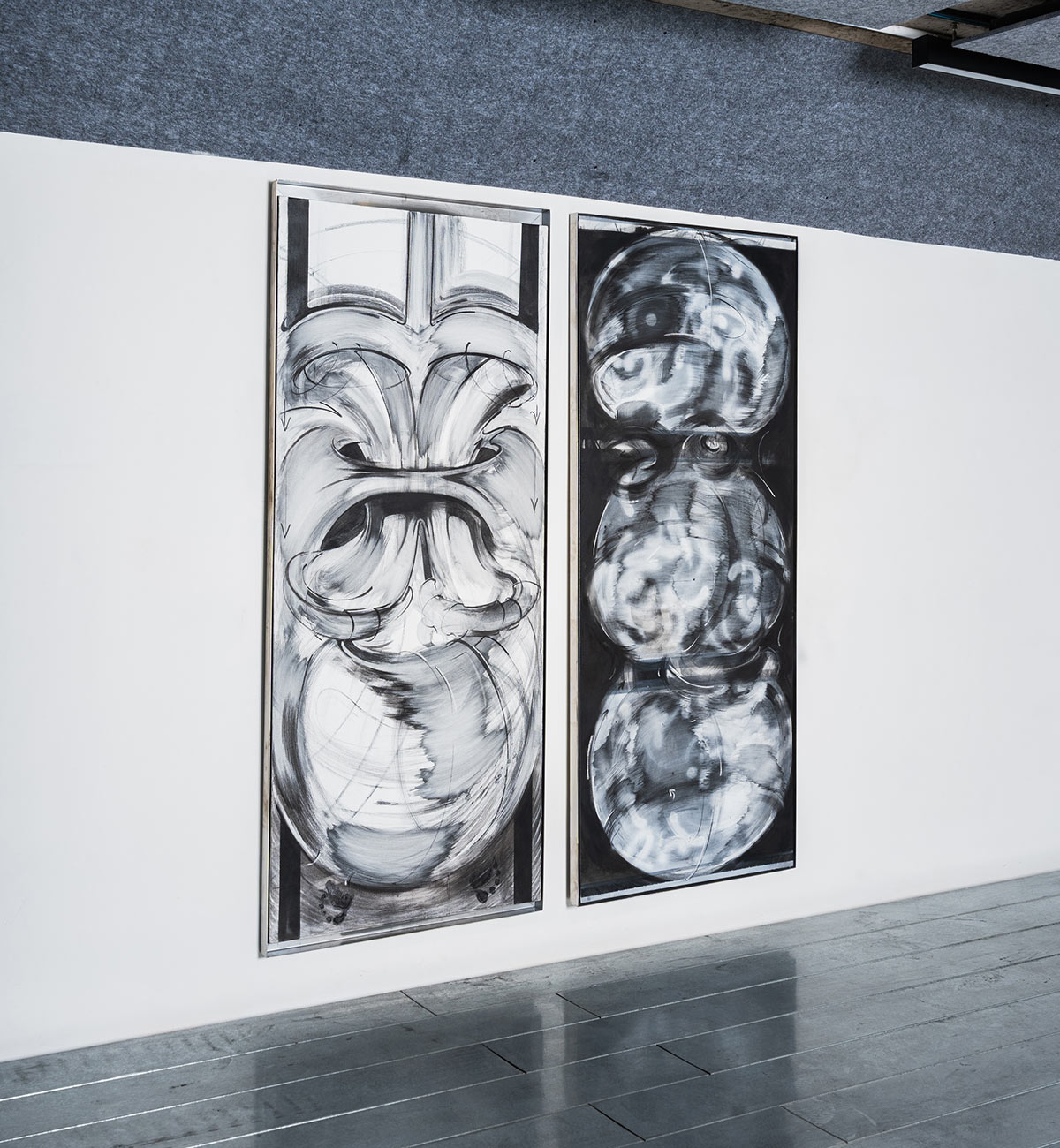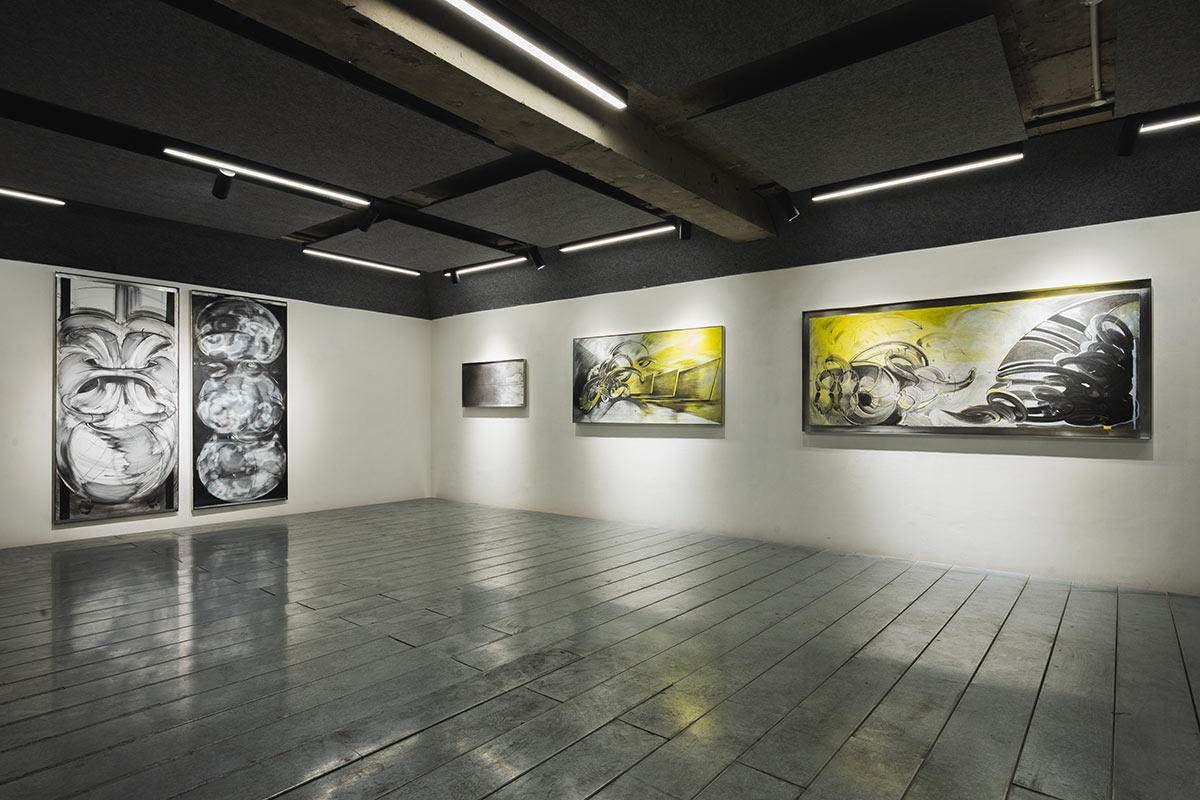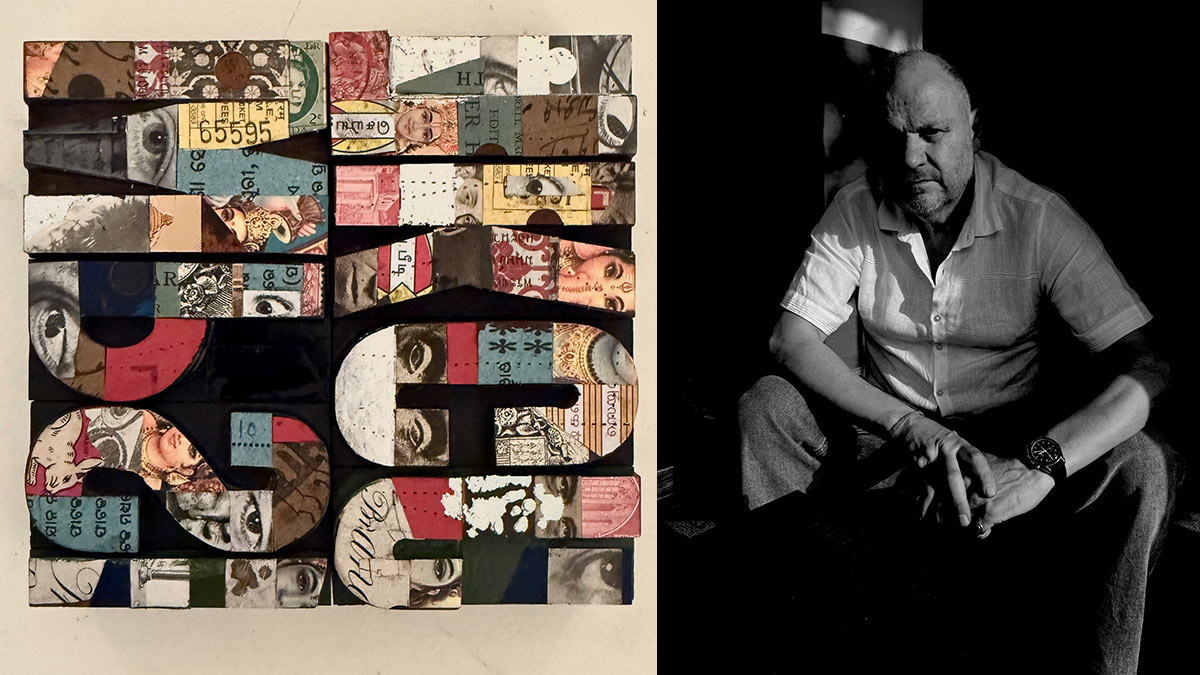
Shilo Shiv Suleman’s Fearless Foundation Painted Cochin’s Largest Mural

0

At-the-Root-How-Fearless-Foundation-Painted-Cochin’s-Largest-Mural-01

Art at the Frontlines of Climate and Community

Cochin is a city shaped by tides and trade. Fort Kochi has withstood historic waves of migration, labour, and survival. This historical coastal quarter has emerged as a site of Cochin’s largest painted mural created by Shilo Shiv Suleman’s Fearless Foundation. They have painted a 200-metre-long public artwork on the compound wall of the Indian Coast Guard Office, which has evolved into an artistic space honouring those souls who have worked relentlessly to sustain and safeguard India’s coastline. This mural is not just a visual treat to the city, but a part of the “At the Root” initiative. The rudimentary focus area of this initiative intersects climate justice, gender, and labour. The Fearless Foundation is known across South Asia for its contribution to public art. Engraved in the essence of community engagement and co-creation, the mural taps into lived experiences and the impact of climate change. 

A Confluence of Narratives

The mural is a kaleidoscopic representation of a plethora of tales. It merges the sagas of the Indian Coast Guard, local mangrove plantation workers, and traditional fishing communities. The murals minimize the distance between the security keepers of the coast and the local custodians of the land. 

Fearless Ambassadors and the Power of Listening

At-the-Root-How-Fearless-Foundation-Painted-Cochin’s-Largest-Mural-03

The creation of the mural was a collective effort of 10 “Fearless Ambassadors.” These ambassadors formed an umbrella body of artists and activists from countries across South Asia and beyond. It includes people from Nepal, Bangladesh, Sri Lanka, Uzbekistan, and Myanmar. They facilitated listening circles and rituals in collaboration with residents. These sessions permitted the participants to share stories related to various climatic challenges such as rising sea levels, pollution, and issues related to coastal livelihood. 

Murals as Archives of Lived Experience

The resulting artwork was a genuine reflection of lived experiences. The Fearless Foundation’s broader agenda is to demonstrate public art as a democratic process where people are not mere subjects or viewers, but are the creators of the design. Rather than following a hard and fast artistic vision, they let people opine and choose their artistic call. Fearless’ work has noted how such murals function as “archives on walls,” preserving oral histories and ecological memory in shared urban spaces.

At the Root: Climate Justice Beyond Symptoms

Fort Kochi is a part of the Fearless Foundation’s long-term climate justice focus area called “At The Root.”  This initiative focuses on structural inequalities in how climate change impacts gender, labour, indigeneity, and historical marginalisation. These rituals, storytelling, and other tangible practices, the initiative bridges immediate reality with global crisis. This is the need of the hour in coastal South Asia, where environmental degradation is deeply entangled with its colonial past, extract-oriented economies, and present-day governing challenges. 

Celebrating Collective Imagination


View this post on Instagram


A post shared by Fearless Foundation (@fearless.art)

The completion of the mural was complemented by a formal closing ceremony with a great feast. Food, music, and storytelling animated the space, reimagining the idea that celebration itself can be an act of resistance.  Gatherings like these have been the hallmark of Fearless projects across the globe. In Fort Kochi, the feast served as a statement that climate justice is not only about survival but also about sustaining joy, culture, and connection.

Project Overview and Impact

Feature Details
Location Indian Coast Guard Office, Calvathy Road, Fort Kochi
Dimensions 200 metres (Cochin’s largest mural)
Theme “At the Root” – Climate Justice and Coastal Communities
Participants Shilo Shiv Suleman’s Fearless Ambassadors (6 countries), Indian Coast Guard, and local fisherfolk
Methodology Participatory public art, storytelling rituals, and listening circles
Culmination Fearless Feast featuring community storytelling, music, and food
International Collaboration Fearless Ambassadors from six countries across South Asia and beyond
Closing Event Fearless Feast held at the mural site

Key Highlights

  • Cochin’s largest mural created through community co-creation
  • Focus on coastal protection, climate justice, and invisible labour
  • Participation of international Fearless Ambassadors
  • Integration of storytelling, ritual, and public art
  • Fearless Feast celebrates collective creativity and resilience
  • Unlike traditional street art, the mural featured open “community paint sessions,” where the public was invited to pick up brushes and contribute to the wall
  • This installation adds to the Fearless Collective’s global footprint, which includes over 52 murals across 20 countries, all aimed at replacing narratives of fear with those of love and beauty.

Takeaway

The whole point of this project was to elevate public art from the point of view of being an aesthetic decor to a mainstream engagement programme with real people. Today, climate change is often quoted through daunting statistics and “doom-scrolling” headlines. Amidst this, Shilo Shiv Suleman and the Fearless Foundation’s work demonstrates that murals can function as spaces where climate justice is narrated not through slogans but through lived realities.

Drawing on the walls of institutions like the Indian Coast Guard, it suggests that “safeguarding” a coastline is as much about the policy of the state as it is about the ancestral knowledge of the woman planting saplings in the silt. Thus, it offered a crucial model for how art, activism, and community participation can overlap and produce something creative and worthy of bringing about a change. 


View this post on Instagram


A post shared by Fearless Foundation (@fearless.art)

This mural is a representation of the fact that the public space is also a political arena. By decorating a trivial wall and coating it with colours of the community’s spirit, the Fearless Foundation invigorated the collective psyche of the people who are now more conscious of climate-related issues. 

In the face of ecological uncertainty, such acts of beauty are essential acts of initiating a tide of “change.” This mural stands tall as a proof that when communities are invited to imagine together, walls can speak, history can be rewritten in real time, and art can become an act of protection. 

Kala Ghoda Arts Festival 2026: When Mumbai Turns into a Living Gallery

0

Kala-Ghoda-Arts-Festival-2026

A Reunion of the City’s Creative Pulse

The city of dreams, Mumbai, is about to host Asia’s largest multicultural street arts festival from January 31, 2026, to February 8, 2026. This grand celebration is none other than the Kala Ghoda Arts Festival 2026 (KGAF). Since its inception, it has transformed South Mumbai into the heartthrob of art. The festival spans 9 days and promises an enriching experience, entailing visual art, performance, literature, music, food, and heritage programming. You name it, they have it. This festive extravaganza is organised annually by the Kala Ghoda Association, which has distinctively evolved in the city since 1999. In the current era, it has become a yearly ritual that runs through heritage streets, galleries, and plazas. These are public programs that are free or low-cost for the wider public. Presently, the KGAF has emerged as one of India’s most significant and beloved cultural milestones. Its ability to make art “accessible” to all is phenomenal. 

The Festival As a Grand Canvas

The festival is not just an event; it is a display of unparalleled creativity across numerous themes. It creatively uses the area’s iconic heritage buildings, from museums and libraries to open maidans, as its venues. The core purpose of the festival is not to entertain alone, but to restore the heritage of Kala Ghoda’s rich architectural heritage. All funds raised throughout the event are directly invested in conservation projects. This quality of KGAF makes it distinct and speaks volumes about its success. 

The nine-day festival is a pool of activities taking place in heritage venues such as the Asiatic Library steps and the Cross Maidan. Theatre enthusiasts may look forward to plays in diverse languages at Horniman Circle Gardens, while literature enthusiasts will find their heaven at the book launches, poetry sessions, and discussions with renowned authors at the David Sassoon Library.

A very thoughtful step is taken by creating a separate space for kids, so that the younger audiences do not feel left out. There are workshops for the children covering activities like writing and visual arts. Moreover, dedicated stalls are arranged, showcasing a vibrant street market. These stalls will display the articles of local artisans and design-led products. Food lovers also get their share of the action, with culinary demonstrations and food walks.

The Versatility of The Event 


View this post on Instagram


A post shared by Kala Ghoda Arts Festival (@kgafest)

It is not a single gig; it is a distributed celebration that bridges the colonial aura of “Bombay” with the experiences of “Mumbai.” The edition also incorporates site-specific exhibitions at the Jehangir Art Gallery, the Bombay Art Society, and the statue precinct. The curtain raiser for KGAF 2026 will feature a fusion concert by Santoor maestro Rahul Sharma. The festival’s programming model typically combines headline performances with dozens of weekend stages, masterclasses, and children’s programming that turn the precinct into a live classroom and marketplace for culture.

The Event At a Glance

Aspect Details
Event Kala Ghoda Arts Festival 2026
Festival Dates (2026) Saturday, 31st January – Sunday, 8th February
Venue Kala Ghoda Arts District, South Mumbai
Organiser Kala Ghoda Association (KGA)
Entry Fee Mostly free and open to the public (some workshops or performances may require free pre-registration)
Goal Promote arts and culture; raise funds for heritage restoration of the Kala Ghoda precinct
Scale Referred to as Asia’s largest multi-cultural street festival

Key Highlight 

  • Rahul Sharma’s Santoor fusion concert inaugurates the festival, signalling a blend of classical and contemporary music. 
  • Multi-disciplinary sections: cinema, music, dance, literature, visual arts, heritage walks, food stalls, and a children’s pavilion, a curated structure KGAF has refined over decades.
  • Public art and installations: large-scale sculptures and interactive works installed across the pedestrianised stretch around the Kala Ghoda statue.
  • KGAF emphasises free public programming and partnerships with cultural organisations, artists, and vendors; stall and exhibitor participation is coordinated through official forms. 
  • Digital and social presence: official announcements and schedule teasers appear on @kgafest and partner accounts (including local culture aggregators such as @sabkuch_mumbai), making social channels a key way to track last-minute changes.

Some Practical Notes

KAGF has historically drawn large weekend crowds, so visiting the festival during the weekdays might offer a more relaxed viewof the festival. The Kala Ghoda Association typically publishes detailed programme PDFs and an events calendar a week before the festival; those documents include timings, exact stage locations, and registration links for workshops and masterclasses. So keep an eye!

Takeaway

The KGAF is very grounded in its consistent contributions to heritage conservation. It also offers a live cultural experiment. It is a statement on the importance of public art and heritage preservation. KGAF has successfully managed to make art an everyday, street-level affair. Its success lies in the restoration of magnificent structures like Elphinstone College and the David Sassoon Library. Through actions like this, the festival stands tall as a model of civic responsibility. 

This nine-day celebration illuminates not only the present, but work to safeguard the city’s past. Its essence lies in the fact that the festival has turned Mumbai into a place where art is not confined to a building; it lives and breathes on the street. This is an unmissable opportunity to experience the liveliness of Mumbai through art and culture, where creativity is channeled through a spirit of mass participation and an immersive engagement. 

So, the only mantra is: try to show up a little early, choose a weekday slot if you can, and allow time to move slowly.

Suggested Story: Kala Ghoda Arts Festival 2025: Celebrating 25 Years of Art and Culture

When Memories Sing: IME’s Open Mic Tribute to Mohammed Rafi

0

When-Memories-Sing-IME’s-Open-Mic-Tribute-to-Mohammed-Rafi-01

A Voice That Refuses to Fade

As 2025 winds down and the birthday of the legendary Mohammad Rafi approaches on December 24, 2025, Bangalore is setting the stage to orchestrate a tribute to the musical legend, the ‘Voice of the Millennium.’ The musical event is hosted by the Indian Music Experience (IME), India’s leading interactive music museum. It is set to be one of the most participatory celebrations in Bangalore. This experiential platform is launching a special Mohammad Rafi Open Mic Night on Sunday, 21 December 2025, at its Bengaluru campus.

Mohammad Rafi’s voice felt like a silhouette of velvet, where each note ached with the weight of a thousand unspoken words. His tunes were one of the rarest gifts that breathed life into every song. He possessed a voice that transcended generations; thus, this musical arrangement is not just a thoughtful initiative but an act of collective remembrance. Mohammad Rafi’s voice once shaped the emotional array of Indian cinema and popular culture across decades. Therefore, this open mic will celebrate a true community event to keep the maestro’s legacy alive. 

Mohammad Rafi was a man of immense versatility and zeal, and needs very little reiteration. He was active from the late 1940s to the 1970s and covered a wide range of genres and languages. From devotional bhajans and patriotic anthems to romantic songs, his voice adapted to a wide range of genres. The open mic format of IME is significant because it seamlessly attaches itself to the museum’s goal, i.e., to encourage public engagement and participation in India’s rich musical traditions. The event is orchestrated to unite a community of people who share the same love for the singer’s voice. This open mic not only pays tribute to the musical maestro but also acts as a force of cohesion among people. 

The Indian Music Experience Museum

Situated at the JP Nagar area of Bangalore, the Indian Music Experience Museum is a first-of-its-kind institute in India. Covering 50,000 square feet, the IMEM was established in 2019, with the support of the Brigade Group. The museum currently features nine exhibit galleries, a beautiful sound garden, and a learning centre. With a landscape like that, it forms the perfect background for the instrumentation of the Rafi Open Mic. Hitherto, the museum also launched an online exhibition titled “Mohammed Rafi: The Golden Voice of Hindi Cinema in collaboration with Google Arts & Culture.

The open mic was conceived by the Youth Advisory Board in IMEM to function as a liberal niche for free musical expression. Upto 20 artists are welcome to perform their chosen classic or original compositions. 

A Sneak Peek Into The Event

Open Mics, unlike traditional concerts, emphasize participation over performances. The attendees are encouraged to sing their favourite Rafi classics and recall their personal memories associated with the songs. Playback singing is considered a crucial social phenomenon, and Mohammad Rafi was one of the catalysts who shaped it. Moreover, the IMEM positions itself as an archive of musical history, reaching beyond its experiential projections. The broader injunction of the museum is to “demonstrate how music continues to accrue meaning through communal engagement.”

The Open Mic At a Glance

Aspect Details
Event IME Open Mic: Tribute to Mohammed Rafi
Date & Time Sunday, December 21st, 2025, 5:00 PM
Location Indian Music Experience Museum, Brigade Millennium Avenue, JP Nagar 7th Phase, Bangalore
Organiser Indian Music Experience Museum (IME)
Occasion Celebrating the birth centenary of Mohammed Rafi (Born: December 24, 1924)
Format Open Mic (singing, sharing memories, instrumental performances)
Participation Open to all skill levels
Registration Through a Google Form (link provided in the official bio/website)

Key Highlights

  • A participatory open mic format encouraging community engagement
  • Tribute aligned with Mohammed Rafi’s birth anniversary
  • Hosted by India’s first interactive music museum
  • Inclusive platform for singers, listeners, and storytellers
  • Integration of visual archival material linked to Rafi’s legacy
  • Emphasis on memory, nostalgia, and intergenerational listening
  • The IME itself showcases the entire spectrum of Indian music, from classical maestros to the golden era of Bollywood.
  • The Open Mic serves as a physical counterpart to the IME’s ongoing virtual exhibition on Rafi. 

A Bigger Cultural Context

In the recent years, there has been a trend of revising influential playback singers through dedicated concerts, conferences, and museum events. IME’s initiative fits squarely within this trend but distinguishes itself through its community-centric approach. Rafi’s voice is often described by musicologists as “chameloeonic” as he seamlessly moulded his voice into the complicated compositions that ultimately shaped his identity as the maestro. He could convincingly embody the on-screen personas of actors as diverse as Dilip Kumar, Shammi Kapoor, and Guru Dutt. Thus, it is a great commemorative moment for a personality like him to be interpreted by multiple voices. 

Takeaway

This open mic event is based on the spirit of participation by people who share a common love for Rafi’s voice. IME prioritizes lived memories and collective engagement that feels intimate and filled with nostalgia. Rafi’s songs have survived not because they are endlessly replayed, but because they are repeatedly re-inhabited. 

This event is orchestrated to commemorate Mohammad Rafi’s birthday, but the way it is designed, it transcends a mere birthday commemoration and aims to blend in like a much needed cultural celebration of Rafi and his legendary music. From the buoyant romance of “Deewana Hua Badal” to the philosophical depth of “Yeh Duniya Yeh Mehfil,” his songs are evergreen and will continue to dominate Indian ears for generations to come. It ensures that Rafi’s legacy does not remain frozen in time, but is lived through people who love and honour his work.

Key Highlights

  • A participatory open mic format encouraging community engagement
  • Tribute aligned with Mohammed Rafi’s birth anniversary
  • Hosted by India’s first interactive music museum
  • Inclusive platform for singers, listeners, and storytellers
  • Integration of visual archival material linked to Rafi’s legacy
  • Emphasis on memory, nostalgia, and intergenerational listening
  • The IME itself showcases the entire spectrum of Indian music, from classical maestros to the golden era of Bollywood.
  • The Open Mic serves as a physical counterpart to the IME’s ongoing virtual exhibition on Rafi. 

A Bigger Cultural Context

In the recent years, there has been a trend of revising influential playback singers through dedicated concerts, conferences, and museum events. IME’s initiative fits squarely within this trend but distinguishes itself through its community-centric approach. Rafi’s voice is often described by musicologists as “chameloeonic” as he seamlessly moulded his voice into the complicated compositions that ultimately shaped his identity as the maestro. He could convincingly embody the on-screen personas of actors as diverse as Dilip Kumar, Shammi Kapoor, and Guru Dutt. Thus, it is a great commemorative moment for a personality like him to be interpreted by multiple voices. 

Takeaway

This open mic event is based on the spirit of participation by people who share a common love for Rafi’s voice. IME prioritizes lived memories and collective engagement that feels intimate and filled with nostalgia. Rafi’s songs have survived not because they are endlessly replayed, but because they are repeatedly re-inhabited. 

This event is orchestrated to commemorate Mohammad Rafi’s birthday, but the way it is designed, it transcends a mere birthday commemoration and aims to blend in like a much needed cultural celebration of Rafi and his legendary music. From the buoyant romance of “Deewana Hua Badal” to the philosophical depth of “Yeh Duniya Yeh Mehfil,” his songs are evergreen and will continue to dominate Indian ears for generations to come. It ensures that Rafi’s legacy does not remain frozen in time, but is lived through people who love and honour his work.

Key Highlights

  • A participatory open mic format encouraging community engagement
  • Tribute aligned with Mohammed Rafi’s birth anniversary
  • Hosted by India’s first interactive music museum
  • Inclusive platform for singers, listeners, and storytellers
  • Integration of visual archival material linked to Rafi’s legacy
  • Emphasis on memory, nostalgia, and intergenerational listening
  • The IME itself showcases the entire spectrum of Indian music, from classical maestros to the golden era of Bollywood.
  • The Open Mic serves as a physical counterpart to the IME’s ongoing virtual exhibition on Rafi. 

A Bigger Cultural Context

In the recent years, there has been a trend of revising influential playback singers through dedicated concerts, conferences, and museum events. IME’s initiative fits squarely within this trend but distinguishes itself through its community-centric approach. Rafi’s voice is often described by musicologists as “chameloeonic” as he seamlessly moulded his voice into the complicated compositions that ultimately shaped his identity as the maestro. He could convincingly embody the on-screen personas of actors as diverse as Dilip Kumar, Shammi Kapoor, and Guru Dutt. Thus, it is a great commemorative moment for a personality like him to be interpreted by multiple voices. 

Takeaway

This open mic event is based on the spirit of participation by people who share a common love for Rafi’s voice. IME prioritizes lived memories and collective engagement that feels intimate and filled with nostalgia. Rafi’s songs have survived not because they are endlessly replayed, but because they are repeatedly re-inhabited. 

This event is orchestrated to commemorate Mohammad Rafi’s birthday, but the way it is designed, it transcends a mere birthday commemoration and aims to blend in like a much needed cultural celebration of Rafi and his legendary music. From the buoyant romance of “Deewana Hua Badal” to the philosophical depth of “Yeh Duniya Yeh Mehfil,” his songs are evergreen and will continue to dominate Indian ears for generations to come. It ensures that Rafi’s legacy does not remain frozen in time, but is lived through people who love and honour his work.

The Geometry of Allusions: Radhika Khimji’s ‘The Line in Time’ in Kolkata

0

Radhika-Khimji’s-The-Line-in-Time-in-Kolkata-01

Radhika Khimji is a renowned artist whose artworks overlap the cultural and geographical boundaries between Muscat, Oman, and London. She has recently stepped into Kolkata with her latest and third solo, ‘The Line in Time,’ at Experimenter gallery, Hindustan Road, Kolkata, till January 3, 2026. Her artwork probes into deeper queries of life through an introspective corpus of paintings, sculptures, and installations. In ‘The Line in Time’, Khimji draws the viewer into a complex geometric landscape where lozenges, triangles, and other shapes, rendered in rich earth tones and charcoal grey, appear to float or lean precariously against one another. 

A Deep Dive Into The Exhibition

Radhika’s approach towards time is utterly subjective, which is measured by our internal time-consciousness. Her art challenges the linear perception of time. Upon entering the gallery, people are confronted with surfaces dotted with dormant and inchoate narratives. However, upon a closer look, people find networks of lines coated with earthly hues. Her artworks initially appear abstract, but then the visual elements pop up one by one based on the painter’s philosophy of discernible reality. 

The presentation of her works stands out with the inclusion of photo transfers featuring the harsh, hilly terrain of the Hajar mountains of Oman, Muscat being Radhika’s primary home. These nuanced variations in the depiction of geology immediately stir the idea of time as vast and non-linear.

As the artist herself belongs to a family that settled in Oman 150 years ago, her paintings are thus accompanied by a shifting cultural and geographical identity. Her positioning at a particular place has always been subject to an influx. She can translate her narrative of displacement directly into her canvases. This concept is reiterated in her paintings through the depictions of fragmented spaces. 


View this post on Instagram


A post shared by Experimenter (@experimenterkol)

Interestingly, the Lozenge shape is a recurring motif in her art, and this has a strong symbolic meaning. It is not a mere shape with geometric dimensions; it suggests the cut of the diamonds worn by the deity Shrinathji of Nathdwara, whom her family traditionally worships. These jewels, whose parure (set of ornaments) and matching costumes are changed throughout the day, weave a nexus of muses that encapsulates rituals, daily life, time, etc. 

She also employs the dots, or bindu, in her art. It becomes a very important part in narrating the cross-cultural saga. It draws parallels to the dot-painting of Australian Aboriginal art linked to the tradition of Nigerian art, or the lacy dot patterns prevalent in Ethiopian traditions of tattoos and scarification. By using a global symbol, Radhuka judiciously unites many cultures in one plane. The lines where these dots converge are presented as a “tactile portal,” a space where memories and linear time can be disentangled from their logical sequence. 

Her paintings literally cover a lot, starting from the geological history of the Arabian Peninsula to the specific rituals of Nathdwara, and then to a global history of mark-making. These concepts elevate the exhibition to serve as a visual atlas. 

Ultimately, it is the sensory-based experience of her art that honestly makes it stand out. Radhika maneuvered the understanding of art as experiential and seamlessly stepped out of the didactic box. The inclusion of geometry in her art is also a phenomenal execution of her precision. With these techniques at her disposal, she can create magic in the most trivial way possible. 

The Exhibition At a Glance

Aspect Key Insight
Exhibition Title “The Line in Time”
Artist Radhika Khimji is a contemporary artist based between Muscat and London.
Venue Experimenter Gallery, Hindustan Road, Kolkata
Dates & Timings On view until 3 January 2026; gallery hours as per Experimenter’s regular schedule.
Visual Elements Recurrent use of geometry, dots, lines, and layered surfaces that oscillate between abstraction and material presence.
Medium & Technique A layered, collaged approach using oil, photo transfer, gesso, and stitching on materials like canvas, paper, and wood (MDF panel).
Conceptual Core Time is explored as non-linear and experiential rather than chronological, embedded in gesture and surface.

Key Highlights

  • Radhika’s use of lozenges, triangles, and weaving lines invites viewers into an immersive field where the gesture functions as a trace of lived time and movement.
  • Works in the show intentionally disrupt linear time, proposing simultaneous timelines that intertwine memory and perception in layered visual forms.
  • The geometric motifs have been read as alluding to diverse cultural reference points, from Aboriginal dot traditions to African scarification and Indian bindu practices, although such interpretations are intentionally suggestive rather than prescriptive.
  • Radhika’s technique foregrounds the tactile quality of materials, thread, photo transfers, and paint, which reinforces an embodied encounter with time and space.
  • Subtle photographic shadows of terrains embedded in the works allude to wider geographies and the artist’s diasporic positionality.
  • Radhika’s work acts as a visual manifestation of her Omani-Indian heritage, drawing connections between the Nathdwara tradition and the landscape of Muscat.
  • The works deliberately blur the lines between painting, drawing, collage, and sculpture, informed by the physicality and materiality of the making process itself.

Takeaway

In “The Line is Time, ” Radhika achieves a synthesis by integrating geology, time, and internal consciousness. Her refusal to submit to linear narratives of time and deliberation on displacement and other issues is simply remarkable. Radhika Khimji is among contemporary artists who move away from linear storytelling. The strength of the exhibition lies in its openness; viewers are encouraged to form their own interpretations through direct, physical engagement with the works. She explores her own fluid identity and gives us a way to think about our own sense of belonging in the modern world. She shows us that time, like her artwork, is flexible, personal, and something we create for ourselves. Radhika’s work invites viewers to slow down and engage with art patiently and thoughtfully.

Under The Sun: Doug Aitken’s Immersive New Media Art Debut at NMACC Mumbai

0

Under-The-Sun--Doug-Aitken’s-Immersive-New-Media-Art-Debut-at-NMACC-Mumbai-01

Doug Aitken’s Debut in India

The Nita Mukesh Ambani Cultural Centre (NMACC) in Mumbai is hosting a landmark exhibition, “Under The Sun.” This is the first-ever showcase of the internationally renowned American artist and filmmaker Doug Aitken in India. The Triadic (partners Roya Sachs, Mafalda Kahane, and Elizabeth Edelman) tailors the exhibition and is on show at the Art House, NMACC. This grand exhibition is on view from December 6, 2025, to February 22, 2026. It unfolds as a mesmerizing engagement that transcends time and speculates on the future.  The exposition is conscientiously placed at the juncture of cinema, sculpture, architecture, sound, and light, challenging the traditional modes of displaying art. Aitken describes this event as “a kind of modern mythology.” 

The calibration of this event is colossal. The displayed artefacts are the result of a biennium and a half of coordination across continents and 5 time zones. Each piece, thus, taps into immense philosophical value. Aitken’s work is highly focused on hyper-connectivity, modern isolation, and the evolving relationship between the “natural” and the “virtual.” In Isha Ambani’s words, this exhibition orients itself to NMACC’s aim “to foster global artistic exchange.” This ongoing display is an important link between Indian and Western cultures. 

A Contemporary Mythology in Motion

“Under The Sun” is a synchronized view of sculptures, films, and illuminated installations that form the basics of Aitken’s practice. Spread across three floors, the artworks appear sleek and tech-driven from afar; upon closer look, they unveil a highly embodied experience. Aitken’s artefacts move, reflect, and offer a dense sensory disorientation. His key areas of interest lie in the inquiry into how people navigate their individuality amidst a media-saturated environment. This notion gets a boost in the Indian soil, as it is known to coalesce tradition and futurity, coexisting. 

A striking feature of the exhibition is the development of specific artworks in collaboration with Indian artists over two years. A beautiful amalgamation is framed using locally sourced materials and Aitken’s global vision. 

Key works include NEW ERA (2018), presented as a video installation, and LIGHTFALL / OTHER WORLDS (2025). These installations absorb the viewer into their frame and blur the lines between the observer and the artwork. “Light” is a recurring motif in his art, presented both as a physical entity and a metaphor. Light is the most essential thread that links the exhibits, symbolizing the succession of collapse, renewal, and transformation. Aitken’s art resonates with the post-medium practice and experiential art that have shaped global contemporary art since the late twentieth century. Hitherto, his artworks were discussed in relation to artists like Olafur Eliasson and James Turrell. 

A Journey Through Time, Material, and Light

The First floor is transformed into a landscape of handcrafted artefacts encompassing Indian craft traditions with global elements. The materials include raw logs, debris, stained glass, and woven textiles. A colossal sculpture of human figures created through robotic milling and hand-finishing stands tall at its heart. Six textiles embroidered by Mumbai-based Milaaya Embroidery House for 600+ hours surround the human figures.  These textiles represent India’s sacred rivers as veins across hands.

The Second floor metamorphoses into a kaleidoscopic environment with Aitken’s video installation, NEW ERA (2018). The chamber is adorned with mirroring walls and shifting scenes. The film features Martin Cooper, the inventor of the mobile phone. This display aims to convey the evolving relationship of humans and nature amidst the hyper-digital age. It also showcases the tension between global connection and personal isolation. The mirrored architecture fragments the viewer, making them a part of the accelerated, reflective circuits of the image machine.

The Third floor is the final culmination presented through LIGHTFALL/ OTHER WORLDS. This installation is utterly luminous with hundreds of suspended LED tubes adorning it. It represents something booming. It states the fact that both an atom and an AI consciousness are flickers of life. Both of them are considered pure energy in motion that alters the modes of perception. 

The Exhibition At a Glance

Aspect Details
Exhibition Title ‘Under The Sun’ (Doug Aitken’s first India exhibition)
Venue & Dates Art House, NMACC; December 6, 2025 – February 22, 2026
Curatorial Team TRIADIC (Roya Sachs, Mafalda Kahane, Elizabeth Edelman)
Core Theme A three-part journey through Past, Present, and Future.
Mediums Film, light, sculpture, immersive installations
Special Feature Site-specific works with Indian artisans
Collaboration Two-year effort involving over a dozen Indian artisans using locally sourced materials (Gujarat wood, Mumbai-based embroidery).
Key Installation NEW ERA (Video installation on the second floor); LIGHTFALL / OTHER WORLDS (Immersive light sculpture on the third floor).
Entry Free for senior citizens, children under 7, and fine arts/media students

Key Highlights

  • First-ever solo exhibition of Doug Aitken in India
  • Three-floor immersive installation integrating film, light, and sculpture
  • The linear journey across Past, Present, and Future provides a rare structure that frames the individual art pieces within a larger, philosophical ‘novel’ on human existence and time
  • New commissions developed with Indian artisans using local materials
  • This conscious choice by Aitken ensures the work avoids “awkward colonisation,” weaving local craft into a global vision
  • Major works including NEW ERA and LIGHTFALL / OTHER WORLDS
  • The use of the mobile phone’s inventor in NEW ERA grounds the abstract concepts of technology and connectivity in a tangible human story, enhancing the work’s emotional resonance
  • Curatorial focus on time, mythology, and sensory experience
  • Strong alignment with global new media and experiential art practices

Takeaway

Under the Sun is a beautifully sequentialized encounter that demands time and attention. It is a pivotal show for both NMACC and Mumbai. It is not only a masterful display of a plethora of themes, but with every passing artefact or visual representation, the exhibits turn highly emotionally resonant. Most interestingly, Aitken’s use of light and mirrored environments serves a higher purpose. He employs these media to reflect on the viewer. 

Moreover, the significance of this exhibition lies in the localization of source materials.  By doing so, it committed to Indian craftsmanship. It elevated the local materials to a global platform and made it worthy of an international showcase. It suggests that it is possible to imagine the future even while staying rooted in one’s tradition. Judging on a prudential scale, this exhibition has set a benchmark for future large-scale exhibitions in India

This show is a must-see, not just for art enthusiasts, but for anyone seeking a refuge space to process the hyper-speed reality of modern life in a city like Mumbai.

Echo Chamber by Visakh Menon Explores Digital Abstraction at Blueprint12

0

Echo-Chamber-by-Visakh-Menon-Explores-Digital-Abstraction-at-Blueprint12-01

New Delhi’s Blueprint12 in Anand Niketan is currently hosting a solo exhibition by Visakh Menon, titled Echo Chamber. This solo exhibition is a visual take on contemporary visual culture. The exhibition is running from December 5, 2025, to January 15, 2026. The focused area of the exhibition is the display of the New York-based artist’s new paintings. The exhibition is established at the intersection of contemporary abstractions, complemented by technological consciousness. By amalgamating components from both domains, this show aims to reassert the authority of the human hand in the creation of art. Visakh Menon’s artwork displays a range of modern elements, such as algorithms, screens, and artificial intelligence. His work resists instant legibility and instead insists on duration, patience, and embodied looking.

Between Glitch and Gesture

On the first go, Visakh Menon’s acrylic and ink compositions appear to reiterate the screen static, digital noise, or a momentary glitch frozen in time. The heterogeneity in the use of colours serves as the image of disorientation. This rendezvous produces an effect that is immersive and composite. However, as the proximity between the viewer and the painting decreases, the spectator realizes that the paintings are deceptively rudimentary. Actually, there are dense works on the surface of the paintings etched using thousands of fine, linear marks. These are minutely executed by hand. 

This sense of duality of view is central to the theme of the Echo Chamber. Menon reconfigures his paintings through varied hues and geometric abstracts. He executes the artistic traditions that are linked to artists such as Mark Rothko, Barnett Newman, and later minimalist practitioners. Menon’s surfaces are restless and granular. It appears that the paintings of Visakh Menon tune in to a “white noise,” reflecting the constant sound of notifications and data streams.

Art critics often describe his artwork as possessing the ability to frequently engage the digital themes without undermining artistic relevance. The works mimic the aesthetics of machine-generated imagery while simultaneously undermining it through visible human effort. The title Echo Chamber refers to closed systems of information where ideas are endlessly repeated and reinforced.

The Aesthetics of Digital Disquiet


View this post on Instagram


A post shared by Blueprint12 (@blueprint2012)

Menon has previously spoken of his interest in the “collapse of expectation.” This refers ro a phenomenon when an expected process malfunctions, especially in human-machine interaction. The philosophical label of this exhibition is tied to teh concept of “aesthetics of Failure.” The repetitive function of drawing a multitude of linear lines instantaneously is a labour-intensive process. This is described as an act of “meditation” by him. The paintings reimagine the traditions of colour field painting and geometric abstraction for the era of Artificial Intelligence. Artists like Agnes Martin or Nasreen Mohammedi used repetitive lines to explore interiority, silence, and minimalist structure. Menon introduces the “noise” of the digital age into this lineage.

Menon also executes a unique vertical scroll-like format, which was previously used for traditional calligraphy and ink paintings. He delineates many depictions, such as soundwaves and more, that ensure that his artwork encompasses the involvement of modern-day “screen culture.”

Important Points at a Glance

Aspect Details
Exhibition Title Echo Chamber
Artist Visakh Menon
Medium Acrylic and ink on canvas
Venue Blueprint12, Anand Niketan, New Delhi
Exhibition Dates 5 December 2025 – 15 January 2026
Core Themes Digital overload, tactility, abstraction, AI-era aesthetics
Tension: Digital vs. Manual The work first appears like a “digital glitch” but reveals thousands of hand-drawn linear marks, highlighting the value of human labor in a post-digital world.
Abstraction and Data Uses abstract art language to represent data streams, noise patterns, and diagrammatic systems of contemporary electronic and social networks.
Process as Meditation Repetitive mark-making acts as a meditative practice, inviting stillness amid digital-era chaos.

Key Highlights

  • Reimagines colour field painting and geometric abstraction for the digital age
  • Surfaces that shift from apparent digital glitches to hand-worked textures
  • Explores the tension between algorithmic aesthetics and human labour
  • Encourages slow, immersive viewing in contrast to screen-based consumption
  • Conceptually engages with ideas of repetition, resonance, and information loops
  • Dense compositions of acrylic and ink on wood panels and paper. The technique emphasizes meticulous, repetitive, linear mark-making.
  • Blueprint12 is an established, artist-centric contemporary art gallery in New Delhi known for its focus on experimental, process-driven abstraction from the South Asian region.

Takeaway

The Echo Chamber is one of the most radical exhibitions. The speciality of this exhibition is that it neither refutes technology completely, nor surrenders to it. Visakh Menon’s works propose a new mode of analysis and thought-provoking conversations between the paintings and the viewers. His paintings are indeed a beautiful enigma. He uses non-conventional, painstaking methods to represent machine-generated noise in the most “humane” way possible. In a moment where much of what we consume is authored, generated, or filtered by algorithms, Menon forces a necessary confrontation with the human element. He establishes the centrality of the human hand and its role in creating what human beings call “art.”


View this post on Instagram


A post shared by Blueprint12 (@blueprint2012)

This exhibition at Blueprint12 is a must-see because it is a pause button in our digitally-accelerated lives. It drags us to reality with a subtle force and nudges us to draw a line between the digital and reality.  It ultimately argues that the most potent art of the AI era might be that which is most viscerally, painstakingly human.

Indian Dance Festival at Mamallapuram Set to Celebrate India’s Classical Art Forms

0

Indian-Dance-Festival-at-Mamallapuram-01

The Sacred Stage of Shore Temple

The ancient town of Mamallapuram (Mahabalipuram), a UNESCO World Heritage Site, is ready to orchestrate the Indian Dance Festival, also known as the Mamallapuram Dance Festival. During the course of this festival, a spectacular cultural event is organized at the ancient 7th-century rock-cut Pallava-era Shore Temple, which is transmogrified into a theatre of celebrations, jubilantly celebrating India’s rich cultural heritage. Nestled on the Coromandel Coast of Tamil Nadu, the site of Mamallapuram is set to host the event from December 21, 2025, to January 19, 2026

The Dance Fest is supported by the Department of Tourism, Government of Tamil Nadu. The festival was conceived in the early 1990s to promote and preserve the diverse classical and folk dance forms in India. Moreover, the historicity of the Shore temple amplifies the spectacularity of the festival. Hitherto, the festival used the open-air stage near the bas-relief of Arjuna’s Penance. But, in recent years, many performances have been executed in the expansive lawn in front of the Shore Temple. The ambience against which the festival is set is unparalleled. The ethos of the historical site creates a sense of intimacy as well as grandeur that an indoor auditorium can never replicate. 

Both renowned dancers and emerging artists from across the nation congregate at that place to perform the major classical forms, including Bharatnatyam (From Tamil Nadu), Kathak (North India), Kathakali (Kerala), Kuchipudi (Andhra Pradesh), and Odissi (Odisha). Beyond these classical forms, many folk dances such as Karagam and Kavadi Attam will also be performed. To make these artforms accessible to all, the entry into the temple complex during the event is free. 

Through this annual conclave, Mamallapuram emerges as a cultural hub, going beyond its traditional tourism label. The festival is renowned for drawing audiences from home and abroad. This accelerates the cultural tourism by promoting the nearby Pancha Rathas (Five Chariots) and other rock-cut monuments. This creates a symbiotic relationship between the festival and the local communities on economic lines. 

The Historical Setting 

The shore temple is dedicated to Lord Shiva and Vishnu. The conscious attempt to house the festival within the temple campus elevates the classical performances by adjoining them with their historical roots. The vibe of the place is unmatched, as the classical performances will be executed under the open sky, complemented by the sound of crashing waves. The dancers will enact compositions grounded in bhakti, mythology, and classical aesthetics. This wholesome experience is not only immersive but a “layered heritage experience” in a true sense. 

The involvement of the Tamil Nadu Tourism department is crucial. These government-backed events tend to reach more people, creating a greater impact. Like Mamallapuram, similar events are organized in other historical sites as well. For instance, the Khajuraho Dance Festival and the Konark Dance Festival aim to balance heritage conservation with cultural diplomacy. Syncretic models like these are working in favour of promoting India’s intangible cultural heritage on a global scale.

The Event At a Glance 

Aspect Details
Event Host Department of Tourism, Government of Tamil Nadu
Dates 21 December 2025 – 19 January 2026
Theme Celebration of Indian classical and folk dances, reflecting the nation’s rich cultural and artistic heritage.
Principal Venue Open-air stage at the Shore Temple lawn (and occasionally Arjuna’s Penance), Mamallapuram.
Art Forms Bharatanatyam, other classical and folk dances
Significance A key cultural tourism driver and a platform for preserving traditional Indian classical dance forms.
Admission Generally free, promoting wide accessibility to the classical arts.

Key Highlights

  • Performances set against the UNESCO-listed Shore Temple
  • Integration of classical and folk traditions
  • Features performances in Bharatanatyam, Kathak, Odissi, Kuchipudi, Kathakali, Mohiniyattam, etc.
  • Participation of leading classical dancers from across India
  • Provides a space for spirited folk dances like Karagam and Kavadi Attam, showcasing regional diversity.
  • Night-time performances enhance the site’s visual and acoustic ambience
  • Promotion of Tamil Nadu’s cultural heritage through tourism-led initiatives
  •  Attracts renowned artists, dance gurus, and international attendees, fostering a global dialogue on Indian heritage.
  • The rhythmic movements of the dancers are complemented by live music and the natural sounds of the nearby Bay of Bengal.

A Living Tradition in a Timeless Setting

The Mamallapuram Dance Festival is arguably one of the most vital cultural events in South India today. Its vitality transcends its artistic merit and forms a unique bridge between the past and the present. It is both cultural and educational. It steps into the thread of the continuum of Indian performing arts and engages audiences from India and beyond. 

Today, many classical and folk art forms grapple to exist amidst cultural homogenization and the rising popularity of pop culture among the younger generation, who assume that classical is not “cool.” But a government-backed initiative like this injects a refreshing aura into the celebration and validation of these classical forms. 


View this post on Instagram


A post shared by Tamil Nadu Tourism (@tntourismoffcl)

As Indians, we should be proud of the variety of classical performing arts that we have. These are our intangible national wealth. By making these performances accessible to a wider spectrum of people, the Tamil Nadu Tourism Department has successfully delineated the appreciation of classical dances and converted it into an art for the masses. 

Moreover, the Shore temple does not merely host dance, it contextualises it. As India increasingly turns to cultural heritage as a soft-power resource, festivals like this must continue to emphasise depth over display. Such curated performances would elevate the festival from a cultural calendar event to a mandatory global pilgrimage for art lovers, ensuring that India’s “rhythms on the Coromandel Coast” resonate across continents for centuries to come. 

Face to Face: A Portrait of a City – DAG Mumbai’s Landmark Exhibition

0

Face-to-Face-A-Portrait-of-a-City-DAG-Mumbai-01

A Quick Glimpse Into The Exhibition

Portraiture as a genre has existed in history for a very long time. It grew in demand, especially within the urban centres where diverse social groups interacted. The human appearance has long served as the reflector of history. It apprehends the wavering ebb and flow of power, society, and identity. This persistent gesture is the central focus of DAG’s upcoming exhibition called “Face to Face: A Portrait of a City.” The exhibition will open in Mumbai at the DAG Gallery 1, The Taj Mahal Palace, Apollo Bunder, Mumbai, from January 8 to January 11, 2026. The thematic core of the exhibition revolves around tracing the portraiture of the city, its people, and history in the colonial and post-colonial era. The exhibition aims to trace the evolution of Bombay as a ‘heterogametic city,’ infiltrating through the narratives of social, cultural, and political spheres that have shaped the identity of the city. 

The Colonial Canvas: Academic Realism and the Bombay School

The orbit of Portraiture in Western India is rudimentarily entangled with the establishment of British academic institutions. The establishment of the Sir J.J. School of Art in Bombay was a watershed moment in introducing the principles of European naturalism and academic realism to Indian artists. Hitherto, the visual representations drew inspiration from the Indian miniature or company school conventions. The proper academic conduct was instituted through the newly introduced curriculum that stressed anatomical precision and the Western technique of modelling (using light and shadow). This fundamentally changed how humans were drawn. 

Early works at the beginning of colonial contexts were mostly commissioned under the patronage of local rulers and wealthy patrons. There were artists like Frank Brooks who produced the portraits of regional royals using European techniques. However, the prime chapter of development in the niche of paintings began with figures like M.V. Dhurandhar, M.F. Pithawalla, and D.C. Joglekar, who became instrumental in transforming portraiture into a tool used for chronicling indigenous life.  These charismatic Indian painters absorbed the colonial art and percolated it into Bombay’s own identity. 

Later, the genre expanded and entailed people from a more diverse social strata. This included lay communities, shifting the focus of art from the elite to the broader social bases, sometimes including the subalterns. The portraits, therefore, began to capture collective memory. Hitherto, DAG’s initiatives, such as Indian Portraits: The Face of a People, show similar commitments to understanding how visual culture mediates collective identity and memory. 

M.V. Dhurandhar: The City’s Foremost Chronicler

Among the most significant figures who will be featured in the exhibition, Rao Bahadur Mahadev Vishwanath Dhurandhar occupies a distinct spot. As a product of the J.J. School, he executed the fusion of Western techniques with Indian subjects. In his career, he also rose to the position of becoming the first Indian Director of the J.J. School. His core orientation lies in European realism, but the subjectivity of his paintings revolved around his immediate surroundings in Bombay.

Dhurandhar left thousands of paintings, illustrations, and popular lithographs that reached the masses through postcards and calendars. His work oscillated between Indian mythological themes, such as Radha and Krishna, to historical depictions, and representations of contemporary life. He also bagged the patronage from the affluent Parsi community in late nineteenth and early twentieth-century Bombay. In 1928, Dhurandhar created illustrations for a Parsi Sanad (charter), depicting Parsi religious architectural features and community members in their daily life. He also received patronage from the Pathare Prabhu community to which he belonged. 

Dhurandhar was contemporaneous with Raja Ravi Verma, but unlike him, Dhurandhar’s subjects, particularly his women, possessed a distinctive sense of tangible realism that felt closer to life. 

The Exhibition At a Glance

Aspect Details
Title Face to Face: A Portrait of a City
Venue DAG Gallery 1, The Taj Mahal Palace, Apollo Bunder, Mumbai
Dates January 8–11, 2026
Curatorial Focus Portraiture as a historical and cultural lens of Bombay
Artistic Range Works from colonial academic realism to 20th-century Indian artists
Featured Artists Frank Brooks, M.V. Dhurandhar, M.F. Pithawalla, Abalal Rahiman, and others
Organiser DAG (formerly Delhi Art Gallery), a leading Indian art institution
Public Engagement Exhibition supplemented by gallery programming and publication
Colonial Catalyst The Sir J.J. School of Art introduced European naturalism, fundamentally changing Indian portrait style from miniature conventions to academic realism.
Shift in Patronage Portraiture evolved from serving royal courts to chronicling Bombay’s middle classes, Parsi families, and diverse lay communities.

Key Highlights

  • The exhibition traces how portraiture in Bombay developed from European-influenced academic realism to nuanced representations by Indian artists trained in colonial institutions.
  • It highlights the mastery of academic realism by the Bombay School artists, a movement often sidelined by the narrative of early modern Indian art.
  • Portraits of local royalty, influential communities and everyday citizens are curated to reflect Bombay’s layered civic identity, shaped by empire, migration, commerce and cosmopolitan interactions.
  • The exhibition brings together works across a broad time span and diverse artistic voices, from early colonial painters like Frank Brooks to local artists whose styles engaged both indigenous and Western visual vocabularies.
  • Central artists include M.V. Dhurandhar, whose prolific output provided an unparalleled documentation of the city’s populace.
  • By positioning faces, both of elites and ordinary citizens, as visual archives, the show situates portraiture as a mode of historical documentation rather than mere artistic production. 
  • The featured portraits act as a “collective memory” of the city, reflecting the layered identities of a restless, pluralistic metropolis.

Portraiture as a Socio-Political Document

The exhibition places these portraits in the utilitarian purview of socio-political documents. Each canvas denotes the social hierarchies through attire, posture, and background. The portrait of a Parsi businessman, for instance, speaks volumes about the community’s wealth and influence in commerce, just as a depiction of a daily life scene chronicles vanishing customs.

Today, urban spaces are reimagined in a plethora of ways, and amidst this, the classic portraits of these Indian masters offer a unique visual vocabulary through which the imagination of the cityscape broadens. The exhibition is an open invitation to people to reconsider how arts and visual histories shape the picturization of a particular thing, and in turn are shaped by civic memory.

Beneath the Turning Sky: MAP Bengaluru’s New Cosmic Art Exhibition

0

Beneath-the-Turning-Sky-MAP-Bengaluru’s-New-Cosmic-Art-Exhibition-01

The Exhibition Overview

The Museum of Art & Photography (MAP) in Bengaluru is on the verge of unveiling its second major permanent exhibition titled “Beneath the Turning Sky.” It plunges right into the interiors of human existence and probes, How do we understand our place in the vast, indifferent, and yet deeply interconnected universe? Scheduled to open on January 17, 2026, and run through December 2, 2029, this exhibition attempts to understand the place of humans in the vast, indifferent, and interconnected universe. The exhibition is en route to the sketching of humanity’s search for meaning. This showcase of art is moving on the line of displaying MAP’s philosophy, i.e., situating art as a medium that connects the diverse historical threads and artistic mediums to coalesce time, space, and human existence. 

The exhibition will showcase a vast collection encompassing everything from illustrated manuscripts to modern abstracts and prints on popular culture. The exhibition’s premise is highly ambitious, aiming to trace the evolution of human thought on cosmic subjects. It is a well-researched presentation of “cultural history” that depicts how humans have navigated the world and ultimately shaped their surroundings with conscious choices. The exhibition houses over 60 works, including paintings, photography, textiles, sculpture, and elements of living tradition. 

A Cosmic Dialogue: Tracing Humanity’s Place

“Beneath the Turning Sky” is a pensively structured showcase that revolves around three thematic segments. The first segment is “wonder.” It encapsulates the initial, intuitive relationship between humans and the cosmos. It is represented by the primal awe and spiritual inquiry that can be considered as the beginning point of mythology, astrology, and early scientific attempts to understand the “heavens.” This portion distinctively showcases the divergent views of distinctive Indian cultures on how they have historically envisioned the celestial and how “art” served as the foundational language for humans to express themselves. 

The second section is “Exploration and Conquest.” It delves into the period of dramatic changes indicated by increasing human intervention in the natural world. This frame is explored through the lens of colonialism, industrialization, and the rise of modern sciences. This segment envisions the transition of humans from being the recipients of the fruits of nature (incurring a sense of reverence) to the desire for mastery and extraction. This transition is labelled in detail through colonial-era photographs, maps, etc. The main agenda for this section is to unfold the human psyche of visualising the Earth as a repository of resources that is to be extracted. 

The final section is called “Future, Present.” This segment revolves around contemporary moments. This section aims to address the consequences of the era of exploitation that preceded the present. This resulted in the climate crisis, rapid technical advancements, and a replenishment in the look out for sustainable ways of living. This is the introspective part of the whole exhibition that compels people to realize the wrongs that have been done to harm the planet, and the judicious approach that can be adopted to move towards a better tomorrow. The injustices that have been carried out can not be undone, but they can be diminished or practiced in a less harmful way to save the resources for future generations. 

The Artworks

The artworks that are showcased include the seminal works of Indian masters. Visitors will encounter the art of V. S. Gaitonde, whose art invigorates people with a sense of inner consciousness. The ‘Bindu’ philosophy and ‘cosmic gaze’ of S. H. Raza are also phenomenal. Raza is an artist who spent a major part of his existence translating the ancient Indian philosophies of space and form onto his canvas. Artist Arpita Singh is noted for her representations of zodiacal visions on her canvases. 

The artworks of these renowned artists will be complemented by the showcasing of manuscript folios from medieval India, alongside traditional textiles, etc. This orientation of representation displays the depth of multidisciplinary research involved in framing this exhibition. The show, curated by Arnika Ahldag, Khushi Bansal, and Priya Chauhan, emphasizes accessibility. They wish to make sure that the MAP becomes a site of interaction and intellectual engagement. 

“Beneath The Turning Sky” At a Glance

Aspects Details
Exhibition Venue & Status Museum of Art & Photography (MAP), Bengaluru. It is the museum’s second permanent exhibition.
Duration January 17, 2026, to December 2, 2029.
Curators Arnika Ahldag, Khushi Bansal, Priya Chauhan
The Three Segments Wonder; Exploration & Conquest; Future & Present
Artistic Scope Over 60 artworks across paintings, photographs, textiles, sculptures, and manuscripts, all sourced from the MAP Collection.
Accessibility Tactile artworks, audio guides, wheelchair access, and guide dogs allowed
Accompanying Publication Features essays and reflections from noted scholars like Dr. G. N. Devy, Dr. Harini Nagendra, Ira Mukhoty, and Ranjit Hoskote.
Interactive Elements Engagement hub for participatory reflection

Key Highlights

  • The exhibition aggregates artworks from medieval illustrated manuscripts to modern Indian abstractions, demonstrating how different cultures conceptualize the cosmos and human agency. 
  • Three Thematic Sections:
    1. Wonder evokes the initial human impulse to question existence.
    2. Exploration & Conquest reflects encounters with the unknown—both physical and intellectual.
    3. Future & Present draws connections to contemporary technological and societal transformations. 
  • Works by seminal Indian modernists such as V. S. Gaitonde and S. H. Raza are positioned alongside folk and popular culture artifacts, interweaving visual vocabularies across elite and vernacular modes.
  • Unique to this exhibition is an intentional focus on multisensory experiences. Tactile works, audio descriptions, and interactive installations are designed to expand accessibility beyond visual spectatorship.
  • Accompanying the exhibition are two publications: a comprehensive catalogue of essays by scholars and cultural thinkers and a children’s edition aimed at fostering early engagement with art.
  • The collection spans over a thousand years, incorporating medieval illustrated manuscripts alongside 20th and 21st-century art.

Takeaway

Beneath the Turning Sky is a judiciously crafted exposition that symbolizes a paradigm shift in housing art. This exhibition takes art as a ladder to move up and down the historical timeframe and engages the audience with a methodological framework for intellectual inquiry. Today, the world is dominated by anxieties over issues related to climate change, AI, and global instabilities. This exhibition offers a prelude to the rise of these problems through a systematic arrangement of human quotient and its evolution into an exploitative force throughout the civilizational framework. 

What began as an enigma and wonder for humans is now costing lives in the present world. Moreover, the decision to place it as a long-term exhibition is a very critical choice that can play a critical role in sensitizing people towards becoming more accountable for their actions.  


View this post on Instagram


A post shared by MAP Bengaluru (@mapbangalore)

The exhibition advocates the cause of humans becoming compassionate partners of nature rather than trying to become masters of its resources. The balance of nature needs to be restored, and that is possible only through collective attempts of humanity. Each minute step taken on an individual level will amalgamate as “greater good” for tomorrow. 

By making the exhibition accessible to all, MAP has democratized the concept of building consciousness for people and let them absorb the knowledge to get inspired to be more gentle towards Mother Earth. The museum thus turns into a civic space for critical exchange. This exhibition thus does more than display art; it provokes thought, invites introspection, and challenges audiences to consider art as an enduring instrument of human inquiry. Beneath the Turning Sky models an ambitious and necessary vision for how cultural institutions can contribute meaningfully to public discourse.

Ghika: A Journey to India – A Landmark Indo-Greek Art Exhibition

0

Greek-Master’s-Indian-Odyssey-Revived-at-NGMA-After-67-Years-02

A Cultural Retrospective

The ancient ties between Greece and India date back to around the 6th century BCE. This relationship has got a new makeover at the Jaipur House in the National Gallery of Modern Art (NGMA) in New Delhi. An exhibition titled “Ghika: A Journey to India” is celebrating the artistic impressions of the celebrated Greek modernist painter Nikos Hadjikyriakos-Ghika from his month-long visit to India in 1958. This presentation goes beyond the showcase of historical artwork and is a tangible marker of cultural diplomacy spanning several decades. 

The showcase of his paintings is happening 67 years after the original journey, and it showcases the corpus of sketches, writings, and paintings that serve as a travelogue of the artist’s encounters with Indian life, rituals, architecture, people, and everyday scenes. The exhibition is scheduled to run through February 12, 2026. This exhibition is a celebration of the Indo-Greek relationship, marking 75 years of diplomatic relations between the two. The formal diplomatic ties with Greece were established in May 1950. This exhibition plays a crucial role in re-viewing the nascent years of Post-Independent India from a foreign gaze. 

A Cubist’s Vision of the Subcontinent

Nikos Hadjikyriakos-Ghika was a decisive figure in the “Generation of the 1930s,” a Greek artistic movement acknowledged for synthesizing Cubist and Constructivist formulations with traditional Hellenic aesthetics. Ghika was sponsored by the American Government in 1958 for an international educational exchange, which led him from the West to the East. Ghika initially halted at New York and Hawaii, but his long-term fascination lay in the oriental world. This curiosity led him to circumnavigate the globe. He chose to return to Greece via Asia. This allowed him to visit Japan, Hong Kong, Thailand, Cambodia, and finally, spend a month in India. Ghika was not venturing alone; he was accompanied by his future partner, Barbara Warner.

The Benaki Museum and the Embassy of Greece preserved the Indian part of his global travelogue. The paintings disclose an overwhelming intensity of hues and diversity of landscapes. Ghika’s Indian itinerary included Delhi, Calcutta, Bombay, and Jaipur. He captured the diversities of Indian life and its minutiae. His 39 India-inspired artworks, primarily black-and-white drawings in pen, ink, charcoal, and pencil, focus on the energetic chaos of the bustling streets, the spiritual serenity of the ghats of Banaras (Varanasi), and the delicate beauty of the local population.

The Themes of Ghika’s Indian Paintings

Ghika’s artworks on India particularly highlight the apothesis of the aesthetics of Indian women. He captured their flowing drapes, jewellery, etc, in an intricate manner. To him, the plurality of India’s religious festivals became a huge source of inspiration. The central themes of his paintings revolved around temple architecture, animal motifs, and the figures of the Indian woman. These motifs were perceived as an embodiment of the divine. His distinct technique of applying cubist sensibilities, meaning moving away from traditional realism, to depict multiple perspectives simultaneously, produced unique prints that were seldom produced by other Western artists. In his eyes, the Indian culture stood not only as a continuum of ancient roots, but a constant explosion of modern syncretism. 

The present exhibition is the result of the collaborative effort of the NGMA, the Benaki Museum in Athens, and the Greek Embassy in New Delhi. The symbolic weightage of this collaboration is huge, as stated by the Ambassador of Greece to India, who remarked that the exhibition beautifully reflects the “enduring artistic and philosophical bonds” between the two nations. The return of these masterpieces to their land of origin, 67 years after they were crafted, is a rare opportunity to take a glimpse at them. 

The curator Lonna Moraiti of the Ghika Gallery Archive noted that the artist was particularly intrigued and invigorated by India’s religious diversity and feminine aesthetics. Therefore, this exhibition not only celebrates the Indo-Greek ties but also bridges the personal artistic expression of the painter with a common cultural recollection. 
The Exhibition At A Glance

Aspect Details
Exhibition Title Ghika: A Journey to India
Artist Nikos Hadjikyriakos-Ghika
Venue National Gallery of Modern Art, New Delhi
Duration Open until February 12, 2026
Collaboration NGMA, Benaki Museum, Athens, Embassy of Greece
Diplomatic Significance Commemorates 75 years of India-Greece relations
Artistic Focus Indian rituals, architecture, daily life, and feminine form
Historical Context 1958 visit across India, including New Delhi, Calcutta, Jaipur

Key Highlights

  • The exhibition revives Hadjikyriakos-Ghika’s artistic impressions of India, portrayed through delicate sketches and vibrant paintings that capture both the simplicity and grandeur of Indian life. 
  • Works include silhouettes of daily life, detailed portrayals of religious ceremonies, architectural studies of temples, and nuanced depictions of Indian women, interpreted with a modernist sensibility. 
  • The original journey occurred in 1958, during which Ghika visited various cities such as New Delhi, then Calcutta (now Kolkata), and Jaipur, compiling his first-hand experiences in art and writing. 
  • The exhibition underscores the enduring artistic and philosophical bonds between India and Greece, set against the backdrop of historical intercultural exchange.
  • Senior Indian cultural officials, the Greek ambassador, and art experts attended the inauguration, emphasizing the importance of cultural diplomacy.

Historical Background of Indo-Greek Relationship

Preceding the invasion of Alexander, the Indo-Greek relations were limited and largely concentrated around the Achaemenid Empire. After the invasion of Alexander in the 4th century BCE, Greek presence and exchange took hold in the subcontinent. Since then, India has been influenced by Greek art, philosophy, and commerce. Historical accounts such as Indica by Megasthenes play a very crucial role in uncovering ancient Indian history. 

The cultural interactions continued with art and iconographical influences, such as Gnadhara art. In philosophy, early Greek and Indian thought processes resonated with each other in the fields of metaphysics and existential properties. 

In the modern era, scholars like Greek Indologist Dimitrios Galanos spent decades in India translating Sanskrit texts into Greek. These instances support the view of long-lasting and deeply entrenched ties between the two civilizations. 

Takeaway

The artworks of Ghika are undeniably valuable given their immense artistic merit. The revival of Nikos Ghika’s journey in India and showcasing it in the national capital is a high point in the cross-cultural engagement. “Ghika: A Journey to India” reflects the potential of art to create shared spaces of understanding. Ghika’s choice to travel in India was highly driven by his desire to establish a connection between Western modernism and Eastern traditions. It is a marker of successful cultural merger. 

While NGMA is hosting this exhibition, it is establishing itself as an agency that represents India as an eternal source of inspiration for the world. This exhibition re-establishes the strong hold of culture as the most effluent ambassador of any identity and its role in strengthening the bilateral ties between the two nations. Thus, cultural exchange continues as an essential pillar of Internal Relations.